
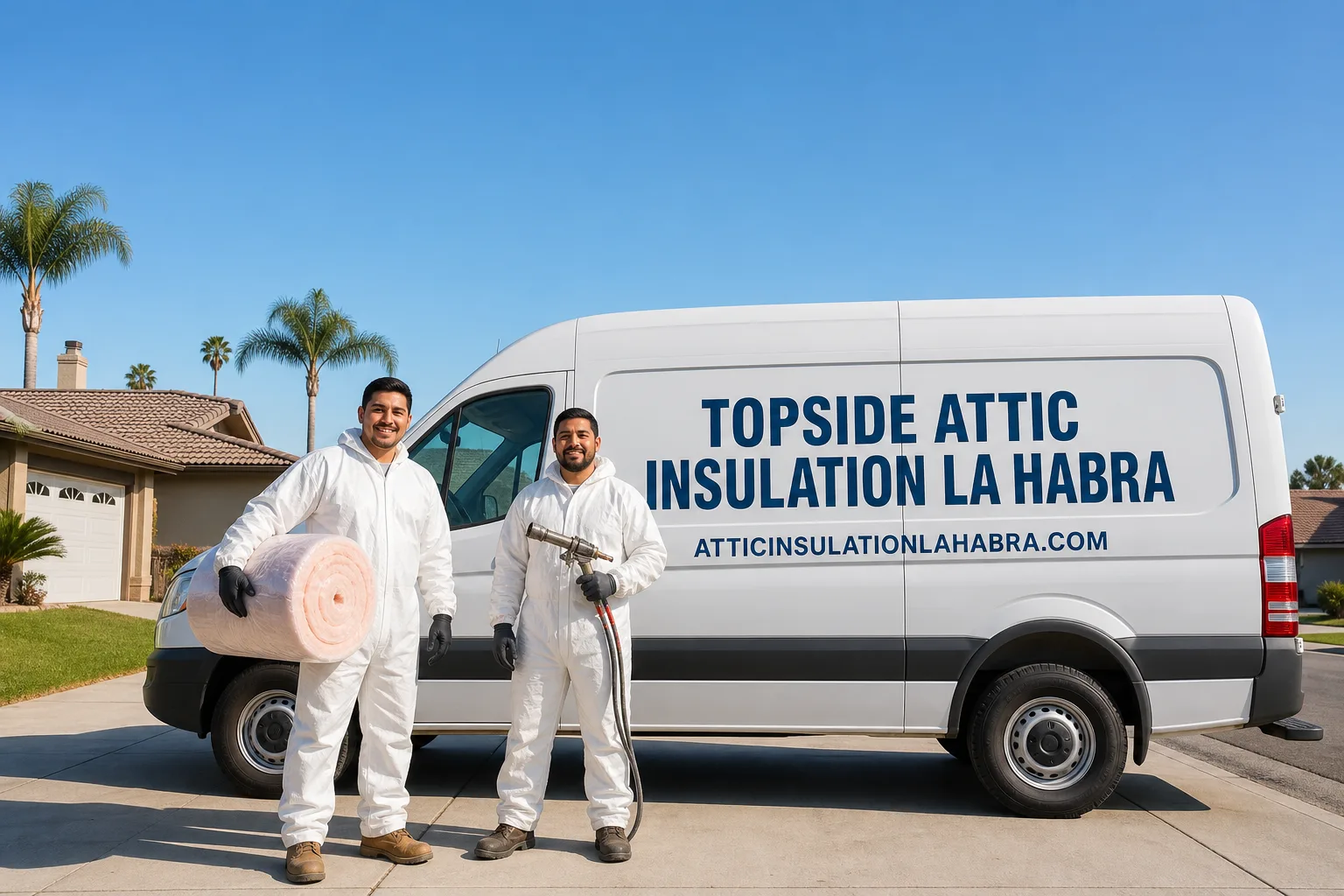
Fast, Reliable Blown-In Insulation Across Stanton
Most blown-in insulation jobs in Stanton run $1,800-$4,200 for a typical single-family attic, and we can usually schedule your free estimate within 24-48 hours. Our crews are dispatched from our Los Angeles office and serve Stanton directly - we know the Beach Boulevard corridor, the Cerritos Avenue tracts, and the older apartment pockets near Stanton Central Park where the housing stock ages in a single, predictable wave.
Call (562) 267-3291 to get a written price before any work starts. That’s Haven Standard Clause 1: flat price, written scope, written warranty delivered before anyone lifts a tool.
Why Topside Attic Insulation La Habra Is Stanton’s Preferred Blown-In Insulation Company
We’ve sealed and insulated more than 9,000 homes since 2016, and Stanton’s pre-1978 housing stock is some of the most consistent retrofit work we see in Orange County. The reviews from Stanton customers tend to mention the same thing: they finally understand what was in their attic because we showed them the photos. Our Documented Photo Record is included on every job, not available on request.
Response time to Stanton is typically same-day or next-day for estimates, with crews carrying Owens Corning and GreenFiber materials so we’re not waiting on deliveries. We know which Stanton tracts have the shallow attic hatches, which have the original knob-and-tube wiring that needs an electrician’s clearance before we can dense-pack walls, and where the Santa Ana wind exposure is harshest on roof decking. That local knowledge saves a day on most jobs.
Wes Okafor, who leads our operation, set the Haven Standard in 2016 specifically because he was tired of watching insulation contractors blow material over unsealed attics and call it done. In Stanton, that sequence matters more than most places - the city’s 1950s-1970s wood-frame stucco tracts are full of top-plate gaps, can-light penetrations, and chimney chases that leak conditioned air straight into the attic. We seal first, then insulate. In that order. Every time.
Our Blown-In Insulation Services in Stanton
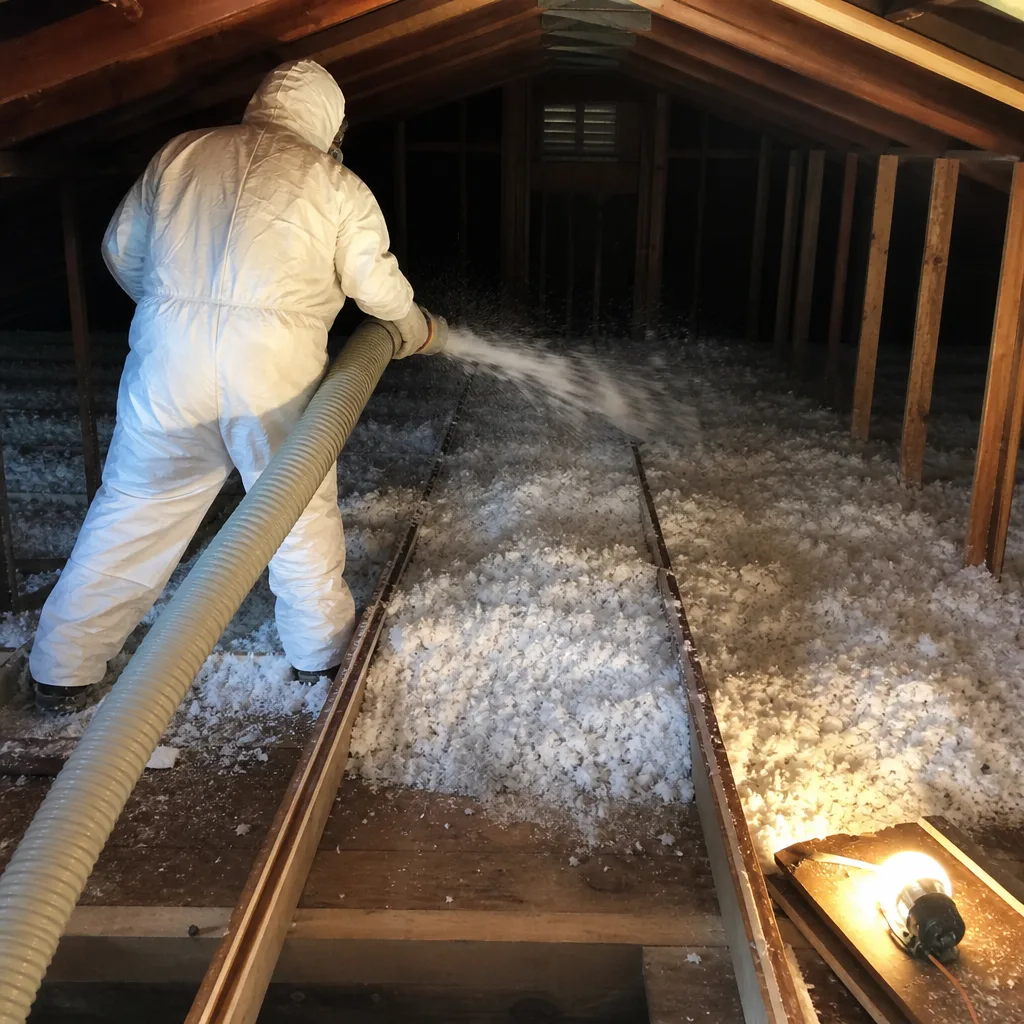
Blown-In Cellulose
GreenFiber cellulose is our most common specification for Stanton attics - it’s treated with borate for fire and pest resistance, and it packs well into the irregular joist bays of post-WWII tracts. Most Stanton homes need 10-14 inches of new cellulose to hit current Title 24 R-value requirements, up from the inch or two of compacted mineral wool that’s typically in place now. We don’t blow over the old stuff. We vacuum it out, air-seal the attic floor, then blow new material. The difference in afternoon kitchen temperatures is immediate.
Blown-In Fiberglass
For Stanton landlords dealing with tenant complaints about cooling costs, blown-in fiberglass from Owens Corning offers a slightly higher R-value per inch and doesn’t settle as aggressively as cellulose over decades. It’s a practical choice for rental properties where the owner wants a longer interval between retrofits. We still air-seal first - fiberglass doesn’t stop air movement, only slows heat transfer - and we still deliver before-and-after blower-door numbers so the owner has documentation for any future Title 24 compliance dispute.
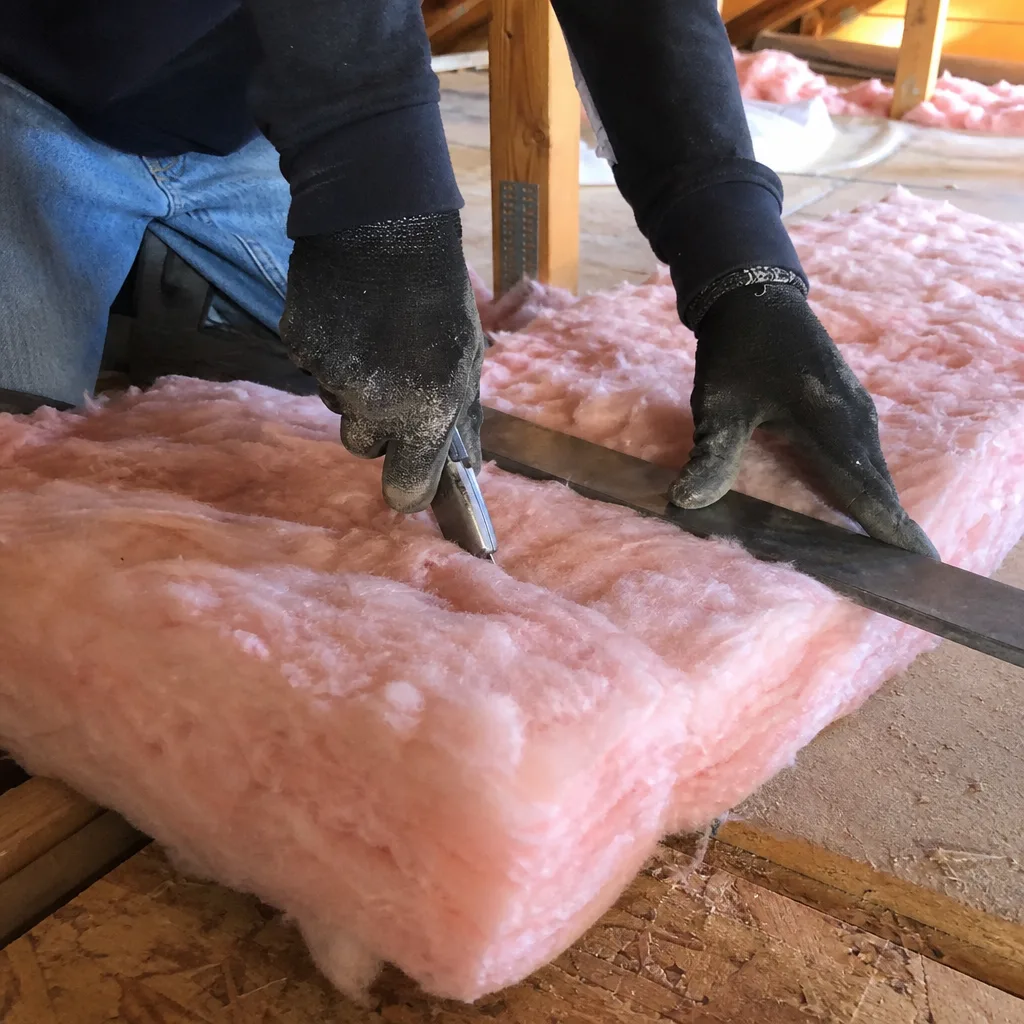
Dense-Pack Wall Insulation
Stanton’s stucco tract homes were built without wall cavity insulation - standard practice in the 1950s and 1960s, but a significant thermal bypass now. Dense-pack cellulose fills those cavities at 3.5 pounds per cubic foot, dense enough to resist settling and slow air convection inside the wall. We drill access holes through the stucco (or from the interior if the homeowner prefers), fill each cavity, then patch and match texture. For a typical 1,200-square-foot Stanton ranch, dense-pack wall work runs $2,400-$3,800 and usually pairs with attic work on the same visit.
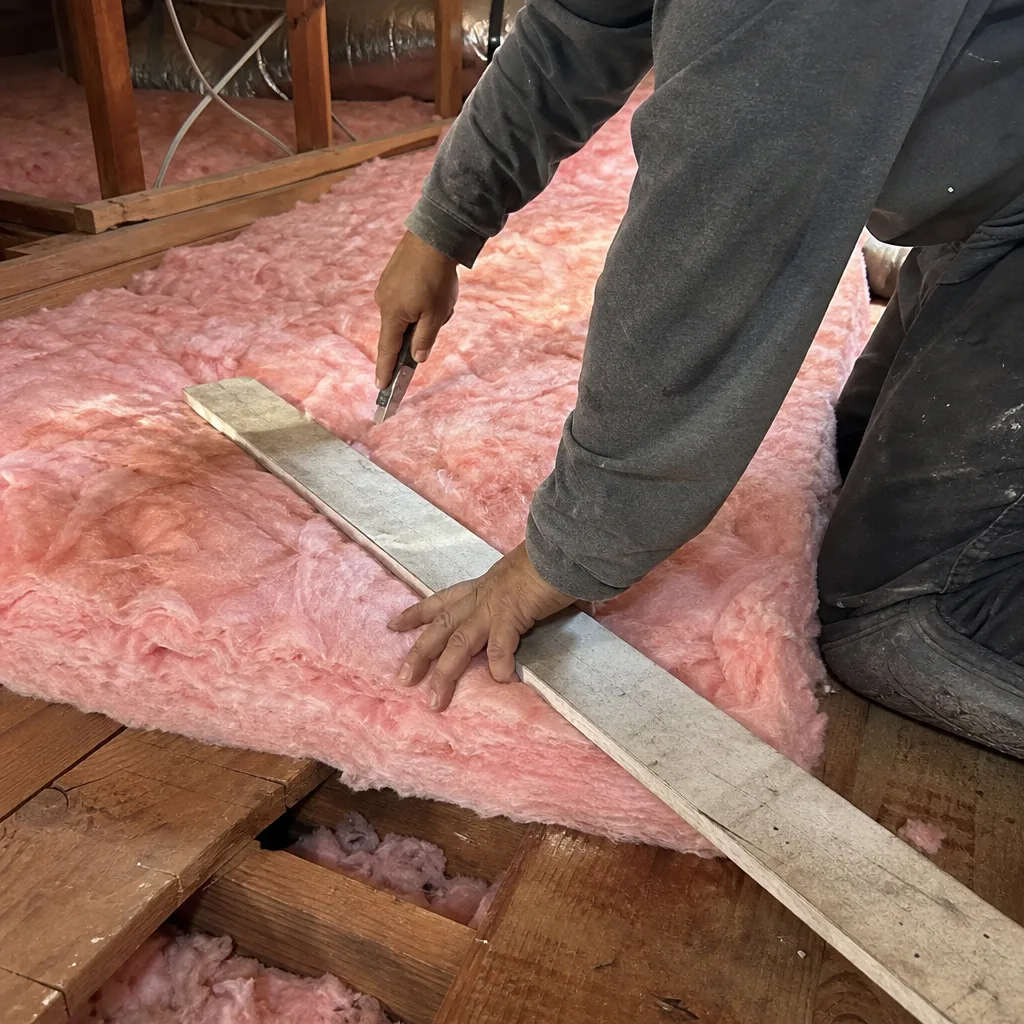
Blown-In Top-Up
Sometimes a Stanton homeowner has had insulation added before, but it was under-specified or installed without air sealing. We see this often in homes near Cerritos Avenue where a previous owner added three or four inches of fiberglass in the 1990s and called it done. A top-up isn’t just adding more material - we test what’s there, remove anything contaminated or compressed, seal the attic floor properly, then blow to full depth. The result is a uniform thermal blanket instead of a lumpy, leaky patch job.
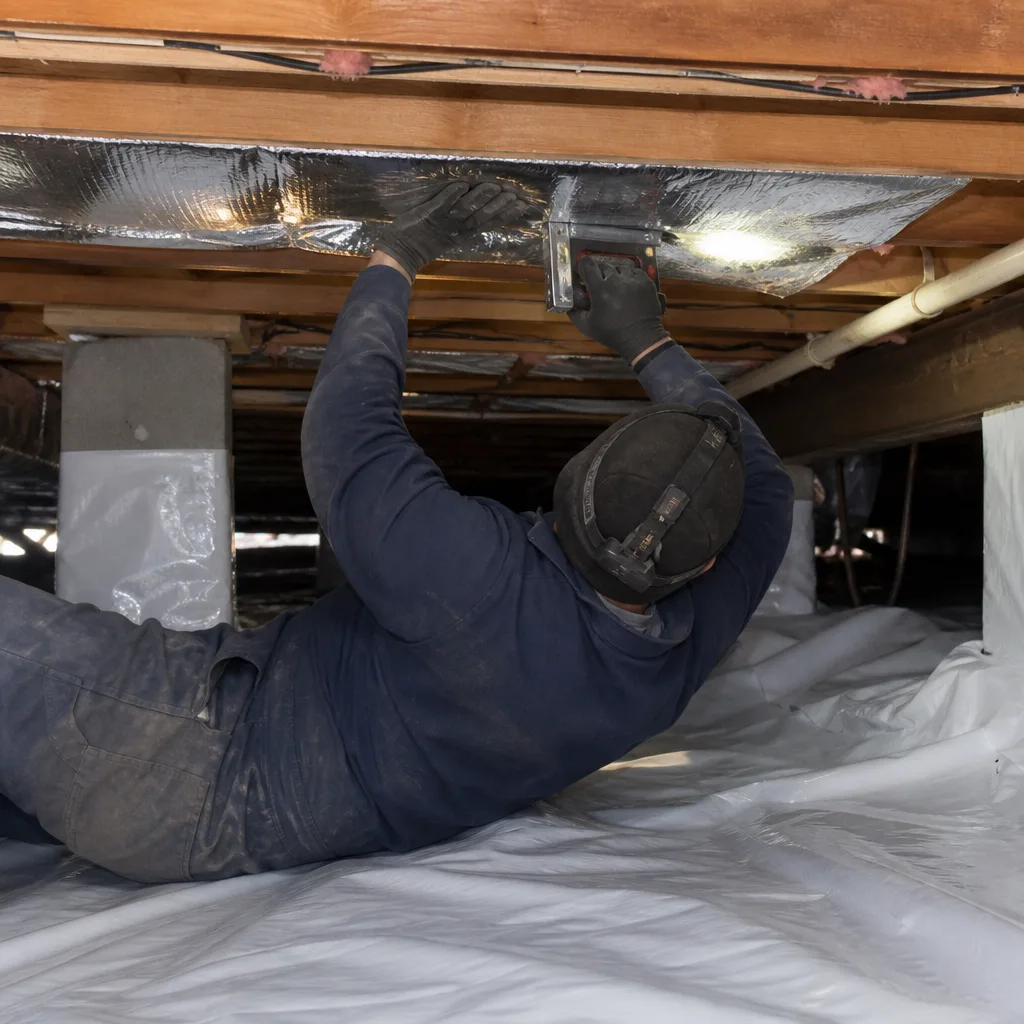
What happens when you call
- 1
A real person answersNo phone trees - you reach a local pro.
- 2
You get an upfront price rangeHonest numbers before anyone is dispatched.
- 3
A background-checked tech heads outLicensed & insured, dispatched right away.
- 4
You approve before work beginsNothing starts until you say go.
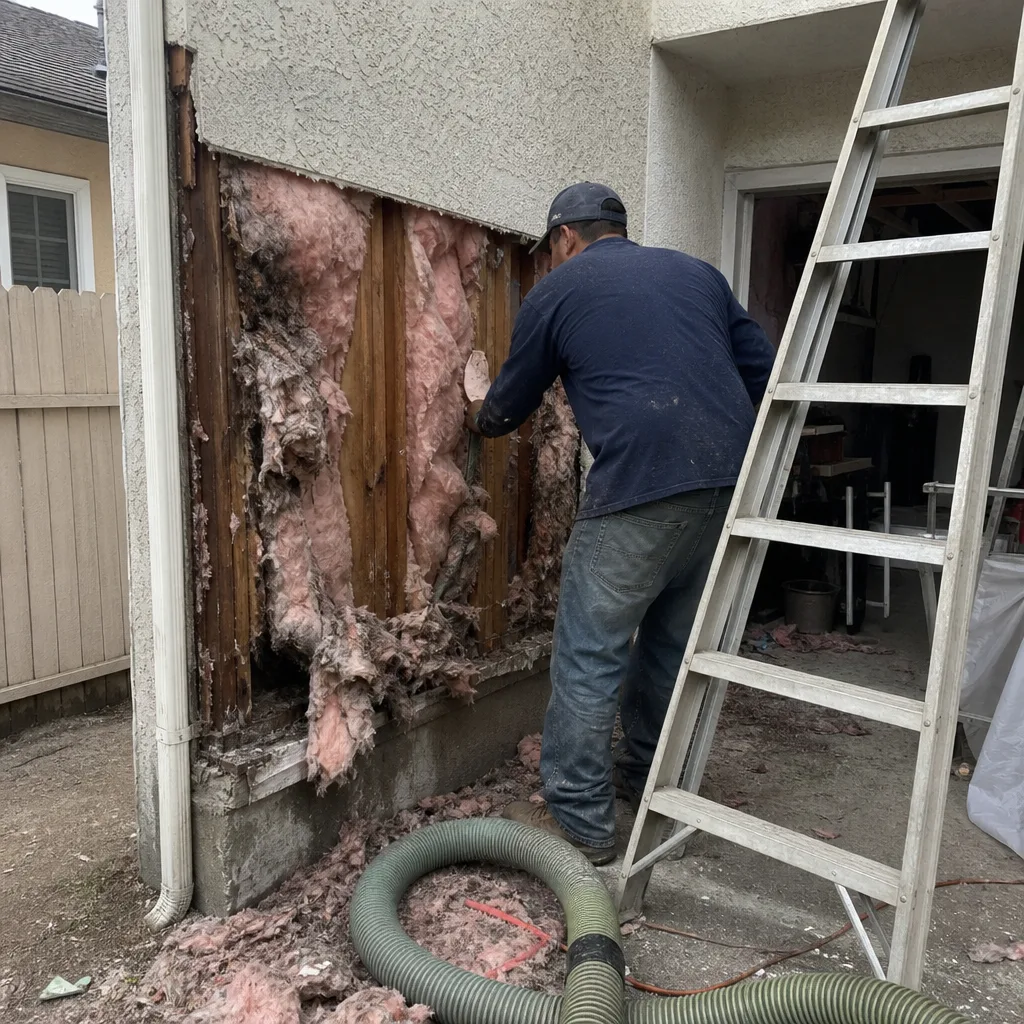 Before
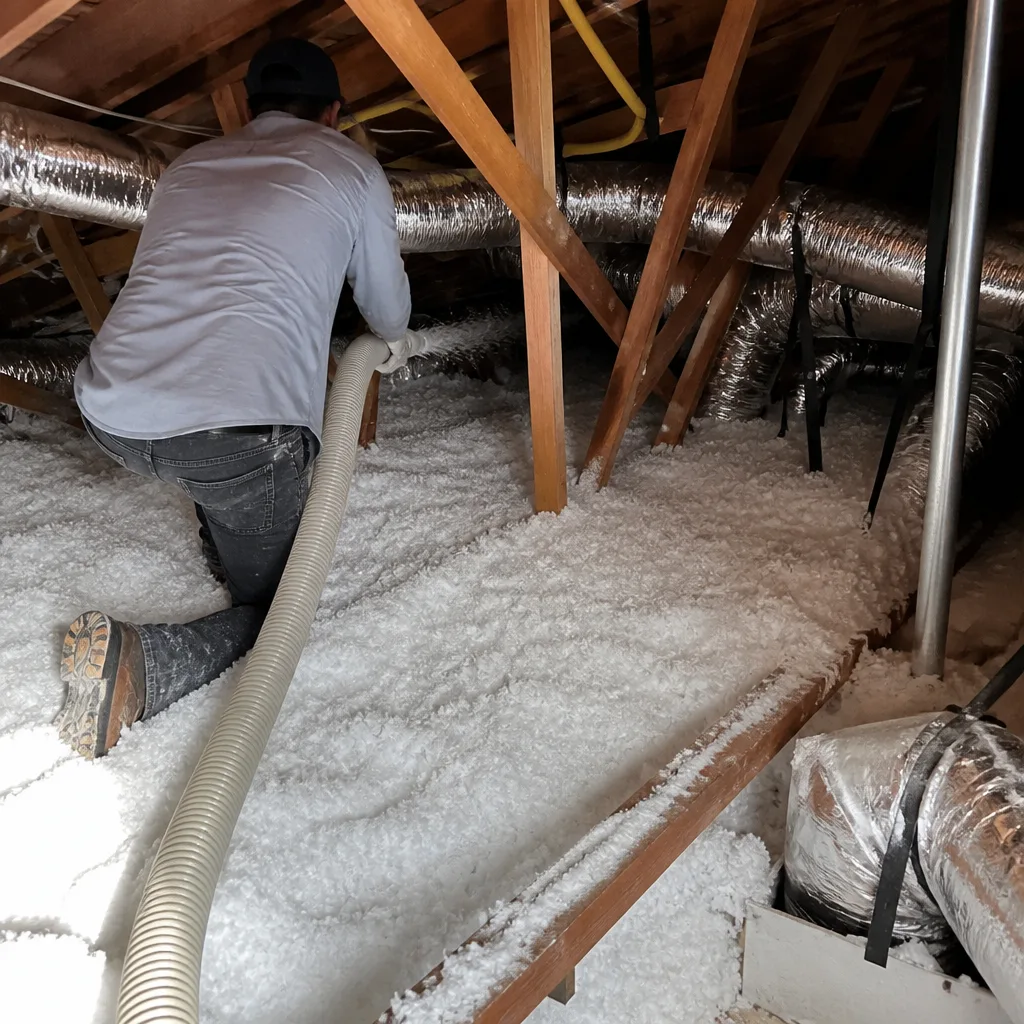 After
AfterTrusted Brands We Service in Stanton
We source materials from Owens Corning, GreenFiber, Johns Manville, Knauf, and others - no proprietary product lock-in, so we specify what’s right for your Stanton home’s condition and your budget. Our trucks carry GreenFiber cellulose and Owens Corning fiberglass as standard stock, which means most Stanton jobs don’t wait on material delivery. For spray foam applications (rare in Stanton’s vented attics but useful for sealed crawl spaces), we work with Icynene and Demilec open-cell products. Every material choice is documented in your written scope before work starts.
Common Blown-In Insulation Problems We See in Stanton Homes
- Original insulation compacted to under two inches of effective depth. In Stanton’s 1950s-1970s tracts, the blown mineral wool or early fiberglass has had 50-70 years to compress and degrade. We routinely open attic hatches to find material rated for R-19 performing at R-5 or less - a thermal performance collapse that’s invisible from below but brutal on your cooling bill.
- No wall cavity insulation in stucco tract construction. Post-WWII wood-frame stucco homes were built with empty wall cavities as standard practice. In Stanton, where summer attic heat gain is the primary complaint, many homeowners don’t realize their walls are radiating afternoon heat inward with no barrier at all. Dense-pack wall insulation addresses this directly.
- Rodent debris and dust matting old insulation into a solid mass. Stanton’s mature tree canopy and older rooflines create entry points for rodents, and decades of activity turn attic insulation into a contaminated, compressed mat. Blowing new material over this doesn’t fix the problem - it buries it. We vacuum and remove contaminated material before any new installation.
- Air leaks at top plates, can lights, and penetrations undoing any insulation value. Even a thick layer of blown-in material can’t stop conditioned air from escaping through unsealed gaps. Our blower-door test - a pressurization reading that shows, in one number, how much air your building envelope is losing - typically reads 3,500-5,000 CFM50 in an unsealed Stanton attic. After sealing and insulating, that number usually drops by 40-60 percent.
Pricing for Blown-In Insulation in Stanton, CA
| Service | Typical Range in Stanton |
|---|---|
| Attic vacuum + air seal + blown cellulose (typical 1,000-1,500 sq ft home) | $2,800-$4,200 |
| Blown-in top-up after partial existing insulation removal | $1,800-$3,200 |
| Dense-pack wall insulation (per 1,000 sq ft of wall area) | $2,400-$3,800 |
| Attic air sealing only (preparation for future insulation) | $1,200-$2,000 |
What moves a Stanton job toward the higher end: multiple attic levels, active rodent contamination requiring full removal, electrical upgrades needed before we can dense-pack walls, or stucco texture matching that requires a specialist patch. What keeps it lower: straightforward rectangular attic, accessible hatch, no active leaks, and scheduling during our standard booking windows. Every job gets a Written Price Before Any Work Starts - no exceptions - and we offer a Free Second Opinion on any written estimate from another contractor. Call (562) 267-3291 for your specific number.
We Also Serve Cities Near Stanton
Our crews work throughout northwest Orange County, including Stanton neighbors like Cypress, Buena Park, Westminster, and Midway City. Each city has its own housing stock pattern and thermal profile - Cypress has more 1980s-1990s construction with better baseline insulation, while Buena Park and Westminster share Stanton’s concentration of pre-Title 24 stock but with different attic configurations. Wherever you are, we bring the same documented process: written price first, blower-door numbers where applicable, and a Documented Photo Record when we leave.
Serving Stanton, CA - Our Local Coverage Area
We’re based in the Stanton area and know this community well. Use the map below to see our service coverage - if you’re nearby, we can almost certainly help.
FAQs - Blown-In Insulation in Stanton
Almost certainly not in any meaningful way. We regularly find original blown mineral wool from the 1950s and 1960s compacted to an inch and a half or less in Stanton attics, delivering perhaps R-4 or R-5 against a rated R-19 - a 75-80 percent performance loss. Call (562) 267-3291 and we’ll show you exactly what’s up there, with photos, before we quote any work.
Stanton sits about 10 miles inland, past the reach of the marine layer’s cooling effect, so summer highs run several degrees hotter and Santa Ana wind events hit harder. That inland thermal position makes attic heat gain the dominant comfort complaint here - precisely why we emphasize air sealing and full-depth blown-in insulation over partial top-ups. The blower-door numbers prove the difference.
Yes, and it’s often the most overlooked upgrade. Stanton’s post-WWII stucco tracts were built with empty wall cavities as standard practice, so your walls are radiating afternoon heat inward with no thermal barrier. Dense-pack cellulose fills those cavities without major demolition, and the comfort improvement is especially noticeable in west-facing rooms during Santa Ana events. Most Stanton homeowners pair wall work with attic insulation on the same project.
It can, and we see this interaction regularly. The salt-air belt reaches Stanton even ten miles inland, corroding garage-door springs, hinges, and opener chains that shed rust particles onto anything below - including new insulation if the garage attic or adjacent ceiling bay is part of the thermal envelope. On jobs where garage-door hardware is actively corroding, we coordinate with our repair team to swap pitted components for coated or nylon alternatives before we blow insulation. We don’t install new material where it’ll be contaminated by ongoing rust shedding.
Title 24 compliance is triggered by specific events - major renovations, HVAC replacements, or additions - not by a calendar schedule. But Stanton’s unusually high share of rental properties means landlords face this question repeatedly as tenants turn over and systems age. When compliance is required, the existing insulation almost never meets current standards. We document the before-and-after R-values and blower-door readings so landlords have defensible records for any future inspection or dispute. Call (562) 267-3291 and we’ll review your specific property and any pending compliance trigger.
Written by Wes Okafor, Owner at Topside Attic Insulation La Habra, serving Stanton since 2016 under The Haven Standard.