
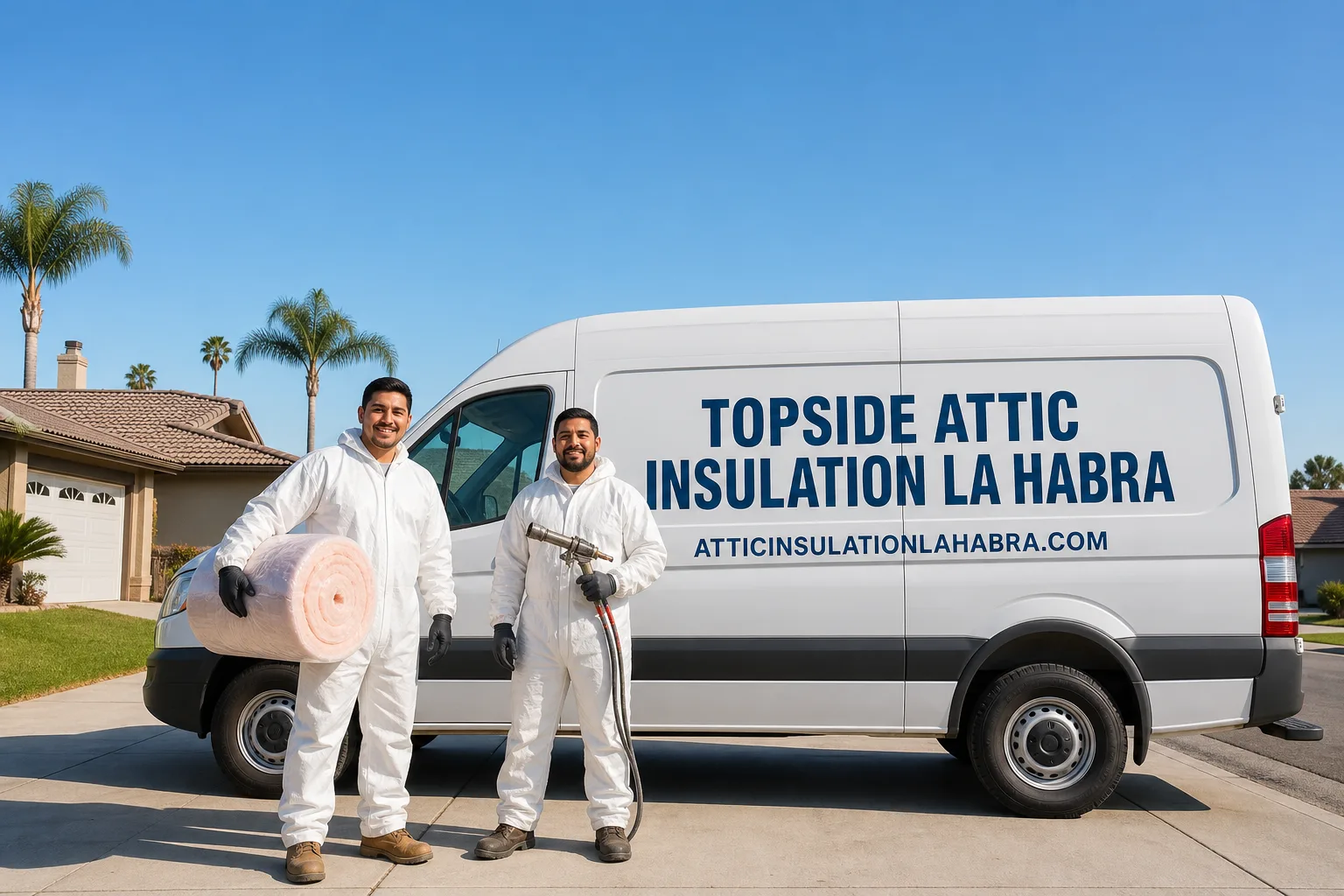
How Much Does Attic Insulation Cost in La Habra?
Our Attic Insulation services in La Habra, CA typically cost between $1,800 and $4,500 for a standard single-story home, with most jobs landing around $2,400 to $3,200 when blown-in fiberglass or cellulose is installed over a properly air-sealed attic floor. Homes that need insulation removal, rodent remediation, or spray foam around penetrations before new material goes in will run toward the higher end of that range.
The numbers above assume the attic floor is sealed first – top plates, recessed light cans, plumbing penetrations, and HVAC chases – because at Attic Insulation in La Habra, that step happens before a single bag of insulation is opened. Skip the air sealing and you’ll add insulation R-value on paper while the conditioned air you paid to cool or heat keeps leaking out through every gap in the ceiling plane.
Attic Insulation Cost Breakdown (2026)
The table below reflects current La Habra market pricing based on jobs completed in the 90631 and 90632 zip codes. Costs vary by attic size, existing insulation condition, and what the attic floor looks like before the crew arrives.
| Scope of Work | Typical Range (La Habra, 2026) |
|---|---|
| Blown-in fiberglass – new installation only (1,000-1,500 sq ft attic) | $1,800 – $2,600 |
| Blown-in cellulose – new installation only (1,000-1,500 sq ft attic) | $1,600 – $2,400 |
| Attic air sealing + blown-in insulation (combined scope) | $2,400 – $3,800 |
| Spray foam (open-cell, applied to roof deck or floor penetrations) | $2,800 – $5,500+ |
| Insulation removal (old batt or blown-in) + disposal | $800 – $1,800 |
| Insulation removal + air sealing + reinstallation | $3,200 – $5,500 |
| Radiant barrier installation (foil type, attic rafters) | $900 – $1,800 |
| Attic cleaning and rodent proofing (before insulation) | $600 – $1,500 |
| Per-square-foot rate (blown-in, air-sealed scope, all-in) | $1.80 – $3.20 / sq ft |
A few things push jobs toward the higher end of those ranges in La Habra specifically. Homes built between 1955 and 1980 – which make up a large share of the housing stock in neighborhoods like Country Hills and the streets east of Harbor Boulevard – often have original batt insulation that has compressed to R-7 or less, recessed light cans with no air-tight covers, and top plates that were never sealed. Addressing all three before adding new blown-in material is the correct sequence, and it adds cost. A job that looks like a $1,900 blown-in project on the phone can turn into a $3,200 project once the crew is in the attic and the flashlight is on.
That’s precisely why every job at Envelope Insulation Co. starts with a written price – flat rate, written scope, written warranty – before anyone climbs the attic ladder. Under Haven Standard Clause 1, no work starts without it. The number you see on the written estimate is the number on the invoice.
What Affects Attic Insulation Pricing in La Habra
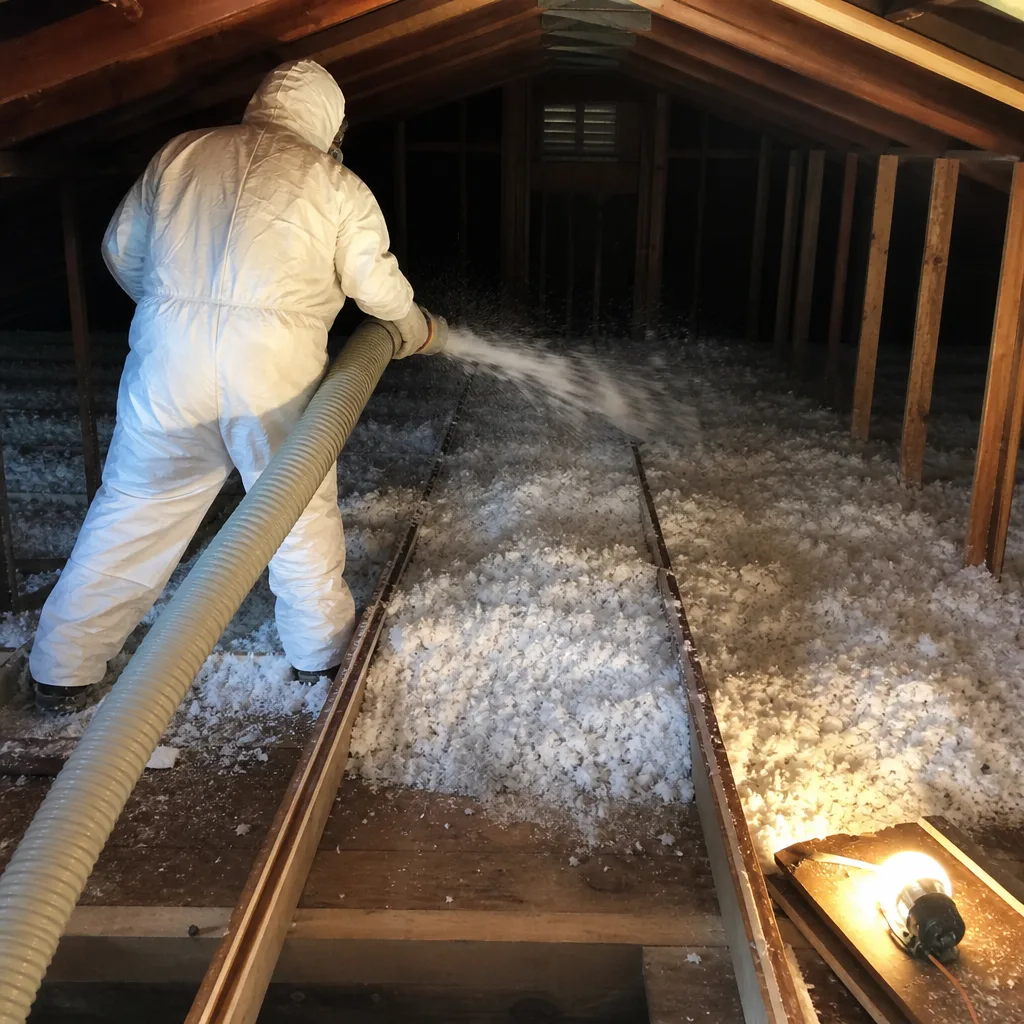
- Attic square footage and access difficulty. A 900-square-foot attic with a 22-inch access hatch and low knee walls on one end takes longer to work in than an open 1,200-square-foot attic. Tight access means slower equipment movement and more labor time, which shows up in the price. Many La Habra ranch-style homes have attics that are spacious in the center but drop to 18 inches at the eave lines – crews have to bag material by hand in those sections.
- Existing insulation condition. If what’s already up there is damaged, rodent-contaminated, or moisture-compromised, it has to come out before anything new goes in. In La Habra’s older tracts, we regularly find blown-in cellulose from the 1970s that has settled to 2 or 3 inches and is hosting rodent activity. Removal adds $800 to $1,800 depending on depth and contamination level.
- Air sealing complexity. The number of penetrations in the ceiling plane – recessed cans, HVAC supply boots, plumbing stacks, interior wall top plates – determines how long air sealing takes. A 1,200-square-foot attic with 18 recessed cans and an HVAC platform in the center takes roughly twice as long to seal as a clean attic with none of those features. Air sealing is not optional on any job we do; it’s the first step.
- Target R-value and material choice. California’s Title 24 energy code requires a minimum of R-38 in attic assemblies for climate zone 8, which covers La Habra. Getting from R-7 (old compressed batts) to R-38 means adding roughly 10 to 11 inches of blown-in fiberglass or 9 to 10 inches of cellulose. Upgrading to R-49 or R-60 – which some homeowners choose when reducing HVAC runtime is the priority – adds material cost but not much additional labor.
- La Habra’s summer heat load and radiant gain. La Habra sits in the eastern Los Angeles basin at the base of the Puente Hills, which means summer afternoons push into the 95-to-100-degree range with meaningful radiant heat load coming through west- and south-facing roof slopes. A radiant barrier (foil-faced material stapled to the underside of rafters) paired with blown-in insulation on the attic floor reduces attic air temperature by 20 to 30 degrees and noticeably cuts afternoon cooling loads. Adding a radiant barrier to a blown-in job typically adds $900 to $1,500 to the total.
- Permit requirements. Los Angeles County Building and Safety has jurisdiction over unincorporated areas near La Habra’s edges, while the City of La Habra’s Building Division handles permits within city limits. Most straightforward insulation additions do not require a permit in La Habra, but jobs that involve electrical work near recessed cans, HVAC modifications, or a change in roof assembly may. We confirm permit requirements before the written price is issued so there are no surprises on the day of work.
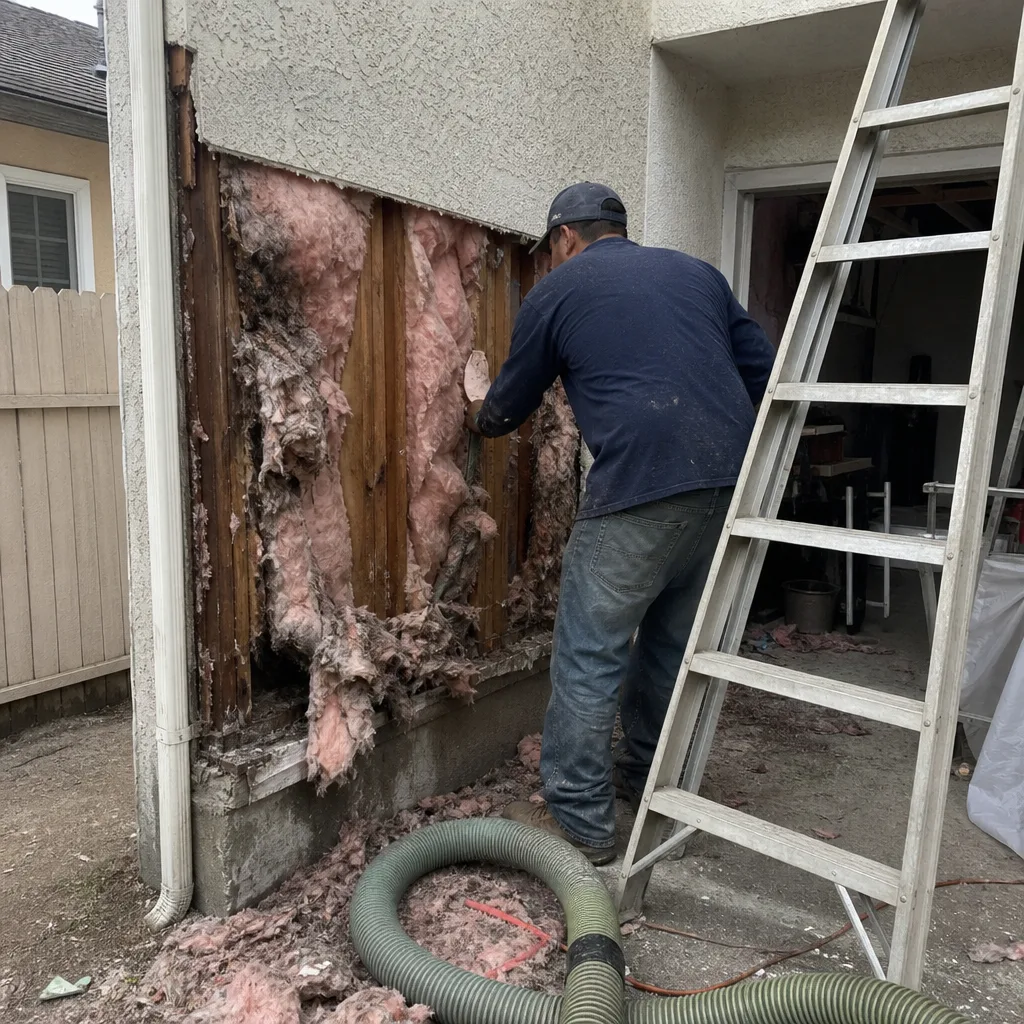 Before
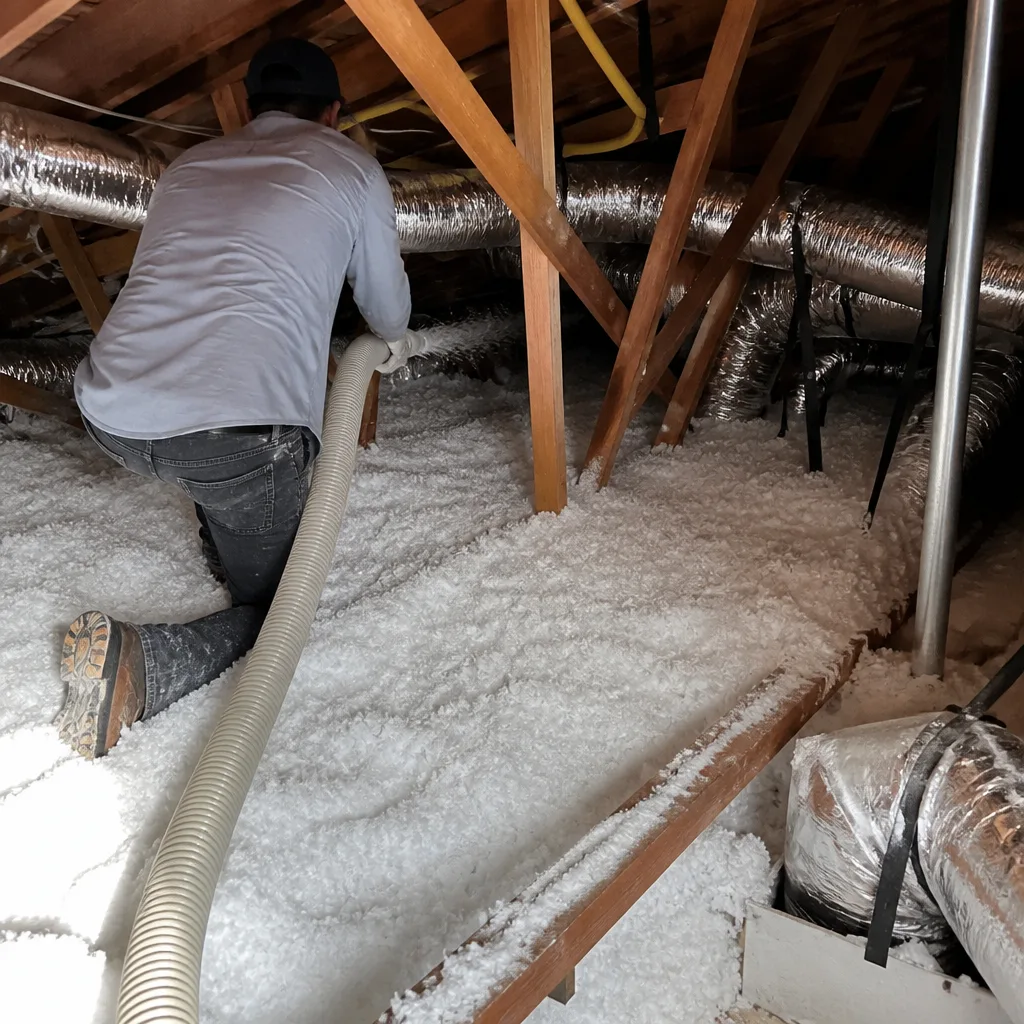 After
AfterLa Habra vs. Nearby Cities: How Prices Compare
La Habra’s pricing sits in a fairly predictable band relative to neighboring communities. Labor rates in the eastern San Gabriel Valley and northern Orange County foothills are comparable, but a few local factors keep La Habra jobs slightly above the basin-average for the region.
- Fullerton and Brea projects average similar per-square-foot rates, though Brea’s newer tract homes (post-1990) tend to need less removal work, which keeps totals lower.
- Whittier and La Mirada homes – many of which share the same vintage as La Habra’s 1960s and 1970s tracts – track closely with La Habra pricing on full remove-and-replace jobs.
- Diamond Bar and Walnut, with more hillside and two-story construction, often run 10 to 15 percent higher due to access difficulty and longer hose runs for blowing equipment.
None of those comparisons should drive your decision about Attic Insulation Near Me in La Habra, CA for your specific attic. What matters is the square footage, the current R-value, the number of penetrations, and whether the existing material needs to come out. Those four things, measured in your attic, determine your number.
How to Save on Attic Insulation in La Habra
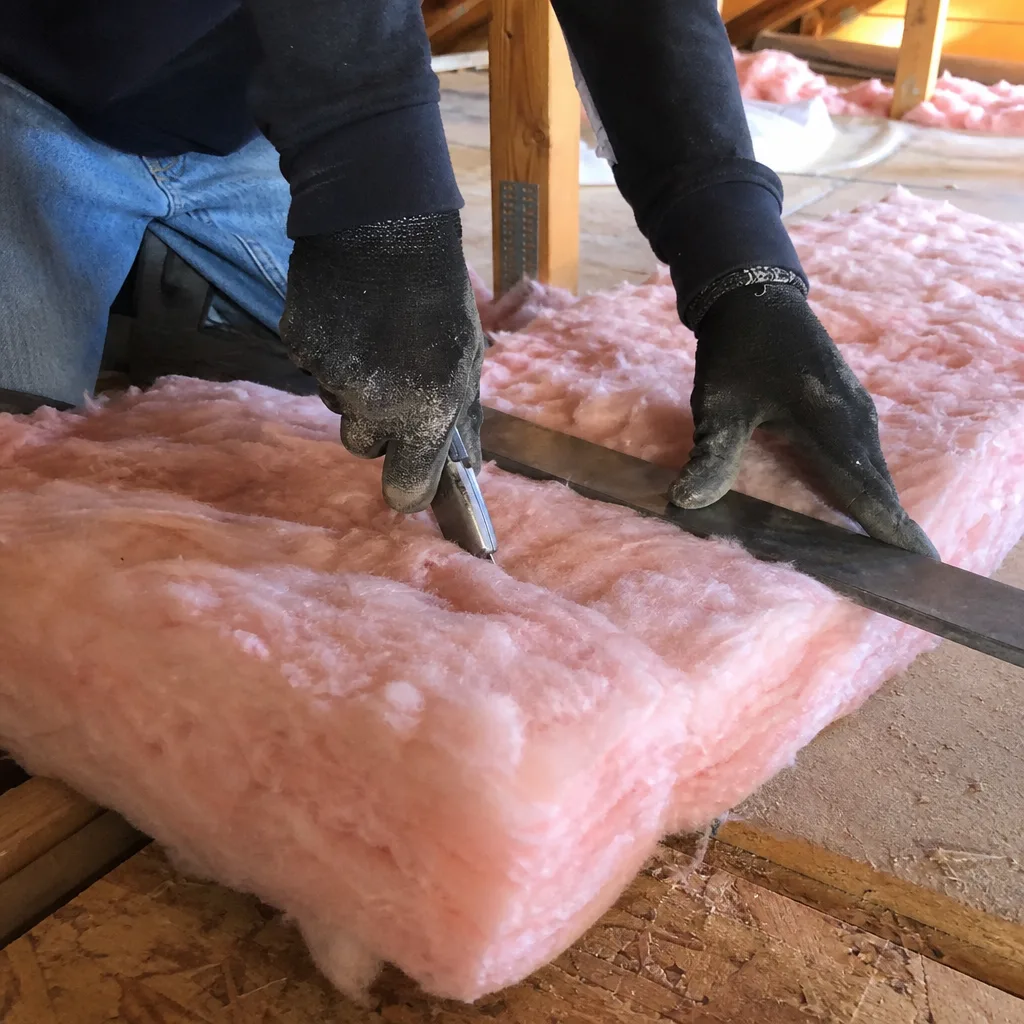
There are real ways to reduce total cost without cutting corners on the work itself. There are also false savings that end up costing more in energy bills or failed equipment over time. Here’s the difference.
Ways that actually reduce total cost
- Get a free second opinion on any written estimate. Attic insulation quotes vary more than most homeowners expect. At Envelope Insulation Co., we’ll read any competing written estimate with you – line by line – and tell you what’s in it, what’s missing, and what the right scope should look like for your attic. Bring us a quote from any other contractor and we’ll give you our honest read at no charge.
- Ask about utility rebates before scheduling work. Southern California Edison and SoCalGas both operate rebate programs for attic insulation upgrades in the La Habra service area. Rebate amounts change annually, but they’ve historically covered $0.10 to $0.20 per square foot of insulation added, plus additional amounts for air sealing work verified by a blower-door test. A job that costs $2,800 out of pocket may net $300 to $600 in rebates if the work is done by a qualifying contractor and documented correctly.
- Combine scopes when the attic is already empty. If you’re having old insulation removed, that’s the single best time to do air sealing and rodent proofing – the attic floor is bare, access is clear, and the crew doesn’t have to work around existing material. Bundling removal, air sealing, and reinstallation into one job is almost always less expensive than doing those scopes separately across two visits.
- Do the math on R-38 vs. R-49. Upgrading from R-38 to R-49 adds roughly $200 to $350 in material cost on a typical La Habra attic. If your HVAC is running more than it should during July and August, that incremental spend often pays back in two to three cooling seasons. A blower-door test before the work – measuring how much air the building envelope is losing at a standard pressure – helps confirm whether the priority is more insulation, better air sealing, or both.
- Don’t skip air sealing to lower the quote. Every contractor who quotes you blown-in insulation without air sealing is quoting you a less expensive job that will perform less well. In La Habra attics, particularly in homes with recessed lighting installed before 2005, the can lights alone can account for 15 to 25 percent of a home’s total air leakage. Adding R-38 of blown-in fiberglass over unsealed cans increases the insulation number without fixing the problem.
What doesn’t actually save you money
Choosing cellulose over fiberglass is a legitimate material preference but saves less than most quotes suggest – roughly $0.10 to $0.20 per square foot on material. Skipping a radiant barrier makes sense for north-facing or heavily shaded roofs but is a meaningful missed opportunity on a west-facing La Habra roof that sees full afternoon sun through August. And hiring a contractor who doesn’t document the before-and-after condition means you have no way to verify the work was done to the specified depth or R-value.
For a specific number on your attic, the estimate is free. Call (562) 267-3291 and we’ll schedule a visit, measure the attic, and give you a written price before anyone does anything.
What La Habra Homes Look Like From the Attic
This section exists because generic pricing guides describe generic attics. La Habra’s housing stock is specific, and what we find when we open attic hatches here reflects that.
The single-story ranch homes built along the Whittier Boulevard corridor and around La Habra Heights Drive from roughly 1958 to 1975 are consistent in a few ways. They tend to have attic depths of 7 to 10 feet at the ridge, dropping to 12 to 18 inches at the eaves. The top plates – the framing members where the ceiling meets the exterior walls – are almost never sealed. Original insulation, when present, is usually kraft-faced fiberglass batts laid flat between joists, compressed to 3 or 4 inches, giving an effective R-value of maybe R-10 when it was new and something closer to R-6 or R-7 today.
Recessed light cans in La Habra homes from this era are almost always the non-air-tight type – there’s a visible gap between the can and the ceiling drywall, and in some cases the housing is fully open to the attic above. Each one of those is a column of warm attic air communicating directly with the living space below in summer, and conditioned air escaping upward in winter.
Homes built in the 1980s and 1990s in the Country Hills area and near the La Habra border with Brea often have some blown-in cellulose already in place from a previous upgrade, but it’s settled – 4 to 5 inches where the spec called for 8 – and the air sealing under it was either minimal or nonexistent. These are not bad attics; they just need Attic Insulation Replacement done in the right order.
Before-and-after blower-door numbers we’ve recorded on La Habra jobs are instructive. A 1,350-square-foot 1968 ranch on a street near the Fullerton border read 5,100 CFM50 before air sealing – that’s the volume of air (in cubic feet per minute) the home was exchanging at 50 pascals of pressure, a standard measurement. After sealing top plates, 16 recessed cans, and three HVAC boots, then adding R-49 blown-in fiberglass, the reading came down to 2,650 CFM50. That’s a reduction of nearly half the home’s air leakage, documented, in writing, with a copy left with the homeowner.
That’s what the blower-door numbers mean in practice. Not a feeling of improvement – a number, before and after, that you can compare to your utility bills.
Insulation Materials: What We Use in La Habra and Why
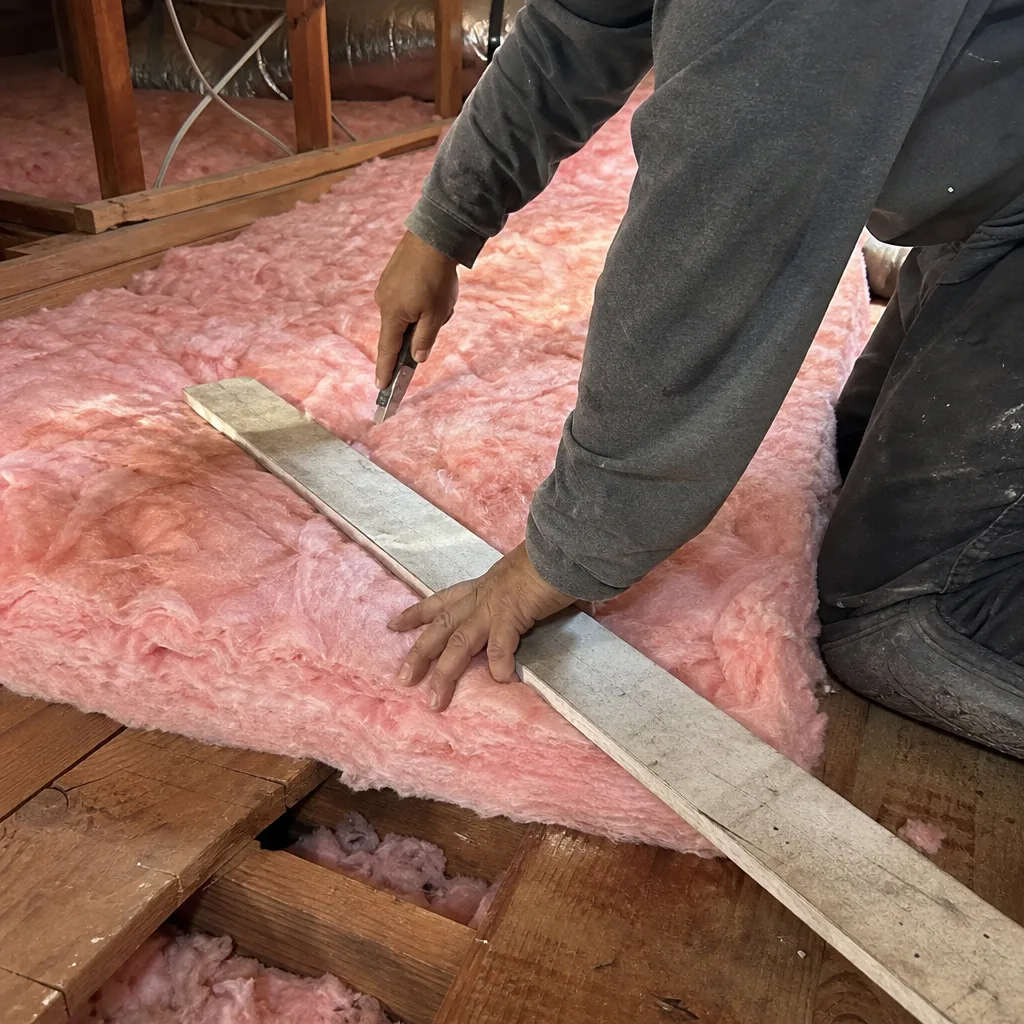
Material selection affects cost, performance, and the right choice depends on the attic. Here’s how the main options break down for La Habra’s climate and housing stock.
Blown-in fiberglass (Owens Corning, Johns Manville, Knauf)
The most common material for attic floors in La Habra. Blown-in fiberglass settles minimally over time, does not absorb moisture readily, and installs quickly in open attic bays. At R-2.2 to R-2.7 per inch depending on density, hitting R-38 requires about 14 to 17 inches of material. It’s the right call for most standard La Habra attics where the floor is flat and the joists are accessible. Owens Corning, Johns Manville, and Knauf are the brands we source – no proprietary product lock-in, and all three are available in California-compliant formulations.
Blown-in cellulose (GreenFiber)
Cellulose is made from recycled paper fiber treated with borate-based fire and pest retardant. It has a slightly higher R-value per inch than fiberglass (R-3.2 to R-3.8), which means less depth needed to hit R-38. Some homeowners prefer it for sustainability reasons; others prefer fiberglass for its moisture resistance. The cost difference is modest – cellulose typically runs $0.10 to $0.20 per square foot less on material. In attics with rodent history, we generally favor fiberglass because cellulose gives rodents a softer medium to nest in.
Spray foam (Icynene, Demilec)
Open-cell spray foam applied to the underside of the roof deck creates an unvented, conditioned attic – the HVAC equipment and ductwork sit inside the thermal boundary rather than outside it, which reduces duct losses substantially. This is a significantly larger investment ($2,800 to $5,500 or more) and the right call for specific situations: attics with HVAC equipment that can’t be relocated, roofs with complex geometry that make blown-in impractical, or homeowners who want the attic to function as livable or storage space. Closed-cell foam in targeted applications – sealing around top plates, penetrations, and can light housings – is a standard part of our air sealing scope on any job, at a fraction of the full-attic spray foam cost.
Radiant barriers (foil-faced)
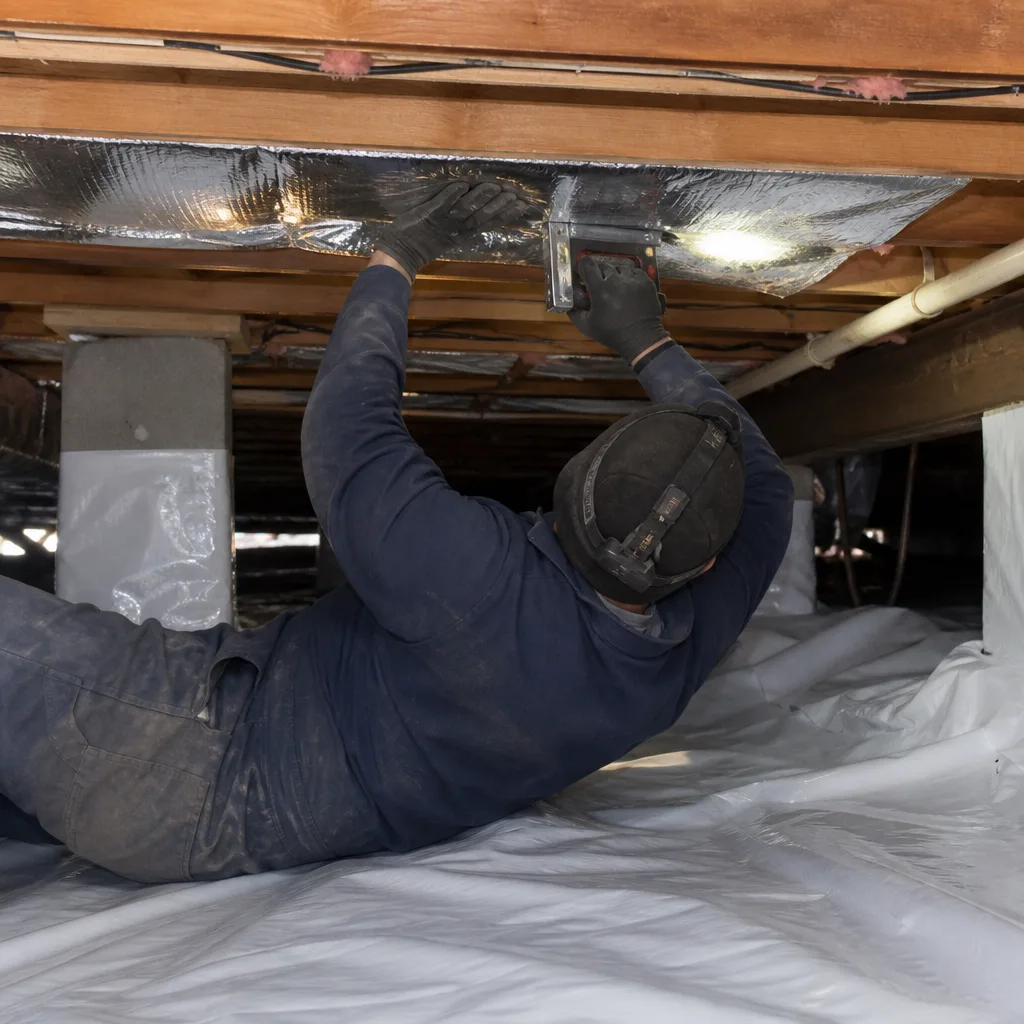
A radiant barrier doesn’t add R-value in the traditional sense – it reflects radiant heat rather than resisting conductive heat transfer. Installed on the underside of roof rafters, it can reduce attic air temperature by 20 to 30 degrees on a La Habra afternoon in August. The practical effect is that your HVAC doesn’t have to fight 140-degree attic air radiating down through the ceiling. Paired with R-38 or R-49 blown-in on the floor, it’s an effective combination for homes with west- or south-facing roof slopes. We source foil-faced radiant barrier materials from CertainTeed and Rockwool for applications where a combined product makes sense.
FAQs – Attic Insulation Cost in La Habra
How much does attic insulation cost in La Habra, CA in 2026?
Most attic insulation jobs in La Habra run between $1,800 and $4,500, with the majority of single-story homes landing in the $2,400 to $3,200 range when blown-in fiberglass is installed over a sealed attic floor. Homes needing old insulation removed first, or with significant air sealing complexity, typically land between $3,200 and $5,500. The per-square-foot all-in cost (air sealing plus blown-in material at R-38) runs $1.80 to $3.20 in this market. For a written price specific to your attic, call (562) 267-3291 – the estimate is free and the written price comes before any work starts.
Is it cheaper to add insulation over existing insulation or remove it first?
Attic Insulation Top-Up costs less upfront – typically $1,600 to $2,600 for blown-in on top of what’s there – but only makes sense if the existing material is clean, dry, and not harboring rodent activity. In La Habra, a large share of pre-1980 homes have existing insulation that fails one or more of those conditions, which makes removal the right call even though it adds $800 to $1,800 to the total. We inspect the existing condition on every estimate and tell you what we find before issuing a written price. If the existing material is clean and the attic floor just needs air sealing and a top-up to R-38, we’ll say so.
Does adding attic insulation require a permit in La Habra?
Most straight insulation additions – blown-in over an existing attic floor – do not require a permit from the City of La Habra’s Building Division. Jobs that involve electrical work near recessed light cans, modification of HVAC equipment, or changes to the roof assembly may require one. We confirm the permit requirement before issuing a written price on every job, so there’s no ambiguity on the day of installation. California’s Title 24 energy code requires a minimum of R-38 in attic assemblies for La Habra’s climate zone, and we document installed depth to confirm compliance on every job.
How much does attic air sealing add to the total cost?
Attic air sealing typically adds $400 to $1,200 to the total cost of a blown-in insulation job, depending on the number of penetrations – recessed cans, HVAC boots, plumbing stacks, and top plates – in the attic floor. On a 1,200-square-foot La Habra attic with 12 recessed cans and standard penetrations, air sealing labor and materials generally run $500 to $800. The reason we include it before insulation on every job is measurable: a blower-door reading before and after air sealing shows the actual reduction in air leakage, which blown-in insulation alone does not produce. Those before-and-after numbers are documented and provided to you. Call (562) 267-3291 to get a written price that includes both scopes.
Can I get utility rebates for attic insulation in La Habra?
Yes. La Habra is served by Southern California Edison and SoCalGas, both of which operate rebate programs for qualifying insulation and air sealing upgrades. Rebate amounts change by program year, but insulation upgrades have historically qualified for $0.10 to $0.20 per square foot of material installed, with additional amounts available for air sealing work that’s verified by a blower-door test. The total rebate on a mid-size La Habra attic job has run $200 to $600 in recent program years. Rebate eligibility depends on the contractor, the documentation provided, and the program in effect at the time of installation – we’ll walk through the current options when we issue your written estimate.
How long does attic insulation installation take in La Habra?
A standard blown-in insulation job on a 1,000 to 1,500 square foot La Habra attic, including air sealing, typically takes 4 to 7 hours for a two-person crew. Jobs that include old insulation removal add 2 to 4 hours depending on depth and contamination. Spray foam applications take longer and vary by scope. We give you a time estimate along with the written price so you know what the day looks like before we show up. A named technician is assigned to your job, and you’ll get a text when they’re on the way – no callback windows measured in days.
What You Receive When the Job Is Done
This is a point most pricing guides skip, and it matters for homeowners who want to verify the work was done to spec.
When a crew from Envelope Insulation Co. finishes an attic insulation job in La Habra, the homeowner receives a documented photo record of the work – before and after photos of the attic floor, air sealing points, and final installed depth – included on every job, not available on request. On jobs that include air sealing, a before-and-after blower-door reading is provided: a number, in CFM50, showing how much the air leakage changed. You also receive the written scope and written warranty before work starts, per Haven Standard Clause 1, and those documents match what’s done – flat price, no adjustments after the fact.
The 365-Day Done Right Promise applies to all completed work. If something isn’t right, we make it right – that’s in writing before anyone starts.
Wes Okafor leads the team at Envelope Insulation Co. and has set the standard for how every La Habra job is scoped, documented, and closed. The home page walks through the full range of building-envelope services if you want to understand the broader scope of what we cover. For attic insulation specifically, the written price starts with a free estimate – no work happens until you have a number in writing.
Ready to Get a Written Price for Your La Habra Attic?
The estimate is free, the written price comes before anyone lifts a tool, and the number on the estimate matches the number on the invoice. If you have a competing quote from another contractor, bring it – we’ll read it with you line by line at no charge under our Free Second Opinion offer.
Call (562) 267-3291 to schedule your free attic insulation estimate in La Habra. A live person answers – no voicemail, no callback window. We’ll confirm your attic size, discuss what you’re seeing (high summer bills, uneven temperatures room to room, visible old insulation through the hatch), and schedule a visit at a time that works for you.
Wes Okafor and the team at Envelope Insulation Co. have been doing this work under The Haven Standard since 2016 – 9,000-plus homes sealed and insulated, every one with a written price before work started and a documented record when the crew left. La Habra homeowners who want to know what’s actually in their attic before and after can find that out, in writing, starting with one call.
Pricing reflects the La Habra market as of 2026. Topside Attic Insulation La Habra offers free estimates – call (562) 267-3291.
Written by Wes Okafor, Owner at Envelope Insulation Co., serving La Habra, CA since 2016.
What Our Customers Say
"Two other companies quoted to blow more insulation on top of what was there. These were the only ones who said the existing material had to come out first, and explained why."
- Clifford E."The winter gas bill dropped by about a third. They had estimated a quarter, so they under-promised."
- Genevieve R."Fixed price, clean work, and they hauled the old material away as agreed."
- Todd M.