
How Much Does Blown-In Insulation Cost in La Habra?
Blown-in insulation in La Habra, CA typically costs between $1,200 and $3,800 for a standard attic job, with most single-story homes in the 1,400-2,200 square foot range landing between $1,500 and $2,600. That range assumes the attic floor is air-sealed first – which, at Envelope Insulation Co., it always is – because blowing insulation over unsealed top plates and can lights is the single fastest way to cancel out most of the thermal benefit you just paid for.
Blown-In Insulation Cost Breakdown (2026)
The table below reflects actual project pricing in the La Habra market as of 2026. These are not national averages pulled from a database – they are the ranges Wes Okafor and the Envelope Insulation Co. crew see on jobs in La Habra, Hacienda Heights, Brea, and the surrounding zip codes week to week.
| Scope of Work | Typical La Habra Price Range (2026) | Notes |
|---|---|---|
| Attic air sealing only (before insulation) | $350 - $750 | Top plates, can lights, plumbing and wire penetrations sealed before any material goes in |
| Blown-in cellulose or fiberglass to R-30 | $0.85 - $1.20 per sq ft installed | Typical for homes that already have some existing insulation being topped off |
| Blown-in cellulose or fiberglass to R-38 | $1.10 - $1.55 per sq ft installed | California Title 24 minimum for climate zone 9 (La Habra sits in CZ-9) |
| Blown-in cellulose or fiberglass to R-49/R-60 | $1.45 - $2.00 per sq ft installed | Recommended for homes with south- or west-facing attic planes and minimal shade |
| Full attic package: air seal + blown-in to R-38 (1,500 sq ft attic) | $1,500 - $2,400 | Most common project type in La Habra’s post-war ranch and split-level stock |
| Full attic package: air seal + blown-in to R-38 (2,000 sq ft attic) | $1,900 - $3,100 | Larger floor plans common in the Westridge and Country Hills neighborhoods |
| Full attic package: air seal + blown-in to R-49 (2,000 sq ft attic) | $2,400 - $3,800 | Homes with older HVAC systems that are working harder than they should |
| Blown-in wall insulation (dense-pack, per sq ft) | $2.50 - $4.50 per sq ft of wall face | Requires small access holes, dense-pack equipment; common in La Habra’s 1950s-1970s tract homes |
| Blown-in crawl space insulation (between floor joists) | $1.20 - $2.10 per sq ft | Less common in La Habra than attic work, but relevant for hillside homes with raised foundations |
| Old insulation removal before new blown-in | $0.75 - $1.40 per sq ft | Required if existing material is contaminated, compressed below R-11, or rodent-damaged |
What Drives the Price Up – and What Brings It Down
The single biggest cost variable in La Habra is attic accessibility. Homes built in the 1960s and 1970s in the central part of the city often have a single 22-inch hatch, limited clearance near the eaves, and HVAC ducts running through the attic floor – all of which add labor time. A straightforward 1,600-square-foot attic with good hatch access and no existing contamination might sit at $1,600 installed. The same footprint with a cramped hatch, an old fiberglass batt layer that needs removal, and leaking flex ducts crossing the attic floor can push past $2,800 before any insulation touches the ceiling.
Material choice matters less than most people expect. Cellulose runs slightly cheaper per bag than fiberglass loose-fill and performs comparably at equivalent R-values – the difference on a 1,800-square-foot attic is usually $80 to $200, not thousands. Envelope Insulation Co. uses material from Owens Corning, Johns Manville, Knauf, and GreenFiber depending on the job profile, and Wes Okafor will note which product and why in the written scope before the job starts – Haven Standard Clause 1, no exceptions.
R-value depth is a real cost driver. California’s Title 24 energy code places La Habra in Climate Zone 9, which requires a minimum of R-38 in attic assemblies for a permitted remodel or addition. But Title 24 minimum is not always the right target – a home on the south side of Las Lomas Drive with a dark tile roof and a 2002 air conditioner is a different conversation than a 2019 build with light-colored roofing. The inspection during your free estimate identifies which target makes economic sense for your specific home.
What Affects Blown-In Insulation Pricing in La Habra
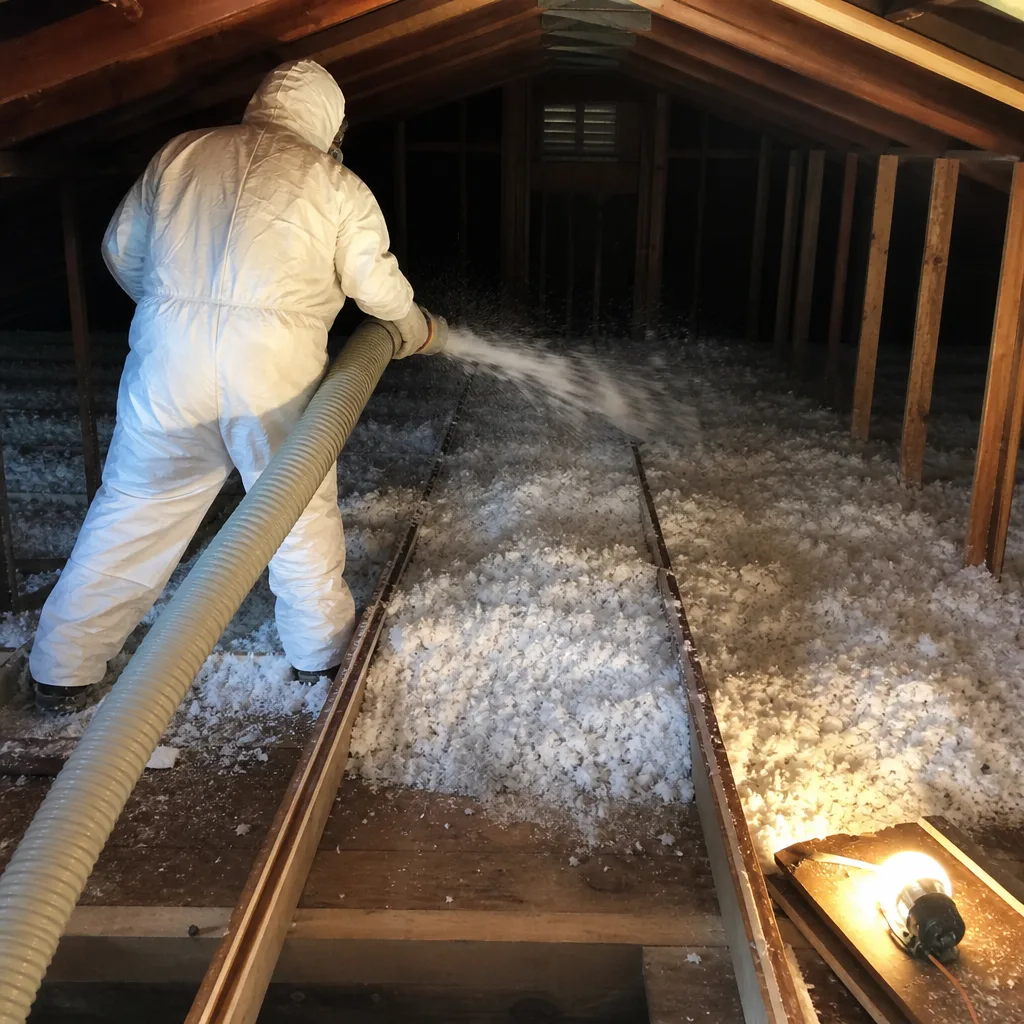
- Attic square footage and geometry: Price scales with area, but geometry shapes the labor number more than pure size does. La Habra’s hillside properties – particularly those above Hacienda Road toward the Whittier Hills – often have sloped attic sections with less than 18 inches of clearance at the perimeter. Every foot a technician has to work on their stomach adds labor time, and that shows up in the estimate.
- Existing insulation condition: Homes built before 1980 in La Habra often have original rock wool or compressed fiberglass batts sitting at an effective R-6 or lower. If the material is in good condition and not contaminated, topping off with blown-in cellulose is straightforward. If there is rodent damage, moisture staining, or vermiculite (which requires asbestos testing before any work begins), removal and disposal become line items. Removal in La Habra typically adds $0.75 to $1.40 per square foot to the job total.
- Air sealing scope: Envelope Insulation Co. will not blow insulation over an unsealed attic floor – that is a firm operational standard, not a sales position. Homes with recessed can lights, open top plates, and unsealed plumbing chases will need air sealing completed first. For a typical 1,700-square-foot La Habra ranch with can lights in the kitchen and living room, air sealing alone runs $400 to $650. That step is what makes the insulation above it actually perform.
- R-value target and material depth: Getting to R-38 requires roughly 10 to 12 inches of blown-in fiberglass or cellulose above the existing depth. R-49 requires 14 to 16 inches. Each additional inch of depth means more material and slightly more installation time. The cost difference between R-38 and R-49 on a 2,000-square-foot attic is typically $400 to $700.
- Local climate load – La Habra’s specific thermal profile: La Habra sits at the edge of the coastal influence zone. Summer afternoons regularly hit 88 to 96 degrees Fahrenheit, and the city’s position inland from Fullerton and Brea means less marine-layer moderation than the coast gets. Attics on west-facing slopes in La Habra measure radiant surface temperatures above 140 degrees on peak summer days. That thermal load argues for hitting R-49 or adding a radiant barrier in combination with blown-in – a conversation that comes up regularly in the Westridge and Lambert Road corridor.
- Permit requirements: Most standalone blown-in insulation jobs in La Habra do not require a building permit from the City of La Habra’s Building and Safety Division. However, if the work is part of a larger permitted remodel or an addition, insulation must meet current Title 24 requirements and will be inspected. If your project has a permit in play, Wes Okafor will flag this in the written scope so there are no surprises at inspection.
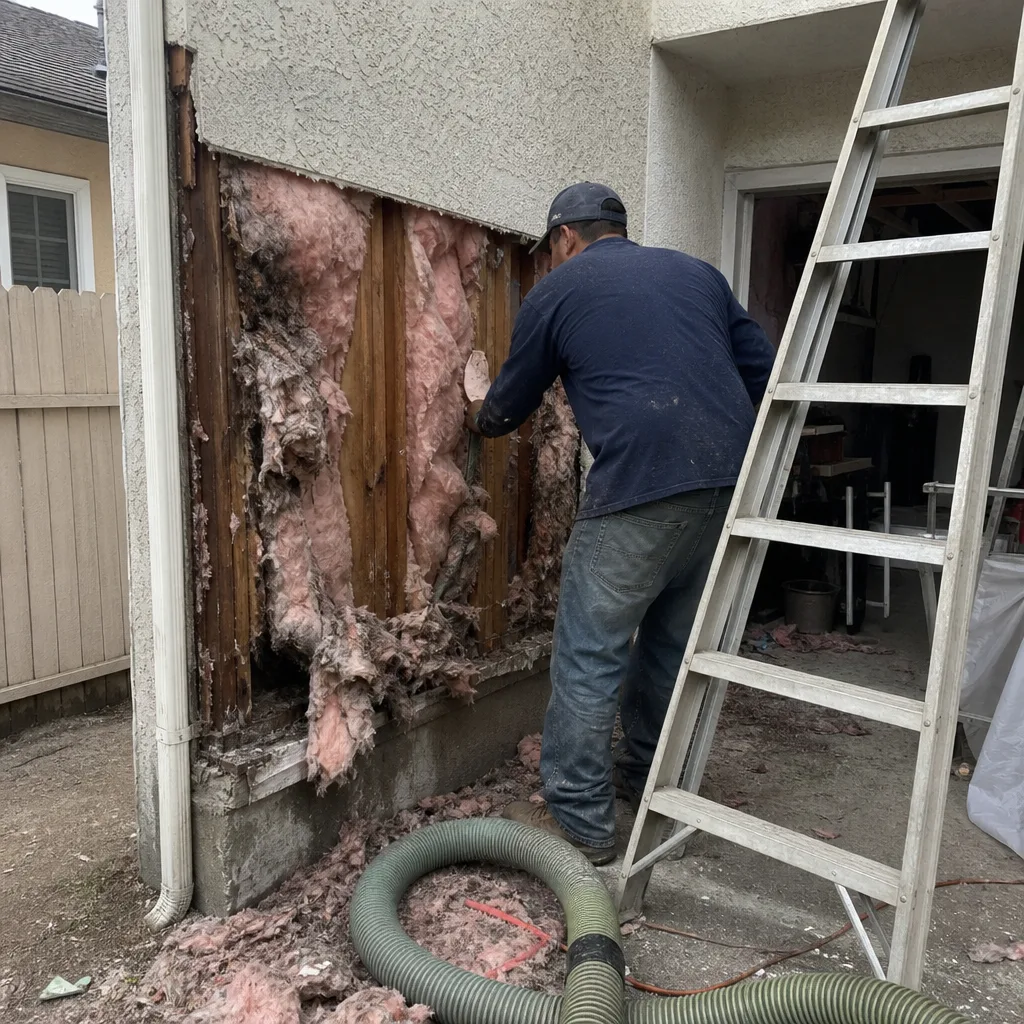 Before
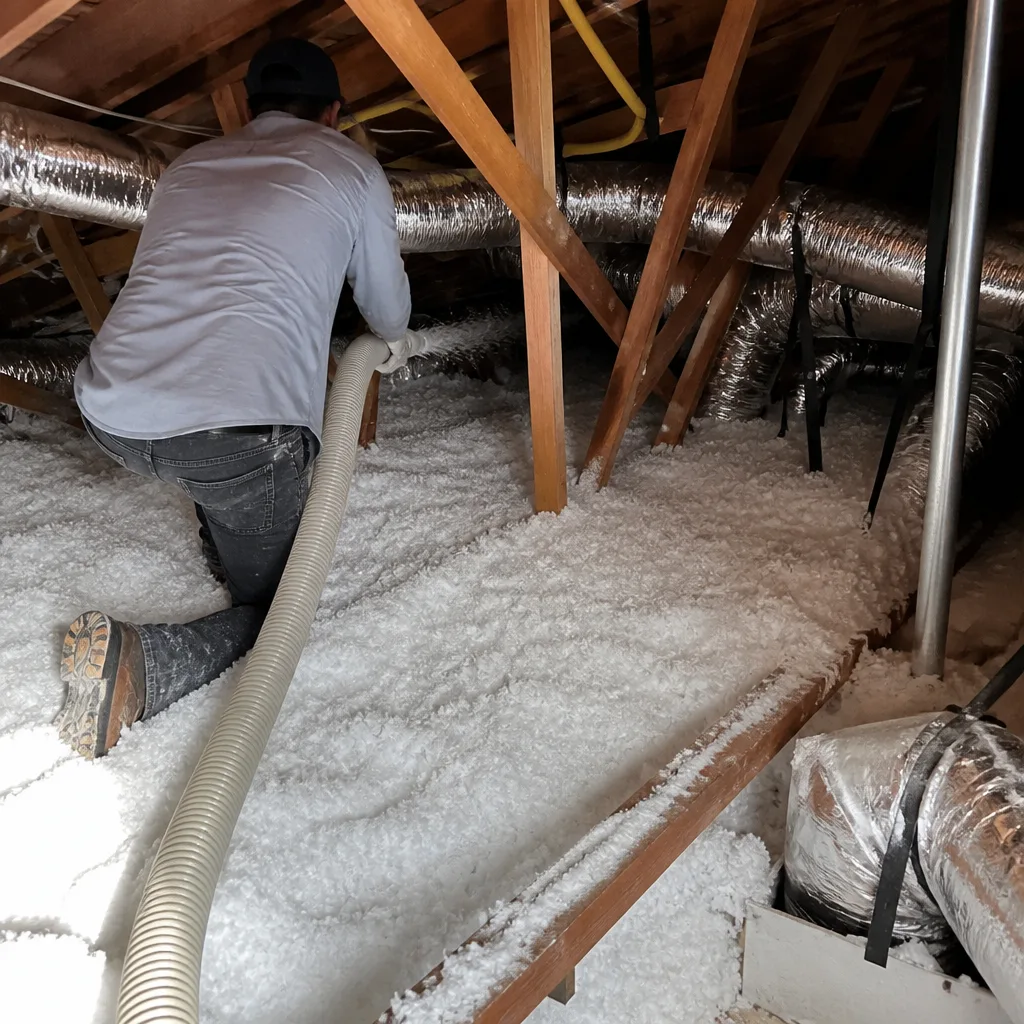 After
AfterHow to Save on Blown-In Insulation in La Habra
Combine Air Sealing and Insulation in a Single Visit
Scheduling air sealing and blown-in insulation as a single project rather than two separate jobs typically saves $150 to $350 in mobilization costs alone. The crew is already staged, the blower-door test can be run once before work and once after to document the improvement, and there is no second inspection window to coordinate. Most La Habra homeowners who ask for air sealing only end up booking the insulation within 30 days anyway – doing them together is almost always the better economic choice.
Check for Southern California Gas and SCE Rebates
SoCalGas and Southern California Edison both run rebate programs for attic insulation upgrades that meet or exceed Title 24 requirements. Rebate amounts shift each program year, but in recent years La Habra homeowners have seen $0.10 to $0.20 per square foot back on qualifying blown-in projects. On a 2,000-square-foot attic, that is $200 to $400 returned. The rebate paperwork requires documentation of the pre- and post-installation R-values – which Envelope Insulation Co. provides as part of the job record on every project. Before scheduling, check current program terms at socalgas.com and sce.com to confirm eligibility and whether the contractor needs to be pre-enrolled in the program.
Get the Inspection Right the First Time
The most expensive version of a blown-in insulation job is the one that gets done twice. Contractors who skip air sealing and blow insulation over open top plates and can-light penetrations create a situation where the conditioned air you are trying to retain just takes a slightly longer path out of the building. The insulation slows conductive heat transfer; unsealed penetrations allow convective loss to continue unchecked. Blower-door numbers before and after tell the story clearly. At Envelope Insulation Co., every applicable job includes before-and-after blower-door readings – a pressurization measurement that quantifies, in a single CFM50 number, how much conditioned air the building envelope was losing before the work and how much it loses after. That number is part of the job record you keep.
Use the Free Second Opinion
If you have a written estimate from another contractor, bring it in. Envelope Insulation Co. offers a free second opinion on any written estimate – Wes Okafor or a senior technician will read it with you line by line and note where the scope is solid, where it is thin, and where the pricing looks out of step with the La Habra market. This is not a sales call disguised as a review. If the other estimate is accurate and well-scoped, you will hear that. The point is to make sure you understand what you are buying before any money changes hands.
Request a Free Estimate – Flat Price, Written Scope, Before Any Work Starts
Envelope Insulation Co. provides a written price before any work begins – no exceptions. The estimate includes the full scope, the material specified, the R-value target, and the warranty terms. Call (562) 267-3291 to schedule a free estimate at your La Habra home. A live person answers, any time.
FAQs – Blown-In Insulation Cost in La Habra
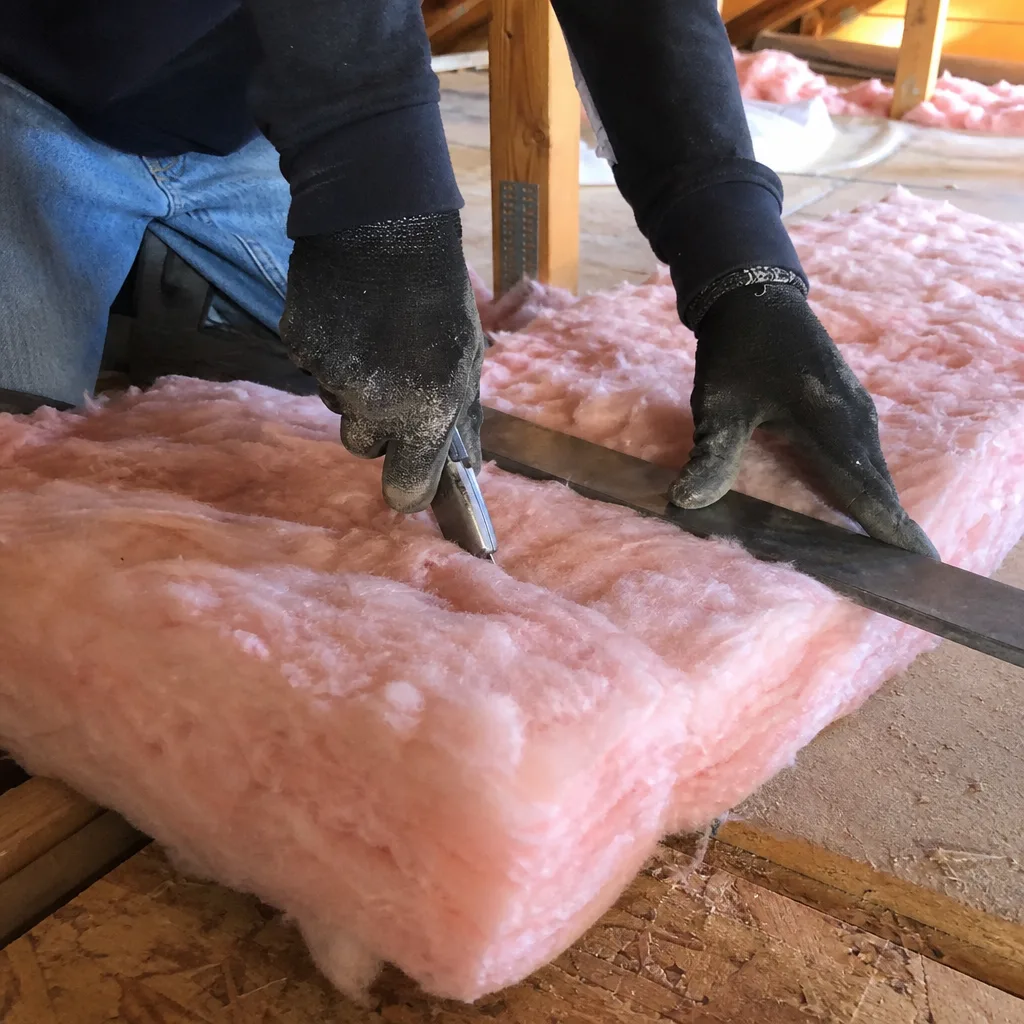
How much does blown-in insulation cost for a 1,500-square-foot attic in La Habra?
A 1,500-square-foot attic in La Habra runs $1,500 to $2,400 for a full project that includes attic air sealing and blown-in insulation to R-38 – California’s Title 24 minimum for Climate Zone 9. If the attic has existing insulation in decent condition that only needs to be topped off to reach R-38, the lower end of that range is realistic. If there is removal involved, or if the attic geometry is tight, expect the middle to upper end. Call (562) 267-3291 for a written estimate specific to your home’s footprint and current condition.
Is blown-in insulation cheaper than batt insulation in La Habra?
For attic applications, blown-in is generally $0.10 to $0.30 per square foot cheaper than batt insulation installed to the same R-value, and it performs better in attics with irregular joist spacing and obstructions – which describes most of La Habra’s 1950s through 1970s housing stock. Blown-in material fills around pipes, wires, and blocking that batts bridge over and leave uncovered. For walls, dense-pack blown-in is more expensive than batts ($2.50 to $4.50 per square foot versus $1.00 to $2.00 for batts) but is the only option in an existing wall without opening the drywall.
Does blown-in insulation require a permit in La Habra?
Most standalone blown-in insulation jobs in La Habra do not require a permit from the City of La Habra Building and Safety Division. The exception is when the insulation work is part of a permitted remodel, addition, or new construction – in those cases, Title 24 compliance documentation is required and the installation will be inspected. If your project touches the permit system in any way, that gets noted in the written scope before work starts, so you know what to expect at inspection.
How long does blown-in insulation last in La Habra’s climate?
Blown-in cellulose and fiberglass insulation installed correctly – meaning air-sealed underneath it and protected from moisture intrusion – typically maintain 90 percent or more of their installed R-value for 20 to 30 years in La Habra’s climate. The main threats to longevity are moisture events (roof leaks, HVAC condensation), rodent activity compressing or displacing the material, and settling that was not compensated for in the original installation depth. La Habra’s dry summers are actually favorable for insulation longevity compared to more humid inland valleys. The documented photo record Envelope Insulation Co. provides at job completion gives you a baseline to compare against if you ever have a home inspection or re-evaluation done years later.
Can blown-in insulation be added over existing insulation in La Habra?
Yes – in most cases, existing insulation in reasonable condition can be left in place and new blown-in material added on top to reach the target R-value. The existing material must be assessed first. If it is compressed below R-11, contaminated with rodent activity, moisture-stained, or contains vermiculite (which requires laboratory testing before any disturbance), removal is the correct first step. On a typical La Habra home built in the 1970s with original 3.5-inch fiberglass batts sitting at an effective R-10 or R-11, topping off to R-38 with blown-in cellulose adds roughly 9 to 10 inches of new material and runs $0.95 to $1.35 per square foot for the blown-in layer alone. Call (562) 267-3291 and Wes Okafor’s team will assess the existing condition during the free estimate visit.
What is a blower-door test and do I need one with my blown-in insulation job in La Habra?
A blower-door test is a pressurization measurement – a calibrated fan is temporarily mounted in a door or window opening, the house is depressurized to a standard 50 Pascals, and the equipment records how many cubic feet of air per minute (CFM50) the building envelope is leaking at that pressure. That single number tells you, objectively, how airtight the building is. A well-sealed La Habra home typically reads below 1,500 CFM50; many pre-retrofit homes in the city test between 3,000 and 5,500 CFM50 before air sealing. On every applicable Envelope Insulation Co. job, a before reading and an after reading are both taken and recorded so the homeowner can see the documented performance change – not just take the contractor’s word for it. This is standard practice on all jobs where air sealing is part of the scope, not a premium add-on.
La Habra-Specific Notes on Blown-In Insulation
La Habra’s housing inventory is a useful predictor of what a job will involve. The city’s core – west of Beach Boulevard and south of Lambert Road – is predominantly 1,100 to 1,800-square-foot ranch homes built between 1953 and 1975. These homes almost universally have original attic insulation that has settled below code minimum, single-pane or early double-pane windows, and uninsulated walls in the original structure. The attic is almost always the highest-return first project because the unfinished attic floor is accessible and the air sealing scope is well-defined.
Homes in the Westridge development, built primarily in the 1980s and early 1990s, typically have more attic area (2,000 to 2,600 square feet of conditioned footprint) and more complex rooflines with multiple valleys. Those rooflines create inaccessible dead spaces at the hips that need to be flagged in the written scope – insulation cannot be placed where a technician physically cannot reach, and a contractor who does not note this in advance is leaving you with a false R-value claim on part of your attic.
The hillside properties east of Hacienda Road, where La Habra grades into the Puente Hills, sometimes have crawl spaces rather than slab foundations – which adds blown-in floor insulation as a potential scope item, usually at $1.20 to $2.10 per square foot between the floor joists. These homes also tend to have more complex attic geometries due to the sloped lots they sit on.
For a broader overview of what the service involves before looking at pricing, the Blown-In Insulation in La Habra service page covers the process, materials, and what the job looks like from first visit to final documentation. And if you want to understand how blown-in insulation fits into the larger picture of your home’s building envelope, the home page outlines Envelope Insulation Co.’s full service line, from attic air sealing through crawl space encapsulation.
Key Takeaways
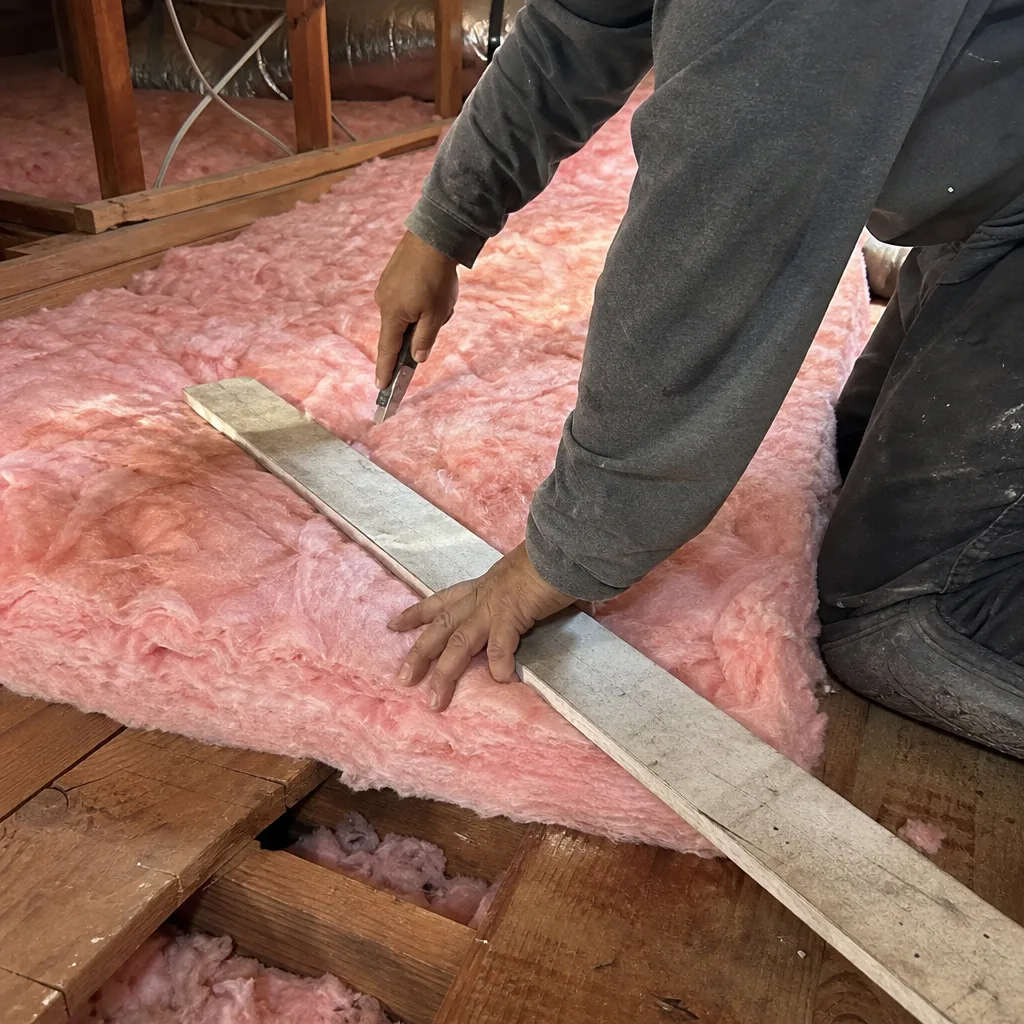
- Blown-in insulation in La Habra costs $1,200 to $3,800 for most residential attic projects, with the majority of single-story homes running $1,500 to $2,600 when air sealing is included.
- La Habra sits in California Climate Zone 9, where Title 24 requires a minimum of R-38 in attic assemblies for permitted work.
- Attic access, existing insulation condition, and air sealing scope are the three biggest price variables – not material choice.
- Air sealing comes before insulation on every Envelope Insulation Co. job. Blowing insulation over unsealed penetrations reduces the thermal benefit you paid for.
- Before-and-after blower-door readings are included on every applicable job – you receive a documented CFM50 number, not just a claim that the work was done well.
- SoCalGas and SCE rebate programs may return $200 to $400 on qualifying La Habra attic projects – check current program terms before scheduling.
- A written price, written scope, and written warranty are provided before any work starts – Haven Standard Clause 1, every time.
- The 365-Day Done Right Promise applies to all completed work. If it’s not done right, Envelope Insulation Co. makes it right.
Get a Written Estimate for Your La Habra Home
Wes Okafor and the Envelope Insulation Co. crew have documented the before-and-after performance on more than 9,000 homes since 2016, every one with a written price before the first tool was lifted. If you want to know exactly what Blown-In Insulation services will cost for your specific La Habra home – not a range pulled from a national average, but a flat written number tied to a written scope – call (562) 267-3291. A live person answers, any time. The estimate is free, the price is written, and the job does not start until you have both in hand.
Written by Wes Okafor, Owner at Envelope Insulation Co., serving La Habra since 2016.
Pricing reflects the La Habra market as of 2026. Topside Attic Insulation La Habra offers free estimates – call (562) 267-3291.
What Our Customers Say
"Two other companies quoted to blow more insulation on top of what was there. These were the only ones who said the existing material had to come out first, and explained why."
- Clifford E."The winter gas bill dropped by about a third. They had estimated a quarter, so they under-promised."
- Genevieve R."Fixed price, clean work, and they hauled the old material away as agreed."
- Todd M.