
Johns Manville Attic Insulation: The La Habra Owner’s Guide
We stock and install Johns Manville fiberglass batts, blown-in formaldehyde-free fiberglass, and mineral wool attic insulation in La Habra, with most residential attic jobs running between $2,400 and $5,800 depending on square footage and whether air sealing is needed first. Same-day installation is available for standard R-30 through R-49 batts when we have your measurements; blown-in jobs typically schedule within 48 hours. Most La Habra homeowners discover their Johns Manville insulation has failed when they notice the second-story bedrooms won’t cool below 78 degrees in August, or when they find batts compressed to half their labeled thickness by decades of storage boxes and foot traffic in the attic.
Which Johns Manville Models This Applies To
Johns Manville produces several attic-specific product lines, and matching the right one matters for both thermal performance and what your existing warranty may cover. We regularly work with three: Climate Pro blown-in fiberglass (the loose-fill product labeled with pink-and-white bags, typically blown to R-38 or R-49 in La Habra attics), Spider custom-fit fiberglass batts (the friction-fit batts with the high-recycled-content binder, common in 1960s-1990s ranch homes near La Habra Heights), and Mineral Wool batts (the denser, fire-resistant product used where clearance to heat-producing fixtures is tight).
To identify what you have, check the paper facing on any exposed batt - Johns Manville prints the product name, R-value, and lot date in the corner. For blown-in, we measure settled depth at four quadrants and compare against the labeled bag weight; a bag rated for 65 square feet at R-38 that covers 90 square feet means someone under-blowed it, or the insulation has settled beyond normal compression. Topside Attic Insulation La Habra is an independent service provider, not affiliated with Johns Manville, though we source their materials through authorized distribution and can match OEM specifications or recommend equivalent Knauf or Owens Corning products where supply or price favors a switch.
The compatibility gotcha in this market: older La Habra homes with original Johns Manville batts often have R-19 or R-22 installed at a time when that met code. Adding new insulation over old without checking the facing direction traps moisture - kraft paper facing down toward the ceiling is correct; facing up creates a vapor sandwich we see fail regularly in the humid weeks before Santa Ana season.
Signs Your Johns Manville Attic Insulation Is Failing
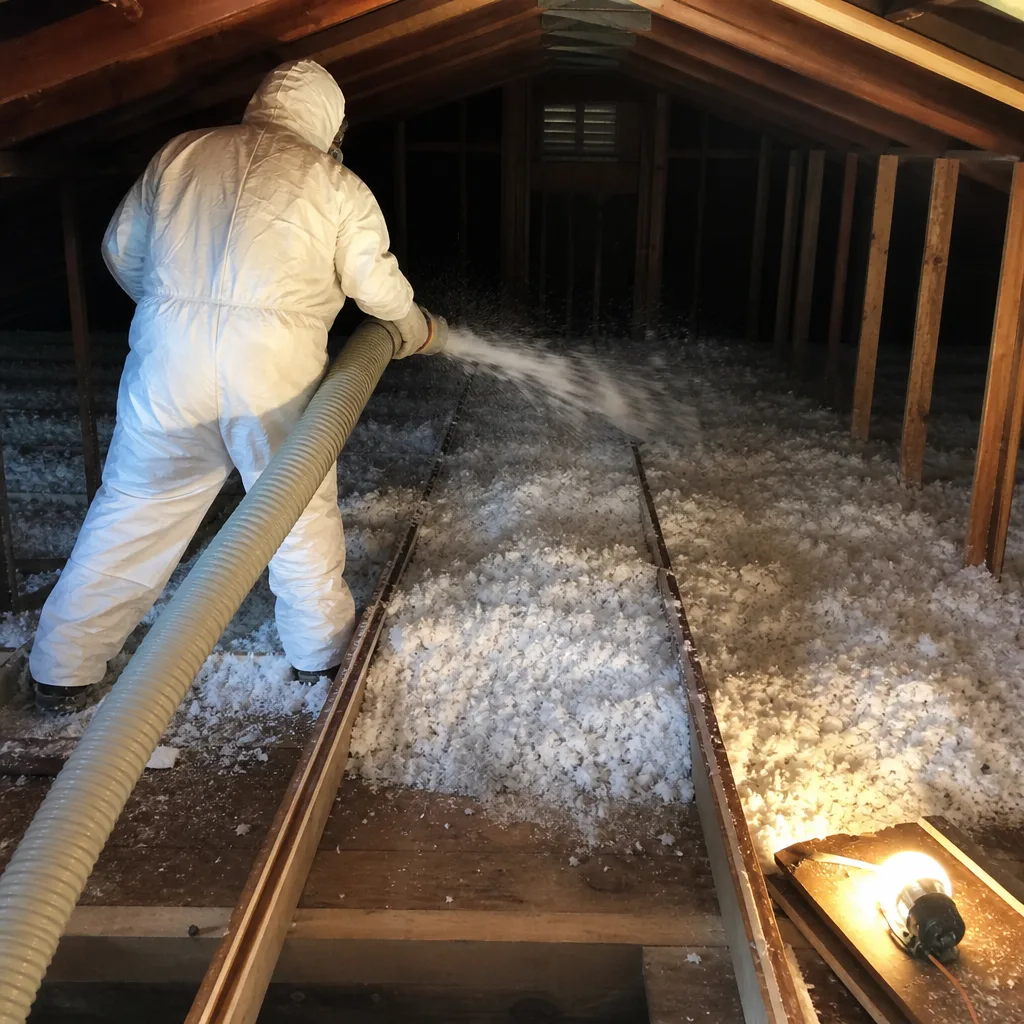
- Uneven temperatures room-to-room. The north-facing bedroom runs five degrees colder than the south-facing one in January. This usually means batts have shifted off the top plates or blown-in has settled unevenly, leaving thermal bridges where ceiling joists conduct heat straight through.
- Insulation visibly compressed or displaced. You climb up and find pink batts squashed to two inches where they should be six, or blown-in fiberglass with visible floor joists poking through. Compression destroys R-value - a six-inch batt crushed to three inches performs closer to R-10 than its labeled R-19.
- Dust streaking around ceiling outlets and can lights. Dark lines on the ceiling paint mean conditioned air is escaping through gaps in the drywall, carrying dust that filters through the insulation and stains the finish. The insulation isn’t failing; the air leaks are rendering it irrelevant.
- Ice damming or premature shingle wear. Heat escaping through thin or bypassed insulation melts roof snow unevenly, refreezing at the eaves. In La Habra’s climate this shows up less as ice and more as curled shingles on the north slope and accelerated granule loss where the roof deck runs hot.
- Energy bills climbing year-over-year with no rate change. Your usage pattern hasn’t shifted but the kilowatt hours keep rising. Insulation doesn’t wear out chemically, but it does get moved, wet, or covered - and once disturbed, the thermal boundary you paid for is gone.
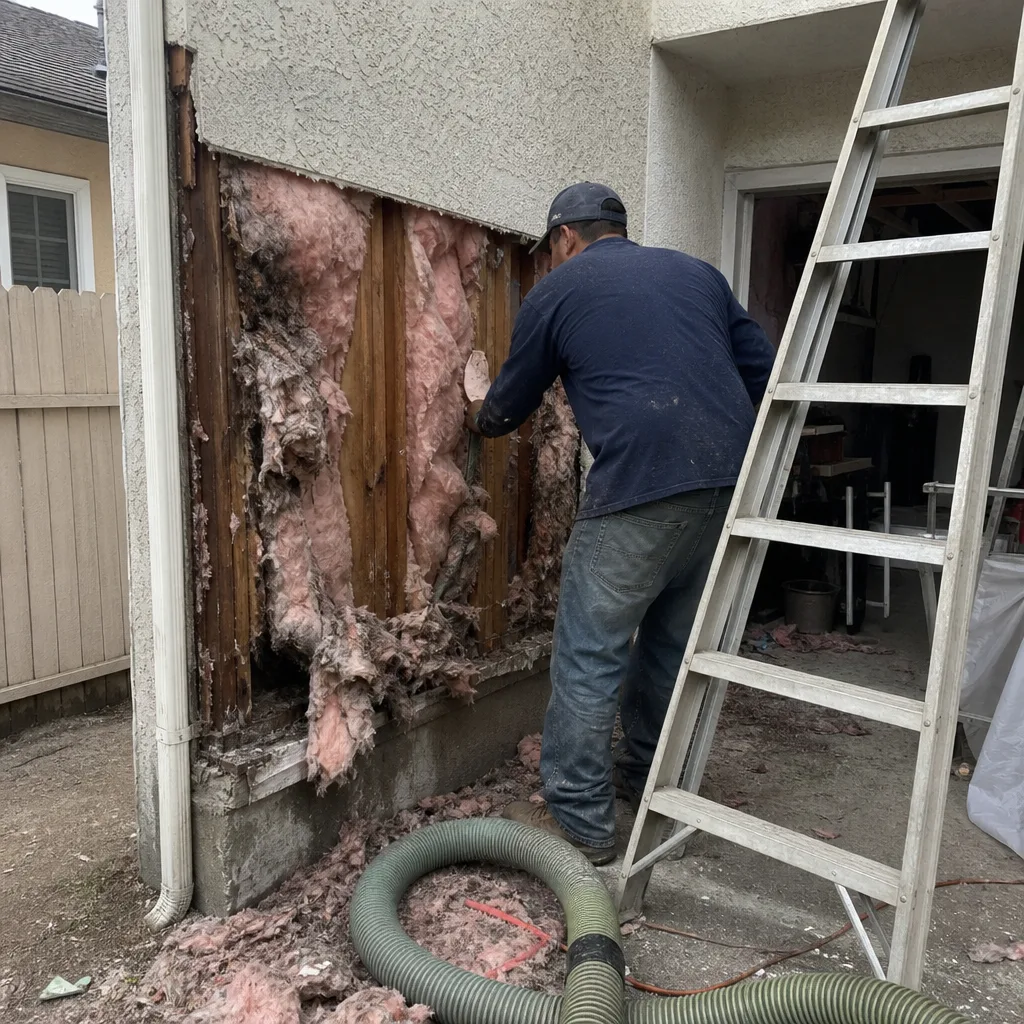 Before
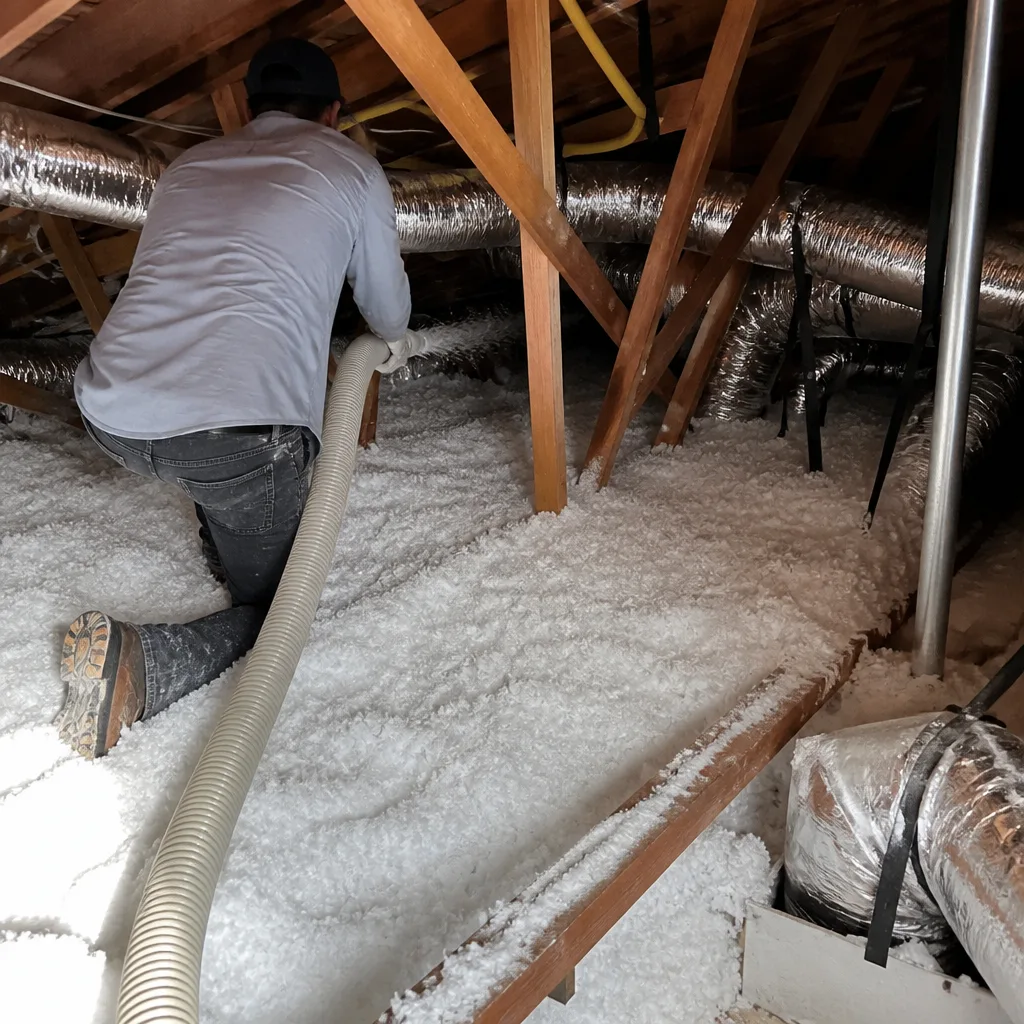 After
AfterReplacement Cost & What’s Included
Most Johns Manville attic insulation replacements in La Habra run $2,400 to $5,800 for a complete removal and reinstall in a 1,200-2,200 square foot home. The lower end covers adding blown-in fiberglass over existing material in good condition, with air sealing of top plates and penetrations. The upper end includes full removal of contaminated or compressed old insulation, rodent-damaged material disposal, deck sealing, and new R-49 blown-in or batts to current Title 24 standards.
What drives the range: attic square footage, access difficulty (hatch size, roof pitch, whether we can get a hose through a gable vent), and the condition of what we’re covering or removing. We don’t blow new insulation over rodent-soiled material, and we don’t add R-value over an unsealed floor - the air sealing is non-negotiable and priced in from the first written scope.
Every job closes with a Documented Photo Record, settled-depth measurements at four quadrants, and on air-sealing jobs, before-and-after blower-door numbers. The 365-Day Done Right Promise applies to all completed work. We source Johns Manville, Owens Corning, Knauf, Rockwool, CertainTeed, and others - no proprietary lock-in means we specify what’s right for your assembly, not our inventory.
DIY or Call Us?
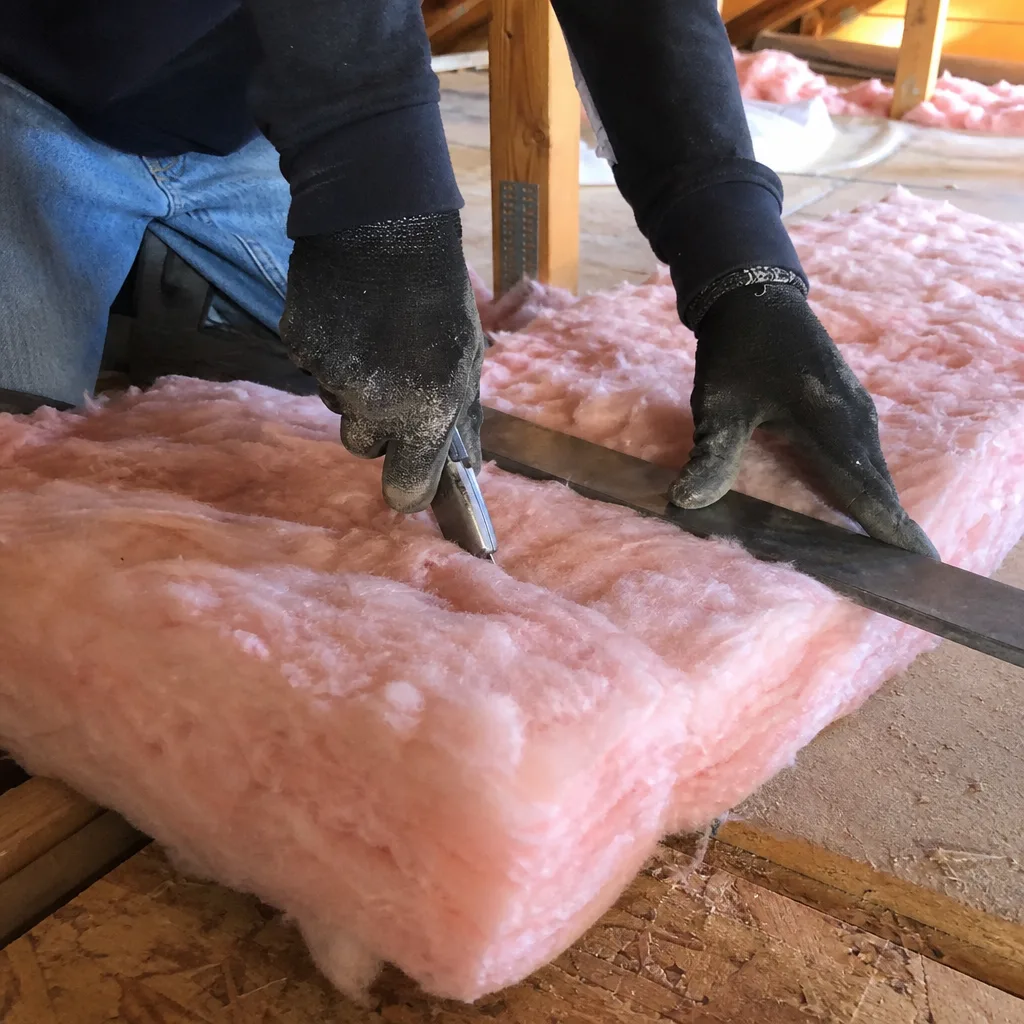
What you can safely check yourself: measure your attic square footage, note the existing insulation type and depth, and photograph any labels you find. Check your PG&E bills for year-over-year usage trends. These three pieces of information are what we need to give you a written price before anyone drives out.
Where DIY goes wrong: Johns Manville blown-in fiberglass requires a blowing machine calibrated to the product’s specified density - too loose and it settles within a season, too dense and you compress the R-value out of it. More critically, working in an attic means walking on ceiling joists (not drywall, which won’t hold you), identifying energized wiring, and knowing which penetrations are safe to foam and which need fire-rated caulk. We’ve replaced DIY jobs where the homeowner sealed their bathroom exhaust into the attic, creating a mold condition that cost four times the original insulation price to remediate. For removal of old material, respiratory protection rated for fiberglass and potential rodent-borne pathogens is non-negotiable.
Seal the bypasses first. The insulation has nowhere useful to go until the air does. Call (562) 267-3291 and we’ll walk through what you’re seeing, or text us photos - a live person answers 24/7, and we’ll have a written price to you before we schedule.
FAQs
Formaldehyde-free fiberglass batts and blown-in products are rated for the life of the building when kept dry and undisturbed, but in practice we see performance degradation after 15-25 years due to settling, compression from storage or maintenance traffic, and the cumulative effect of unsealed bypasses that weren’t addressed at original installation. La Habra’s combination of summer attic temperatures exceeding 140°F and winter humidity spikes from marine layer intrusion accelerates binder breakdown in older products. Call (562) 267-3291 for a free assessment of your specific installation - estimates are free, and we include settled-depth measurements even if you don’t hire us.
Localized damage - a section compressed by a storage box, a few batts displaced by a prior contractor - can be patched with matching material if the surrounding insulation is clean and the vapor barrier orientation is correct. Widespread settling below labeled depth, rodent contamination, or moisture staining requires full removal; adding new over damaged old traps problems and voids most manufacturer warranties. We provide a free second opinion on any written estimate that recommends one approach over the other.
A standard blown-in installation with air sealing runs one day for a crew of two; full removal, deck cleaning, and reinstall takes two days. We schedule arrival windows, text when the technician is en route, and leave you with the written scope, photo documentation, and blower-door results before we pack up. Most La Habra jobs on ranch-style homes near the Heights border finish in a single day because the attic access and open floor plan simplify hose routing.
We stock Climate Pro blown-in fiberglass and standard batt sizes on our trucks; specialty products like high-density Mineral Wool for tight clearances order in 24-48 hours from regional distribution. We don’t start work until materials are on-site and you’ve approved the written price - Haven Standard Clause 1, no exceptions. If you need a specific Johns Manville product matched for warranty continuity, text us the product name from your existing label and we’ll confirm availability before we schedule.
Written by Wes Okafor, Owner, Topside Attic Insulation La Habra at Topside Attic Insulation La Habra, serving La Habra and nearby areas.