
Icynene Crawl Space Encapsulation: The La Habra Owner’s Guide
Most Icynene crawl space encapsulation jobs in La Habra run between $2,800 and $5,400 installed, depending on whether we’re covering 800 square feet or 1,500-plus, and whether the existing vapor barrier can stay or comes out in pieces. We stock Icynene-compatible polyethylene barriers, seam tape, and mechanical fastening systems on every truck, and we can usually inspect and start the same day you call. Homeowners typically figure out something’s wrong when their floors feel cold despite the heater running, or they notice a sharp musty smell that peaks after rain - both signs that the encapsulation layer has torn, detached, or was never continuous to begin with.
Which Icynene Models This Applies To
Icynene doesn’t sell crawl space encapsulation as a standalone branded kit the way they market their open-cell and closed-cell spray foam systems. What we encounter in La Habra homes - especially the 1950s-1970s ranch and split-level stock near Imperial Highway and Idaho Street - is Icynene spray foam applied to rim joists and sill plates, paired with a separate vapor barrier on the crawl floor. The compatibility question isn’t “which Icynene model” but whether your existing foam is Icynene’s LD-C-50 (open-cell, softer, more permeable) or MD-R-200 (closed-cell, rigid, vapor-retarding), because that determines what we can attach to and what we can’t.
Here’s how to tell: open-cell Icynene compresses when you press it with a thumb and has a spongy, bread-like texture; closed-cell feels like hard styrofoam and barely gives. If your crawl has open-cell on the joists, we can’t staple a new vapor barrier directly to it - the staples pull out, and the barrier sags within a season. We use mechanical fastening to the mud sill or block wall instead. Closed-cell accepts mechanical fasteners or compatible adhesive tapes without issue. We also stock 6-mil and 10-mil reinforced polyethylene from multiple manufacturers, not Icynene-branded barrier material, because Icynene doesn’t manufacture crawl vapor barriers. Our seam tape is butyl-based, 4-inch wide, rated for damp substrates, which matters because La Habra’s clay-heavy soil keeps crawl floors chronically damp six months a year.
One compatibility gotcha we see repeatedly: homeowners who had Icynene foam installed in the 2012-2018 period, when many Orange County crews were pairing it with thin 3-mil or 4-mil non-reinforced poly that tears on any rock or rodent activity. We upgrade those to 10-mil woven-reinforced or 12-mil string-reinforced barrier, depending on crawl access height and debris level.
Signs Your Icynene Crawl Space Encapsulation Is Failing
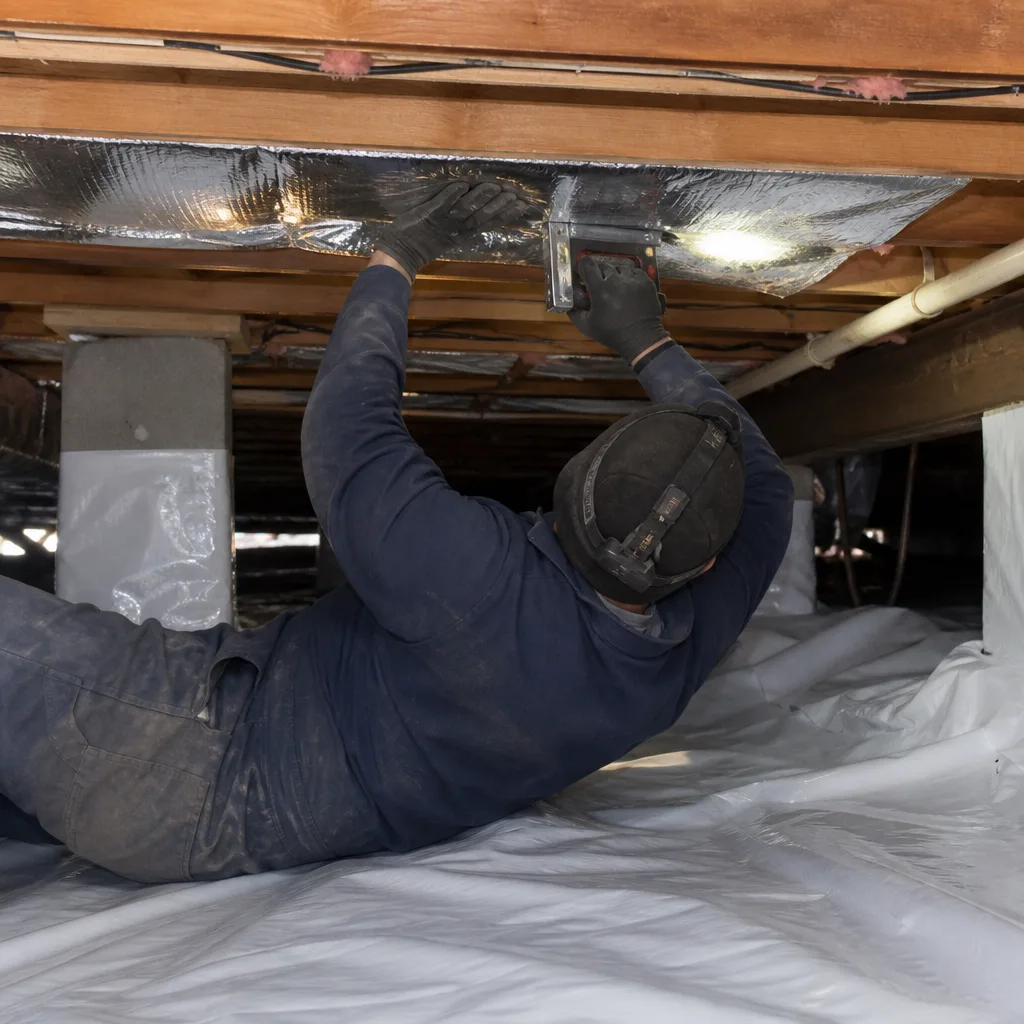
- Cold floors in winter, especially over the crawl. The thermal boundary has separated from the floor joists, or the vapor barrier has pulled away from the walls, letting outside air wash across the soil and cool the subfloor from below. In La Habra’s older ranch homes near La Habra Heights, we measure subfloor temperatures 8-12°F below the conditioned space when this happens.
- Musty odor that air fresheners can’t touch. This means moisture is evaporating from exposed soil into the crawl air, then migrating through gaps in the encapsulation layer. The smell spikes after rain because La Habra’s clay soil drains slowly; water tables rise and evaporation rates jump even in “dry” crawls.
- Visible tears, sagging, or pooling water on the barrier surface. Reinforced 10-mil poly should lie flat and drain toward any installed sump or perimeter channel. Sagging means the original install used too few fasteners (we space ours every 18-24 inches on walls and 4-foot grid on floors) or the barrier has degraded from UV exposure if the crawl has vent screens that let in daylight.
- Increased humidity readings upstairs. We bring a hygrometer on every crawl inspection. If the crawl relative humidity is above 65% and the encapsulation is intact, the failure is usually at the rim joist - Icynene foam has pulled away, or the original crew missed a gap. That gap becomes a moisture pump straight into the floor system.
- Rodent trails or insect activity on the barrier surface. A proper encapsulation includes no organic food source and no liquid water. If you’re seeing activity, there’s a breach somewhere - often where the barrier meets a pier post or where a plumbing penetration wasn’t sealed with compatible mastic.
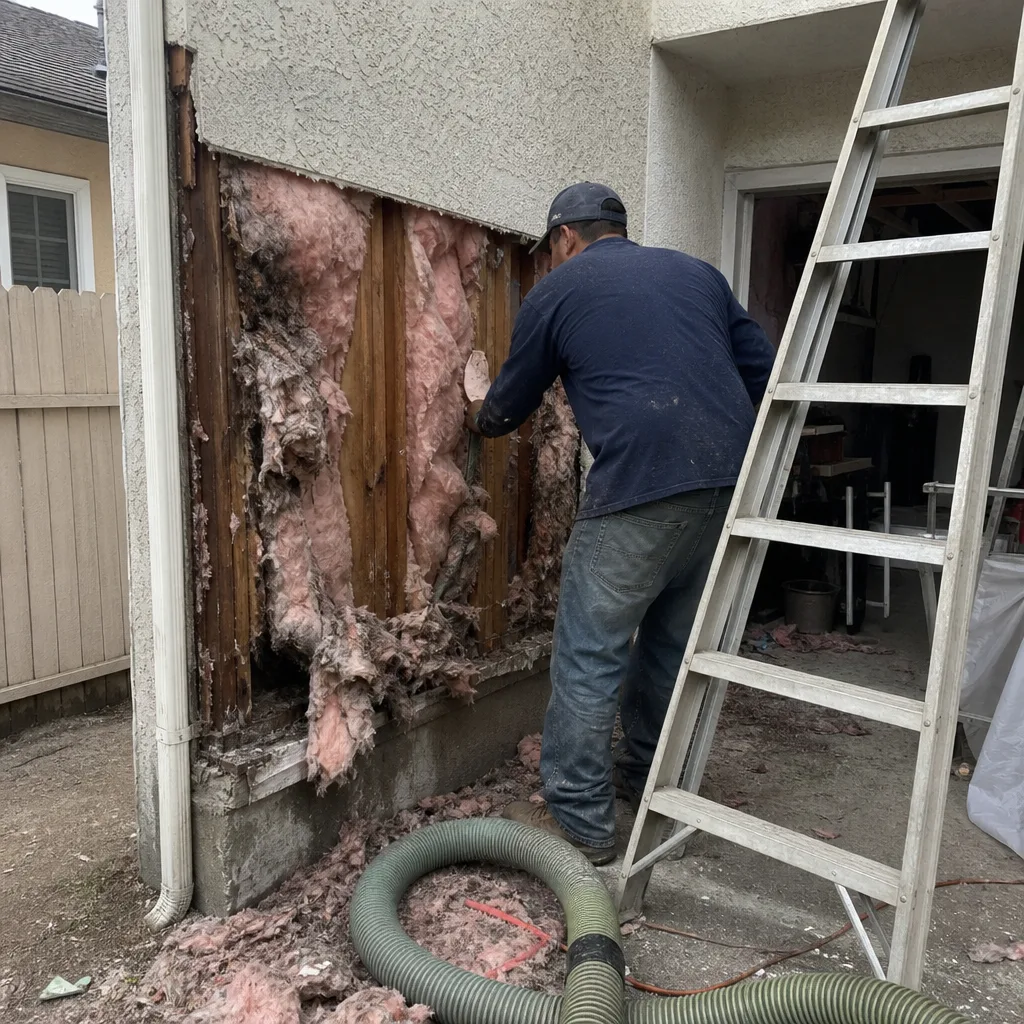 Before
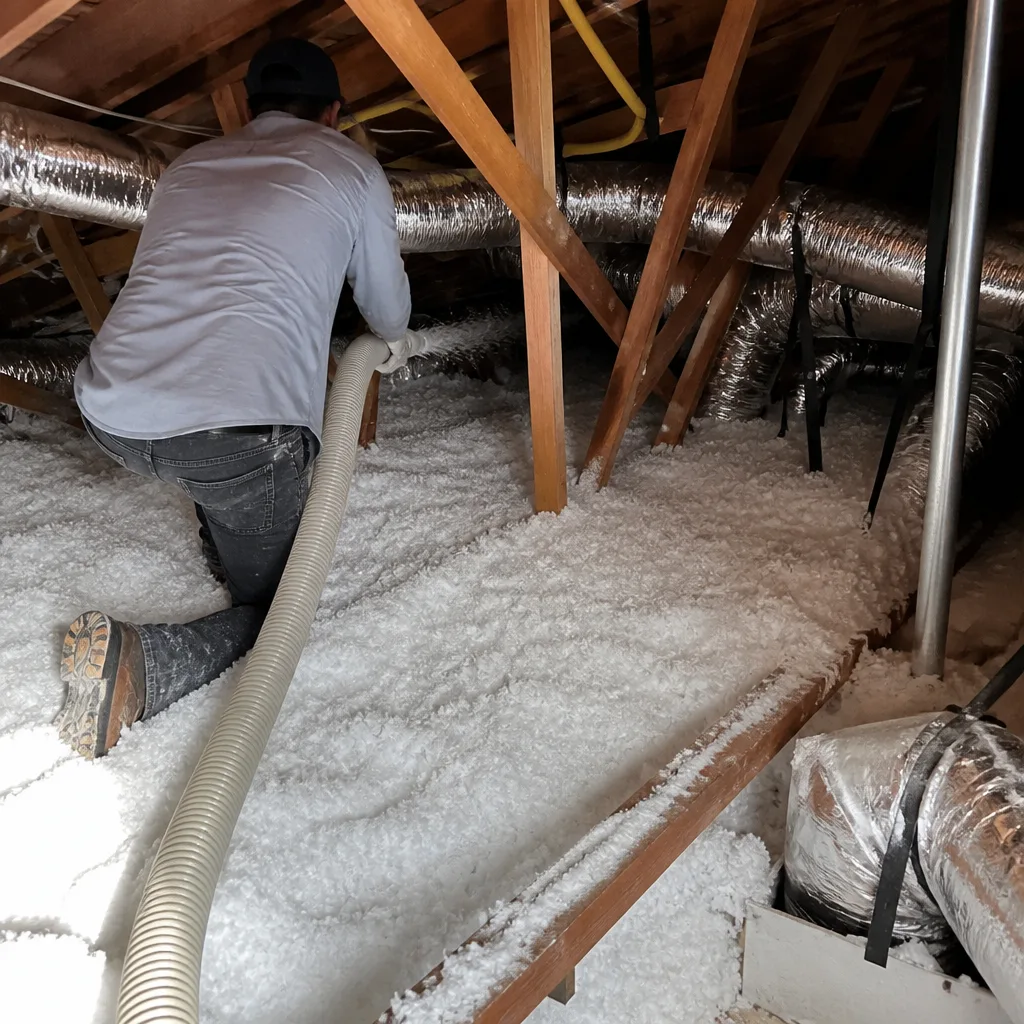 After
AfterReplacement Cost & What’s Included
| Scope | Typical Range in La Habra | What Drives the Price |
|---|---|---|
| Re-barrier only (existing foam intact, no removal) | $2,800 - $3,900 | Square footage, access height, number of piers/posts to cut around |
| Re-barrier plus Icynene foam touch-up at rim joists | $3,800 - $5,000 | Linear feet of rim joist, open-cell vs. closed-cell, whether old foam needs scraping |
| Full encapsulation with dehumidifier prep (no electrical) | $4,200 - $5,400 | Conditioned vs. vented crawl design, sump pit needs, wall insulation additions |
The range exists because crawls in La Habra vary enormously. A 900-square-foot crawl with 3-foot clearance, four piers, and good access from a side door is a half-day job. A 1,400-square-foot crawl with 18-inch clearance, a center beam with six support posts, and a water heater to work around is a full day with two technicians. Every quote we write breaks out material, labor, and disposal separately - Haven Standard Clause 1 - so you see exactly what the poly costs versus the installation time. We also include the Documented Photo Record at no additional charge: before, during, and after shots of every wall transition, pier wrap, and seam overlap.
Our 365-Day Done Right Promise covers encapsulation work fully. If a seam lifts, a fastener pulls, or a rodent finds a gap we missed, we return and fix it. The written scope you sign before we start specifies fastener spacing, overlap dimensions (minimum 12 inches at seams, 6 inches at walls), and barrier mil rating - so there’s no dispute about what “done” looks like.
DIY or Call Us?
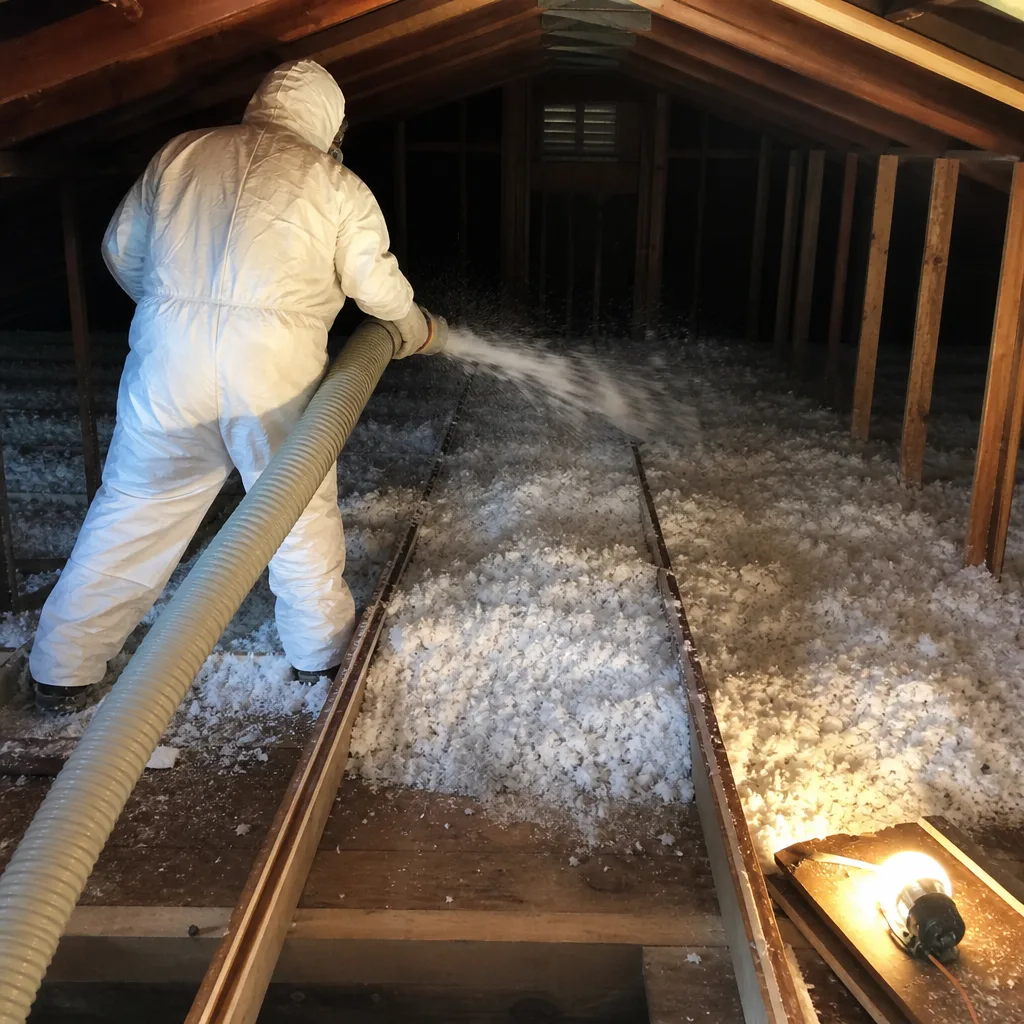
There’s a short list of things a homeowner can safely check without tools: verify that crawl vents are closed if you have a conditioned crawl design, look for obvious tears or standing water from the access hatch, and confirm that any dehumidifier is running and draining. Beyond that, the work gets problematic fast.
Crawl encapsulation in La Habra’s older stock means working around knob-and-tube remnants, gas lines with no drip legs, and sill plates compromised by decades of termite activity. We’ve found live electrical junctions sitting on dirt, unsupported by code for forty years, that a homeowner in coveralls would never spot until they rolled onto it. The 10-mil reinforced poly we use weighs roughly 75 pounds per 1,000 square feet - manageable in open air, unwieldy in a 24-inch crawl where you’re working on your back. And the butyl seam tape we specify requires clean, dry substrate and roller pressure to achieve its rated adhesion; hand-pressing in a damp crawl buys you six months before the seam opens.
We’re not affiliated with Icynene - we’re an independent service provider - so we have no brand mandate to sell you anything beyond what the building actually needs. If your Icynene foam is sound and only the barrier failed, we’ll tell you. If the foam has degraded too, we’ll show you the photos and the blower-door numbers that prove where the air is moving. Call (562) 267-3291 and we’ll get a technician out with a written price before any work starts.
FAQs
A properly installed 10-mil reinforced polyethylene barrier with butyl-sealed seams should last 15-20 years in La Habra, though we inspect them at year 10 in homes near the La Habra Heights border where runoff patterns shift. The limiting factor is usually mechanical damage from service trades (plumbers, HVAC techs) cutting the barrier and not sealing the repair, not material degradation. Call (562) 267-3291 for a free condition check - estimates are free.
Patching works for isolated tears under 6 inches if you use the same mil-rated material and seal all edges with compatible tape. We don’t recommend patching within 12 inches of a wall transition or pier post, because those are high-stress areas where the patch will fail within a year. If you have more than three patches or any sagging, full replacement is more cost-effective long-term. Call (562) 267-3291 and we’ll assess whether patch or replace makes sense for your specific crawl.
Most re-barrier jobs in La Habra finish in one day; jobs requiring Icynene foam removal and reapplication at rim joists take two days because the foam needs cure time before we can install the new barrier over it. We schedule start times so you’re not without heat or water access overnight. Call (562) 267-3291 to check same-week availability.
Yes - we carry 10-mil and 12-mil reinforced polyethylene, butyl seam tape, mechanical fasteners for block and wood sill applications, and compatible adhesive mastics for Icynene closed-cell surfaces on every service vehicle. For open-cell Icynene that can’t accept fasteners, we stock standoff brackets that anchor to the mud sill instead. We don’t stock Icynene spray foam resin on trucks - that’s a two-component system with short pot life - but we can source LD-C-50 or MD-R-200 for next-day rim joist work if your foam needs replacement. Call (562) 267-3291 to confirm material availability for your specific Icynene installation.
We also stock parts for Reflectix radiant barrier systems, though those are less common in crawl applications.
Seal the bypasses first. The insulation has nowhere useful to go until the air does.
Ready to get your crawl space dry and your floors warm? Call (562) 267-3291 to speak with a live person - we answer 24/7 - and we’ll schedule a same-day inspection with a written price before any work starts. Every job closes with a Documented Photo Record and, where applicable, before-and-after blower-door numbers that show exactly how much conditioned air your home stopped losing.
Written by Wes Okafor, Owner, Topside Attic Insulation La Habra at Topside Attic Insulation La Habra, serving La Habra and nearby areas.