
Demilec Radiant Barrier Installation: The La Habra Owner’s Guide
We stock and install Demilec-compatible radiant barrier systems for La Habra homes, with most complete attic installations running between $2,800 and $5,400 depending on roof deck square footage and whether the existing insulation needs to be cleared first. Same-day starts are available when we have your roof geometry and attic access confirmed by phone. Homeowners usually figure out something’s wrong when their second-floor bedrooms won’t cool below 78 degrees even after sunset, or when their July electric bill jumps $80-$140 year-over-year with no rate change from SCE.
Which Demilec Models This Applies To
Demilec’s radiant barrier line centers on the Heatlok HFO series and the Demilec APX spray-foam hybrid systems that incorporate a reflective foil component during application. The key identifier is the foil-facing stamp: Demilec products carry a “DML” prefix followed by a four-digit lot code, usually found on the foil’s clean side near the roll edge. If your attic was insulated between 2015 and 2022, you’re likely looking at either the HFO-2000 reflective assembly or the earlier APX-5000 with integrated barrier.
We don’t stock proprietary Demilec foil rolls; we source equivalent ASTM C1313-compliant reflective barrier from multiple suppliers, including Reflectix, and cut to fit your existing Demilec substrate. The critical compatibility point is emissivity rating: Demilec’s original spec calls for 0.03 or lower, and some aftermarket rolls test at 0.05, which is fine for general use but won’t match your original thermal performance. We verify the number with a handheld emissometer before any material goes on the truck. Topside Attic Insulation La Habra is an independent service provider, not affiliated with Demilec.
Signs Your Demilec Radiant Barrier Installation Is Failing
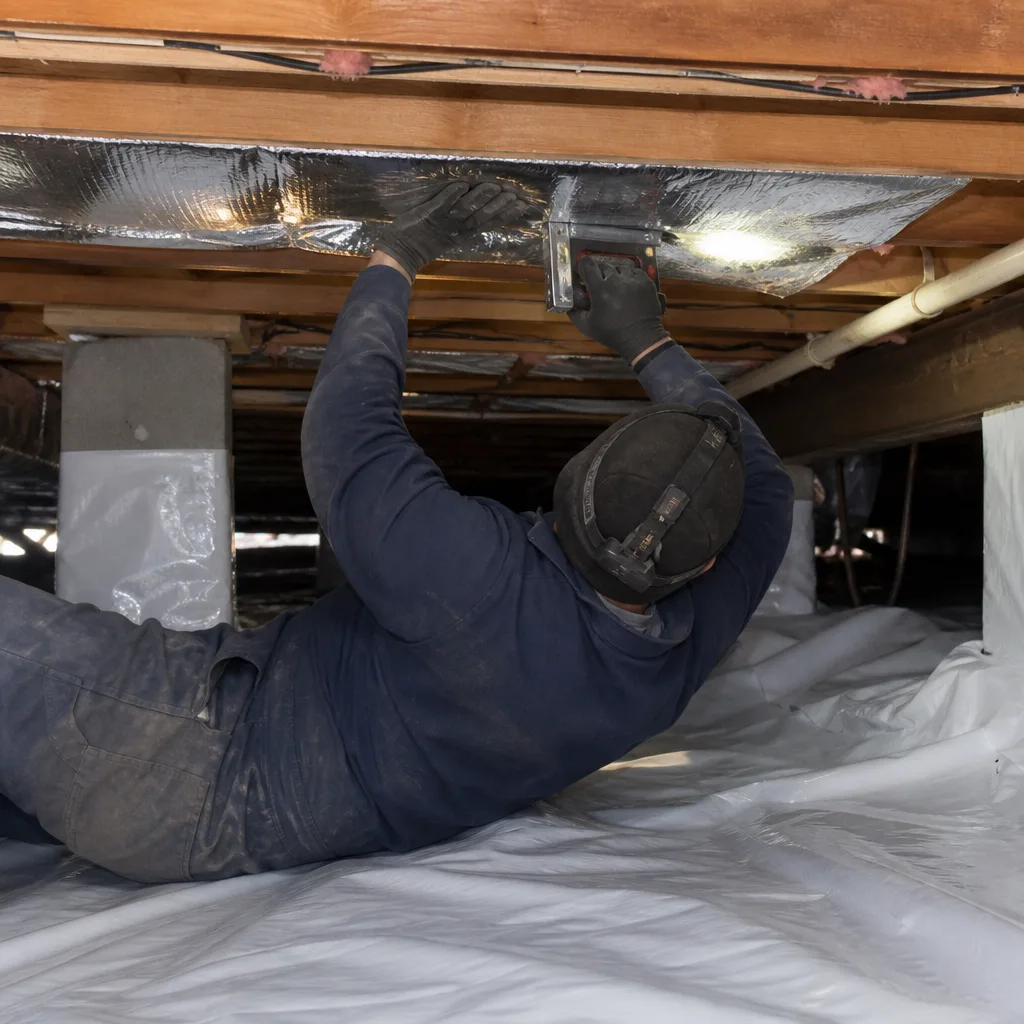
- Hot ceiling patches in late afternoon. The foil has detached from the roof deck in sections, usually at the staple line where La Habra’s summer heat cycling has degraded the adhesive. You’ll feel it walking barefoot on the second floor: warm stripes where the barrier used to sit, cool stripes where it’s still attached.
- Dust-coated foil that no longer reflects. Attic dust in La Habra settles heavy during Santa Ana wind events, and once the foil’s reflective surface is occluded, emissivity climbs from 0.03 toward 0.30. The barrier becomes a gray absorber instead of a reflector. We see this most in homes near the 57 freeway corridor where particulate load is higher.
- Sagging or torn sections near ridge vents. Demilec’s original staple pattern was 6 inches on center, but roof deck expansion in our inland heat pulls staples through OSB over time. Tears start at stress points and propagate; by the time you notice temperature issues, 20-40% of the barrier surface is compromised.
- Condensation on the foil’s underside in January. This means warm moist air is reaching the cold roof deck, which shouldn’t happen if your attic ventilation and air sealing are correct. The barrier itself isn’t the root cause, but the symptom often exposes that the original installation skipped top-plate sealing, a sequencing error we correct on every redo.
- Insulation compression directly below failed barrier zones. When radiant heat penetrates torn foil, it superheats the fiberglass or cellulose beneath, breaking down binder resins and causing settling. We measure settled depth at four quadrants on every job; if you’re 2+ inches below original spec, the barrier likely failed first and the insulation followed.
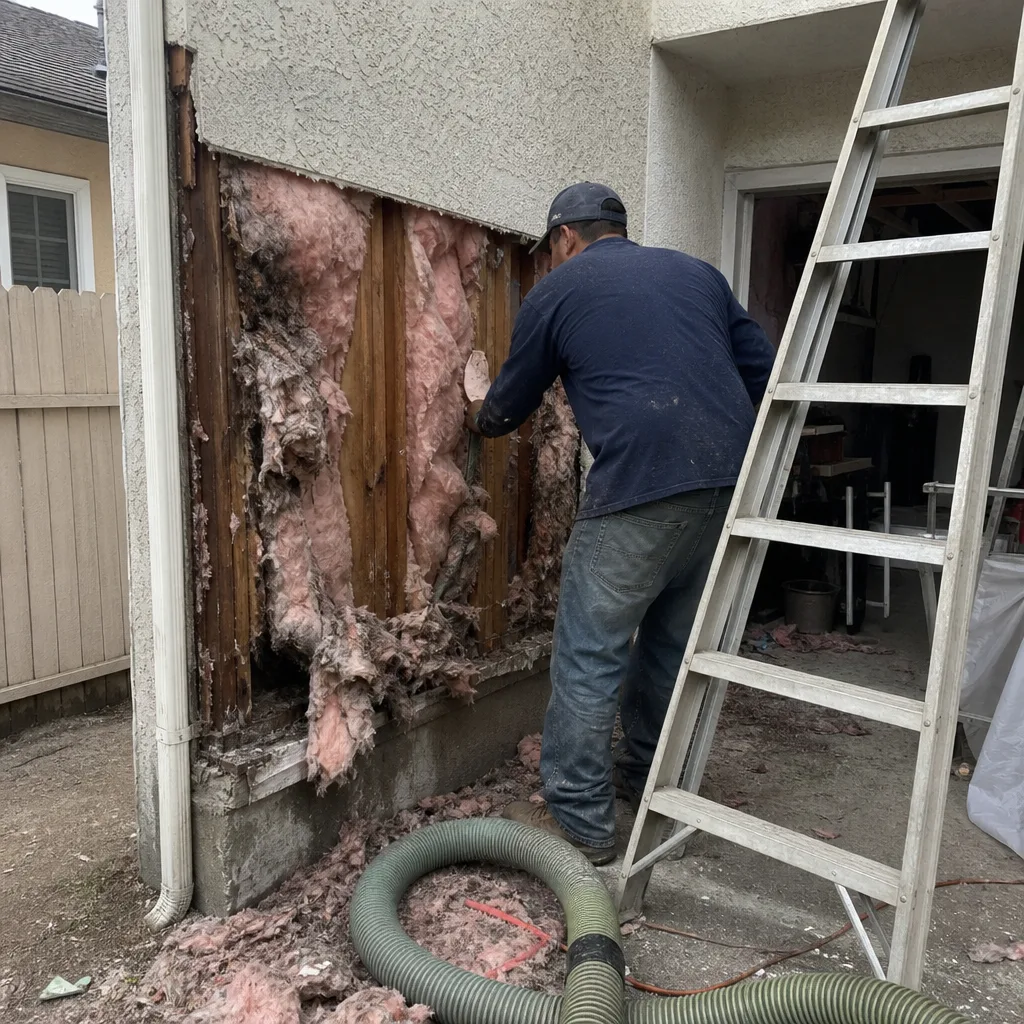 Before
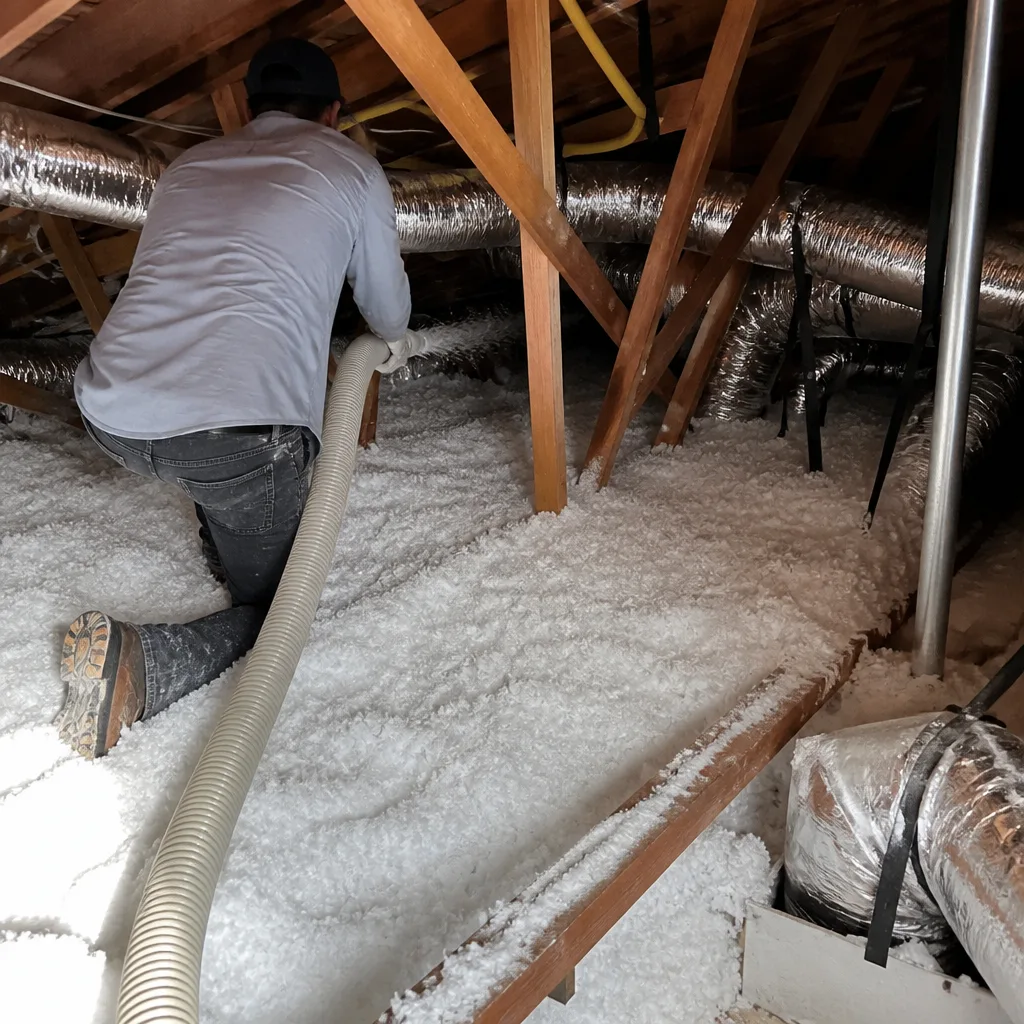 After
AfterReplacement Cost & What’s Included
| Component | La Habra Price Range |
|---|---|
| Reflective barrier material (per 1,000 sq ft roof deck) | $1,200 - $2,100 |
| Attic air sealing (top plates, penetrations, can lights) | $680 - $1,400 |
| Existing barrier removal and disposal | $340 - $620 |
| Installation labor with documented depth verification | $580 - $1,280 |
| Typical total installed | $2,800 - $5,400 |
The wide range reflects roof pitch (steeper = slower, more material waste), whether we’re working around stored items, and whether the original Demilec barrier was stapled to truss bottoms (easier) or glued to roof deck sheathing (requires full removal). Every job gets a Written Price Before Any Work Starts under Haven Standard Clause 1, and the final invoice matches the written scope exactly. We warranty the installation for 365 days; material defects carry the manufacturer’s standard coverage, which we handle directly if a claim arises.
DIY or Call Us?
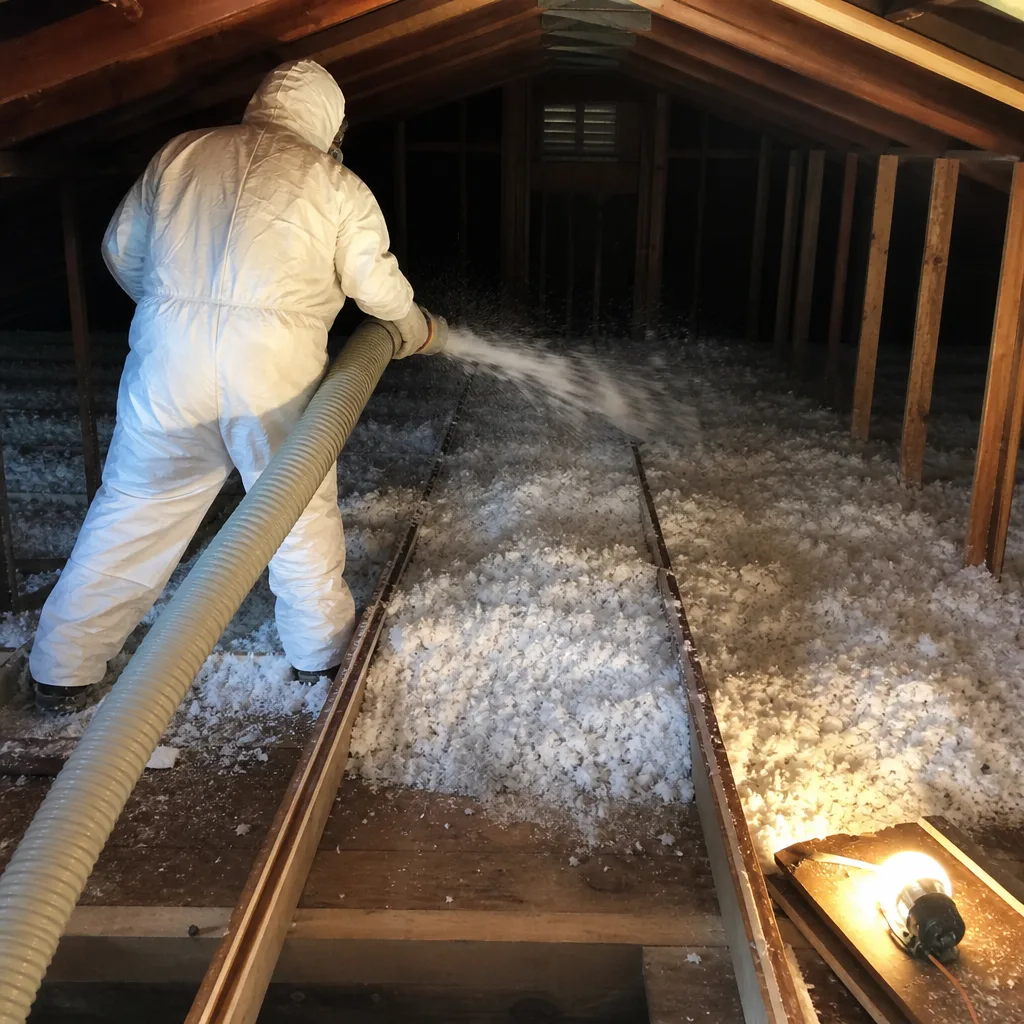
There’s no high-tension danger with radiant barrier replacement, but there are two honest pitfalls. First, walking a La Habra attic in August without proper foot placement on truss chords risks a ceiling fall-through, especially in ranch-style homes built 1955-1975 with 24-inch on-center framing and half-inch drywall. Second, most homeowners who DIY this skip the air sealing, staple new foil over dusty old foil, or use the wrong staple gun and tear the material during install.
What you can safely check: go up with a flashlight and photograph any torn, sagging, or dust-blackened sections. Note the “DML” code if you find it. Then call us at (562) 267-3291 with those photos. We’ll tell you whether you’re looking at spot repair or full replacement, and we’ll give you a written price before we schedule. Seal the bypasses first. The insulation has nowhere useful to go until the air does.
FAQs
In La Habra’s inland climate, a properly installed radiant barrier lasts 15-25 years, but dust accumulation and summer heat cycling at 140°F+ attic peaks typically degrade performance after 10-12 years even if the foil is physically intact. Annual attic inspections aren’t common, so most homeowners discover failure through utility bills, not visual checks. Call (562) 267-3291 and we’ll assess whether yours is still doing measurable work.
Spot repair works for isolated tears under 2 square feet if the surrounding foil is still firmly attached and clean, but partial fixes almost always leave thermal bridges at the seams. For homes with more than 15% compromised surface area, full replacement with new air sealing delivers measurable results that patchwork doesn’t. We provide blower-door numbers either way so you can see the difference.
Most La Habra homes in the 1,200-2,400 square foot range take one full day for removal, air sealing, and new barrier installation; larger homes or those with boarded storage decks may extend to a second day. We don’t rush the sequencing: air sealing happens first, then we verify with a smoke pencil or blower-door test, then the foil goes up. You’ll get a text when the crew is en route and a Documented Photo Record before they leave.
We stock ASTM C1313-compliant reflective barrier equivalent to Demilec’s original spec, cut to common La Habra roof pitches, with emissivity verified at 0.03 or below. For Demilec-specific OEM foil, we special-order through our supplier network with a 3-5 business day lead time. Most homeowners choose the equivalent material; performance is identical and the warranty coverage is the same. Call (562) 267-3291 to confirm what’s on the truck this week.
Written by Wes Okafor, Owner, Topside Attic Insulation La Habra at Topside Attic Insulation La Habra, serving La Habra and nearby areas.