
Crawl Space Vapor Barrier in La Habra, CA
A crawl space vapor barrier is a polyethylene or reinforced plastic sheeting – typically 10 to 20 mils thick – installed across the soil floor and up the foundation walls of your crawl space to stop ground moisture from migrating into the conditioned part of your home. In La Habra, where the soil stays damp through much of the rainy season and summer humidity pushes in from the coast, that moisture has a direct path upward into your subfloor and floor joists if there’s nothing blocking it. Most Crawl Space Encapsulation & Vapor Barrier services in La Habra run between $1,200 and $3,800 depending on crawl space square footage, existing moisture levels, and whether the ground needs grading before liner installation. Most installs are completed in a single day.
At Topside Attic Insulation La Habra, we’ve been installing vapor barriers under the Haven Standard since 2016 – which means a written price before anyone enters your crawl space, a documented photo record when we leave, and Wes Okafor’s name on the work. If you want to understand the full scope of what we do below your floor, the parent page for Crawl Space Encapsulation & Vapor Barrier in La Habra walks through every layer of the system. For this specific page, we’re focused on the barrier itself: what it does, who needs it, what it costs, and what the process looks like start to finish. You can reach us directly at (562) 267-3291 – a live person answers, no voicemail loop.
When You Need a Crawl Space Vapor Barrier
Some symptoms are obvious. Others take a year or two of quiet damage before anyone notices. Here’s what we see regularly in La Habra homes – especially in the older neighborhoods around West La Habra and the hillside properties closer to the Whittier border:
- Musty odors rising through the floor. If the first thing you notice when you walk in from the garage is a damp, earthy smell that gets worse after rain, ground moisture is already moving upward. A vapor barrier stops the source – not just the symptom.
- Wood floors that cup, buckle, or squeak seasonally. La Habra’s soil is clay-heavy in sections, which holds water longer after winter rains. That retained moisture wicks into subfloor sheathing and joists, causing the wood to swell and shift. We’ve opened crawl spaces in this area where the bottom face of the subfloor was visibly discolored from repeated wet-dry cycling.
- HVAC equipment or ducts running through the crawl space. Exposed ground moisture accelerates corrosion on sheet-metal ductwork and degrades duct insulation faster than it should. If your ducts are down there, a vapor barrier protects them too.
- Insulation batts hanging loose or visibly wet. Fiberglass batt insulation between floor joists loses most of its R-value when it absorbs moisture. If you can see the kraft paper sagging or the batts pulling away from the joist bays, moisture is already the reason.
- Allergy symptoms or poor indoor air quality with no clear attic cause. Mold spores and mildew generated in an unsealed crawl space move upward through penetrations, joints, and gaps – especially in homes built before 1990, which describes a large portion of La Habra’s housing stock. The crawl space is the starting point for a stack-effect air quality problem.
- Visible standing water or wet soil after rain. This is the clearest indicator. If you can shine a flashlight into the crawl space access hatch and see dark, saturated soil or puddled water, you need a vapor barrier – and possibly a drainage solution underneath it first.
Our Crawl Space Vapor Barrier Process
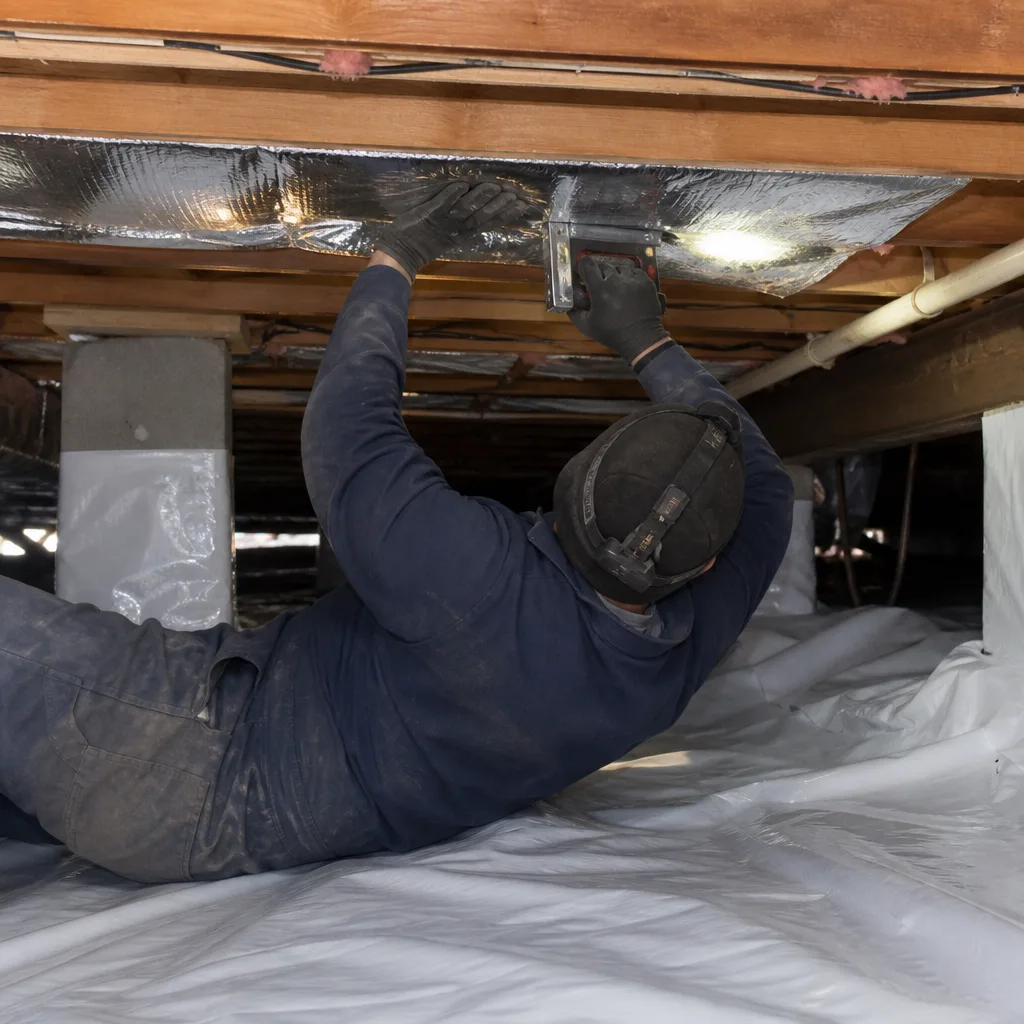
The process is methodical. We don’t install the liner until we understand what’s underneath it. Skipping the inspection step is how vapor barriers trap existing moisture instead of blocking new moisture, which creates the exact problem the customer was trying to solve.
- Written scope and pre-work inspection. Before any materials come off the truck, we deliver a written price and scope under Haven Standard Clause 1 – flat price, written scope, written warranty before anyone lifts a tool. Then we inspect the crawl space fully: measuring the square footage, checking for standing water, identifying existing insulation condition, noting any pest evidence, and photographing everything. That photo record is yours when we’re done.
- Ground preparation and drainage assessment. If the soil is graded toward the foundation, or if there are low points where water pools, we address those before the liner goes down. A vapor barrier over a poorly drained floor will eventually develop pockets of trapped water underneath it. In La Habra’s clay-soil areas, this step matters more than it does in sandier coastal ground.
- Debris and obstruction removal. Old deteriorated vapor barrier (often thin 6-mil poly sheeting installed decades ago), wood scraps, insulation that has fallen from the joist bays, and any pest waste are removed and bagged. Running a new liner over contaminated material is a shortcut we don’t take.
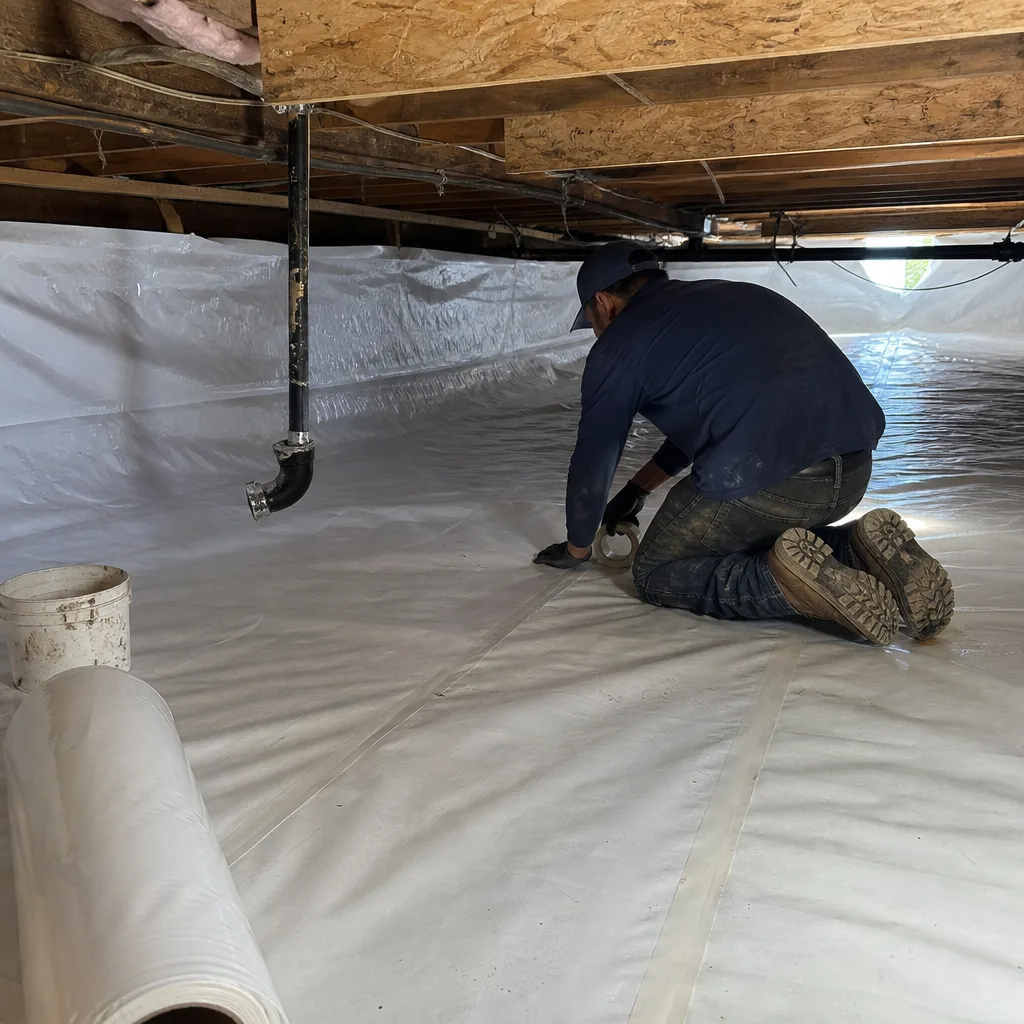
- Liner installation – ground coverage and wall termination. We install a minimum 12-mil reinforced polyethylene liner across the entire crawl space floor, overlapping seams by at least 12 inches and sealing them with manufacturer-specified tape. The liner runs up the foundation walls and terminates at or above the sill plate, then is secured with concrete fasteners and a termination bar. This wall-to-wall, floor-to-wall seal is what separates a proper vapor barrier from a tarp thrown on dirt. We source liner materials from proven suppliers – Owens Corning products are part of our regular material selection, and we’ll specify exactly what goes in your crawl space in writing before the job starts.
- Penetration sealing around piers, columns, and pipes. Every pier block, support post, plumbing penetration, and HVAC boot that comes up through the ground gets cut around and taped. Unsealed penetrations are where ground moisture bypasses the liner – leaving them open defeats the purpose of installing it.
- Final documentation and walkthrough. We photograph the completed installation – liner coverage, seam taping, wall termination, penetration sealing – and deliver that photo record before we leave. You get a documented baseline of what was installed, where, and how, so there’s no ambiguity if a warranty question ever comes up. The 365-Day Done Right Promise applies: if something isn’t right within a year of completion, we come back and make it right.
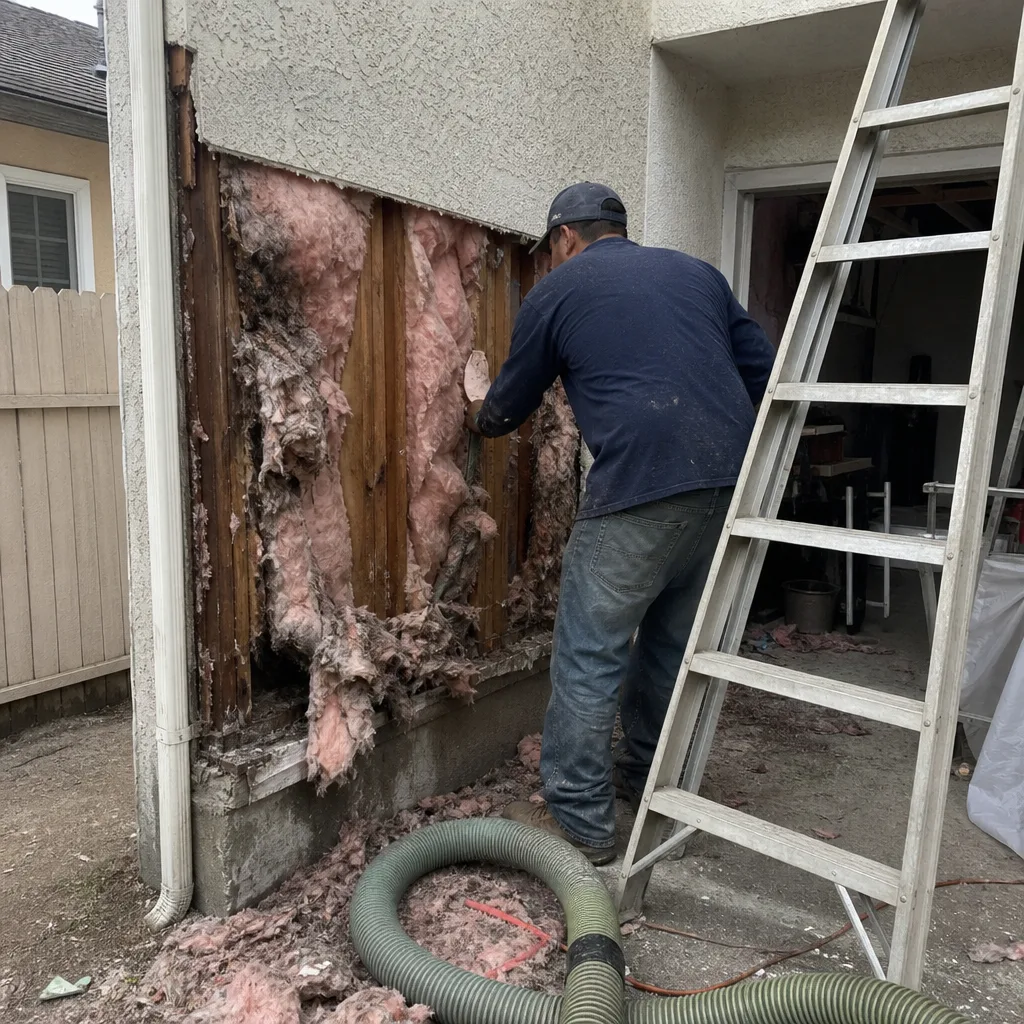 Before
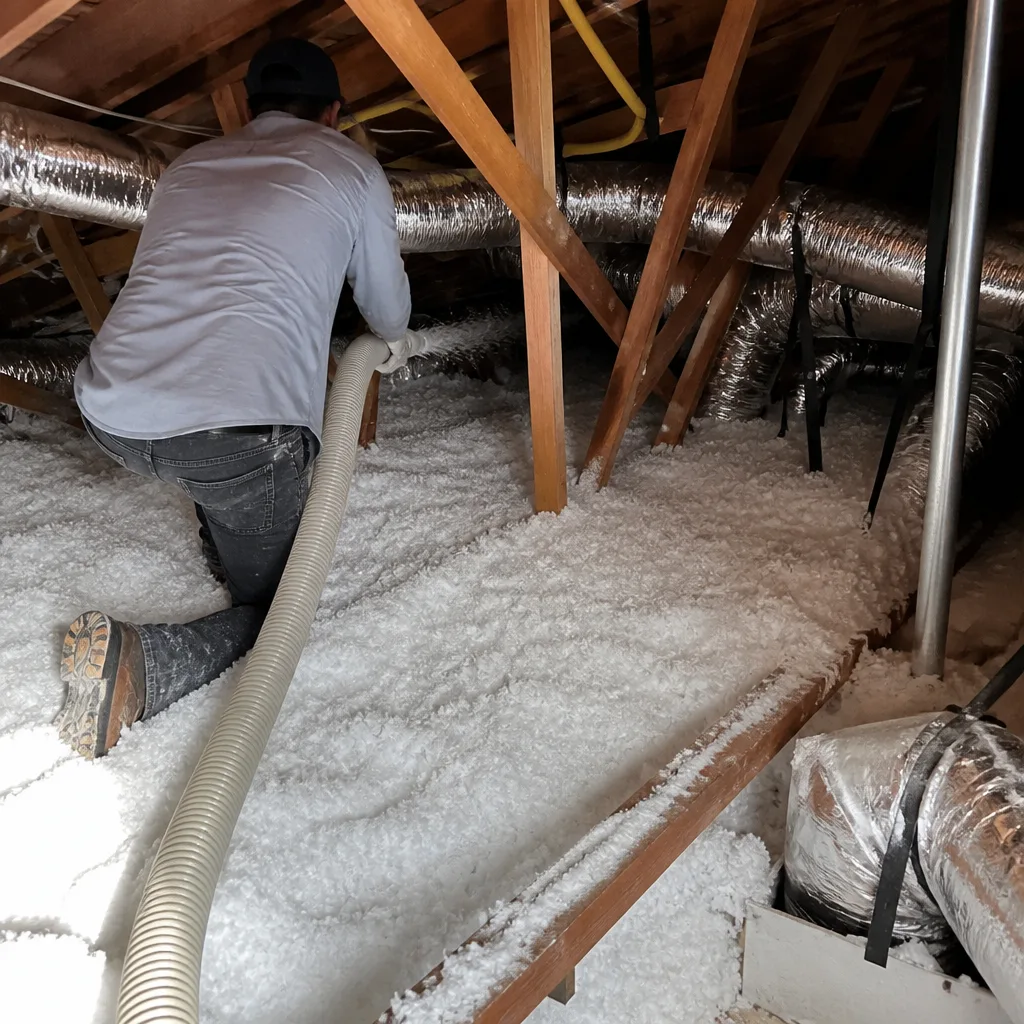 After
AfterCrawl Space Vapor Barrier Pricing in La Habra
Vapor barrier pricing depends on four main variables: the square footage of the crawl space, the thickness and grade of liner specified, the condition of the ground before installation, and whether any supplemental work – like old liner removal, drainage correction, or pest-related cleanup – is required first. Below are the ranges we see on actual jobs in La Habra and the surrounding area.
| Crawl Space Size | Liner Only (Basic Install) | With Prep Work or Old Liner Removal |
|---|---|---|
| Up to 800 sq ft | $1,200 – $1,800 | $1,800 – $2,400 |
| 800 – 1,500 sq ft | $1,800 – $2,600 | $2,600 – $3,200 |
| 1,500 – 2,500 sq ft | $2,600 – $3,800 | $3,200 – $4,800 |
A few things that push costs toward the higher end: crawl spaces with very low clearance (under 18 inches) that slow down crew movement significantly; heavily contaminated ground requiring debris removal and bagging; and older La Habra homes with irregular foundation layouts that require more cutting and seam taping to achieve full coverage.
Liner mil-thickness also matters. A 10-mil liner is adequate for a dry, well-maintained crawl space in a newer home. A 16- or 20-mil reinforced liner is the right call for crawl spaces that show evidence of repeated moisture intrusion, pest activity, or where someone will be entering periodically for HVAC maintenance. We’ll specify the right mil-rating in writing, along with the reason, before any work begins.
Under Haven Standard Clause 1, you receive a written price with a flat-dollar total before we schedule installation. There is no “estimate subject to change once we get in there.” If we find something during the inspection that changes the scope – old liner that needs removal, for example – we write a revised price and you approve it before anything changes. The estimate is free, and so is a second opinion on any written quote you’ve already received from another contractor: call us at (562) 267-3291 and we’ll review the competing scope with you line by line.
FAQs – Crawl Space Vapor Barrier
What thickness vapor barrier does a La Habra crawl space actually need?
Most La Habra crawl spaces need a minimum 12-mil liner; homes with a history of moisture intrusion or pest activity should use 16 to 20 mil. The California Building Code references ASTM E1745 Class A as a performance standard for below-grade vapor retarders, and a 12-mil reinforced polyethylene liner meets or exceeds that threshold for Crawl Space Insulation. Thinner 6-mil poly – common in homes built in the 1970s and 1980s – degrades quickly, punctures easily, and doesn’t extend up foundation walls, which is where most moisture bypass happens. We specify the mil-rating in the written scope so you know exactly what’s going in. Call (562) 267-3291 for a free on-site assessment and written price.
Can I just install a vapor barrier myself instead of hiring a contractor?
The liner material itself is not dangerous to handle, but the quality of the install – seam overlaps, wall termination, penetration sealing – determines whether it actually works. A liner that isn’t taped at seams or doesn’t run up the foundation wall just redirects moisture to the edges rather than blocking it. We’ve re-done DIY installs in La Habra where the homeowner spent $400 on 6-mil poly and then had worse moisture readings two years later because the seams were open. If you want to do it yourself, we’ll still give you a free second opinion on your plan – call us first.
Does a vapor barrier replace crawl space encapsulation, or is it part of it?
A vapor barrier is one component of a full encapsulation system, not a replacement for it. Full encapsulation adds insulation on the foundation walls, air sealing at the rim joist, and in some cases a conditioned air supply or dehumidifier to control humidity inside the sealed space. A vapor barrier alone addresses ground moisture; encapsulation controls the entire crawl space environment. For homes in La Habra with significant moisture history, we’ll often recommend the full system. For homes with a relatively dry crawl space that just needs a ground cover upgrade, a vapor barrier with proper sealing at the walls may be all that’s needed. We assess both and give you a written price for each option so you can make the call. Our full Crawl Space Encapsulation & Vapor Barrier in La Habra page covers the complete system in detail.
How long does a crawl space vapor barrier last in La Habra’s climate?
A properly installed 12-mil or heavier liner, fully sealed at seams and terminated up the foundation walls, typically lasts 15 to 25 years in Southern California conditions. The liner degrades faster if it’s exposed to standing water for extended periods, if it isn’t sealed at penetrations (which lets rodents in to damage it), or if it’s a low-mil product that wasn’t rated for below-grade use. We photograph the completed install and document exactly what was installed – so if a warranty question comes up in year three or year ten, there’s a written record of what was there and how it was installed. The 365-Day Done Right Promise covers workmanship for the first year; call (562) 267-3291 if you have a concern within that window and we’ll schedule a return visit.
Key Takeaways
- Crawl space vapor barrier jobs in La Habra typically run $1,200 to $3,800 depending on crawl space size, liner grade, and prep work required.
- A minimum 12-mil reinforced liner, sealed at seams and terminated up the foundation walls, meets California’s ASTM E1745 Class A standard – thinner poly sheeting does not.
- La Habra’s clay-heavy soil holds water longer after winter rains than sandy coastal soil, making ground preparation a meaningful step before liner installation.
- Every job under the Haven Standard includes a written price before work starts, a documented photo record at completion, and the 365-Day Done Right Promise on workmanship.
- A vapor barrier addresses ground moisture; full encapsulation addresses the entire crawl space environment. We price both options in writing so you can decide.
Get a Written Price for Your La Habra Crawl Space
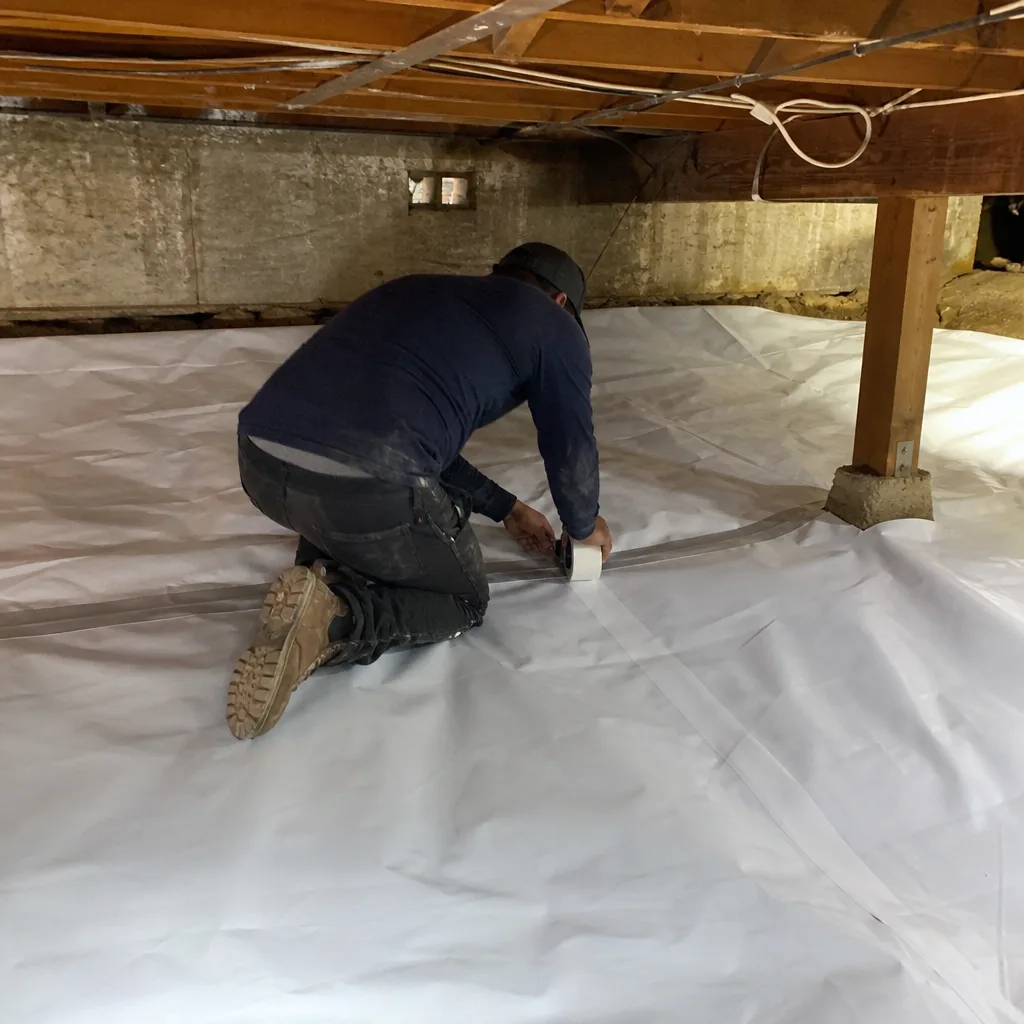
If your La Habra home has a crawl space that smells damp, shows signs of moisture damage on the subfloor, or has never had a proper vapor barrier installed, the starting point is a direct inspection – not a phone estimate. Wes Okafor and the crew at Topside Attic Insulation La Habra have been doing this work since 2016. We’ll come out, assess the crawl space, photograph what we find, and deliver a written flat-price quote before anyone asks you to commit to anything. There’s no voicemail, no callback window: call (562) 267-3291 and you’ll reach a live person. The estimate is free, and if you already have a written quote from another contractor, we’ll review it with you at no charge – that’s the Haven Standard Free Second Opinion.
Written by Wes Okafor, Owner at Topside Attic Insulation La Habra, serving La Habra since 2016.