
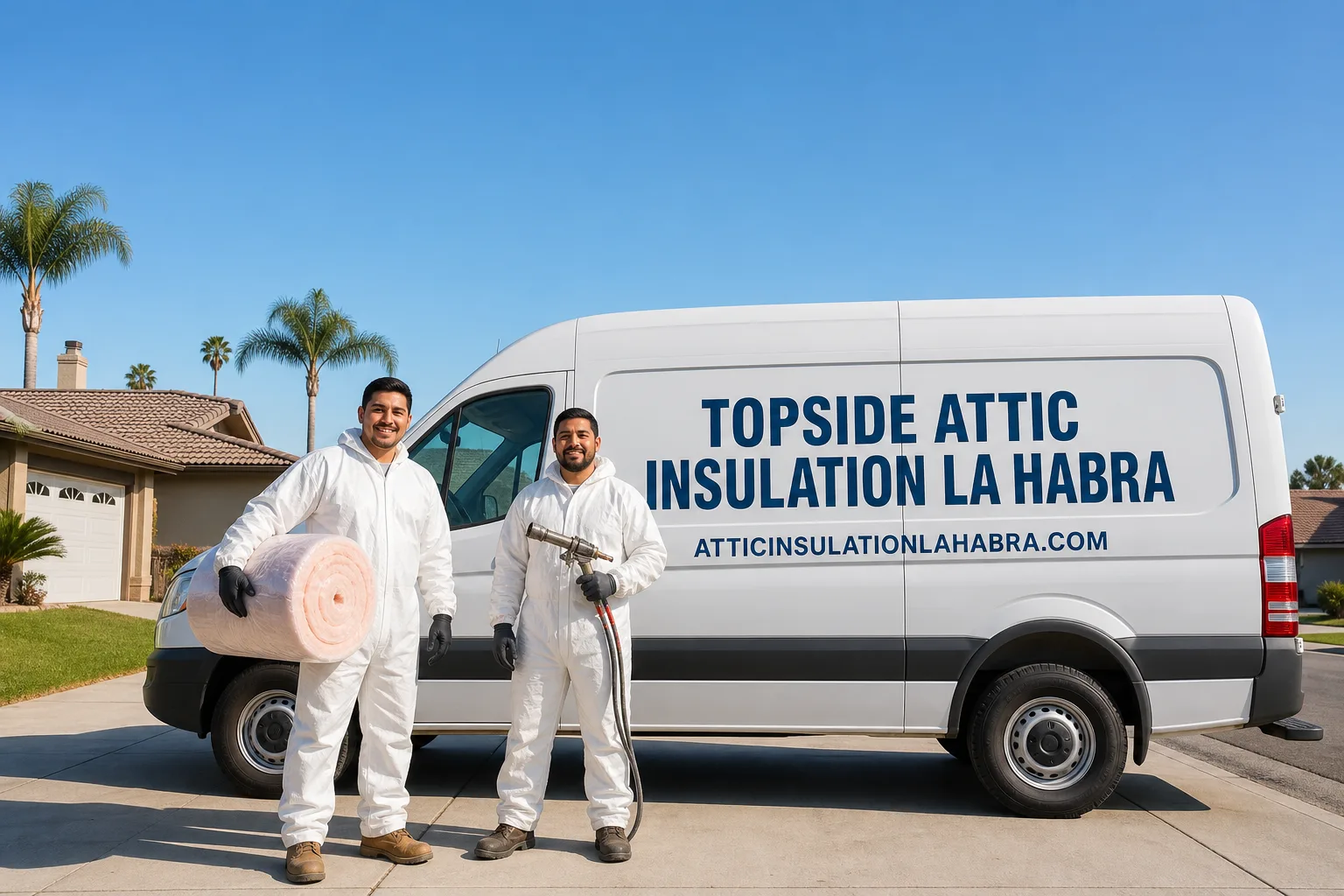
Fast, Reliable Attic Insulation Across Cypress
Most attic insulation jobs in Cypress run between $1,800 and $4,200 depending on whether we’re topping up existing material or stripping out degraded batts and starting fresh. We typically schedule Cypress appointments within 48 hours, and our crews are familiar with the city’s uniform 1960s tract construction - the low-slope roofs, the shallow attic cavities, the original rock wool that has settled to a fraction of its rated value after decades of marine-layer humidity. Call (562) 267-3291 for a written price before any work starts. Dispatch and scheduling are coordinated from our Los Angeles office, but the crew that arrives at your Cypress home lives and works locally.
Why Topside Attic Insulation La Habra Is Cypress’s Preferred Attic Insulation Company
We’ve replaced or topped attic insulation in hundreds of Cypress homes since 2016, and the pattern is remarkably consistent across the city. Homeowners near Lincoln Avenue and Moody Street, along Katella Avenue, and throughout the tracts north of Ball Road tell us the same thing: the house never felt quite right during June gloom, and the attic smelled musty even in dry months. Our reviews from Cypress customers consistently mention the before-and-after blower-door numbers we provide - a pressurization reading that shows, in one figure, how much conditioned air the home was losing before and after the work.
We answer calls with a live person, 24/7. No voicemail loops. No callback windows measured in business days. Most Cypress appointments are scheduled within two days, and every job begins with a written price and ends with a Documented Photo Record. Under Haven Standard Clause 1, no work starts without a flat price, written scope, and written warranty already in your hands.
Our Attic Insulation Services in Cypress
Attic Insulation Replacement
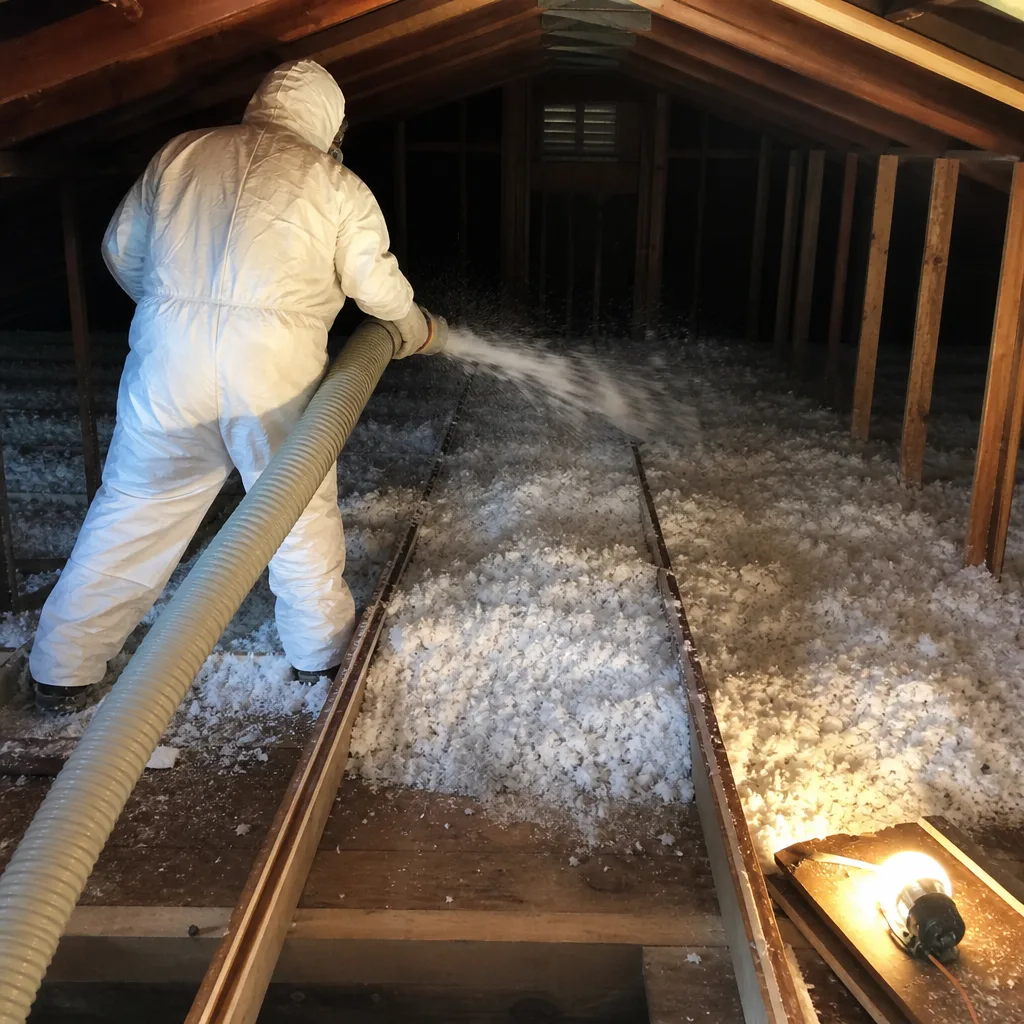
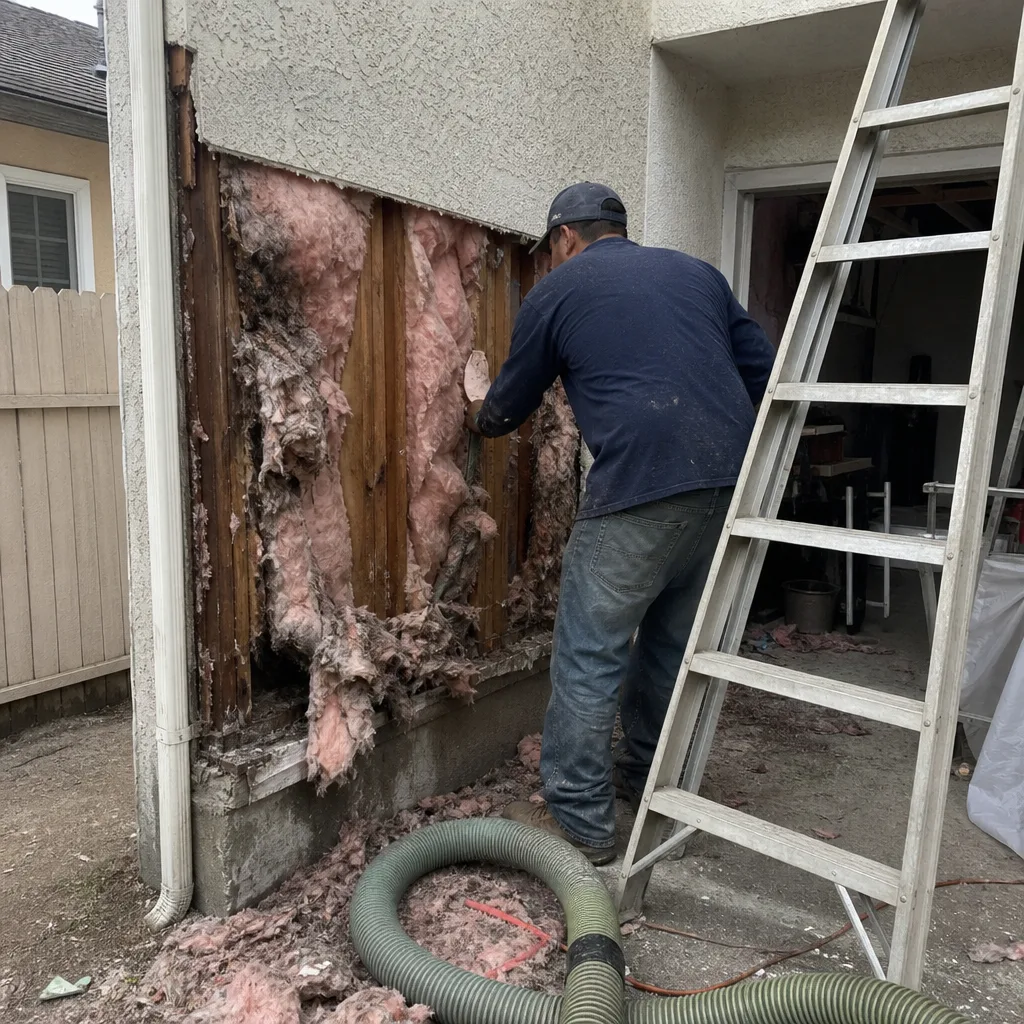
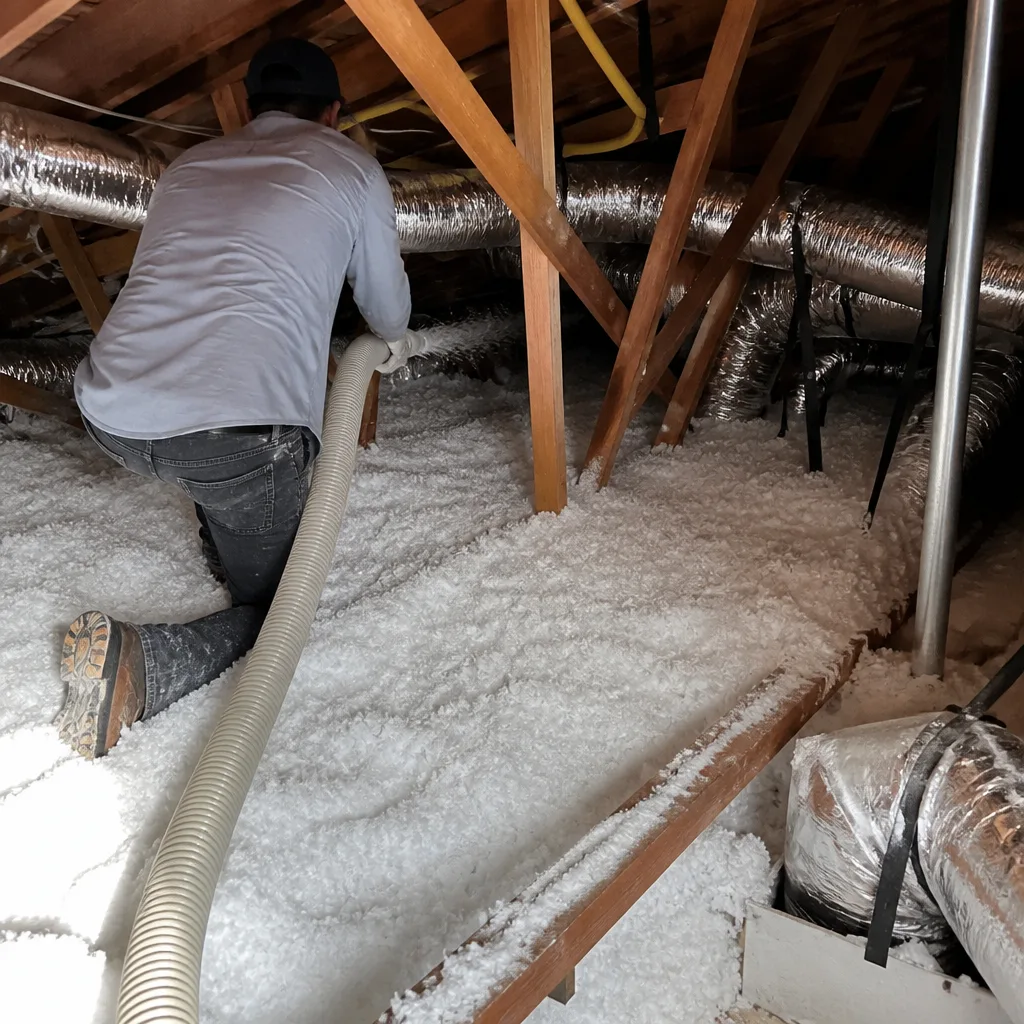
This is what most Cypress homes actually need. The city’s housing stock was built almost entirely between the mid-1960s and mid-1970s, meaning virtually every residential insulation call involves the same pre-Title 24 tract construction with original, degraded batts. We strip out the compacted rock wool or early fiberglass - often measuring R-4 to R-6 where R-11 was originally specified - air-seal top plates, can lights, and penetrations, then install new material to modern Title 24 standards. On a mid-1960s tract home near Lincoln Avenue and Moody Street, our crew pulled out compacted rock wool that had settled to about R-5 and found wet-stained sheathing from years of morning marine layer. We aired the attic, added baffles at the soffits, and blew in Owens Corning fiberglass to R-38 - the homeowner said the house finally stopped feeling clammy in June.
Blown-In Attic Insulation
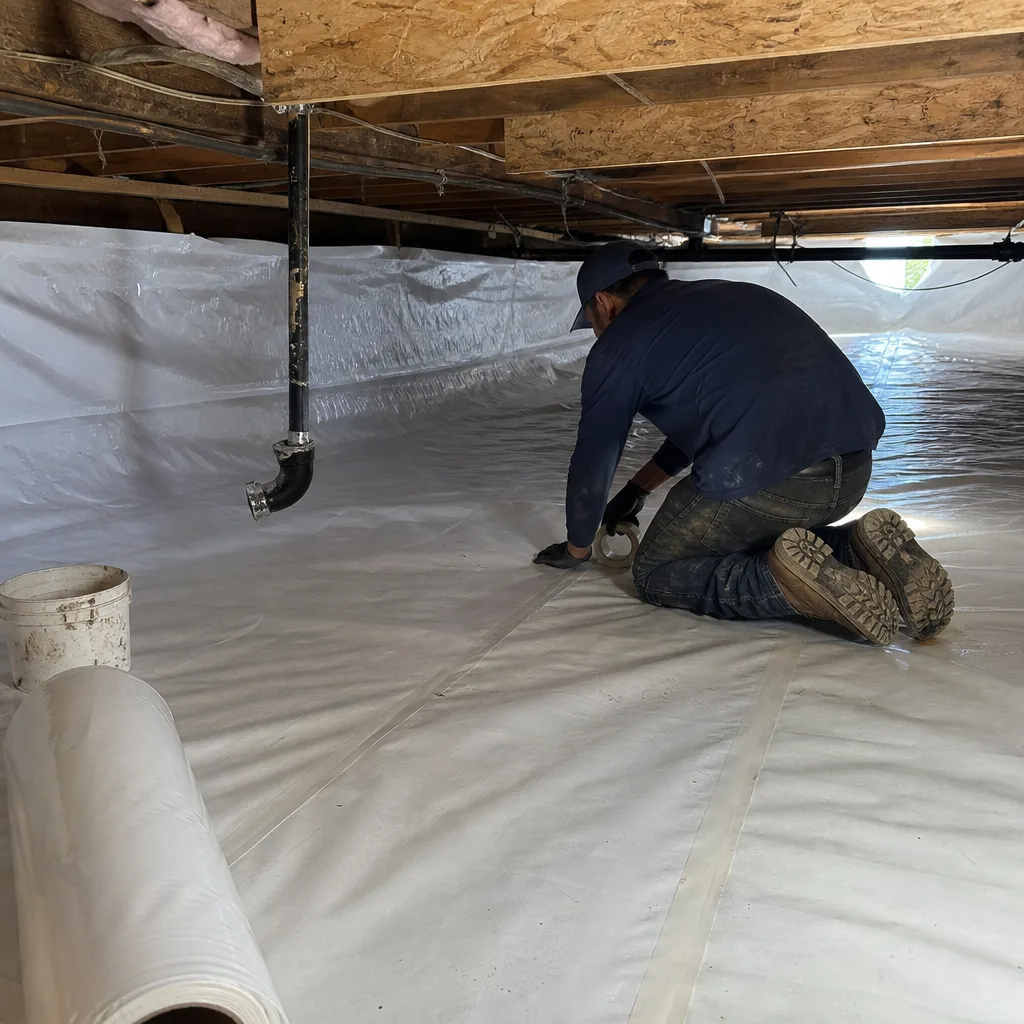
Blown-in fiberglass or cellulose is our standard recommendation for Cypress’s shallow attic cavities. The low-slope rooflines in 1960s tracts restrict headroom and make batt installation awkward; blown material fills corners and covers top plates completely. We use Owens Corning, Johns Manville, and GreenFiber products - no proprietary lock-in, so we match the material to the application. Every blown-in job in Cypress includes baffles at the soffits first. Without them, the new insulation blocks the limited airflow these shallow attics already struggle to maintain, and the marine-layer moisture problem gets worse instead of better.
Attic Batt Insulation
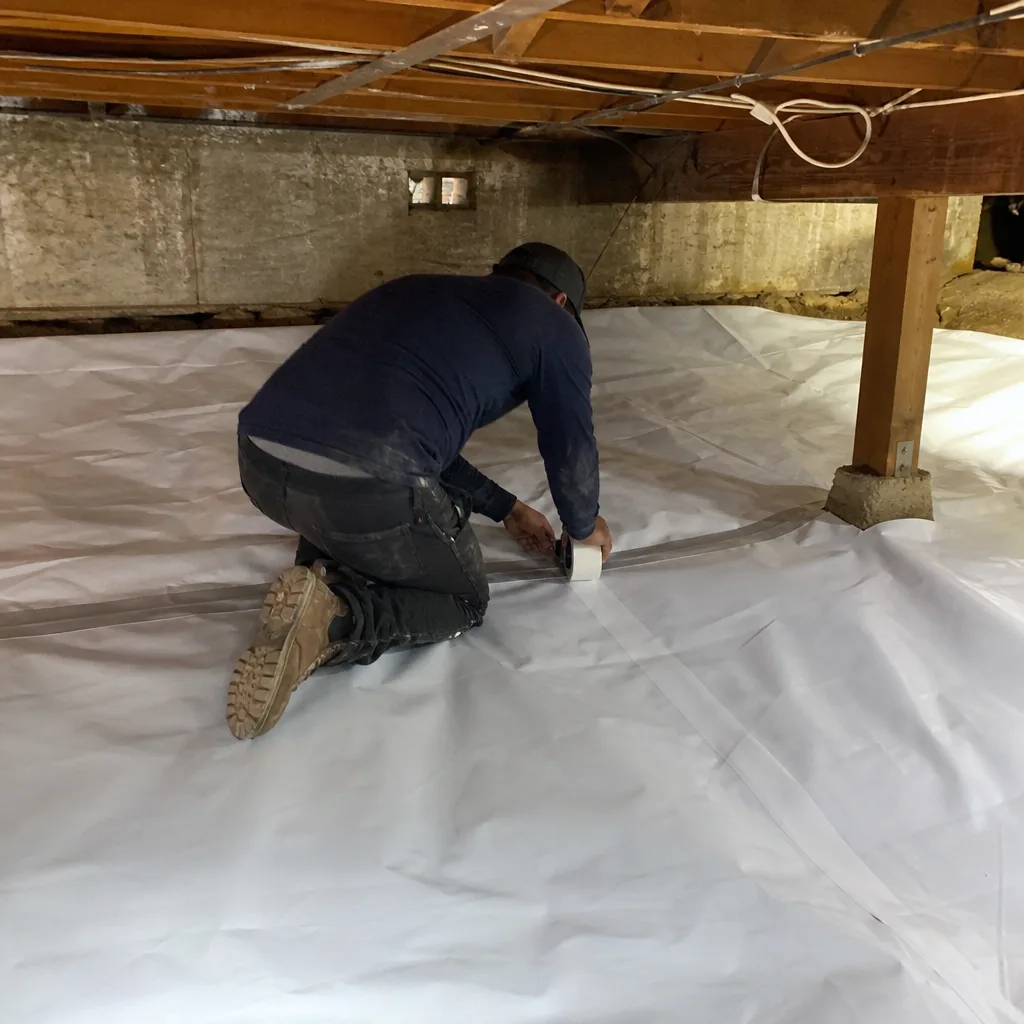
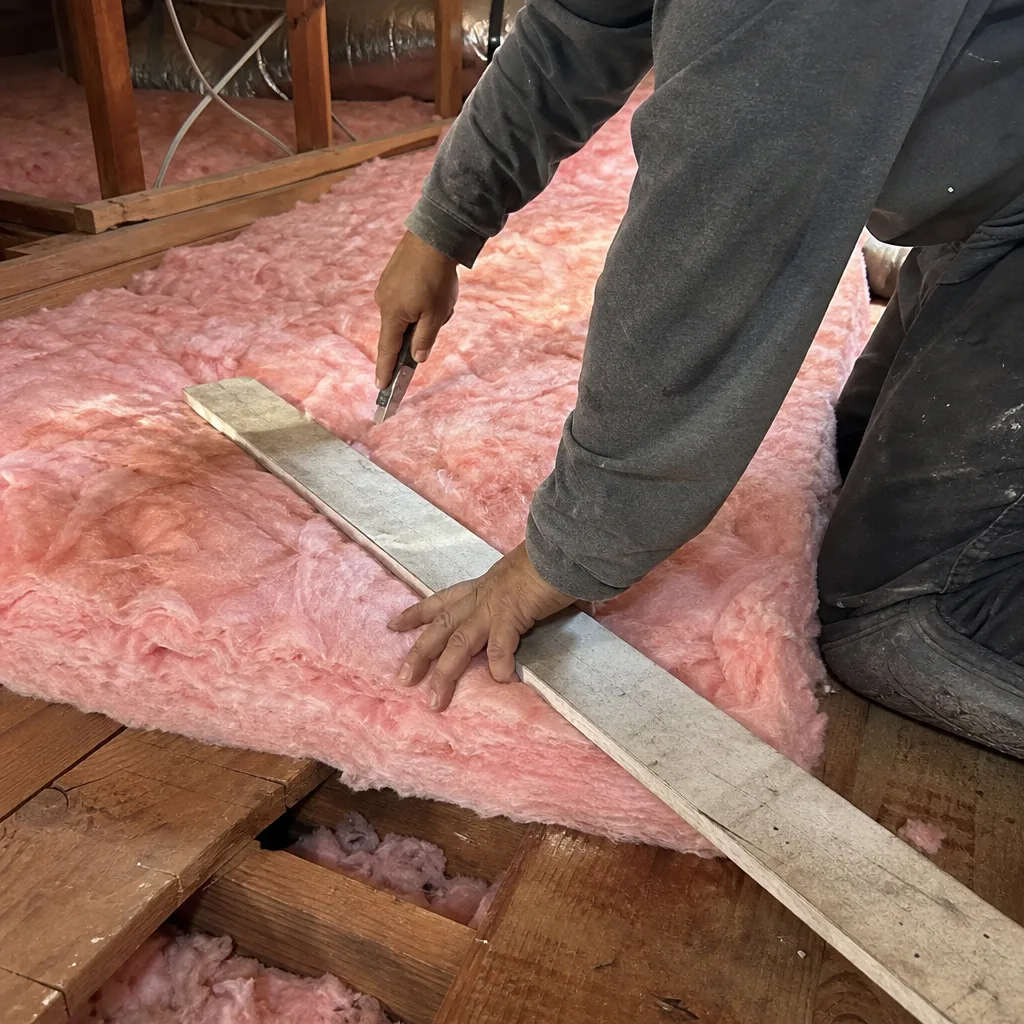
Batt installation in Cypress is usually reserved for specific applications: knee walls in split-level tracts, vertical gable ends, or areas where blown material won’t stay in place. We stock Knauf and Johns Manville batts in R-30 and R-38 for these situations. In Cypress’s climate, batts must be paired with proper air sealing - the marine layer will find any gap, and unsealed batts act like a wick. Our Attic Insulation team never installs batts over an unsealed attic floor; the Haven Standard requires air sealing first, insulation second, always in that order.
Attic Insulation Top-Up
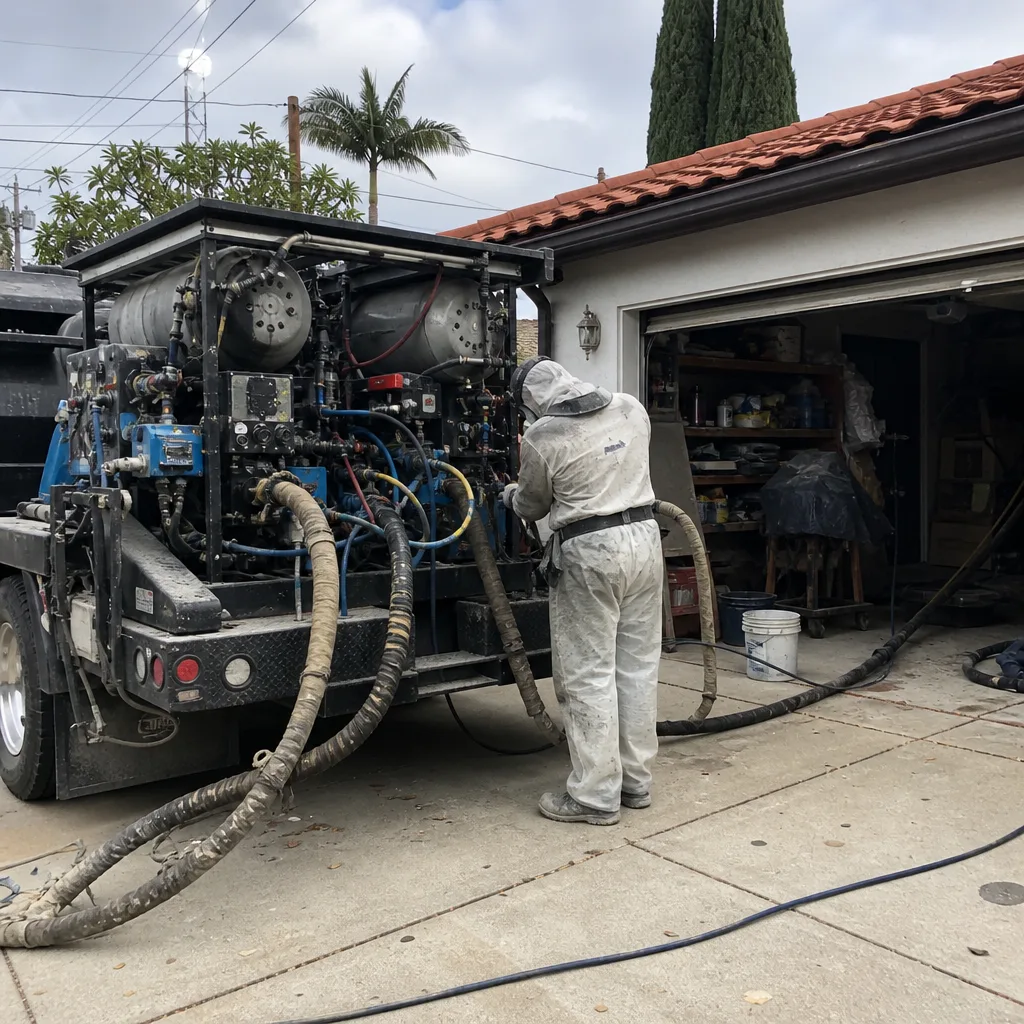
A top-up makes sense when the existing insulation is dry, reasonably distributed, and free of mold - rare in Cypress’s older tracts, but it happens. We inspect first. If the original batts are merely thin rather than compacted and stained, we’ll add blown fiberglass to reach R-38. More often, we find the top layer is masking wet, compressed material against the drywall. In those cases, we recommend full replacement and show you the photo documentation so you can decide with actual evidence.
Attic Baffles & Ventilation Prep
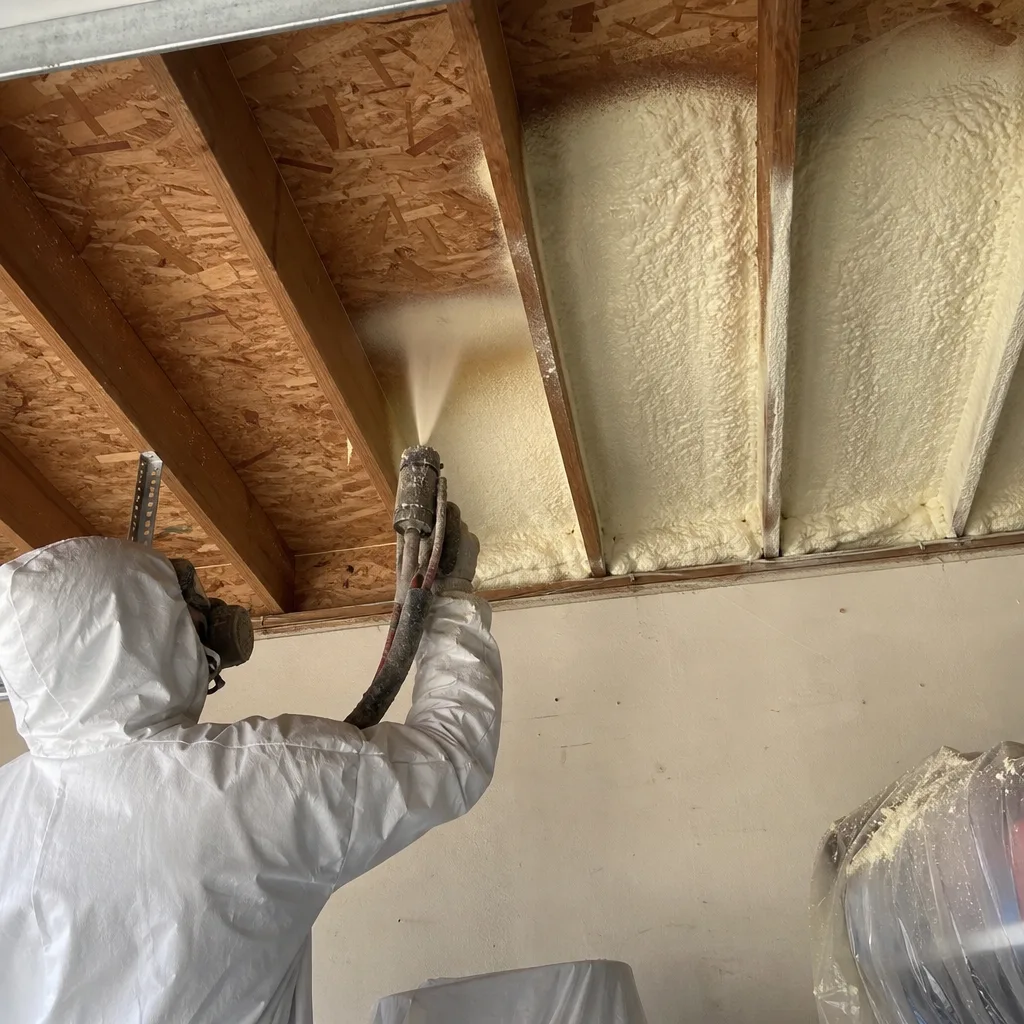
This is non-negotiable work in Cypress. The shallow attic cavities and low-slope rooflines in 1960s tracts restrict airflow at the soffits, so moisture condenses on the underside of roof sheathing and stains or molds the existing insulation. We install proper baffles - vent chutes that maintain an open channel from soffit to ridge - before adding any new insulation. Without this step, you’re paying for R-38 performance and getting R-20 with a side of mold. Every attic we work on in Cypress gets this treatment; it’s part of the written scope, not an upsell.
What happens when you call
- 1
A real person answersNo phone trees - you reach a local pro.
- 2
You get an upfront price rangeHonest numbers before anyone is dispatched.
- 3
A background-checked tech heads outLicensed & insured, dispatched right away.
- 4
You approve before work beginsNothing starts until you say go.
 Before
 After
AfterTrusted Brands We Service in Cypress
We source materials from Owens Corning, Johns Manville, Knauf, and GreenFiber - no proprietary product lock-in, so we specify what performs best for your specific attic conditions. For Cypress’s marine-layer environment, we typically recommend Owens Corning blown fiberglass for its moisture resistance and dimensional stability, or GreenFiber cellulose when we’re targeting maximum air-sealing benefit in tighter cavities. We stock standard weights locally, so most Cypress jobs don’t face material delays. If your home has specific requirements - say, a shallow cavity near Katella Avenue that needs a lower-density fill - we’ll note that in the written scope and adjust the product accordingly.
Common Attic Insulation Problems We See in Cypress Homes
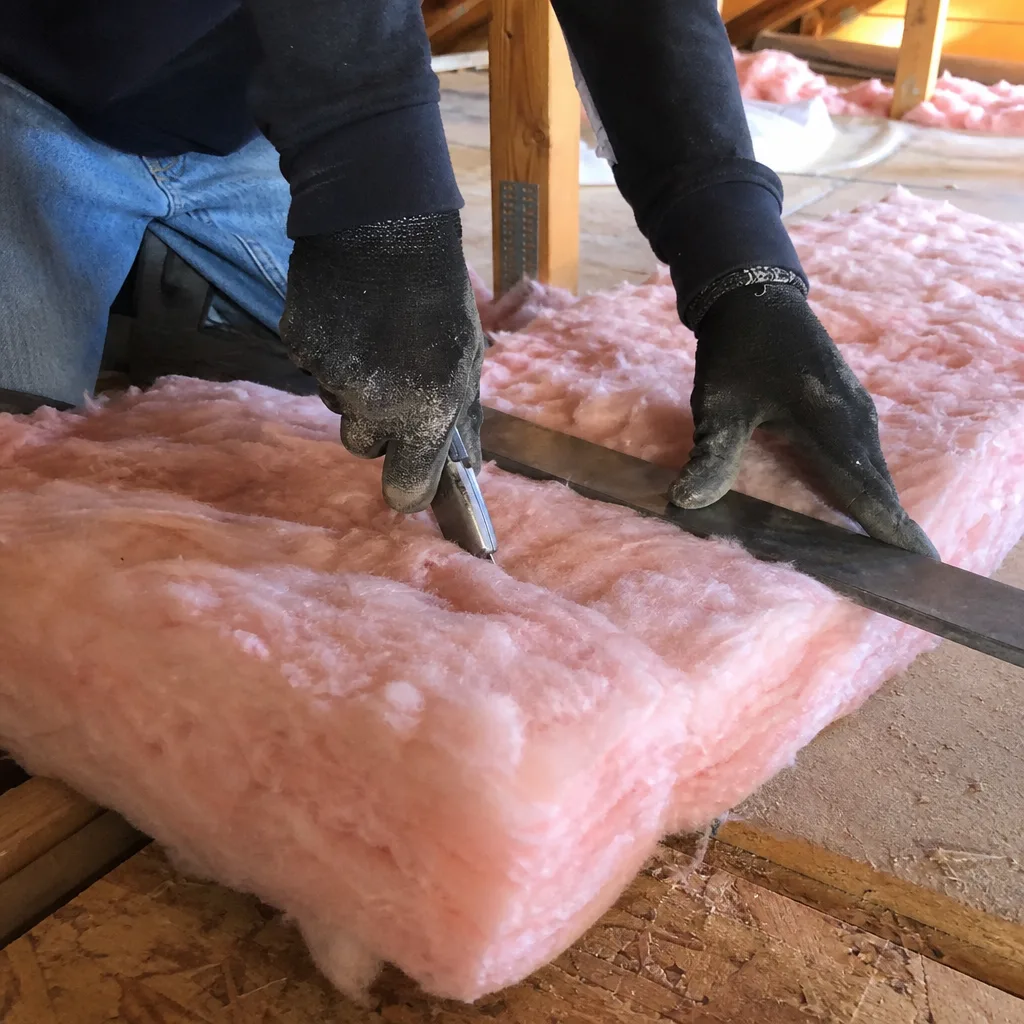
- Compacted rock wool and early fiberglass batts. In Cypress’s dense 1960s tracts, technicians frequently find that original blown rock wool or early-generation fiberglass batts have compacted to less than half their rated R-value after decades of mild coastal moisture cycling. Because the entire city was built in the same era by the same handful of tract developers, this exact condition repeats house after house across nearly every street.
- Wet-stained roof sheathing from marine-layer infiltration. Cypress sits close enough to the coast to receive persistent morning marine layer from June through September, keeping overnight lows mild but driving attic relative humidity higher than inland cities. This degrades fiberglass batts and causes mold in poorly ventilated attic spaces - a pattern that’s rare in drier inland cities like Anaheim but repeats on nearly every street in Cypress.
- Missing vapor barriers letting moisture migrate upward. The vast majority of Cypress’s single-family homes were built with R-11 wall batts and minimal attic insulation that falls well below modern California Title 24 standards. These homes rarely had vapor barriers installed, so ground and wall moisture migrates into the attic, wets batts, and promotes corrosion on nearby metal roof fasteners.
- Soffit airflow blocked by decades of added insulation. Homeowners and prior contractors have often blown or laid additional material directly over soffit vents, choking the already-limited ventilation in these shallow cavities. We find this on roughly half the Cypress homes we inspect - the attic bakes on east-wind summer days and stays damp the rest of the year.
Pricing for Attic Insulation in Cypress, CA
Here’s what attic insulation costs in Cypress’s market right now:
| Service | Typical Range |
|---|---|
| Attic insulation top-up (to R-38, existing material viable) | $1,800 - $2,800 |
| Blown-in attic insulation, full replacement with air sealing | $3,200 - $4,800 |
| Attic batt insulation replacement (specific applications) | $2,400 - $3,600 |
| Attic insulation replacement with baffles and ventilation prep | $3,800 - $5,400 |
| Insulation removal only (prep for other work) | $1,200 - $1,800 |
These ranges assume a typical Cypress tract home of 1,400-1,800 square feet with a shallow attic cavity and standard access. Factors that push toward the higher end: multiple attic hatches, extensive can-light air sealing, rodent damage requiring cleanup, or sheathing mold remediation. We provide a Free Second Opinion on any written estimate - bring us a competing quote and we’ll read it with you line by line. Every job gets a flat, written price before anyone lifts a tool. Call (562) 267-3291 for an exact quote; estimates are free.
We Also Serve Cities Near Cypress
Our crews work throughout northwestern Orange County. If you’re in Cypress or nearby - La Palma, Los Alamitos, Buena Park, or Stanton - we can typically schedule within 48 hours. The same written-price guarantee, same documented photo record, same 365-Day Done Right Promise applies wherever we work.
Serving Cypress, CA - Our Local Coverage Area
We’re based in the Cypress area and know this community well. Use the map below to see our service coverage - if you’re nearby, we can almost certainly help.
FAQs - Attic Insulation in Cypress
Cypress’s marine-layer humidity from June through September raises attic relative humidity enough that the original 1960s tract insulation - mostly rock wool or early fiberglass batts - has compacted to under half its rated R-value and often shows mold staining on the roof sheathing, a pattern that’s rare in drier inland cities like Anaheim but repeats on nearly every street in Cypress. The combination of age-uniform housing stock and persistent coastal moisture creates a failure mode you simply don’t see inland. Call (562) 267-3291 for an inspection and written price.
In most 1960s Cypress tracts, full replacement is the better investment. The original material has typically compacted to R-4-R-6, may be mold-stained, and sits against drywall that has absorbed decades of moisture migration. A top-up over that base gives you uneven coverage, trapped moisture, and R-value that varies by square foot. We inspect first, photograph what we find, and show you before recommending either approach. The written scope specifies exactly what you’ll get either way. Call (562) 267-3291 to schedule.
Low-slope roofs make the work more precise, not more difficult. The shallow cavity means we use lower-density fill settings on the blower, install baffles at every soffit bay to maintain airflow, and often specify fiberglass over cellulose for its dimensional stability in tighter spaces. We’ve done hundreds of these installations in Cypress tracts - the crew knows how to work in 24-inch clearances without crushing existing ductwork or blocking vents. The written scope notes any access constraints before we start.
We install Owens Corning, Johns Manville, Knauf, and GreenFiber products - no exclusive arrangements, so we specify based on your attic’s conditions. For Cypress’s marine-layer environment, Owens Corning blown fiberglass is our most common specification for its moisture resistance. GreenFiber cellulose gets the nod when we’re prioritizing air-sealing performance in tighter cavities. The brand and weight are listed in your written scope before work begins. Call (562) 267-3291 for material questions specific to your home.
Look for three signs: a musty smell in the house during June through September, visible dark staining on the roof sheathing when you check the attic with a flashlight, and insulation that feels dense or crumbles rather than fluffs when disturbed. But the definitive check is a professional inspection with photo documentation - we find moisture damage in roughly 70% of Cypress attics we inspect, often in areas homeowners can’t safely reach. We’ll show you exactly what we found and provide a written price for remediation. Call (562) 267-3291 to schedule; estimates are free.
Ready to fix your attic insulation the right way? Call (562) 267-3291 for a free estimate. We’ll provide a written price before any work starts, a Documented Photo Record when the crew leaves, and before-and-after blower-door numbers on every applicable job so you can verify the performance change you paid for. The 365-Day Done Right Promise applies to all completed work. Haven Standard: Have it in writing.
Written by Wes Okafor, Owner at Topside Attic Insulation La Habra, serving Cypress since 2016.