
Last updated September 24, 2026
Insulation Warning Signs: A La Habra Homeowner’s Reference Guide
A room that runs 4°F hotter than your thermostat setpoint in July is not an HVAC problem 60% of the time. In La Habra, where summer afternoons push attic temperatures past 140°F, that temperature gap usually traces to a localized air-sealing failure at the top plate or a duct boot that has separated from ceiling drywall. Replacing the AC unit won’t fix it. This complete guide to insulation in La Habra maps the symptoms homeowners actually notice - uneven rooms, climbing utility bills, mysterious condensation - to the specific insulation and air-sealing failures causing them, so you can describe what you’re experiencing in terms a contractor can act on.
Quick Answer
The most reliable insulation warning signs in La Habra homes are: utility bills that rise in both heating and cooling seasons proportionally (not just one); rooms that stay 3-5°F off from the thermostat setpoint regardless of HVAC runtime; and cold or hot zones that appear in the same spots year after year. These symptoms point to envelope failures - air leaks, compressed or displaced insulation, or thermal bridging - rather than equipment problems.
Table of Contents
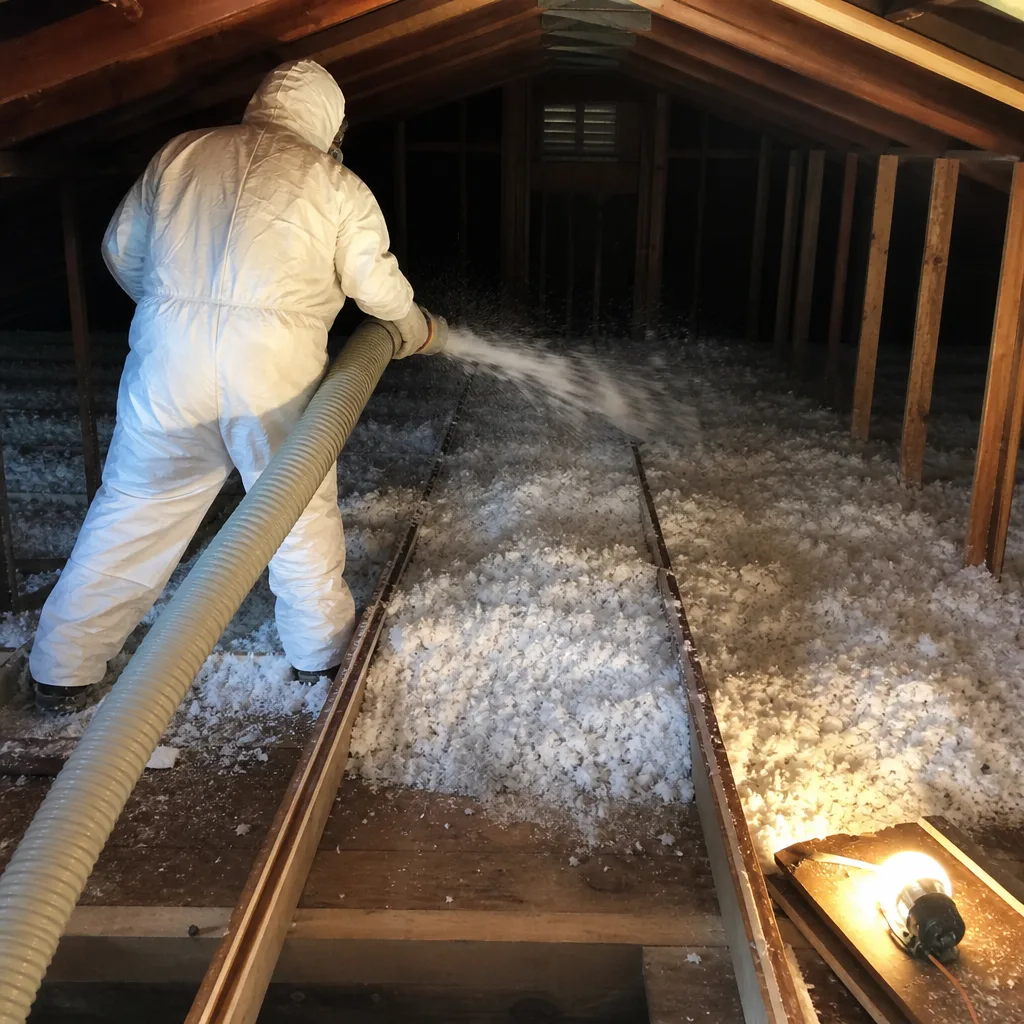
- Symptom-to-Failure-Mode: What Your Home Is Telling You
- How to Use a $30 Infrared Thermometer to Find Thermal Leaks
- Reading Your Utility Bill: Insulation vs. HVAC Failure
- Pest Activity in the Attic: Early Evidence Before It Reaches Your Living Space
- Moisture, Mold, and When to Call Immediately
- La Habra Climate Factors That Accelerate Insulation Failure
- Common Mistakes to Avoid
- When to Call a Professional
- Frequently Asked Questions
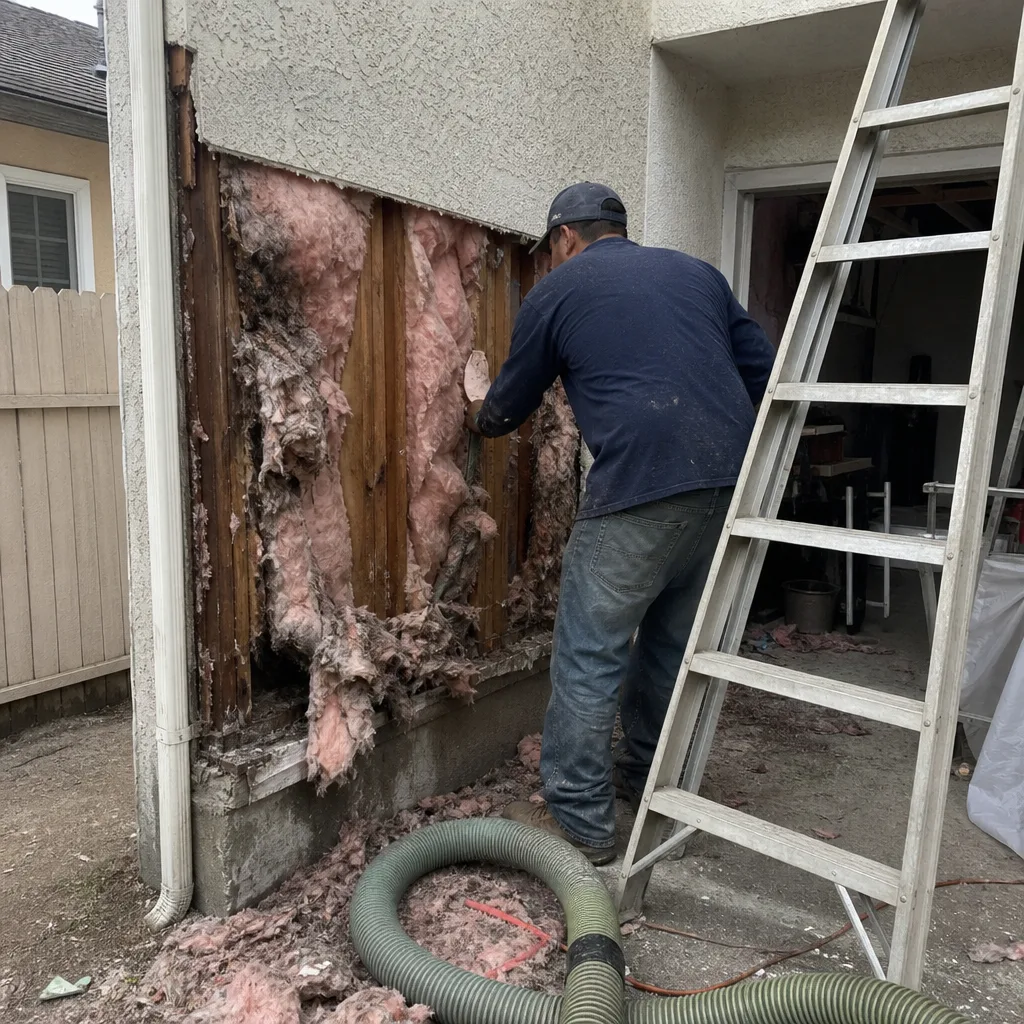 Before
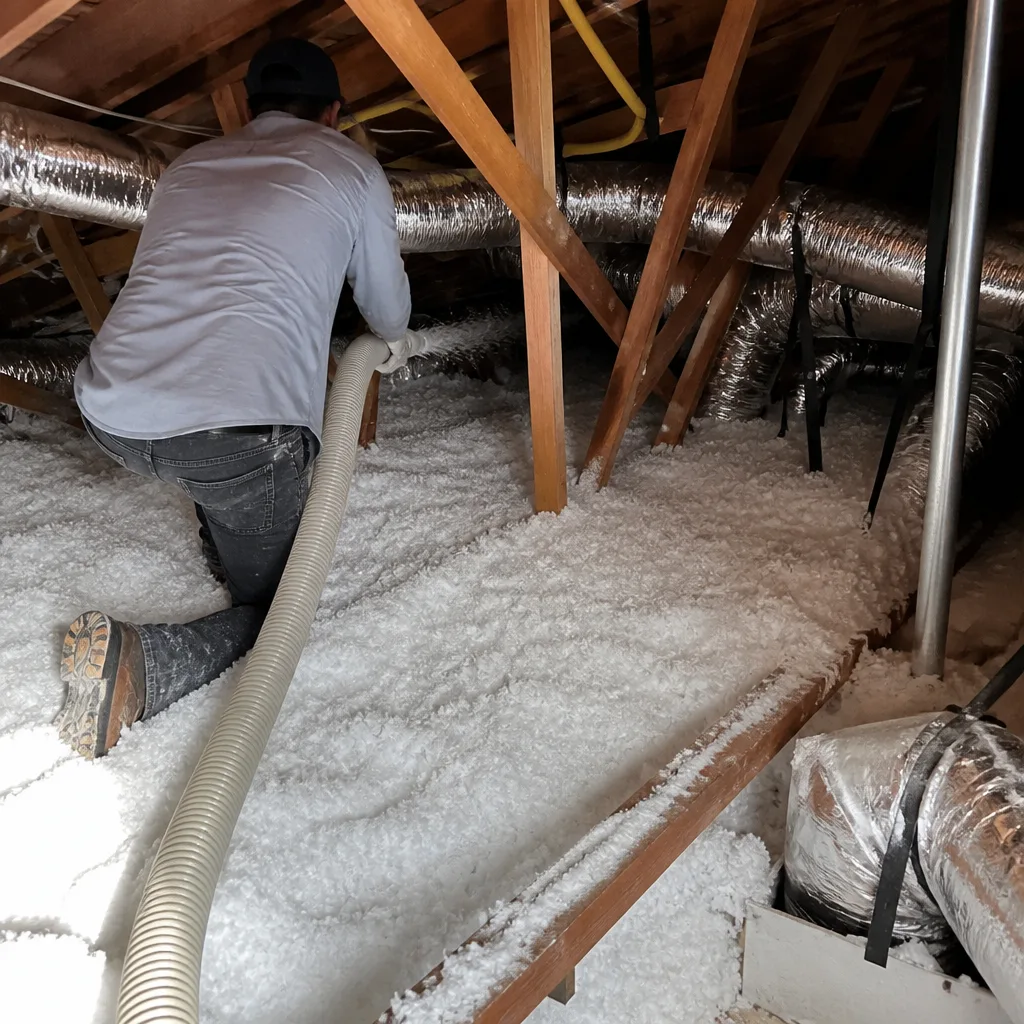 After
AfterSymptom-to-Failure-Mode: What Your Home Is Telling You
Most insulation failures announce themselves through household behavior changes, not visual inspection. Homeowners in La Habra’s older neighborhoods - the pre-1980 stock near Imperial Highway and the Whittier Boulevard corridor - often adapt to symptoms for two or three seasons before connecting them to the envelope. Here’s what we’ve mapped from 9,000+ homes sealed and insulated since 2016.
| Observable Sign | Most Probable Failure Mode | Where to Look First |
|---|---|---|
| One room 3-5°F off from thermostat, consistent year-round | Top plate air leak or missing insulation at exterior wall header | Infrared scan of ceiling-wall corner; attic floor above the room |
| Increased HVAC runtime in both heating and cooling seasons | General attic floor air leakage, degraded blown-in insulation depth | Attic floor uniformity; measure settled insulation against current R-value code |
| Ice plant or condensation on interior walls or ceilings | Warm, humid interior air hitting cold surface due to missing or wet insulation | Attic side of the affected surface; check for roof leak or bathroom exhaust venting into attic |
| Hot hallway, cool bedrooms (or reverse) | Duct leakage or disconnected duct boot in unconditioned attic | Attic duct connections; mastic seal integrity at plenum |
| Dust accumulation faster than normal, especially near ceiling fixtures | Stack effect pulling attic air through can light penetrations | IC-rated can lights without airtight gaskets; non-IC fixtures buried in insulation |
| Floor cold in winter above crawl space | Missing or fallen crawl space insulation, inadequate vapor barrier | Crawl space inspection for displaced batts, standing water, or torn polyethylene |
The pattern that matters: symptoms that persist across seasons point to the envelope. Symptoms that appear only in cooling season or only in heating season more often trace to HVAC equipment degradation or refrigerant charge issues.
In La Habra specifically, we see top plate failures concentrated in the ranch-style homes built 1955-1975, where wall framing used single top plates with minimal blocking. The 2×4 walls were never designed for the insulation depth modern codes require, and the gap between top plate and drywall becomes a chimney for conditioned air once attic floor sealing degrades.
How to Use a $30 Infrared Thermometer to Find Thermal Leaks
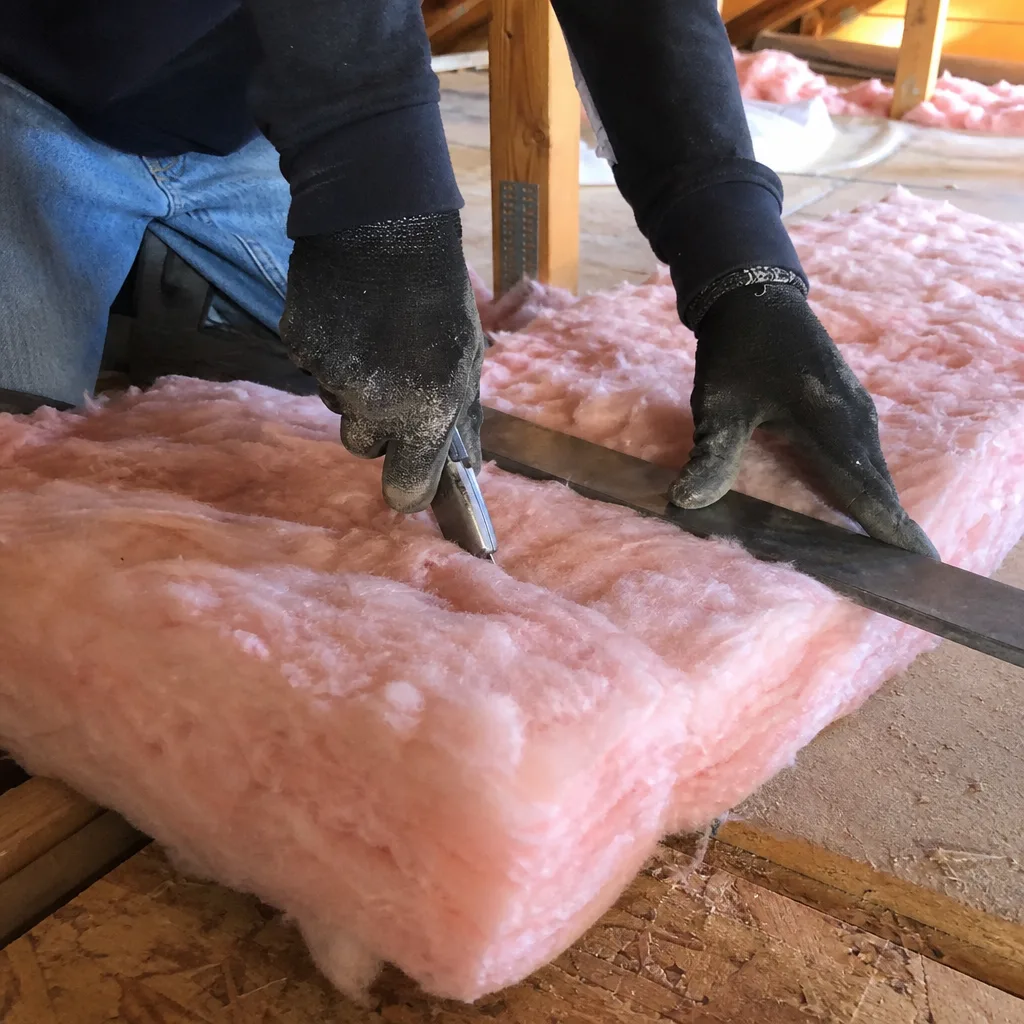
A non-contact infrared thermometer, available at any hardware store in La Habra for $25-$35, is the single most useful diagnostic tool a homeowner can own. It won’t give you the precision of a professional thermal imager, but it will locate the wall section or ceiling area where thermal bridging is occurring, which narrows the scope of any contractor visit significantly.
What You Need
- Infrared thermometer with laser pointer (emissivity setting at 0.95 for painted drywall)
- Notebook to log readings by location
- Ideally: a day with 15°F+ temperature difference between inside and outside
Step-by-Step Method
- Establish your baseline. Point the thermometer at an interior wall you know is well-insulated - typically a wall between conditioned spaces, not an exterior wall. Log this temperature. In a La Habra home with functioning insulation, interior wall surfaces should read within 2°F of your thermostat setpoint.
- Scan exterior walls at mid-height. Move the laser spot across exterior walls every 12 inches. A reading 3°F or more below your baseline in winter, or above it in summer, indicates a thermal bridge or missing insulation cavity. Mark these spots with painter’s tape.
- Scan ceiling corners and fixtures. Ceiling-wall corners are where top plate leaks show first. Can lights, ceiling fans, and smoke detectors are penetration points. A 5°F+ differential at any of these locations is significant - we’ve seen La Habra homes with 12°F gaps at unsealed can lights.
- Check floors above crawl spaces. In winter, a well-insulated floor should read within 3°F of room temperature. Readings 5°F+ colder indicate displaced or missing crawl space insulation.
- Log and photograph your findings. The documentation helps any contractor understand the problem before they arrive. Under Haven Standard, we ask homeowners to share any prior readings - it speeds diagnosis and reduces time on site.
What temperature differential is significant? In our experience across La Habra homes, 3°F is worth noting, 5°F indicates a real problem, and 8°F+ means active air movement or missing insulation. The $30 thermometer won’t tell you which, but it will tell you exactly where to point a contractor’s attention.
Reading Your Utility Bill: Insulation vs. HVAC Failure
The utility bill pattern that distinguishes insulation degradation from HVAC efficiency loss is one of the most useful diagnostic tools available, and almost no homeowner uses it systematically. Here’s the distinction: insulation failure shows in both heating and cooling seasons proportionally; equipment loss skews to one season.
The Insulation Failure Pattern
Look at 24 months of bills. If your winter heating kWh or therms climbed 20% and your summer cooling kWh climbed 18-22% over the same period, you have an envelope problem. The building is leaking conditioned air at a consistent rate, so the HVAC works harder in both directions. In La Habra, where we have meaningful heating loads December through February and significant cooling loads June through October, this pattern is especially clear.
The HVAC Equipment Failure Pattern
If winter costs climbed 5% but summer costs climbed 30%, your air conditioner or heat pump is the likely culprit. Refrigerant leaks, dirty coils, or compressor wear reduce cooling capacity without affecting heating proportionally. The envelope hasn’t changed; the equipment can’t keep up.
The Duct Leakage Hybrid
Duct leakage in an unconditioned attic produces a signature pattern: moderate increases in both seasons, but with a summer spike that’s 1.5-2x the winter increase. In La Habra’s climate, leaking supply ducts in a 140°F attic dump cooled air before it reaches rooms, while leaking return ducts pull superheated attic air into the system. The summer penalty is severe; winter is less dramatic because attic temperatures rarely drop below 45°F.
We publish before-and-after blower-door numbers on every applicable job so homeowners can verify the air-sealing result. A blower-door test - a pressurization reading that shows, in one number, how much air your building envelope is losing - typically reads 3,500-5,500 CFM50 in an unsealed La Habra home of 1,800 square feet. After proper air sealing and insulation, that figure should drop 30-50%. The utility bill pattern confirms whether the investment is performing as designed.
Pest Activity in the Attic: Early Evidence Before It Reaches Your Living Space
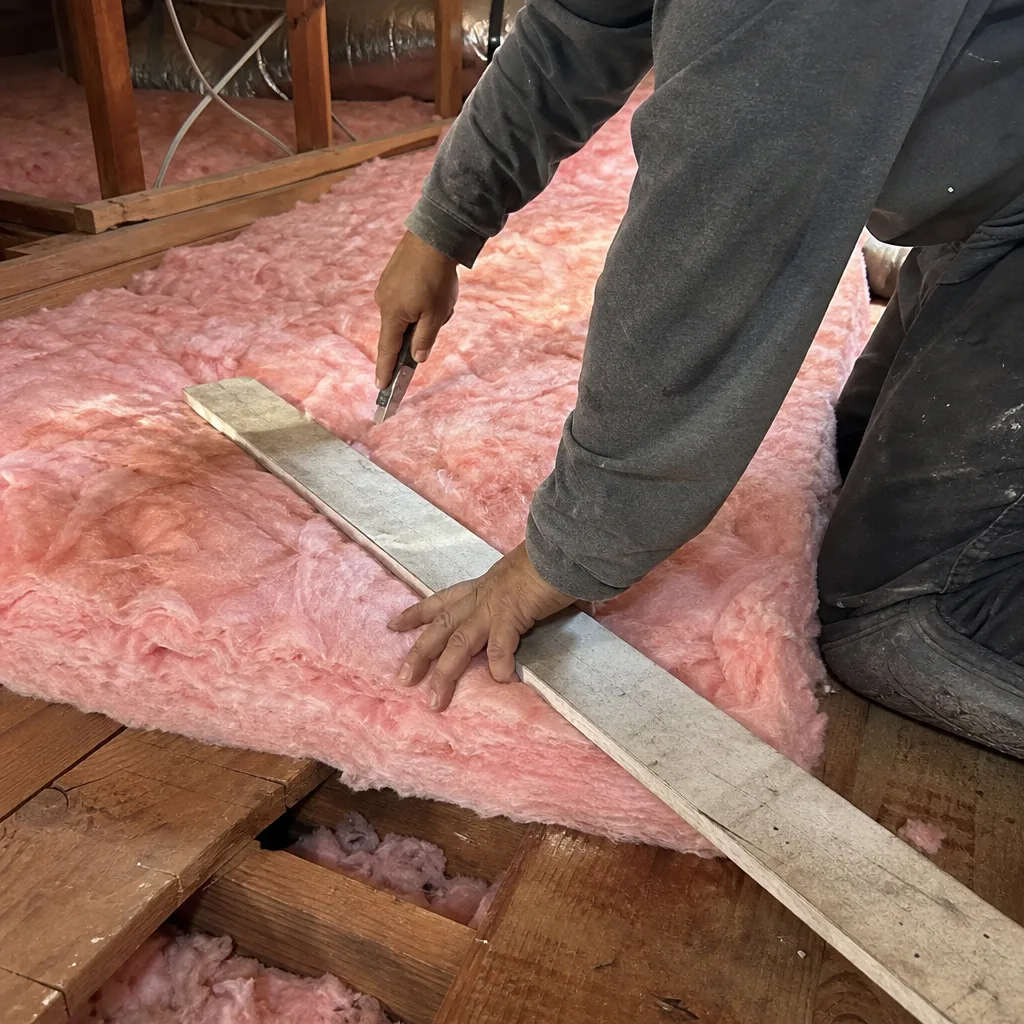
Pest damage to insulation is almost never visible from the living space until it’s extensive. By the time homeowners hear scratching or smell odor, the insulation assembly has typically been compromised for months. Early detection requires attic inspection, which most homeowners never perform.
What to Look For During an Attic Visit
- Runways in blown insulation. Rodents compress loose-fill fiberglass or cellulose into narrow paths, 3-4 inches wide, between entry points and nesting areas. The insulation depth drops from 12-14 inches to 2-3 inches in these channels. In La Habra, we see this most in homes near La Habra Boulevard and Harbor Boulevard, where mature trees provide roof access.
- Compressed batt edges. Fiberglass batts pushed to the sides of joist bays, with the center of the bay cleared to the drywall below. This indicates repeated travel, not random disturbance.
- Entry points at eave soffits. Gaps where the roof deck meets the top of the exterior wall, often hidden by fascia boards. A gap of 3/4 inch is sufficient for roof rats; 1/4 inch for mice. These are air leaks as well as pest highways.
- Insulation staining. Dark streaks or localized discoloration, distinct from uniform dust accumulation. Rodent oils, urine, and feces change insulation chemistry and reduce R-value.
- Nesting material accumulation. Shredded paper, landscape fabric, or insulation itself gathered in corners near HVAC equipment or recessed light housings, where warmth is available.
The critical threshold: if you find any of these signs, the insulation in affected areas requires removal and replacement, not supplementation. Rodent-contaminated insulation cannot be effectively sanitized in place. We document this with photos on every inspection - part of the Documented Photo Record included on every visit, not available on request.
Homes in La Habra’s hillside areas - the zones above Idaho Street and north of Whittier Boulevard - see elevated pest pressure due to interface with open space. An attic insulation maintenance checklist for La Habra homeowners can guide these annual inspections, particularly after September when roof rats begin seeking winter harborage.
Moisture, Mold, and When to Call Immediately
Some insulation warning signs indicate active damage to the building structure and require contractor response within days, not weeks. Others are monitor-and-schedule situations. The distinction matters for both cost and health.
Immediate Response Required
- Moisture staining on ceiling drywall that expands or changes color between inspections. This indicates active roof leak or condensation event, and wet insulation loses essentially all R-value while supporting mold growth.
- Visible mold on attic sheathing - the plywood or OSB under your roof shingles. Any surface mold on sheathing indicates ventilation failure, air leak condensation, or both. In La Habra’s climate, attic mold accelerates rapidly once established.
- Live pest infestation with audible activity in walls or ceiling. Active rodents or raccoons in the attic create new entry points and compress insulation nightly.
- Sagging or waterlogged insulation in any location. Wet fiberglass or cellulose cannot be dried in place; it must be removed.
Monitor-and-Schedule Situations
- Uniform dust accumulation on attic insulation surface. Normal in La Habra’s dry climate; indicates air movement but not active failure.
- Insulation settled below joist tops in areas without air leaks. Common in homes 15+ years old; reduces R-value gradually but doesn’t create immediate risk.
- Single-room temperature variation under 3°F with no moisture signs. Schedule for next convenient appointment; not urgent.
The Haven Standard requires that we flag any immediate-response condition during inspection, provide photographic documentation, and explain why timing matters. We’ve seen La Habra homeowners delay mold remediation by two seasons because the attic “wasn’t that bad,” only to find sheathing replacement required instead of cleaning.
La Habra Climate Factors That Accelerate Insulation Failure
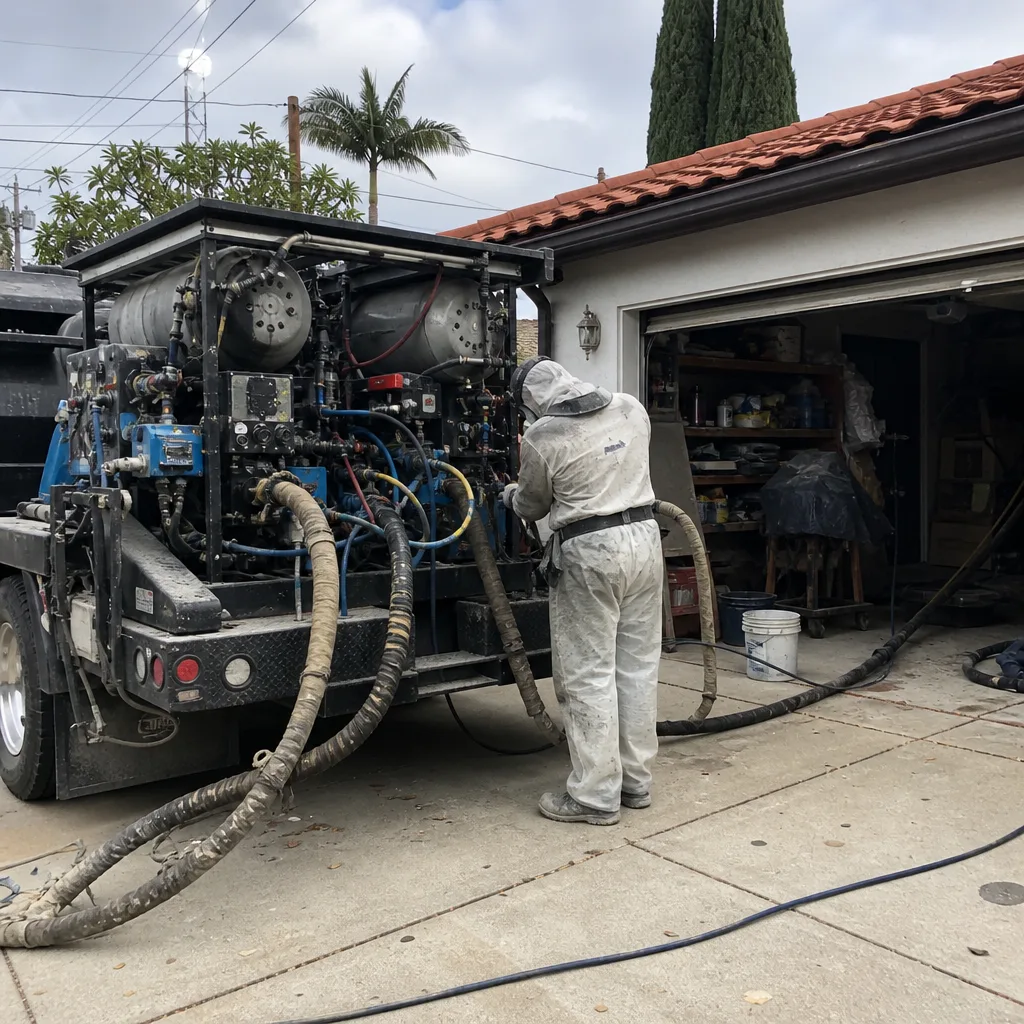
La Habra’s specific climate and construction history create insulation stress patterns that differ from coastal Orange County and inland Riverside County. Understanding these factors helps interpret warning signs correctly.
Attic temperature extremes. La Habra sits in a thermal transition zone. Summer attic temperatures reach 140-150°F, comparable to inland locations. Winter overnight lows drop to 38-42°F, creating meaningful heating loads. This wide swing - covered in our Seasonal Insulation Care for La Habra guide - cycles attic insulation materials through expansion and contraction annually, accelerating settling in loose-fill products and joint separation in batt installations.
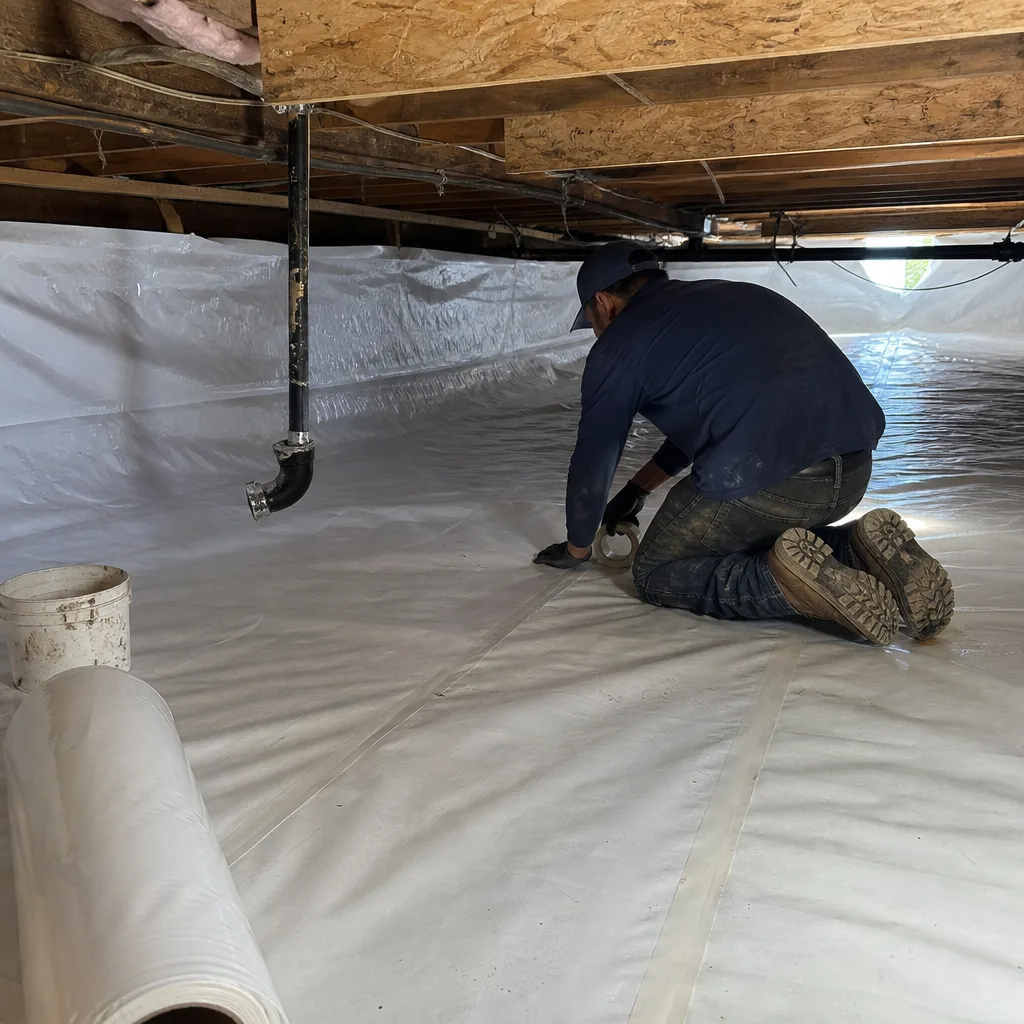
Marine layer influence. Morning fog penetration from the southwest, particularly in spring, introduces moisture into attic spaces with inadequate ventilation. We’ve found mold on sheathing in La Habra homes that would be dry in Fullerton or Brea, simply because the marine layer lingers longer here. Crawl space encapsulation & vapor barrier in La Habra addresses the ground moisture component, but attic ventilation must handle the atmospheric contribution.
Seismic history and construction era. Much of La Habra’s housing stock was built 1955-1985, with significant construction in the decade following the 1971 San Fernando earthquake. Framing practices of that era used minimal air sealing - no top plate gaskets, no sealed electrical penetrations, unsealed duct boots as standard. These homes were designed for natural ventilation (leaky) and are now being asked to perform as tight envelopes. The gap between design intent and modern expectation is where most warning signs originate.
Code evolution. California’s Title 24 energy code has tightened three times since most La Habra homes were built. Current code requires R-38 minimum in attics for retrofit work; many existing homes have R-19 or less, often degraded. When we perform topside attic insulation La Habra home assessments, we measure actual depth and condition, not assumed original construction.
Materials matter in this climate. Owens Corning fiberglass loose-fill maintains dimensional stability through La Habra’s temperature swings better than some alternatives. Johns Manville batts perform well in wall cavities where settling is constrained. For homeowners considering spray foam insulation in La Habra, Demilec and Icynene products offer air-sealing and insulation in one application, which addresses the top plate leaks we see repeatedly in this market.
Common Mistakes to Avoid
- Blowing new insulation over old without air sealing first. This is the most common error we correct in La Habra. Adding R-value over an unsealed attic floor traps moisture, hides air leaks from future detection, and wastes material. Envelope will never blow insulation over an unsealed attic floor; air sealing of top plates, can lights, and penetrations is completed before any insulation is added.
- Replacing HVAC equipment before diagnosing envelope. A 4°F room temperature gap will not be solved by a larger compressor. We’ve documented blower-door readings of 4,800 CFM50 in homes where the homeowner had received three HVAC replacement quotes. Air sealing dropped the load calculation by 25%.
- Assuming all insulation types perform equally in La Habra’s climate. Cellulose settles faster in high-attic-temperature environments. Fiberglass batts perform poorly when compressed by storage or foot traffic. Spray foam requires proper application temperature and thickness to achieve rated R-value. The right material depends on the specific assembly and access.
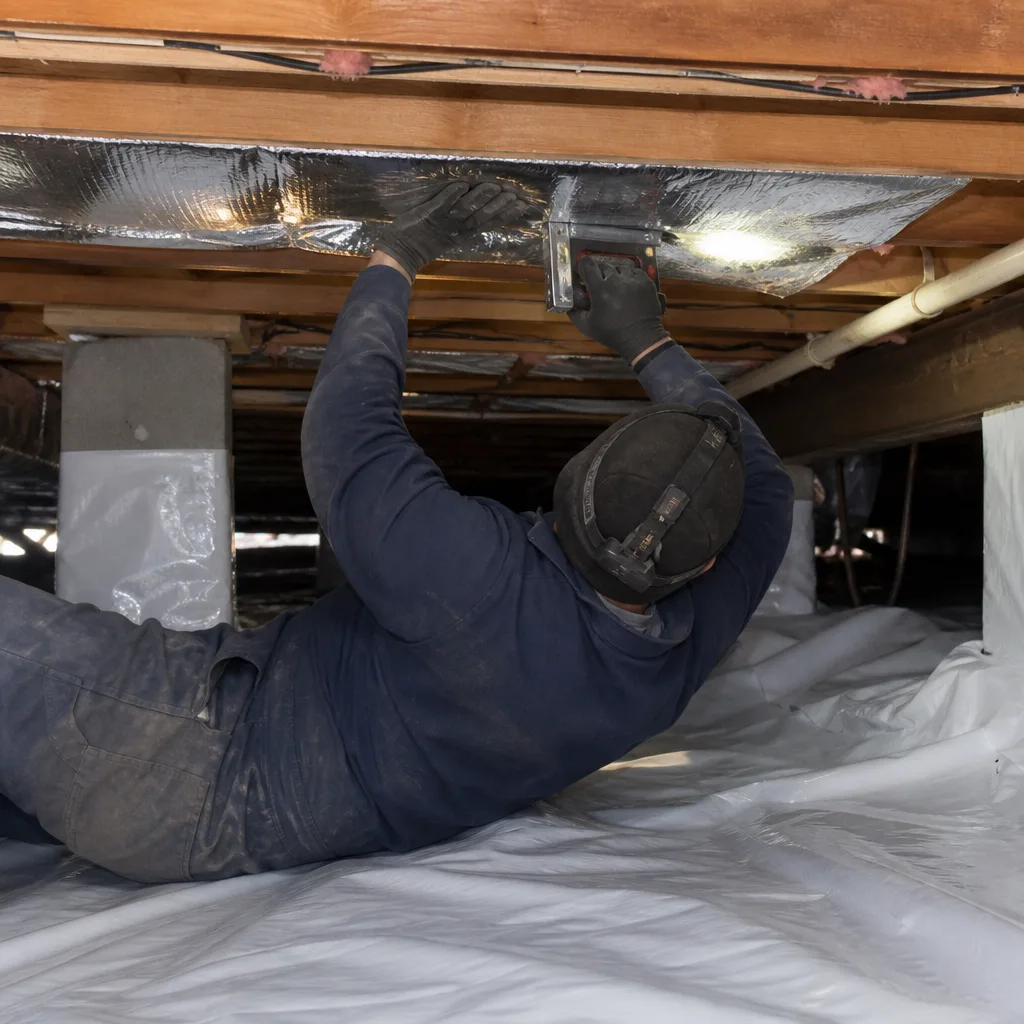
- Ignoring the crawl space. In La Habra’s flatland neighborhoods south of Whittier Boulevard, many homes have vented crawl spaces with minimal insulation. Winter floor cold is attributed to “old house character” when it’s actually a solvable envelope failure. Crawl space encapsulation & vapor barrier in La Habra transforms comfort in these homes.
- DIY removal of contaminated insulation without respiratory protection. Rodent droppings in attic insulation can carry hantavirus. Disturbing old insulation without N95 minimum protection, or without wetting material first to suppress dust, is a genuine health risk. We use HEPA filtration and proper PPE on every removal job.
- Accepting a verbal estimate for envelope work. Every job begins with a written price - no work starts without it. A verbal quote for insulation cannot be compared, cannot be warranted, and leaves scope undefined. Haven Standard Clause 1: flat price, written scope, written warranty before anyone lifts a tool.
When to Call a Professional
Call for same-day assessment if you observe moisture staining that is expanding, visible mold on any attic surface, or active pest noise in walls or ceiling. These conditions damage structure and degrade air quality; delay increases remediation cost.
Schedule within two weeks for persistent room temperature variations over 3°F, utility bill increases in both seasons, or if your home was built before 1985 and has never had a blower-door test or professional air-sealing work. The diagnostic visit is straightforward: we measure, photograph, and provide a written scope with flat pricing.
Topside Attic Insulation La Habra offers free estimates in La Habra - call (562) 267-3291. Every estimate includes a Documented Photo Record of conditions found, and on applicable jobs, we provide before-and-after blower-door numbers so you can verify the air-sealing result. The 365-Day Done Right Promise applies to all completed work: if it’s not done right, we make it right.
Frequently Asked Questions
Most attic insulation removal and replacement jobs in a 1,500-2,000 square foot La Habra home run $3,800-$6,500, including air sealing of top plates and penetrations. Spray foam applications in the same footprint typically range $5,500-$9,000 depending on thickness and access difficulty. These ranges reflect 2024-2025 material and labor costs in the North Orange County market. Call (562) 267-3291 for an exact quote - estimates are free, and we provide a Written Price Before Any Work Starts.
Only if the existing insulation is dry, uncontaminated, and the attic floor is already air-sealed. In our experience across La Habra homes, fewer than 20% of attics meet all three conditions. Blowing new material over wet, compressed, or pest-affected insulation traps problems and wastes money. We inspect first, document conditions with photos, and specify exactly what stays and what goes.
Compare 24 months of bills season by season. If both winter heating and summer cooling increased proportionally - say 20% and 22% - the envelope is leaking. If summer spiked 35% while winter rose only 5%, your AC or heat pump is the primary issue. A blower-door test removes the guesswork entirely. Call (562) 267-3291 to schedule one; we publish the numbers so you can see the result.
Current California Title 24 standards require R-38 minimum for attic insulation in retrofit applications, and R-49 for new construction in Climate Zone 8 where La Habra is located. Many existing homes have R-19 or less due to settling and age. We measure actual installed depth during every inspection and specify the upgrade path to meet or exceed code.
For homes with complex attic geometry, numerous penetrations, or severe top plate leakage, spray foam often justifies the premium because it air-seals and insulates simultaneously. In simpler attics with straightforward access, blown fiberglass with meticulous air sealing achieves comparable blower-door results at lower cost. We evaluate both paths and quote each, using materials from Owens Corning, Johns Manville, or Demilec depending on the application. No proprietary product lock-in.
We answer calls with a live person 24/7 - no voicemail loops. For active moisture or mold, we schedule within 24-48 hours in La Habra. The inspection includes thermal imaging, moisture meter readings, and a Documented Photo Record. If insulation removal is required, we contain the work area with negative air pressure and HEPA filtration. Call (562) 267-3291.
The Bottom Line
Insulation failure in La Habra rarely announces itself with visible deterioration. It shows up in utility bills that climb in both seasons, in rooms that never quite match the thermostat, in dust patterns near ceiling fixtures, and in attic conditions that require deliberate inspection to discover. The $30 infrared thermometer, the 24-month bill comparison, and knowing which symptoms demand immediate response versus scheduled attention - these are among the more guides & resources that convert vague discomfort into actionable diagnosis. When you’re ready to move from observation to solution, the work should begin with measurement, continue with written scope and price, and end with documented results you can verify. That’s the Haven Standard, and it’s how we’ve approached every one of the 9,000+ homes we’ve sealed and insulated since 2016.
Written by Wes Okafor, Owner at Topside Attic Insulation La Habra, serving La Habra since 2016.