
Blown-In Attic Insulation in La Habra, CA
Blown-in attic insulation in La Habra typically costs between $1,400 and $3,200 for a standard single-story home, and most jobs are completed in a single day. The process involves mechanically blowing loose-fill material – cellulose or fiberglass – across the attic floor to a specified depth, filling gaps that batt insulation almost always misses. If your attic currently sits below R-38, which is the minimum California Title 24 requires for this climate zone, blown-in is usually the most cost-effective way to get there, though How Much Does Attic Insulation Cost? (2026 Price Guide) - La Habra, CA can help you budget accurately.
At Topside Attic Insulation La Habra, we do one thing before any insulation goes in: we seal the attic floor. Top plates, can light penetrations, plumbing chases, electrical boxes – every air pathway gets sealed first. That is not an upsell. It is how the work is always done here. Skipping air sealing and then blowing insulation over it is like caulking over a gap you never filled; the conditioned air keeps moving, the insulation just slows it down slightly. Our full approach to the attic as a building system is covered on the Attic Insulation in La Habra page – this page focuses specifically on the blown-in process, what it costs, and what you should expect from start to finish. You can also reach us directly at (562) 267-3291; a live person answers, no voicemail.
Wes Okafor leads the Topside team, and under The Haven Standard that has guided every job since 2016, you receive a written price before anyone lifts a tool and a documented photo record when the crew leaves. Those are not options. They are how every job is closed.
When You Need Blown-In Attic Insulation
Not every La Habra home needs blown-in insulation, but the symptoms below are a reliable indicator. If two or more of these match your situation, it is worth getting an attic assessment.
- Your home was built before 1990 and the attic has never been touched. Older La Habra homes in neighborhoods like Whittwood and the streets north of Lambert Road frequently have original batt insulation that has settled to R-11 or lower – well below what the climate requires to keep cooling loads manageable through a Southern California summer.
- Your energy bills spike every June through September. La Habra sits in a climate zone where attic temperatures routinely reach 140-160°F on summer afternoons. When the insulation layer is thin, that heat radiates directly into living spaces, and the air conditioning runs longer to compensate. A standard before-and-after blower-door test – a pressurization reading that shows, in one number, how much air the envelope is losing – usually reveals the source.
- You feel warm or stuffy rooms on the top floor. Second-floor rooms and rooms directly under the attic are the first to show under-insulated attic floors. If the upstairs is noticeably warmer than downstairs by mid-afternoon, the attic is almost certainly part of the problem.
- Your existing insulation is damaged, compressed, or contaminated. Rodent activity is common in La Habra’s older housing stock. Nesting material, droppings, and urine degrade fiberglass batts quickly and can compress them enough to cut the R-value nearly in half. In those cases, we remove the damaged material first, then air-seal and re-insulate.
- You have open-concept remodeling or recent HVAC work in the attic. Any time attic penetrations are opened for ductwork, recessed lighting, or structural work, the air sealing layer is compromised. Blown-in insulation added on top of unsealed penetrations does not fix the underlying problem – it conceals it until the next energy audit reveals it.
- A home energy audit flagged attic air leakage as the primary loss point. If you have a written energy audit that identified the attic as the top contributor to air infiltration, blown-in combined with attic air sealing is typically the highest-return single improvement available.
Our Blown-In Attic Insulation Process
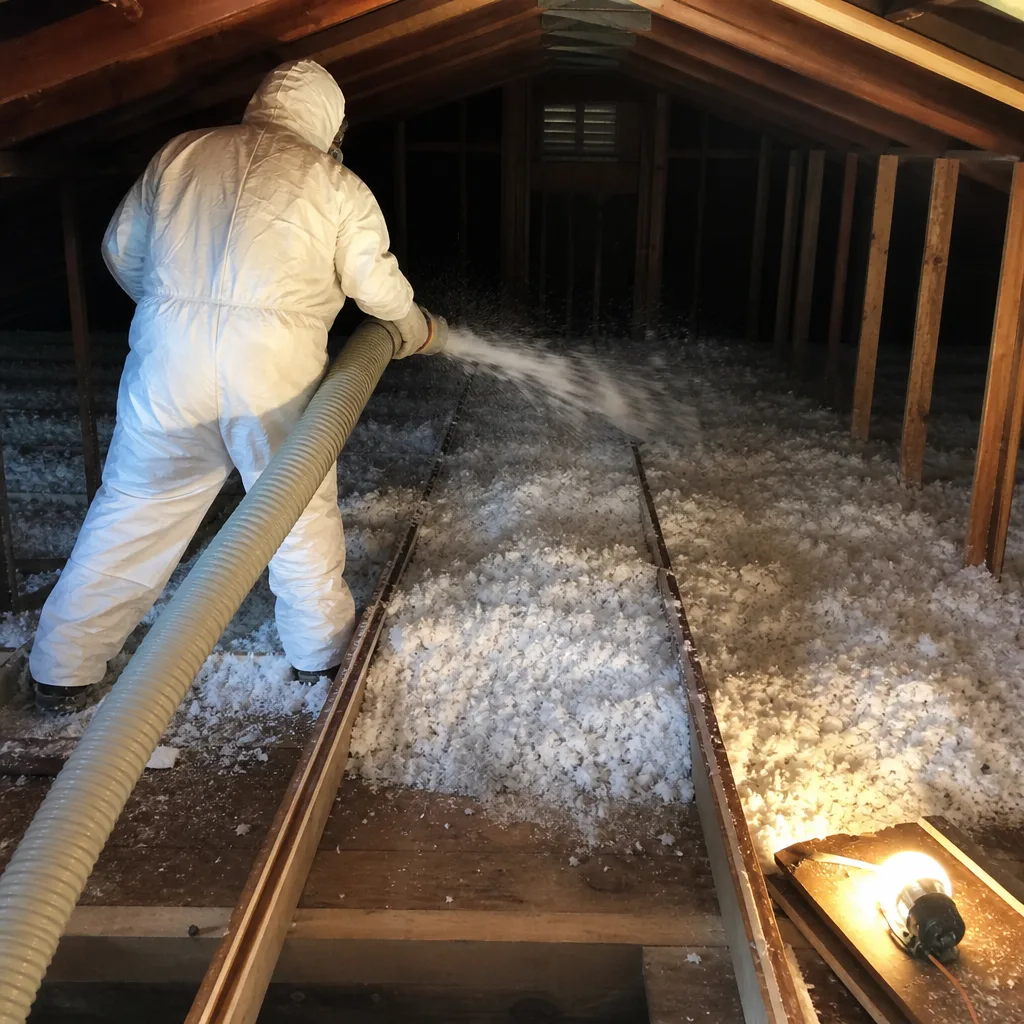
Every our Attic Insulation services job follows the same sequence. There are no shortcuts, and the steps below do not change based on job size or price point. This is what the work looks like from the day you call to the day we hand you the documentation.
-
Written scope and price before anything starts.
We assess the attic – current R-value depth, existing insulation condition, visible air leakage points, and attic access logistics – then provide a written price with a flat scope. Haven Standard Clause 1: no work begins without it. If you have a competing written estimate, we will read it with you as part of a free second opinion. You will know exactly what we found and exactly what it will cost before you make a decision. -
Attic air sealing – always first.
Before the blower machine is even unloaded, the crew seals every air pathway in the attic floor: top plates between wall cavities and the attic, recessed can lights (which are among the largest single air leakage points in a typical La Habra home), plumbing and electrical penetrations, and any HVAC boot gaps. We use two-part spray foam and fire-rated caulk depending on the location and gap size. On applicable jobs, we run a blower-door test – a calibrated fan mounted in the front door that depressurizes the house to a standard 50 Pascals – before and after sealing, and we publish both numbers in the job documentation so you can see the actual change in CFM50, not an estimate of it. -
Attic prep and depth marker installation.
We set insulation depth markers across the attic floor at regular intervals. These are the reference points that ensure the final installed depth matches the specified R-value – R-38, R-49, or R-60 depending on your scope. California’s Title 24 requires R-38 minimum in Climate Zone 8, where La Habra sits. Many homeowners upgrading an older home choose R-49 or R-60 to build a margin against summer heat gain. -
Blown-in installation.
We run the blower hose from the machine outside into the attic and distribute loose-fill material evenly across the floor. For most La Habra jobs we use GreenFiber cellulose or Owens Corning fiberglass blown-in, chosen based on the attic’s moisture profile and the homeowner’s preference. Cellulose has a slightly higher settled R-value per inch and better filling performance around irregular framing. Fiberglass is lighter and performs well in attics with any residual moisture concern. We do not lock you into a single material; the right product for your attic is the one we specify in writing. -
Depth verification and quality check.
After blowing is complete, the crew walks the attic to confirm the installed depth at every marker. Any low spots are corrected before the crew leaves. This is not a visual estimate – it is a direct measurement against the depth markers installed in step three. -
Documented photo record and close-out paperwork.
Before we pack the truck, we photograph the sealed penetrations, the depth markers at installed depth, and any areas of note. You receive those photos as part of the job record, along with the written scope, the warranty, and – on all applicable jobs – the before-and-after blower-door readings. This is what “done” looks like at Topside. You do not need to ask for documentation; it is included in every visit under The Haven Standard.
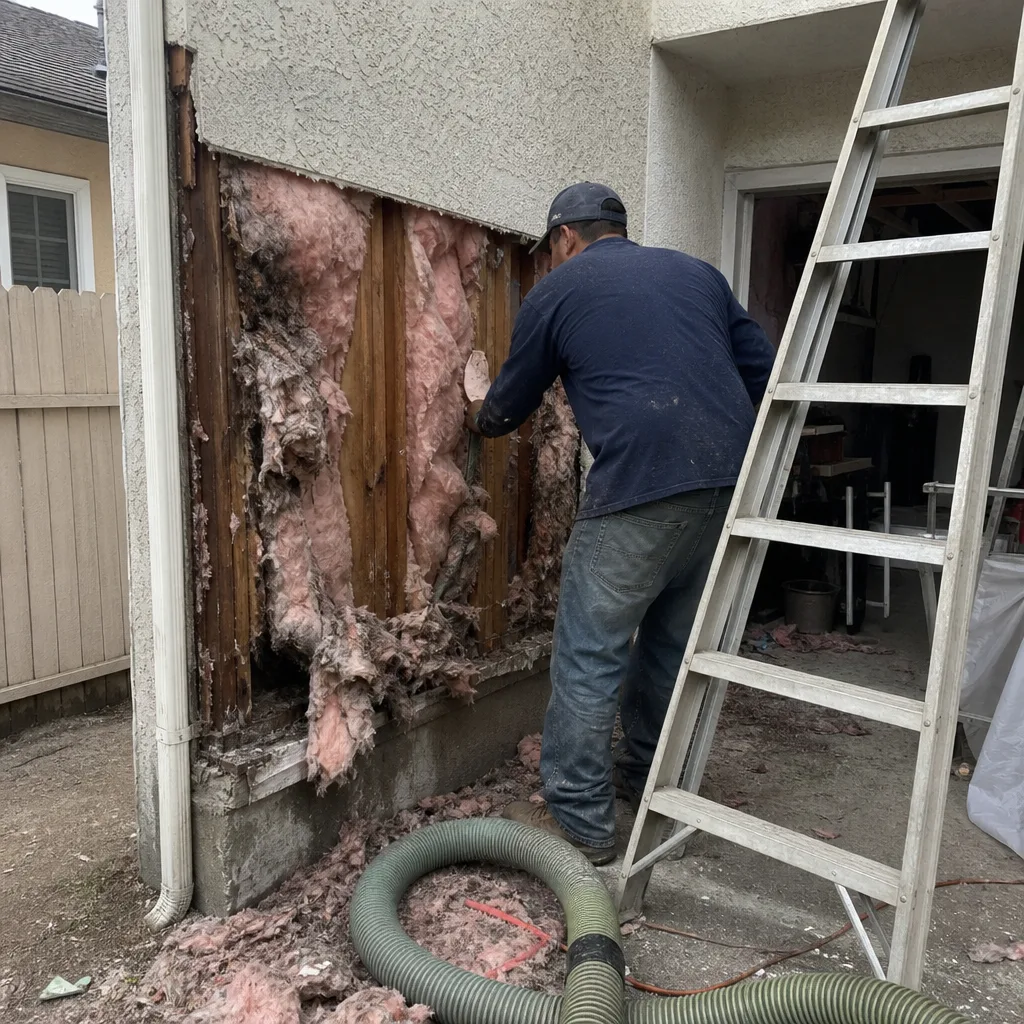 Before
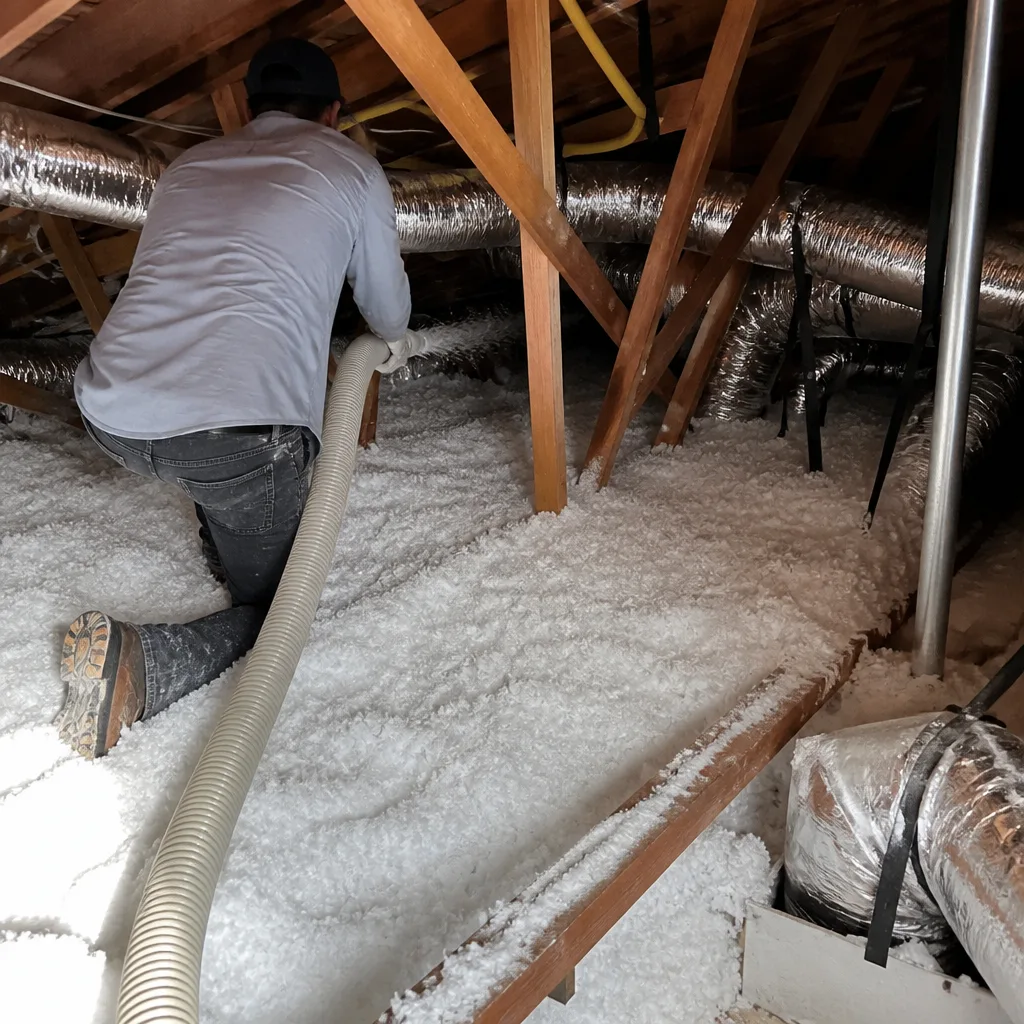 After
AfterBlown-In Attic Insulation Pricing in La Habra
Blown-in attic insulation in La Habra runs between $1.20 and $2.10 per square foot of attic floor area, installed, for most residential jobs. The range accounts for differences in attic access difficulty, current insulation condition, and target R-value. Below is a practical breakdown by home size.
| Home Size (Conditioned SF) | Approximate Attic SF | Typical Price Range |
|---|---|---|
| 1,000 – 1,400 SF | ~900 – 1,200 SF | $1,100 – $1,700 |
| 1,400 – 1,900 SF | ~1,200 – 1,700 SF | $1,500 – $2,400 |
| 1,900 – 2,500 SF | ~1,600 – 2,200 SF | $2,100 – $3,200 |
| 2,500 SF+ | Varies | Quoted individually |
What affects where your job falls in that range:
- Attic access. A standard pull-down stair with reasonable clearance is the baseline. Low-pitch attics common in La Habra’s 1960s ranch-style homes can require smaller hose configurations and more repositioning, which adds labor time.
- Existing insulation condition. If the existing material is in good condition, we can blow directly on top. If it needs removal first due to contamination or damage, that is a separate line item – typically $0.85 to $1.40 per square foot for removal alone – quoted in writing before any removal begins.
- Target R-value. R-38 requires roughly 11-12 inches of blown fiberglass or 10-11 inches of cellulose starting from zero. R-49 requires more material. The depth, and therefore the material cost, is specified in your written quote.
- Air sealing scope. Attic air sealing is included as a prerequisite on every job. The extent of the sealing – a modest number of penetrations versus a heavily modified attic with dozens of can lights and HVAC boots – affects total price. This is broken out as its own line in the written scope so you can see it separately.
All pricing above reflects jobs in the La Habra area as of 2025-2026. Material costs for GreenFiber and Owens Corning blown-in products can shift with supply conditions; your written quote locks the price for the job. Call (562) 267-3291 to schedule an attic assessment and receive a written estimate at no charge.
FAQs – Blown-In Attic Insulation
How long does blown-in attic insulation last in La Habra’s climate?
Properly installed blown-in insulation – either fiberglass or cellulose – lasts 20 to 30 years in a typical La Habra attic under normal conditions. Southern California’s dry summers are generally favorable for insulation longevity; the main threats are moisture intrusion from a roof leak, pest activity, and physical disturbance from HVAC work. Cellulose can absorb and release small amounts of moisture without losing R-value, but sustained moisture exposure from an active leak will degrade it over time. We photograph the attic floor and any areas of concern on every job, so you have a baseline record if a future inspection is needed. If you are uncertain about your current insulation’s condition, our assessment includes a visual inspection at no charge.
Is blown-in insulation better than batt insulation for an attic?
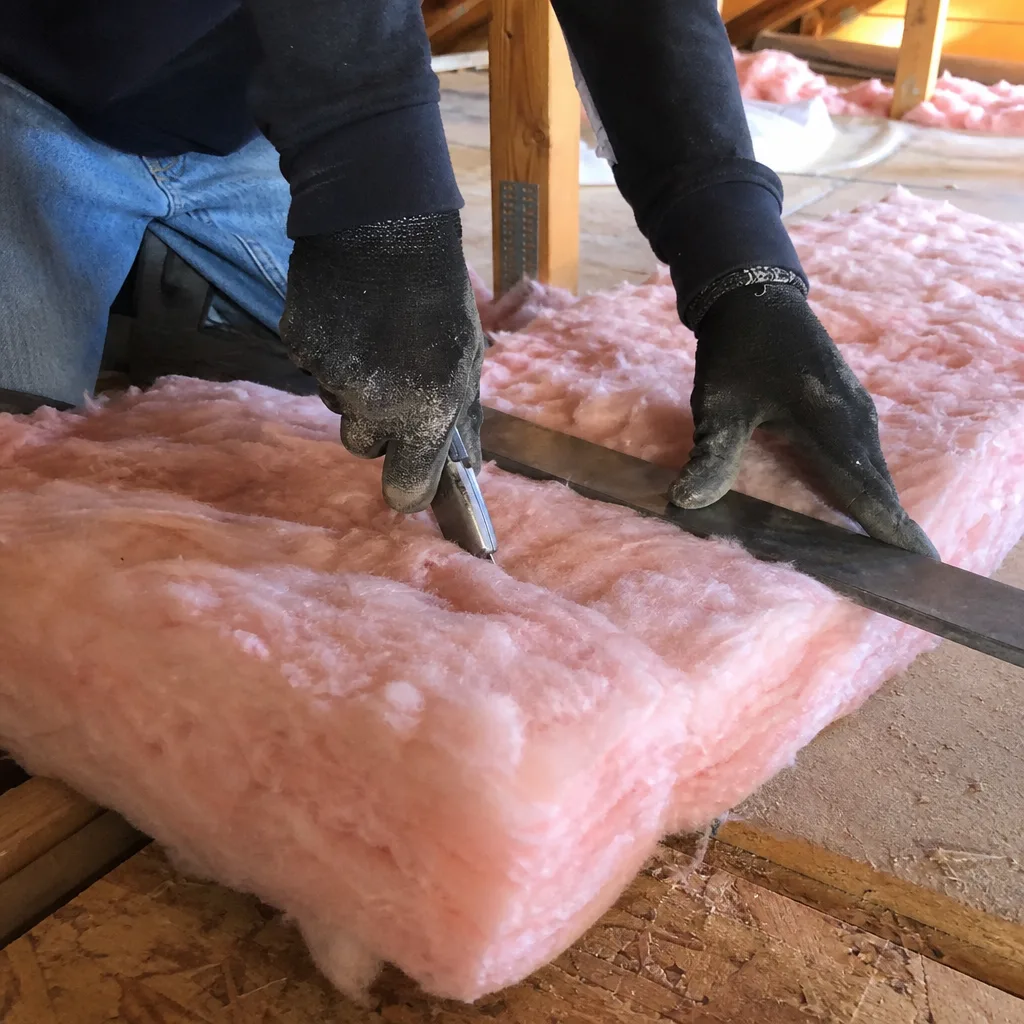
For attic floors specifically, blown-in outperforms batt insulation in most La Habra homes because it fills irregular framing cavities, wraps around obstructions, and does not leave the edge gaps that cut batt R-value by 20-40% in practice. Batt insulation relies on a precise friction fit between framing members; attic framing in homes built before the 1990s is rarely that uniform. The one exception is attic walls and rafter bays in cathedral ceiling applications, where Attic Batt Insulation or spray foam is often more appropriate. Your written scope will specify the right product for each zone of the attic based on what the assessment finds.
Do you need a permit for blown-in attic insulation in La Habra?
Adding blown-in insulation to an existing attic in La Habra generally does not require a building permit under the City of La Habra’s current building code, as long as no structural work, electrical modifications, or HVAC changes are involved. However, if the job includes insulation removal and replacement or if it is tied to an HVAC upgrade, a permit review is advisable. We confirm the permit status for every job in writing before work begins. If a permit is required for your specific scope, we will flag it in the written estimate so you know what to expect before any work starts. Wes Okafor reviews the scope on every job where there is any question about code applicability.
How do I know the insulation was actually installed to the right depth?
We install physical depth markers across the attic floor before blowing begins, then verify the installed depth at each marker when the job is complete. Any low spot is corrected on the same visit. The depth markers remain in the attic after the job – they are visible during any future inspection. Your job documentation includes photos of the installed depth alongside the written scope that specifies the target R-value. On jobs where Attic Baffles & Ventilation Prep and a blower-door test was conducted before and after air sealing, those readings are included in the same packet. You are not taking anyone’s word for it; the documentation tells you what was done and what was measured.
If you have additional questions about blown-in insulation, our full home service overview covers every part of the building envelope we work on.
Ready to Get a Written Price for Your La Habra Attic?
Topside Attic Insulation La Habra has assessed and insulated more than 9,000 homes since 2016, every one with a written price before the work started and a documented record when the crew left. If your La Habra home’s attic is under-insulated, air-leaking, or has never been properly assessed, the next step is a written estimate – not a ballpark, a flat written price with a named scope and a warranty attached.
Call (562) 267-3291 to schedule your attic assessment. A live person answers – no voicemail, no callback windows measured in business days. If you have a written estimate from another contractor, bring it; we will review it with you as a free second opinion. Under The Haven Standard, you will have everything in writing before anyone starts.
Written by Wes Okafor, Owner at Topside Attic Insulation La Habra, serving La Habra since 2016.