
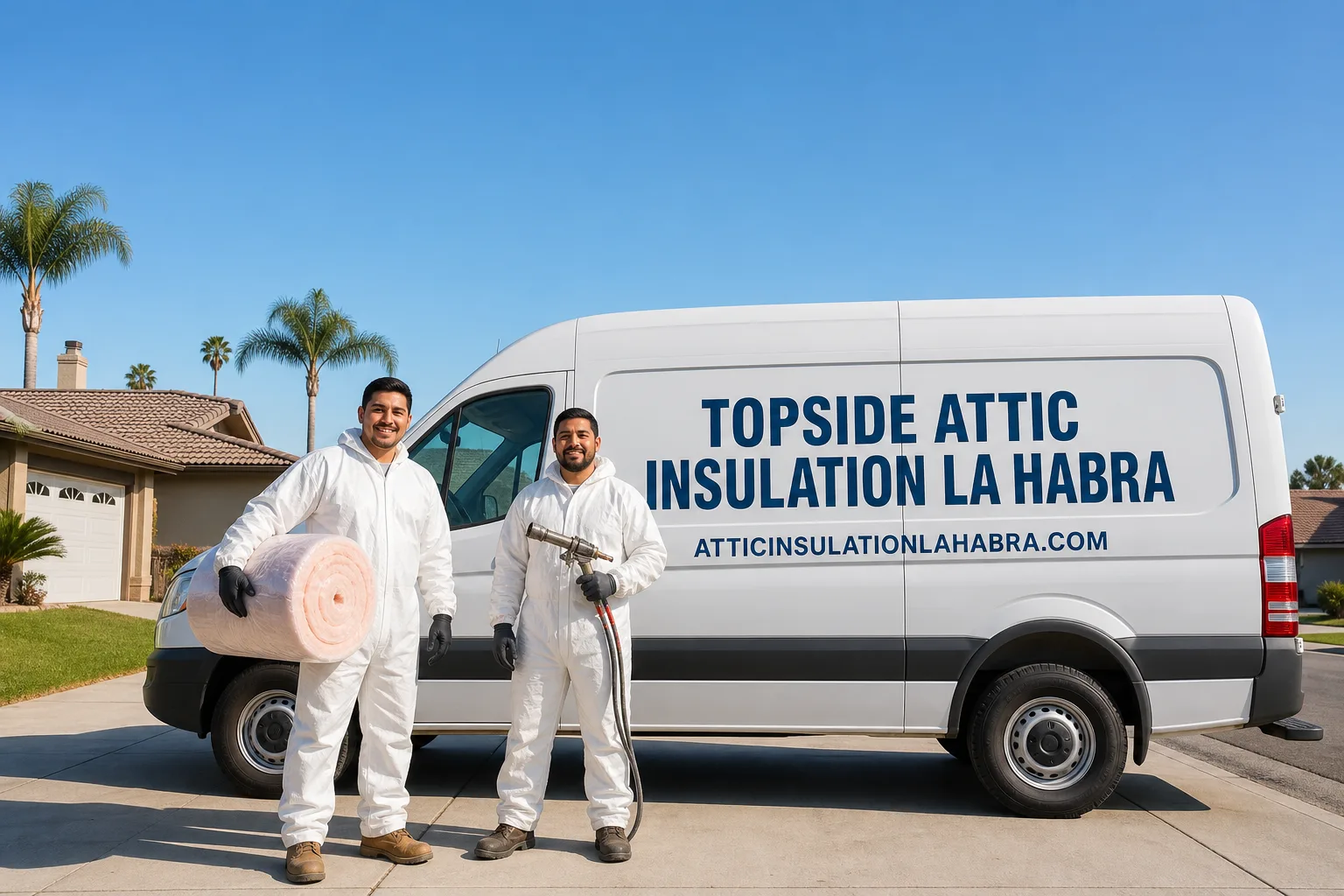
Fast, Reliable Blown-In Insulation Across Villa Park
Blown-in insulation in Villa Park typically runs $2.80-$4.50 per square foot for attic floors, with most estate homes falling between $3,200 and $6,800 depending on accessible square footage and whether we’re topping up or starting from the original R-11. We’re usually on-site within 24-48 hours of your call, and dispatch routes from our Los Angeles office with crews that know the acre-plus lots and gated drives off Santiago Boulevard and Villa Park Road. Call (562) 267-3291 for a written price before any work starts.
We’ve worked enough Villa Park homes to know the pattern: a 1970s split-level on a half-acre, the upstairs roasting while the downstairs struggles, and an attic that looks like a time capsule of thin rockwool and mouse damage. These aren’t tract houses with straightforward hatches. They’re custom builds with complex rooflines, cathedral sections, and enough square footage that a half-measure on insulation shows up immediately on the summer electric bill.
Why Topside Attic Insulation La Habra Is Villa Park’s Preferred Blown-In Insulation Company
Our Blown-In Insulation team has completed retrofits on more than forty Villa Park homes since 2019, from the ranch estates near Cerro Villa Middle School to the hillside properties off Lemon Heights Drive. We don’t quote over the phone for these jobs; we inspect the attic, measure the existing insulation depth, and deliver a written price with a photo record of what we found. That’s Haven Standard Clause 1, and we’ve applied it to every one of those homes.
Villa Park customers leave reviews that mention the same things: the blower-door number they got to show their spouse, the photo folder they received before the crew left, and the fact that we text when we’re en route rather than leaving them guessing on a half-mile private drive. Our response time to Villa Park averages next-day scheduling, with same-day available for attic inspections when the heat emergency is acute.
We know this city’s housing stock. The 1965-1985 custom builds, the semi-custom ranches with the odd dormer additions, the open-beam living rooms that were never meant to hold insulation. That local knowledge means we don’t waste a trip discovering what we should have known from the description.
Our Blown-In Insulation Services in Villa Park
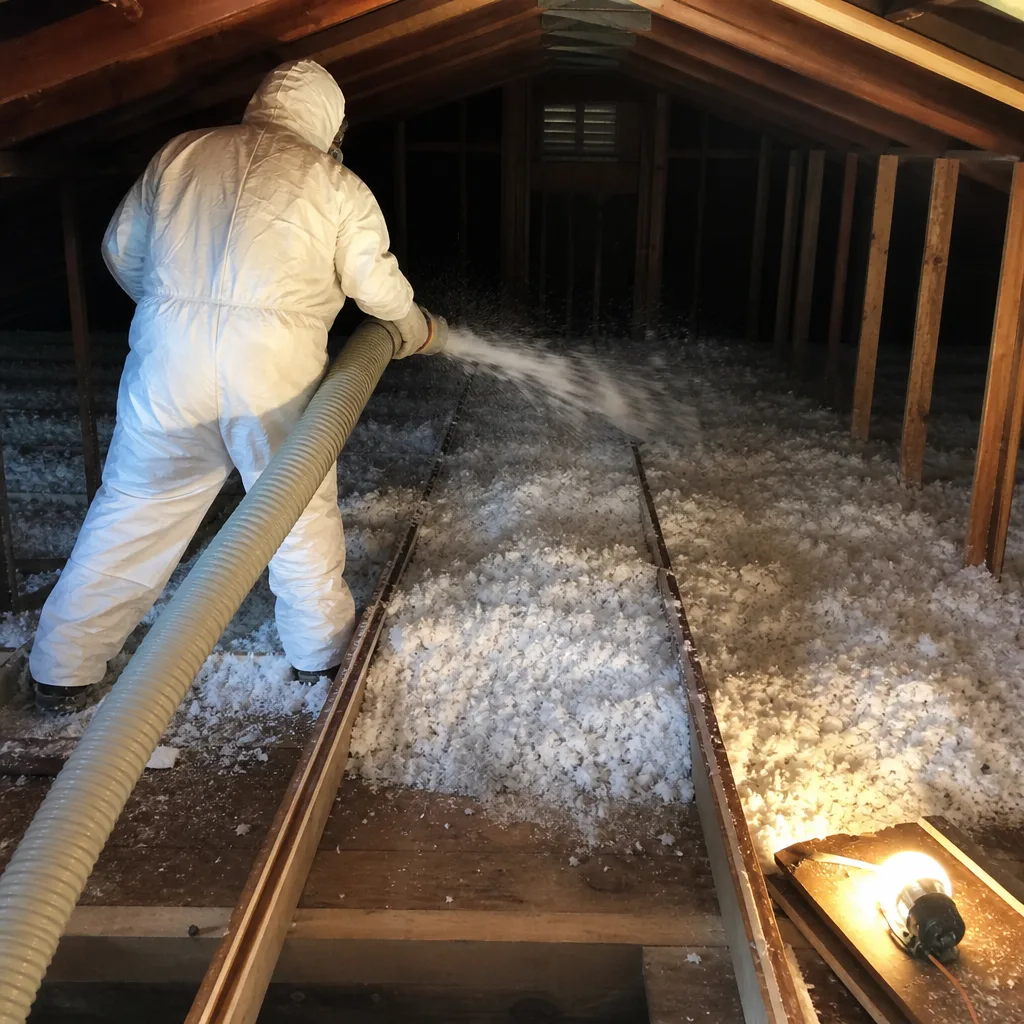
Blown-In Fiberglass
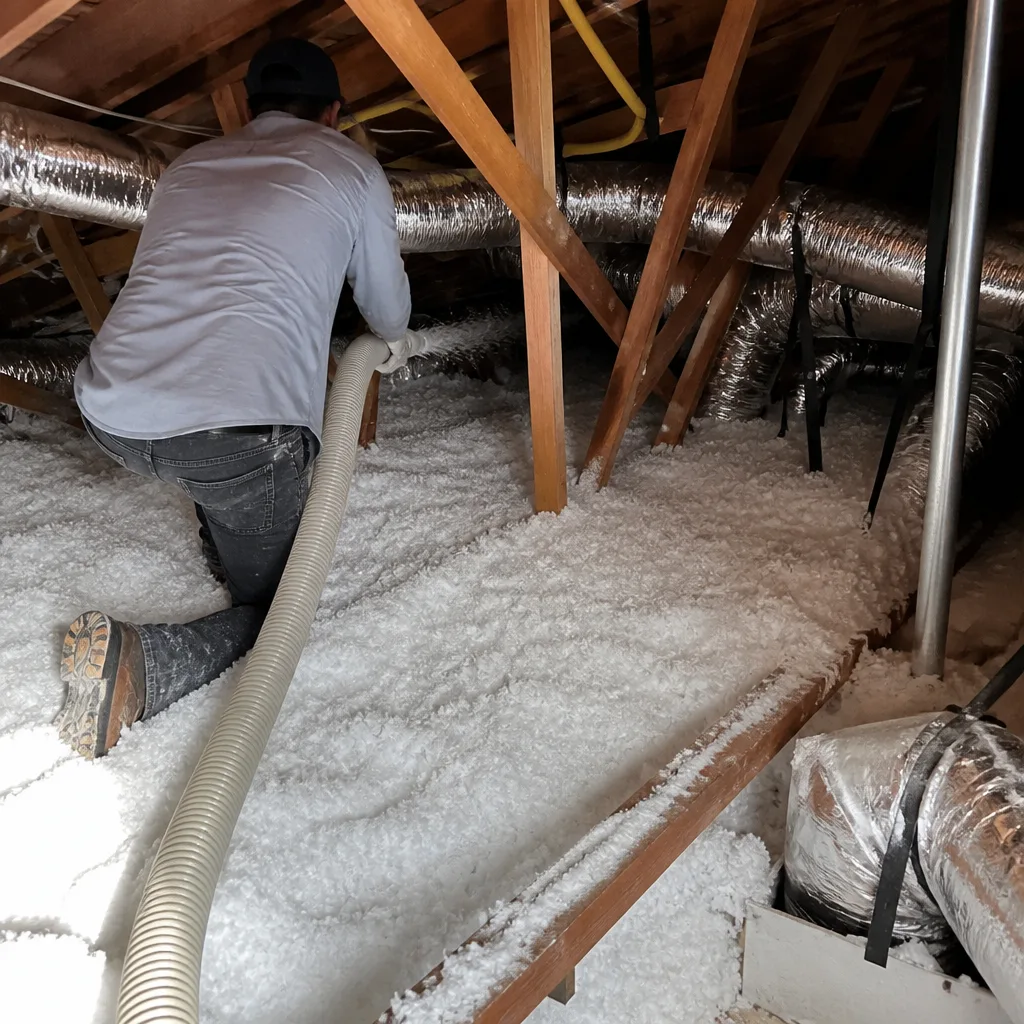
We blow Owens Corning and Johns Manville fiberglass to R-49 on flat attic floors in Villa Park, which is the depth that actually handles the 100°F-plus inland heat these homes endure. Fiberglass doesn’t settle as aggressively as cellulose, and for the deep fills these oversized attics need, that stability matters. We pair every blow with air sealing of top plates, can lights, and penetrations first; without that step, the Santa Ana winds pressurize the attic and the R-value you’ve paid for leaks out through gaps you can’t see from below.
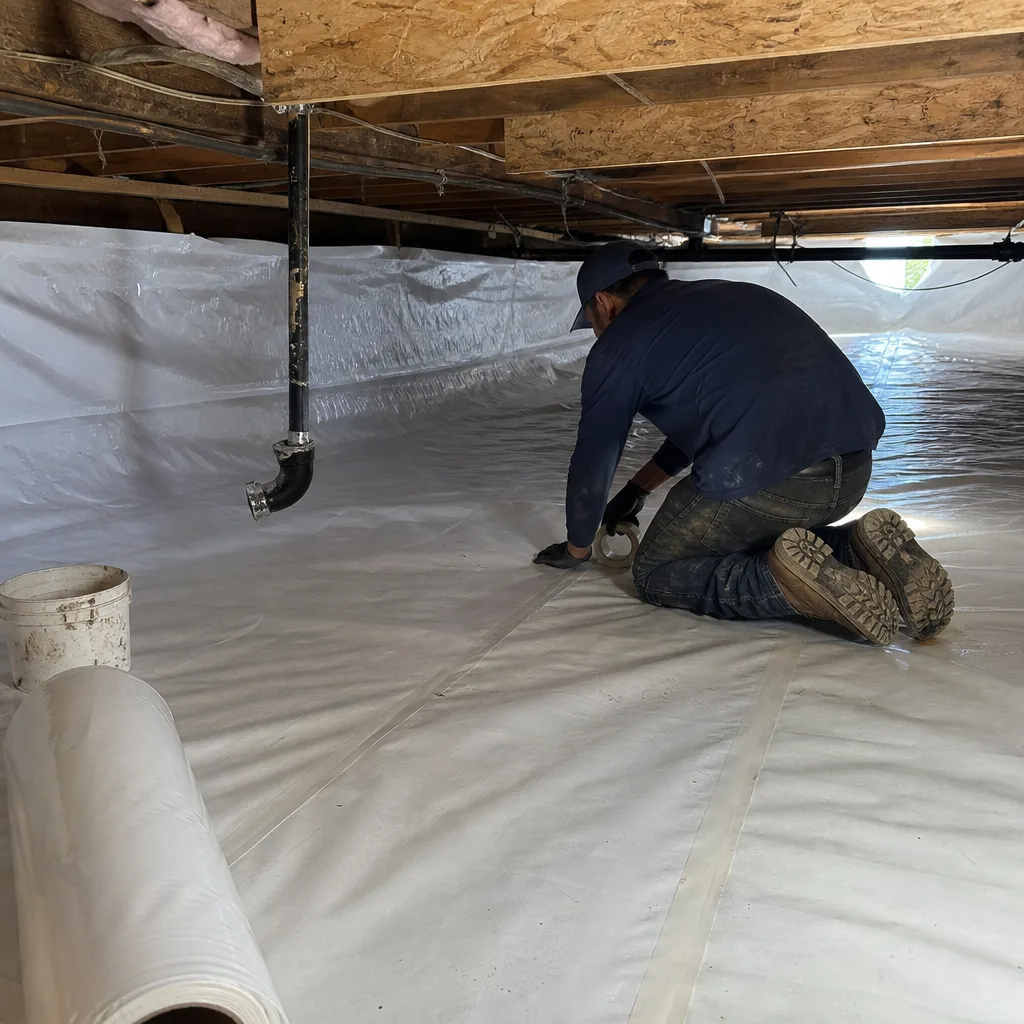
Blown-In Cellulose
GreenFiber cellulose works well for Villa Park homeowners who want a recycled-content fill and are topping up an attic that already has reasonable air sealing. We don’t recommend cellulose as the sole solution for homes with active roof leaks or significant rodent history, which we see often enough in these older attics to flag it honestly. When conditions are right, we dense-pack cellulose to R-38 or R-49 with a uniform depth marker every fifty square feet so you can verify the coverage yourself.
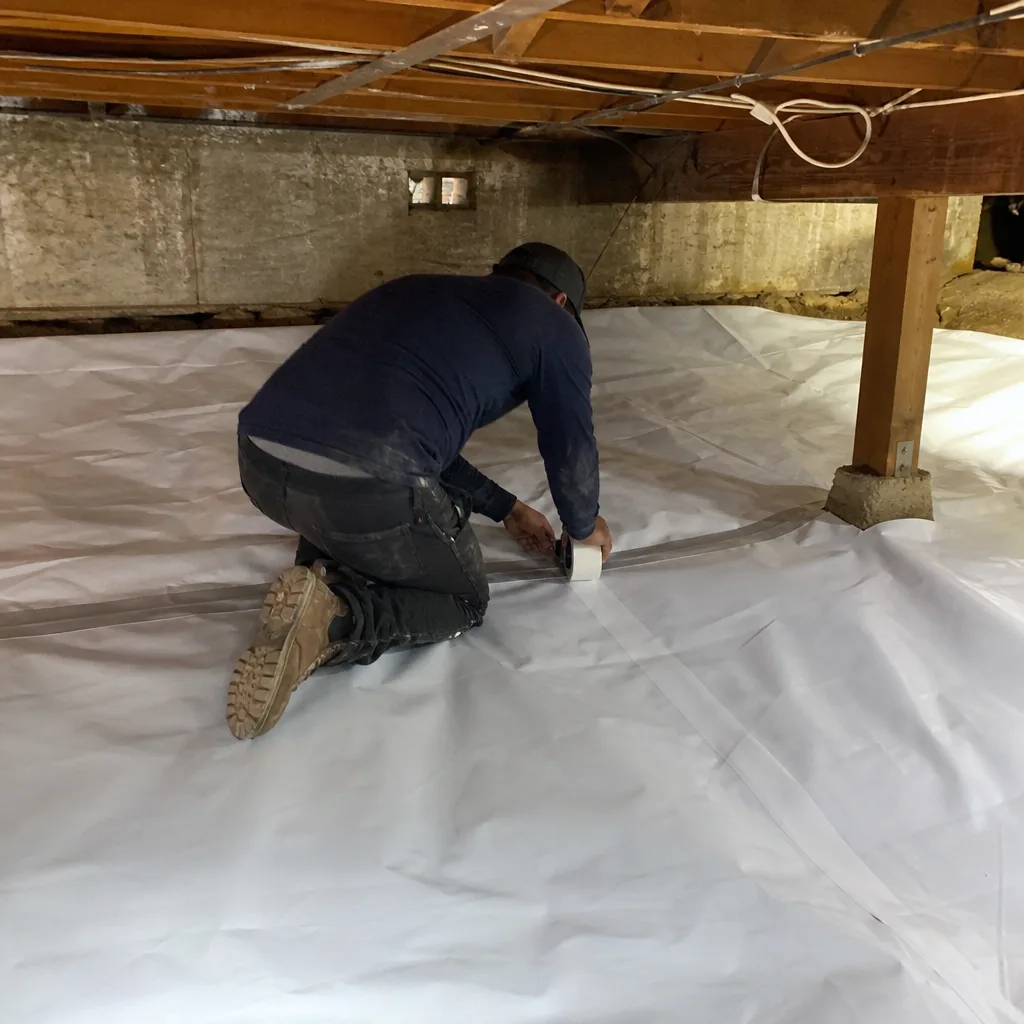
Blown-In Top-Up
Many Villa Park estates still carry the original R-11 or R-19 from 1975, now settled to something closer to R-8. A top-up blow brings the flat attic floor to current Title 24 standards without the cost of full removal, provided the existing material isn’t contaminated and the air sealing was addressed at some point. We inspect first, photograph the condition, and tell you straight whether a top-up makes sense or whether removal and restart is the honest recommendation. No work starts without that written price and scope.
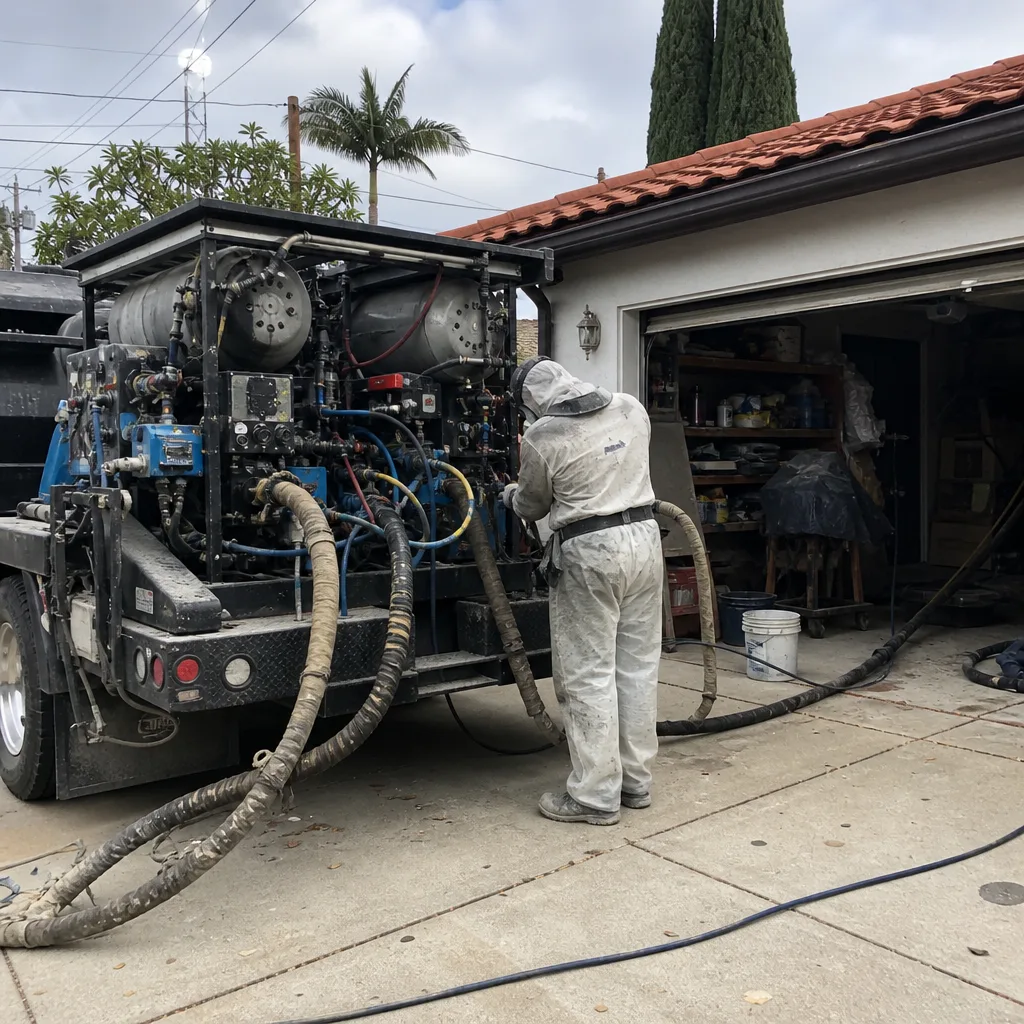
Dense-Pack Wall Insulation
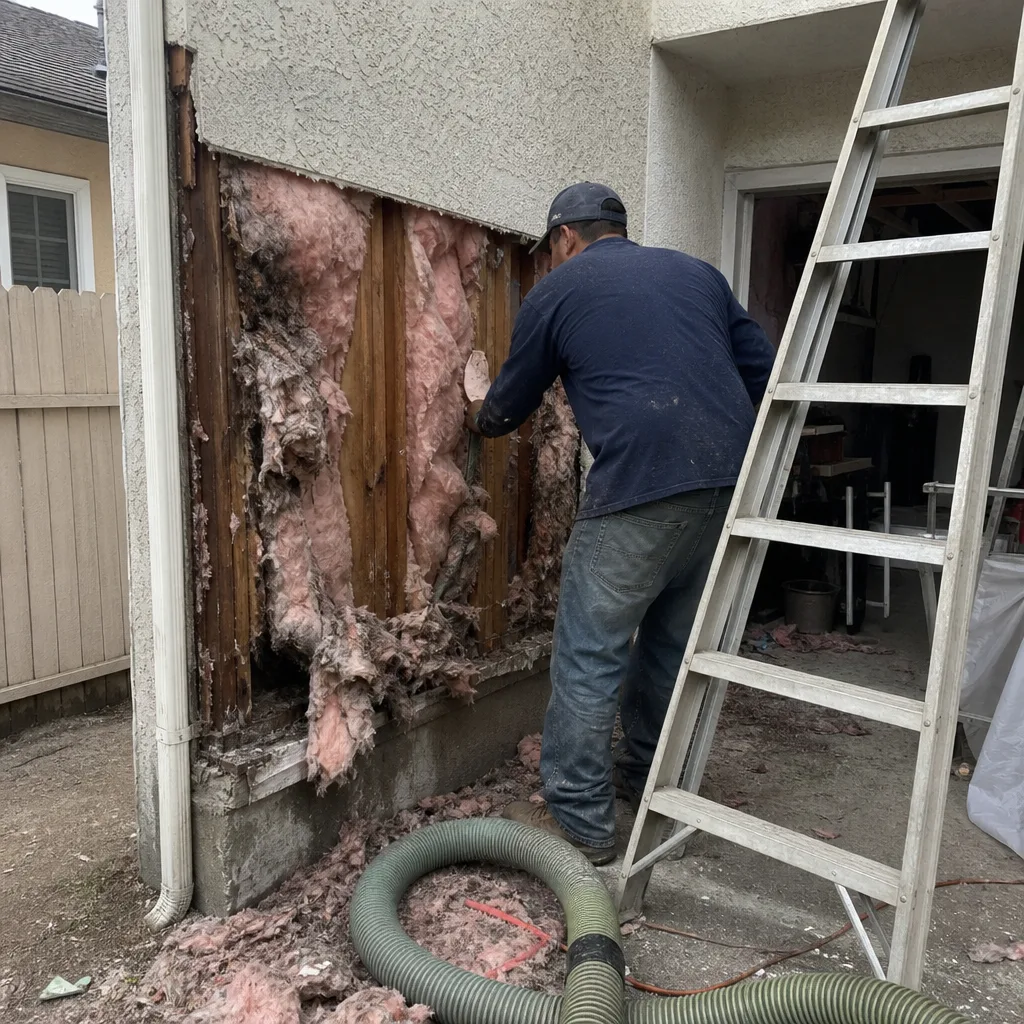
The 1960s and 1970s ranch homes along Villa Park Road and surrounding streets often have empty 2×4 stud cavities with no insulation at all. Dense-pack blown-in fills those walls from the exterior without full siding removal, using a fill tube and controlled pressure to pack cellulose or fiberglass to 3.5 pounds per cubic foot. It’s slower than attic work and costs more per square foot, but for homes where the walls are basically outdoor temperature in January, it’s the difference between a house that holds heat and one that doesn’t.
What happens when you call
- 1
A real person answersNo phone trees - you reach a local pro.
- 2
You get an upfront price rangeHonest numbers before anyone is dispatched.
- 3
A background-checked tech heads outLicensed & insured, dispatched right away.
- 4
You approve before work beginsNothing starts until you say go.
 Before
 After
AfterTrusted Brands We Service in Villa Park
We stock Owens Corning, Johns Manville, and Knauf blown-in fiberglass systems, with GreenFiber cellulose available for specified jobs. We don’t push proprietary products or pretend one brand is magic; we match the material to the assembly, the budget, and the performance target. For Villa Park’s estate homes, that usually means Owens Corning L77 loose-fill fiberglass for attic floors at R-49 depth, with the blower-door test afterward to prove the air sealing held. Parts and additional material are available without the multi-week wait times that plague smaller operators, because we maintain local inventory for the Orange County service area.
Common Blown-In Insulation Problems We See in Villa Park Homes
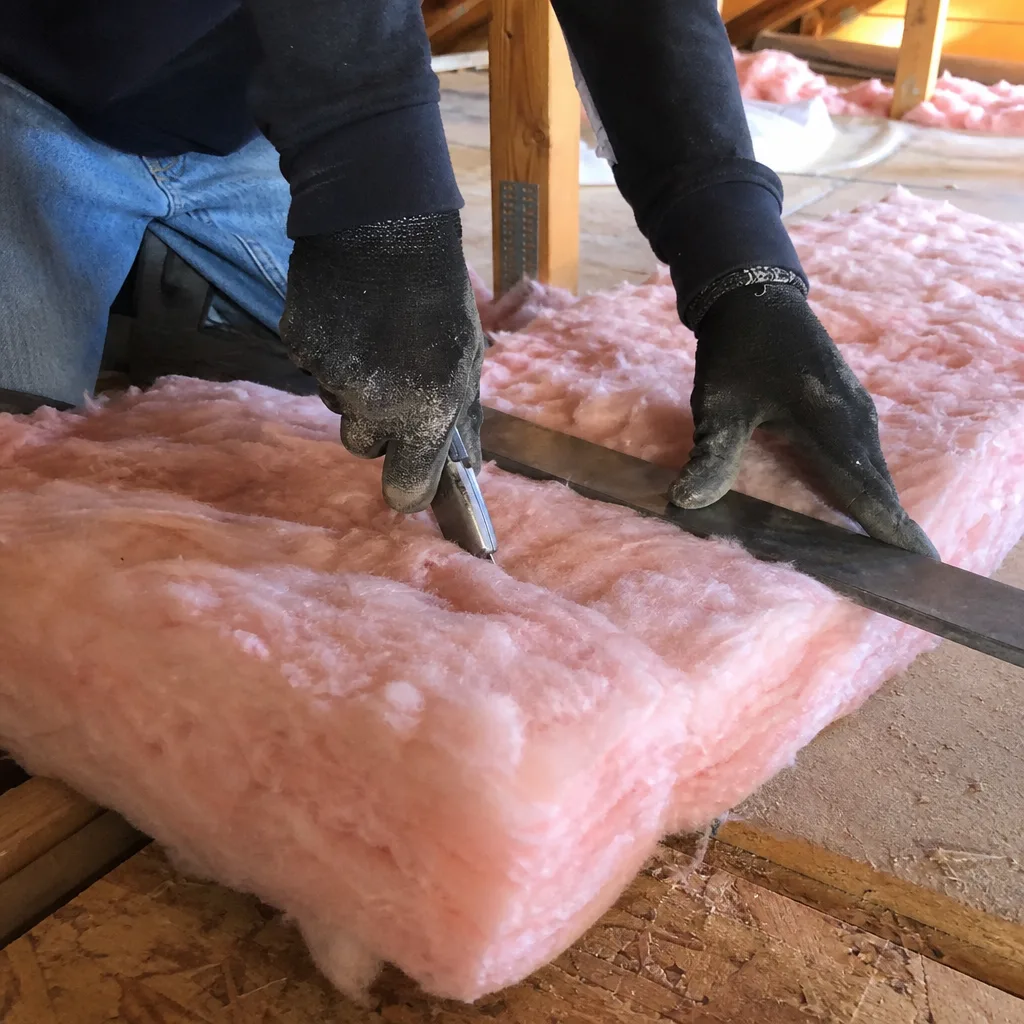
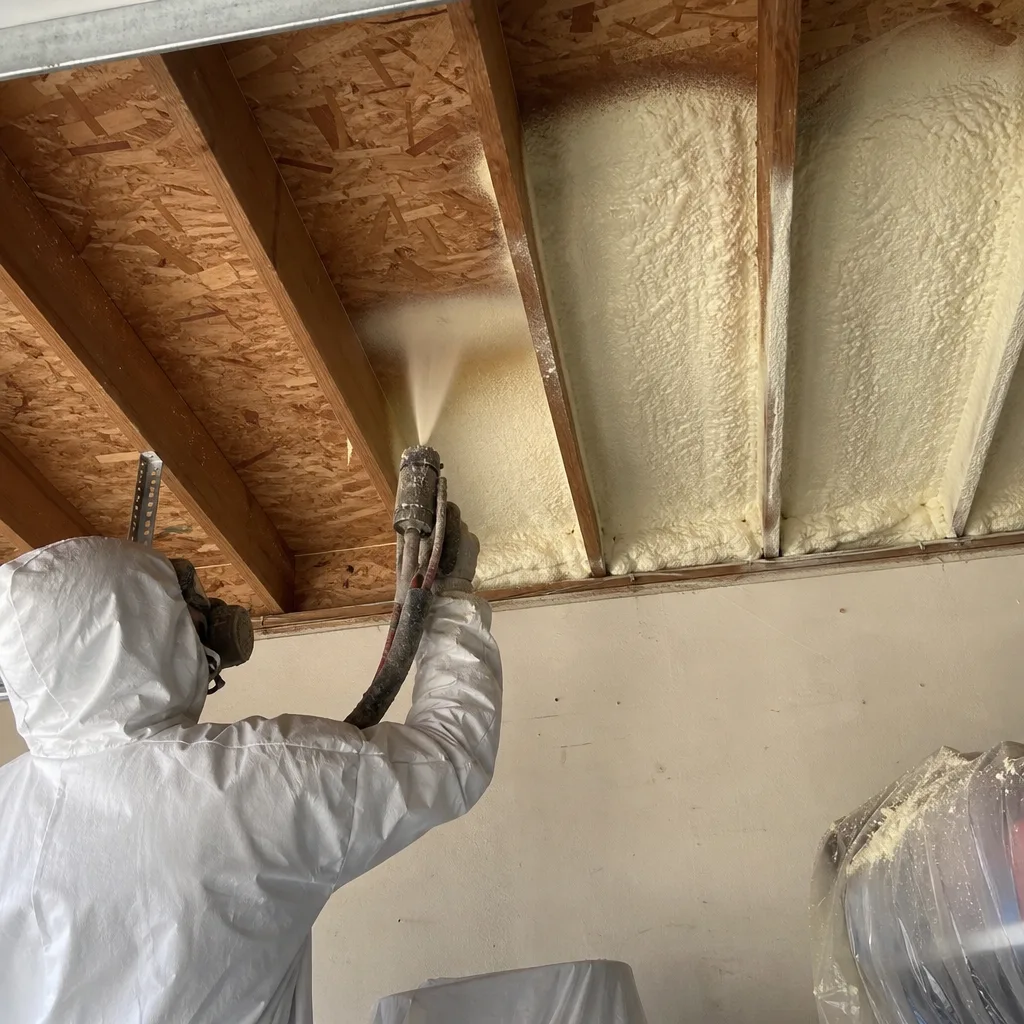
- Blowing cellulose or fiberglass over vaulted or open-beam ceiling sections. These ceilings have no flat attic floor to fill. The insulation falls through to the living space or sits uselessly on a beam. The only thermal envelope for these assemblies is closed-cell spray foam applied to the roof decking, period. We’ve seen competitors skip this and leave the homeowner with a $4,000 attic fill and a still-roasting great room.
- Skipping air sealing before the blow-in. The Santa Ana winds that funnel through Villa Park’s hillside position pressurize the attic and force hot air through every gap around can lights, top plates, and duct chases. New insulation over unsealed leaks performs at a fraction of its rated R-value. We seal first, test with the blower door, then insulate.
- Reusing original baffles and chutes on complex 1965-1985 rooflines. Those cardboard or foam baffles crumble or collapse after fifty years. When we blow deep insulation, they get buried, soffit intake chokes, and the eaves become convection ovens that melt roof shingles from underneath. We replace baffles as standard on every deep-fill retrofit.
- Ignoring the mouse-tunneled rockwool from original construction. Villa Park attics from this era often contain degraded old insulation with active rodent runs. Blowing new material over it traps the contamination, the odor, and the pest highway. We photograph the condition, quote removal when it’s warranted, and don’t pretend a top-up fixes everything.
Pricing for Blown-In Insulation in Villa Park, CA
| Service | Typical Range in Villa Park | What Moves the Price |
|---|---|---|
| Blown-in fiberglass attic floor, R-49 | $3,200 - $5,800 | Attic square footage, access difficulty, need for baffle replacement |
| Blown-in cellulose attic floor, R-49 | $2,900 - $5,200 | Existing material condition, air sealing extent required |
| Blown-in top-up to existing insulation | $1,400 - $2,800 | Current depth, contamination status, whether air sealing was prior-done |
| Dense-pack wall insulation | $4,500 - $8,200 | Wall square footage, siding type, interior finish protection needed |
| Air sealing + blower-door verification | $1,800 - $3,400 | Number of penetrations, can light count, top plate accessibility |
These ranges reflect what we’ve actually written for Villa Park homes in the past eighteen months. A 3,200-square-foot ranch with a straightforward hatch and clean attic lands near the bottom. A 5,500-square-foot custom with multiple dormers, buried soffits, and a vaulted section needing foam referral lands higher. We don’t estimate blind; we inspect, photograph, and deliver a written price with no obligation. Call (562) 267-3291 to schedule.
We Also Serve Cities Near Villa Park
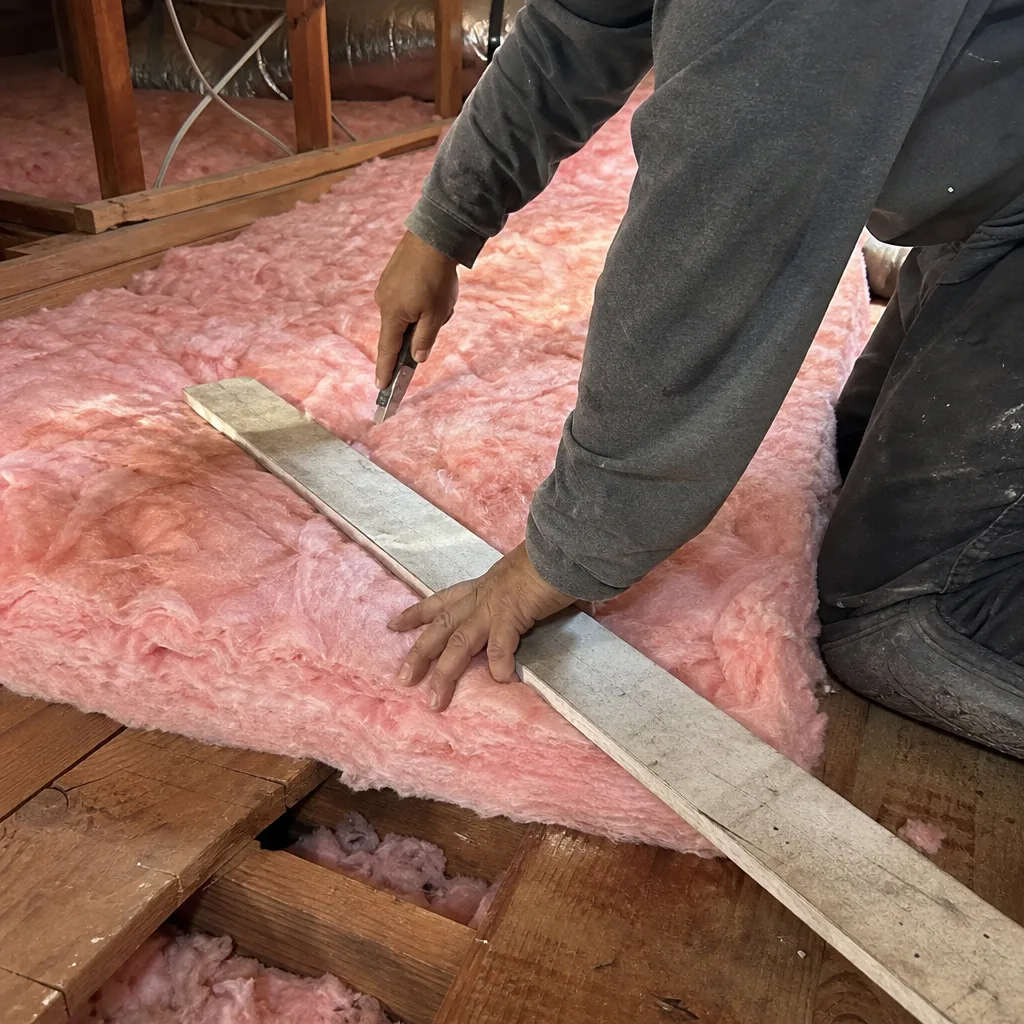
Our crews work throughout central Orange County, including Blown-In Insulation in Villa Park and neighboring Orange, Placentia, Yorba Linda, and Santa Ana. The same written-price standard, same blower-door documentation, and same live-person answering apply across the service area.
Serving Villa Park, CA - Our Local Coverage Area
We’re based in the Villa Park area and know this community well. Use the map below to see our service coverage - if you’re nearby, we can almost certainly help.
FAQs - Blown-In Insulation in Villa Park
No. Open-beam and vaulted ceilings have no flat attic floor to contain blown-in material. The only effective thermal envelope for these assemblies is closed-cell spray foam applied directly to the roof decking, which we coordinate through our spray foam division or refer to a trusted partner if the job scope requires it. We won’t sell you a blown-in fill that we know will fail. Call (562) 267-3291 and we’ll inspect the assembly, photograph the condition, and give you a written scope that addresses the actual structure.
Most 1970s Villa Park homes need R-49 on the flat attic floor, which translates to approximately 18-20 inches of blown-in fiberglass or 14-16 inches of cellulose, depending on the specific product density. The original R-11 or R-19 from construction has settled to roughly half its labeled value after fifty years. We measure existing depth with a ruled probe, mark the target height on the rafters, and verify uniform coverage before we leave. Call (562) 267-3291 for an attic inspection and written depth recommendation specific to your roofline.
Yes, significantly. Villa Park’s position in the Orange foothills exposes homes to pressurizing Santa Ana wind events that force hot attic air through unsealed gaps around top plates, can lights, and duct chases. Without comprehensive air sealing completed before the blow-in, the new insulation underperforms its rated R-value by 30% or more in real conditions. We blower-door test before and after air sealing to document the actual leakage reduction, not just the theoretical R-value of the material. Call (562) 267-3291 to see what your home’s current leakage number looks like.
Sometimes. A top-up makes sense when the existing material is uncontaminated, reasonably level, and the attic was air-sealed at some point in the past. We see too many Villa Park attics where the original rockwool is mouse-tunneled, water-stained, or compressed to R-6 effective; in those cases, removal and restart is the honest recommendation. We photograph what we find, show you the condition, and quote both options when both are viable. Call (562) 267-3291 for an inspection with no obligation.
Because your vaulted or open-beam ceiling sections have no attic floor to blow into. Blown-in insulation requires a horizontal cavity to fill and contain it; cathedral ceilings with exposed beams have only the roof decking above and living space below. Closed-cell spray foam adheres to the underside of that decking, creating the thermal barrier that was omitted in 1975. For the flat attic floors in the same house, blown-in fiberglass or cellulose to R-49 is still the right approach. Most Villa Park estates need both: blown-in for the flat sections, foam for the vaulted ones. We inspect the whole envelope and write a scope that doesn’t pretend one solution fits everything. Call (562) 267-3291 for that written assessment.
Written by Wes Okafor, Owner at Topside Attic Insulation La Habra, serving Villa Park and Orange County since 2016.