
GreenFiber Wall Insulation in La Habra: What to Know First
As an independent GreenFiber service provider, we handle wall insulation for GreenFiber cellulose systems in La Habra homes, most jobs completed in one day with the crew arriving between 8 and 9 a.m. Most drill-and-fill wall jobs run $2,800-$4,600 for a typical 1,400-square-foot ranch, and we put that price in writing before anyone touches a drill. This page is for homeowners who know they’ve got GreenFiber in their walls, suspect it’s settled or wasn’t dense-packed right the first time, and want to know what fixing it actually involves. Call (562) 267-3291 for a free estimate with a written scope.
How GreenFiber Products Fail - and How We Fix Them
- GreenFiber All Borate Cellulose settling in stud bays. The loose-fill product, when blown at insufficient density (below 3.5 lbs per cubic foot), drops 20-30 percent in volume within five to seven years. We see this in La Habra’s 1960s tract homes near Imperial Highway where original contractors skipped the dense-pack hose technique. Our fix: extract the settled material, then dense-pack to 3.6-3.8 lbs per cubic foot with a friction-fit hose so the cellulose stays put.
- GreenFiber Sanctuary sagging in cathedral ceilings. This stabilized product contains added binders, but in La Habra’s south-facing walls with afternoon sun load, the binders can degrade if moisture cycles through unsealed top plates. We find Sanctuary clumped at the bottom of the bay. Our fix: remove the clumped material, seal the top plate and electrical penetrations with acoustic sealant, then reinstall Sanctuary at manufacturer density with humidity monitoring.
- GreenFiber Low Dust creating voids around obstructions. The low-dust formulation is easier on installers but can bridge across wiring and plumbing instead of packing tight. In La Habra Heights border homes with balloon framing, we regularly find 8-12 inch voids behind conduit runs. Our fix: slow-fill technique with directional nozzle, packing in 2-foot lifts and probing with a borescope every third bay.
- GreenFiber stabilized cellulose losing R-value after rodent intrusion. Cellulose compresses where rats tunnel; we pulled 40 pounds of compacted, urine-contaminated GreenFiber from a Fullerton-adjacent La Habra home last spring. Our fix: full extraction, HEPA vacuuming of the cavity, application of borate treatment to studs, then new dense-pack with rodent-proofing at all exterior penetrations.
- GreenFiber in walls with failed air sealing. This isn’t a product defect, it’s a sequencing error we see constantly: insulation blown over unsealed electrical boxes and drywall gaps. The cellulose acts as a filter, not a barrier, and La Habra’s Santa Ana wind events drive conditioned air straight through. Our fix: remove or displace the GreenFiber, seal every penetration with fire-rated foam and acoustic sealant, then reinstall. Seal the bypasses first. The insulation has nowhere useful to go until the air does.
Our GreenFiber Wall Insulation Process
- 1
Call and schedule. A live person answers, or you text us back. We book a 2-hour arrival window in La Habra, usually within 48 hours.
- 2
On-site assessment with borescope and infrared. We probe wall cavities through existing openings and run a thermal camera to map voids, settling, and moisture patterns. You get the images on a tablet before we talk price.
- 3
Written price and scope. We specify GreenFiber product line, density target, air-sealing details, and whether we’re extracting old material or adding new. No work starts without your signature on this document.
- 4
Air sealing first, then insulation. We seal top plates, electrical boxes, and penetrations; on applicable jobs we run a blower-door test before and after to document the reduction in air leakage.
- 5
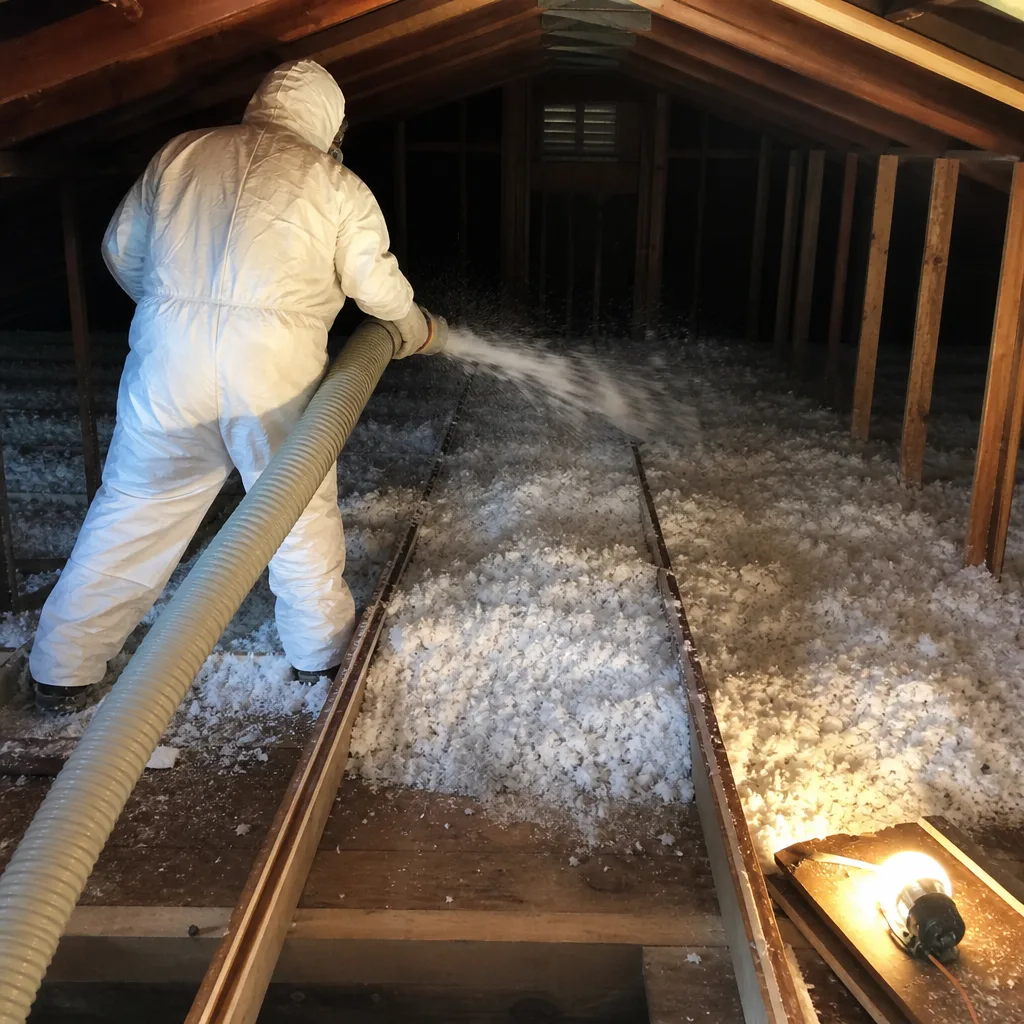
Dense-pack installation. We use the friction-fit hose method at 3.6+ lbs per cubic foot, probing every few bays to verify settled depth matches the spec.
- 6
Documentation and walkthrough. You receive a Documented Photo Record, final blower-door number if applicable, settled-depth measurements at four wall locations, and the written warranty under our 365-Day Done Right Promise.
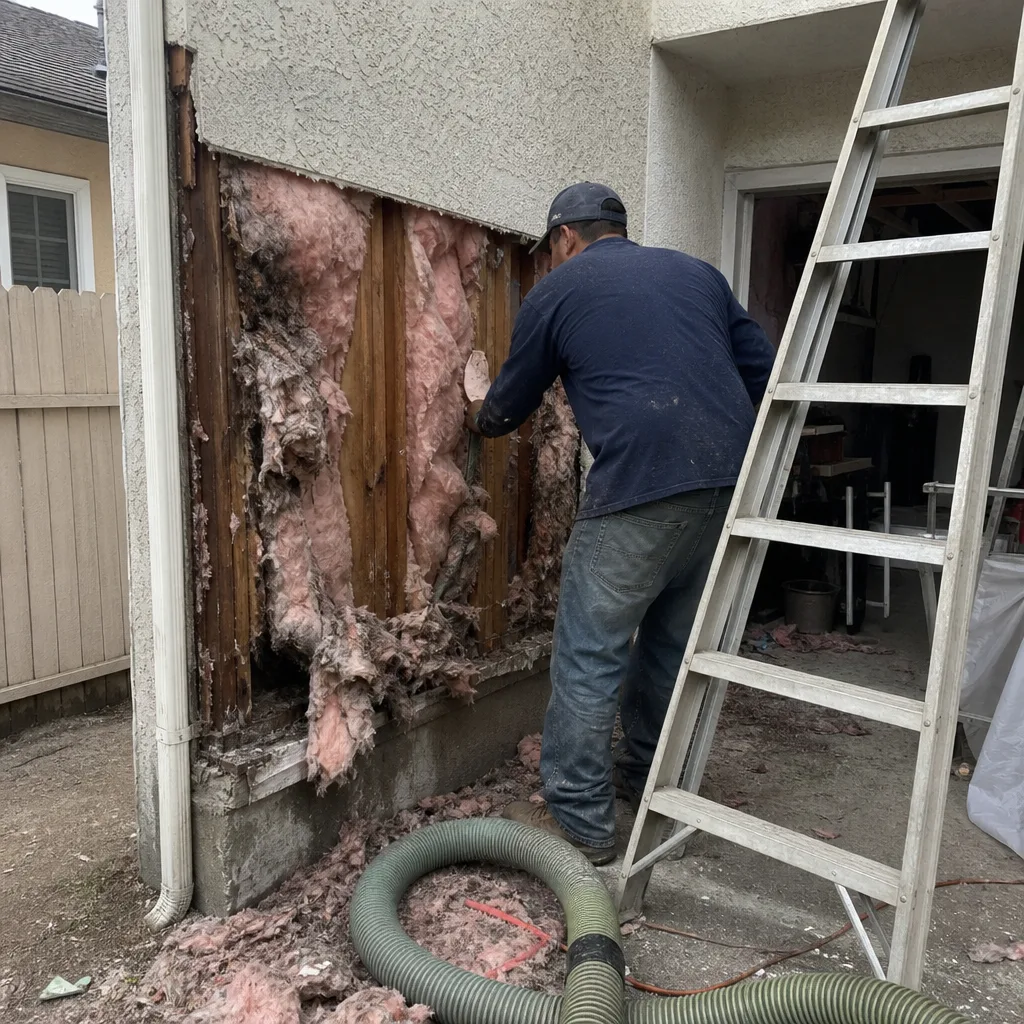 Before
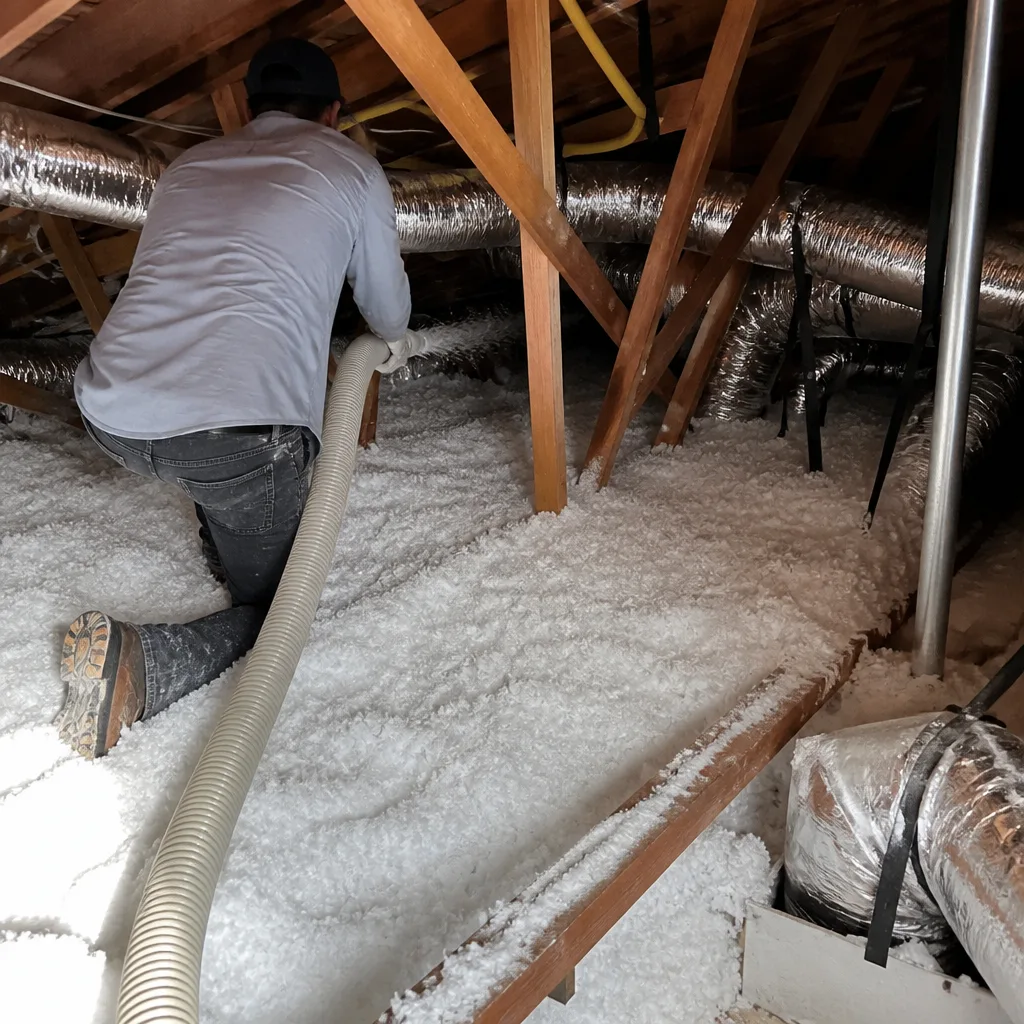 After
AfterWhat GreenFiber Wall Insulation Costs in La Habra
| Job Type | Typical Range | What Moves the Price |
|---|---|---|
| Drill-and-fill exterior walls, single story | $2,800-$4,200 | Linear feet of wall, cavity depth (2×4 vs. 2×6), need for old material extraction |
| Drill-and-fill with full extraction of settled cellulose | $3,800-$5,400 | Volume of material to remove, disposal weight, borate treatment if rodent damage |
| Interior soundproofing walls, dense-pack | $2,200-$3,600 | Number of walls, double-stud vs. single-stud, need for resilient channel |
| Catherdral ceiling / sloped wall, Sanctuary | $4,200-$6,800 | Access difficulty, ventilation baffle installation, top-plate sealing complexity |
Prices include materials, labor, air sealing of accessible penetrations, and the Documented Photo Record. We also source from Owens Corning, Johns Manville, Knauf, Rockwool, CertainTeed, Icynene, Demilec, and GreenFiber, so if another product suits your assembly better, we’ll say so. Call (562) 267-3291 for a written estimate - estimates are free, and we offer a Free Second Opinion on any competing written quote.
Why La Habra Homeowners Call Topside Attic Insulation La Habra for GreenFiber Work
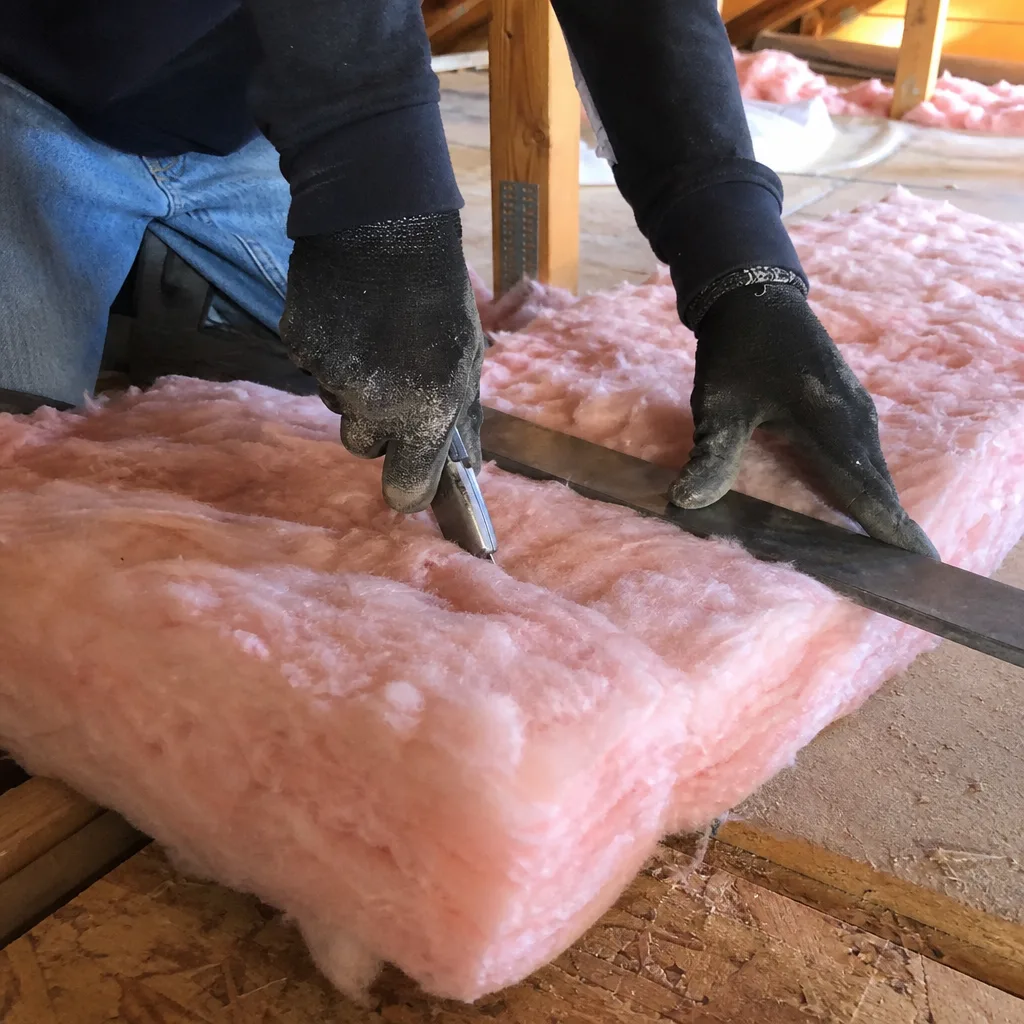
We’ve sealed and insulated 9,000+ homes since 2016, and the ones in La Habra keep us honest about cellulose in older framing. Wes Okafor’s crew has been running blower-door tests and dense-pack jobs across this city for years, including the ranch-style homes near the La Habra Heights border where attic bypasses almost always go unsealed on the first pass. We don’t upsell air sealing; we sequence it first, measure it, and hand you the number. Every job closes with a written record, not a handshake. We also service Reflectix and other brands, so if your wall assembly needs something GreenFiber doesn’t provide, we’ll tell you straight.
FAQs
No. GreenFiber’s warranty covers product defects in manufacturing, not installation workmanship, and using an independent service provider does not affect that coverage. We document the product batch and installation density so any future product claim has the paperwork it needs. If you’re unsure about your warranty status, call us at (562) 267-3291 and we’ll walk through it with you.
Usually yes. We stock GreenFiber All Borate, Sanctuary, and Low Dust formulations, and we match the original product type unless we find a compelling reason to switch, which we explain in writing before you sign. If your home has a discontinued GreenFiber line, we specify the closest current equivalent and how its density and R-value compare.
Adding on top is cheaper in the short term, but it rarely solves the problem. Settled cellulose has already lost its designed density; new material blown on top bridges over voids and creates uneven thermal layers. Extraction and proper dense-pack costs 30-40 percent more upfront, but it’s the only way to hit the R-value you paid for. We quote both approaches so you can see the difference.
Most GreenFiber wall jobs in La Habra are scheduled within 3-5 business days of the estimate approval. Weather rarely delays interior work, though we avoid dense-packing during Santa Ana wind events when positive-pressure testing is unreliable. If you’re seeing visible settling or feeling drafts, call (562) 267-3291 - we’ll get a technician out for a free estimate.
We provide before-and-after blower-door readings on any job where the building envelope is accessible for testing, which includes most wall jobs in La Habra. The test measures pressurization in CFM50, a single figure showing how much conditioned air your home loses. Wall-only improvements typically show modest reductions; combined with attic air sealing, the drop is usually significant. You get both numbers in writing either way.
Written by Wes Okafor, Owner, Topside Attic Insulation La Habra at Topside Attic Insulation La Habra, serving La Habra and nearby areas.