
Icynene Radiant Barrier Installation: The La Habra Owner’s Guide
Most Icynene radiant barrier installations in La Habra run between $1,800 and $3,400 for a typical 1,200-2,000 square foot attic, and we can usually schedule within 48 hours. The price moves with attic square footage, existing insulation depth, and whether your top plates and can-light penetrations need sealing first. We stock Icynene-compatible radiant barrier materials on our La Habra trucks, including the foil-faced polyiso board and the perforated reflective sheeting used in vented attic assemblies.
Homeowners usually figure out something’s wrong when their upstairs rooms won’t cool below 78 degrees even after sunset, or when their summer electric bill jumps $80-$150 compared to the same month last year. Sometimes it’s an HVAC tech who spots the problem: the unit’s working fine, but the attic’s hitting 140°F and the ductwork’s baking inside it.
Which Icynene Models This Applies To
Icynene doesn’t manufacture radiant barrier as a standalone branded product. What we’re talking about is the radiant barrier component installed alongside Icynene open-cell or closed-cell spray foam in hybrid attic systems. The foam goes on the roof deck or gable walls; the radiant barrier goes on the attic floor or the underside of the rafters, depending on whether you’re venting the attic or conditioning it.
If your home was insulated between 2015 and 2022, check for Icynene Classic Plus (open-cell, 3.5 lb density) or Icynene ProSeal (closed-cell, 2.0 lb density) markings on the foam surface. The radiant barrier paired with these is typically a perforated aluminum foil laminate, either stapled to the underside of the rafters as a draped sheet or laid over the attic floor as a radiant barrier decking overlay. Measure your existing material: the standard roll width is 48 inches, but retrofit jobs in La Habra’s smaller 1950s ranch homes near Imperial Highway often need 24-inch strips to work around truss spacing.
OEM-spec radiant barrier from Icynene distributors runs about 15-20% higher than quality aftermarket equivalents from Reflectix or Fi-Foil. The performance difference, measured by emissivity rating, is negligible for most La Habra homes - 0.03 to 0.05 on either material. We source both and will show you the spec sheet before we order.
Signs Your Icynene Radiant Barrier Installation Is Failing
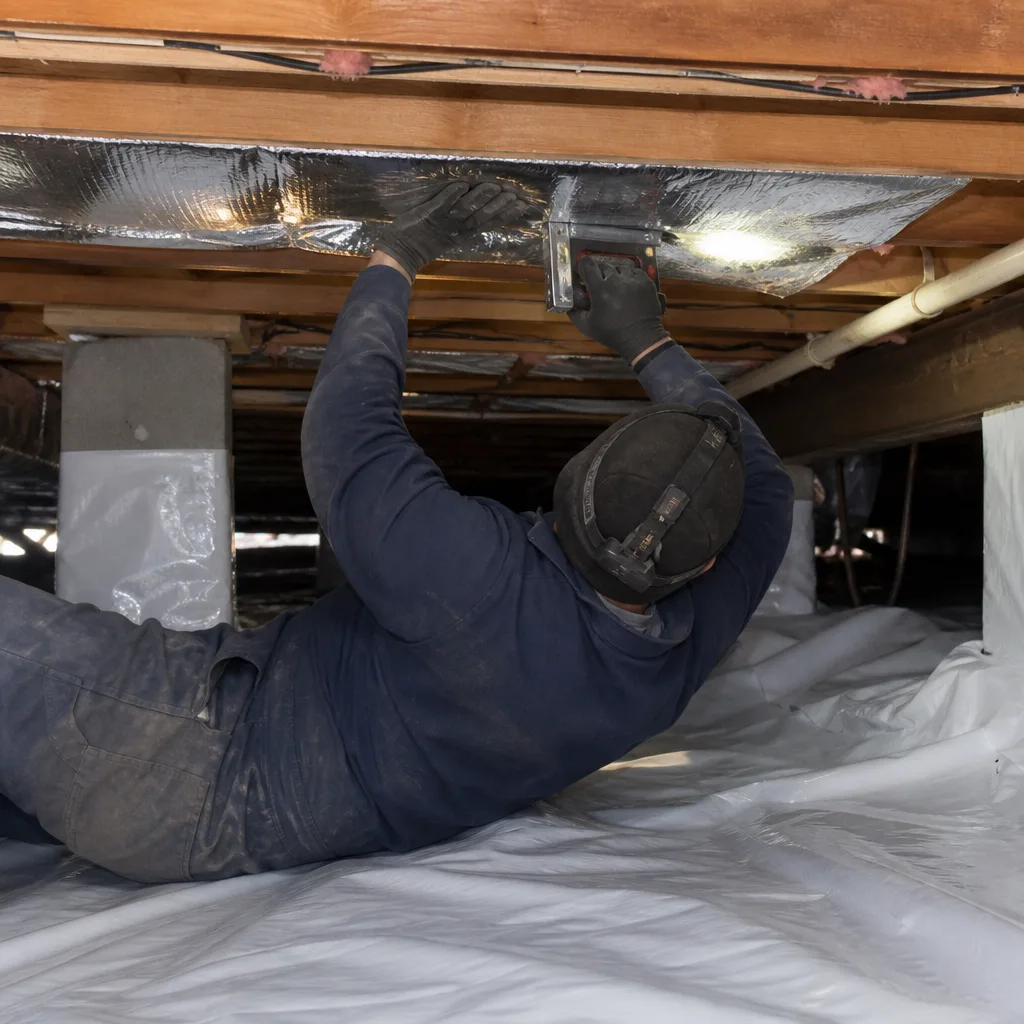
- Hot second-floor ceilings in late afternoon. The radiant barrier’s job is to reflect infrared heat back toward the roof deck. When the foil surface oxidizes or gets coated with dust, emissivity climbs above 0.10 and the heat starts radiating downward into your living space. We see this most often in La Habra homes within a mile of the 57 freeway, where particulate load in attic air is higher.
- Torn or sagging foil between rafters. Staple fatigue is common after 7-10 years in a vented attic with La Habra’s temperature swings - 55°F winter mornings to 140°F summer peaks. Once the foil droops, it loses surface area and creates air gaps where convection carries heat past it.
- Water staining on the radiant barrier surface. This means roof deck condensation is reaching the foil, which usually points to a ventilation imbalance: soffit vents blocked by insulation, or a missing baffle. The barrier itself isn’t the root problem, but it’s telling you the attic’s humidity profile is wrong.
- Spray foam separation at the rafter interface. Icynene Classic Plus can shrink 2-3% over time. If you see a gap between the foam and the rafter, conditioned air is leaking into the attic cavity and the radiant barrier is working harder than it was designed to.
- Insulation crew footprints or compressed blown-in over the barrier. This one’s immediate and common. Someone walked on the foil during a later insulation top-off, tearing it, or they blew cellulose right over it, burying the reflective surface and nullifying its function.
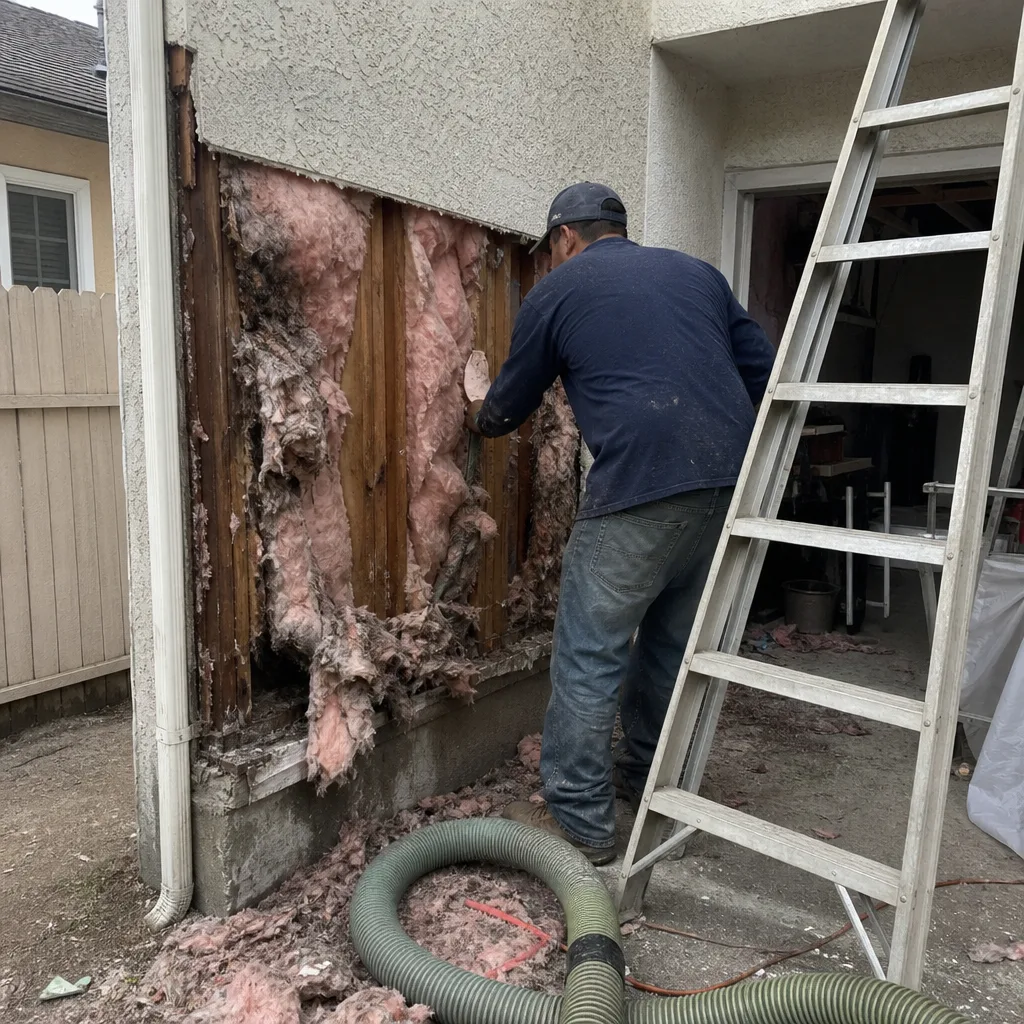 Before
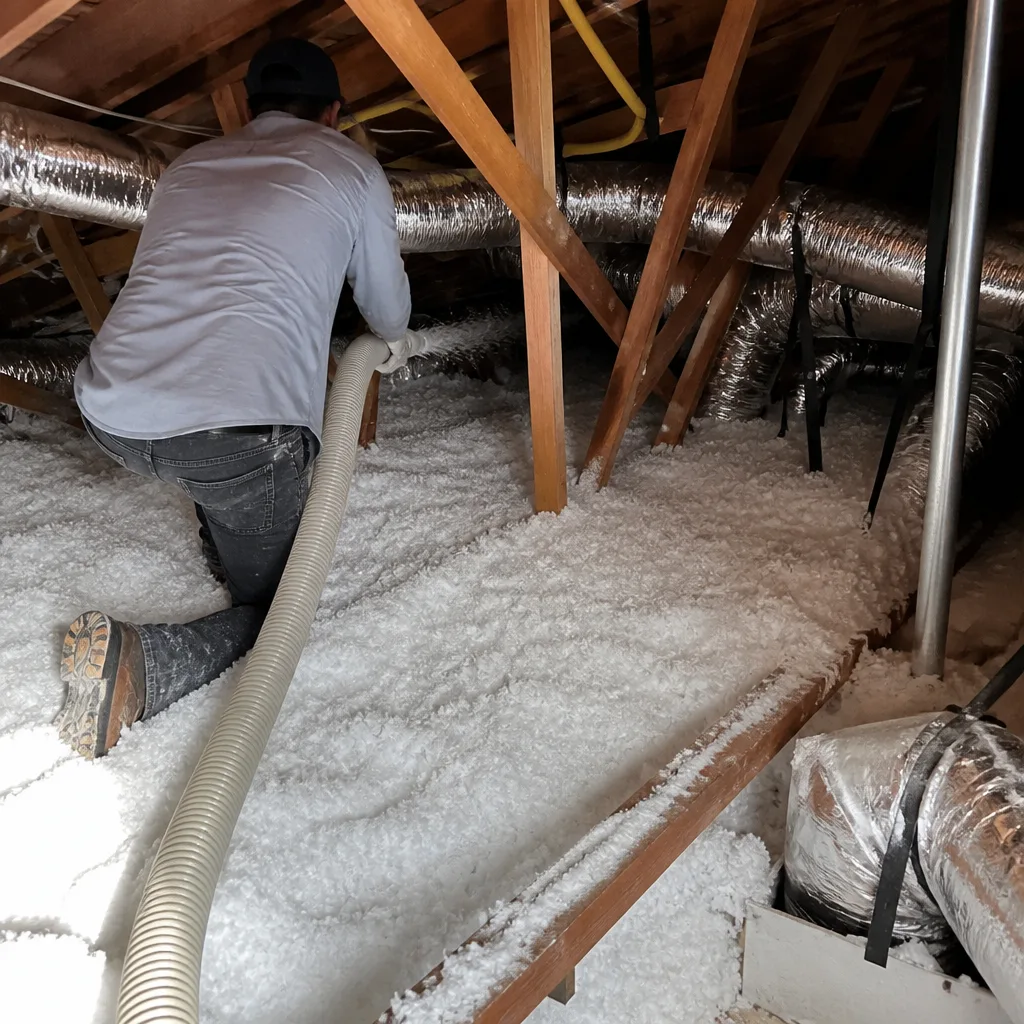 After
AfterReplacement Cost & What’s Included
| Component | La Habra Price Range |
|---|---|
| Perforated radiant barrier material (aftermarket) | $0.45-$0.75/sq ft |
| OEM-grade foil laminate | $0.60-$0.95/sq ft |
| Labor: remove failed material, prep surface, install new | $1.20-$1.80/sq ft |
| Attic air sealing (top plates, penetrations) - if needed first | $400-$900 |
| Typical total, 1,500 sq ft attic | $2,200-$3,100 |
The range depends on three things: how much failed material we’re removing, whether the attic floor needs air sealing before the new barrier goes down, and roof pitch. Steeper pitches above 8/12 in the La Habra Heights border area add labor time. Every job gets a Written Price Before Any Work Starts - Haven Standard Clause 1 - and the 365-Day Done Right Promise covers the installation. We also publish before-and-after blower-door numbers on any job where we’re sealing the attic floor, so you can verify the air-leakage reduction in CFM50.
DIY or Call Us?
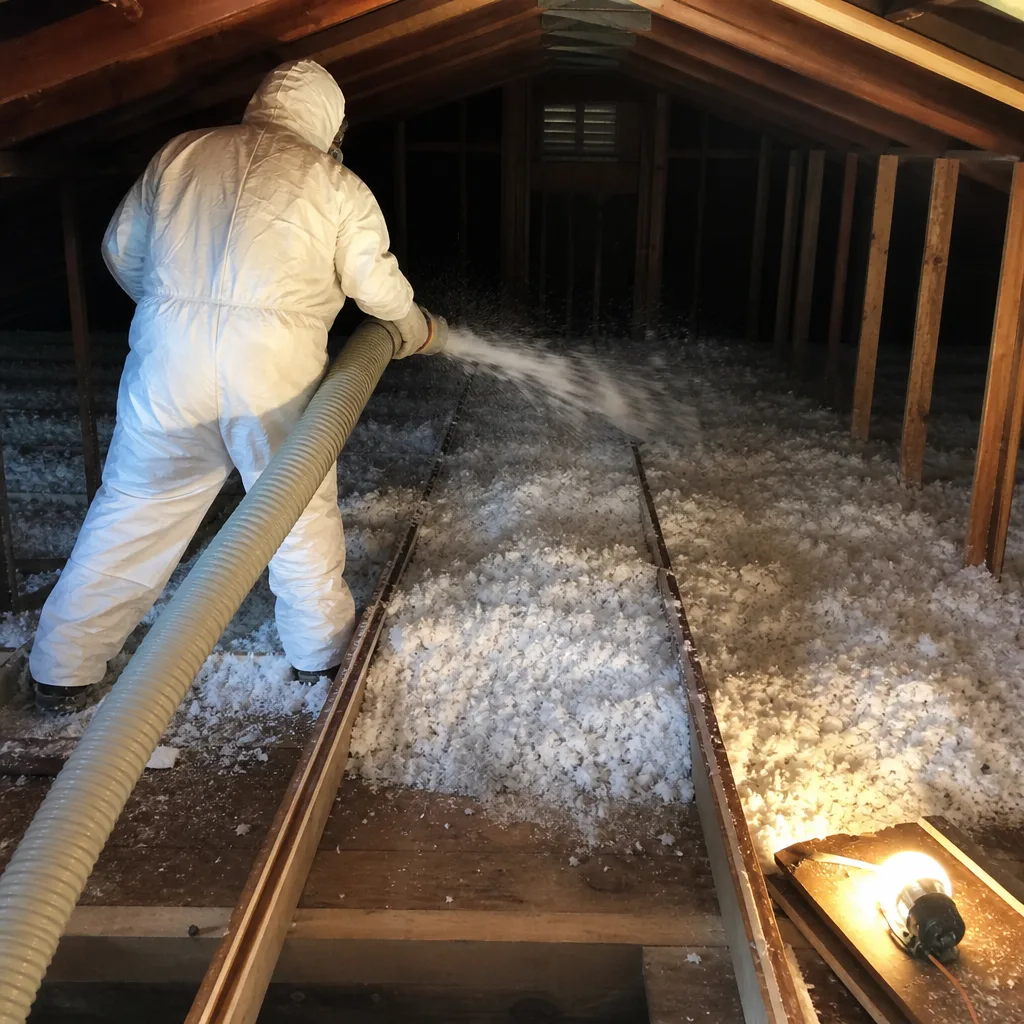
There’s no high-tension spring or electrical hazard in radiant barrier replacement, but there are two ways DIY goes wrong in La Habra attics. First, working in 130°F heat on a July afternoon is genuinely dangerous without hydration breaks and a spotter - we’ve pulled homeowners out who thought they’d knock it out in an hour. Second, and more important: if you install new radiant barrier over an unsealed attic floor, you’re reflecting heat into a space that’s still leaking conditioned air through can lights and top-plate gaps. The barrier performs poorly, and you won’t know why.
What you can safely check: go up with a flashlight and photograph any torn, sagging, or stained foil. Note the staple pattern and whether the material is perforated (tiny holes, for vented attics) or solid (unvented assemblies). Then call us at (562) 267-3291 with those photos. We’ll tell you whether the fix is localized repair or full replacement, and we’ll give you a written price before anyone schedules.
Seal the bypasses first. The insulation has nowhere useful to go until the air does.
FAQs
Perforated aluminum foil laminate in a vented La Habra attic typically holds spec for 10-15 years, but dust accumulation and oxidation start degrading performance after year 7. Homes near construction zones or the 57 corridor often see faster fouling. Call (562) 267-3291 and we can inspect your current material’s emissivity with a handheld meter - estimates are free.
Small tears in accessible areas can be patched with foil tape rated for 180°F, but sagging, widespread staple failure, or water staining means the whole surface is compromised. Patching over multiple failure points costs nearly as much in labor as replacement and leaves you with inconsistent performance. We quote both options when we can, but replacement is usually the better value.
A typical 1,500 square foot attic takes one day for removal and replacement, or two days if we’re air-sealing first. We bring a three-person crew, run the blower-door test before and after, and leave you with the documented photo record and the CFM50 readings. Most La Habra jobs start at 7 AM and the crew’s off-site by 4 PM.
Yes - we carry perforated 48-inch rolls, 24-inch strips for retrofit truss bays, and the foil-faced polyiso board used in conditioned attic assemblies. If your job needs OEM-spec material from an Icynene distributor, we can have it within 48 hours. We also stock Reflectix equivalents for homeowners who want the performance at a lower material cost. Topside Attic Insulation La Habra is an independent service provider, not affiliated with Icynene.
Written by Wes Okafor, Owner, Topside Attic Insulation La Habra at Topside Attic Insulation La Habra, serving La Habra and nearby areas.