
Knauf Radiant Barrier Installation: The La Habra Owner’s Guide
Knauf radiant barrier installation in La Habra typically runs $1,800-$3,400 for a standard 1,200-2,000 square foot attic, and we stock Knauf EcoSeal-compatible radiant barrier rolls and tape on every truck for same-day starts. Most homeowners in La Habra call us after their second summer of climbing utility bills, or when an inspector flags the existing foil as delaminated during a sale - the attic reads 140°F in July, but the barrier’s doing nothing because it was stapled flat to the joists instead of draped with the required air gap.
Which Knauf Models This Applies To
Knauf doesn’t sell a standalone “radiant barrier system” under one model number. What you’re looking for is Knauf Insulation radiant barrier products: the RB (radiant barrier) facing on their EcoSeal fiberglass batts, the standalone Knauf radiant barrier foil rolls (typically 48-inch width, perforated for attic moisture management), and the Knauf FSK-25 tape used to seal seams. Check your existing material for the Knauf logo and a stamped ASTM C1313 compliance mark; if you see a plain silver foil with no perforations, it’s likely a generic import that won’t breathe properly in La Habra’s mixed-dry climate.
The critical compatibility gotcha: Knauf’s radiant barrier foil is designed to work with their EcoSeal air-sealing system, which uses a water-based acrylic sealant on top plates and penetrations. We’ve found that pairing Knauf barrier with non-Knauf tape, or skipping the air-sealing step entirely, drops the effective emissivity from the rated 0.03 to roughly 0.15 within three years. We stock both OEM Knauf FSK-25 tape and a commercial-grade aluminum seam tape that meets the same emissivity spec; the OEM runs about 15% higher in material cost but carries Knauf’s product warranty. For most La Habra homes, the aftermarket tape performs identically if the substrate prep is correct.
Signs Your Knauf Radiant Barrier Installation Is Failing
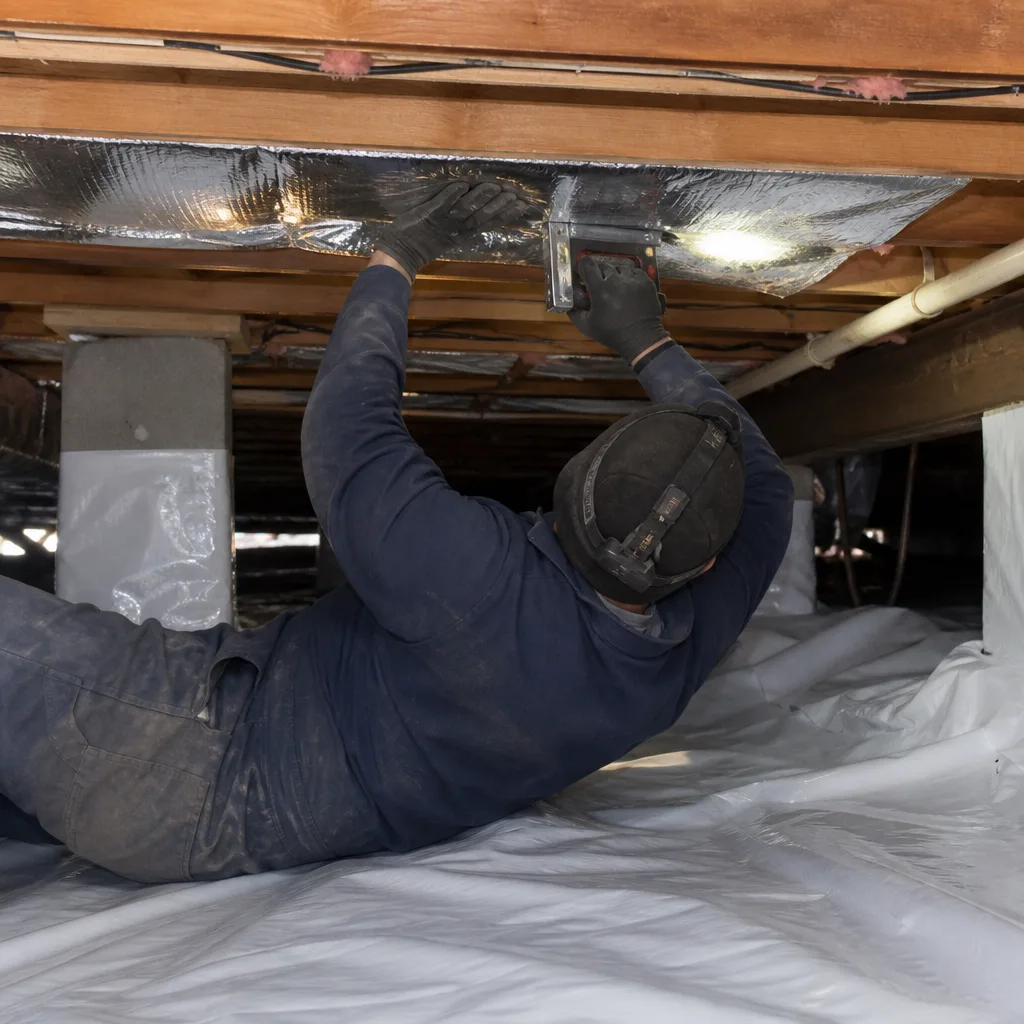
- Utility bills spike June through September despite no rate change. The barrier’s emissivity has degraded, usually from dust accumulation on a flat-installed surface or from tape failure at the seams. In La Habra, Santa Ana winds pull fine dust through ridge vents; a properly draped barrier sheds this, but flat-stapled foil becomes a dust shelf.
- Hot spots on your second-floor ceiling directly under attic duct runs. The radiant barrier was either omitted in those bays or the foil was torn during a prior HVAC service. We see this routinely in La Habra’s 1960s ranch-style homes near the La Habra Heights border, where flex duct was retrofitted through attic space never designed for it.
- Foil facing is visibly torn, delaminated, or flaking. This is material failure, not installation error. Non-perforated foils trap moisture; in La Habra’s occasional winter rains, condensation forms on the underside and separates the aluminum layer from the scrim backing. Knauf’s perforated product prevents this if it was actually used.
- Your attic still hits 130°F+ after “radiant barrier” was installed. The barrier was likely installed without the required minimum 3/4-inch air gap. Stapling foil directly to roof decking or attic floor joists turns a radiant barrier into a conductor, not a reflector. We measure this with an infrared gun on every assessment.
- Home inspector notes “radiant barrier present but non-functional” in a sale report. This usually means the barrier is intact but bypassed by unsealed attic bypasses - the chimney chase, the plumbing stack, the top plates - so conditioned air escapes faster than the barrier can reflect heat. Seal the bypasses first. The insulation has nowhere useful to go until the air does.
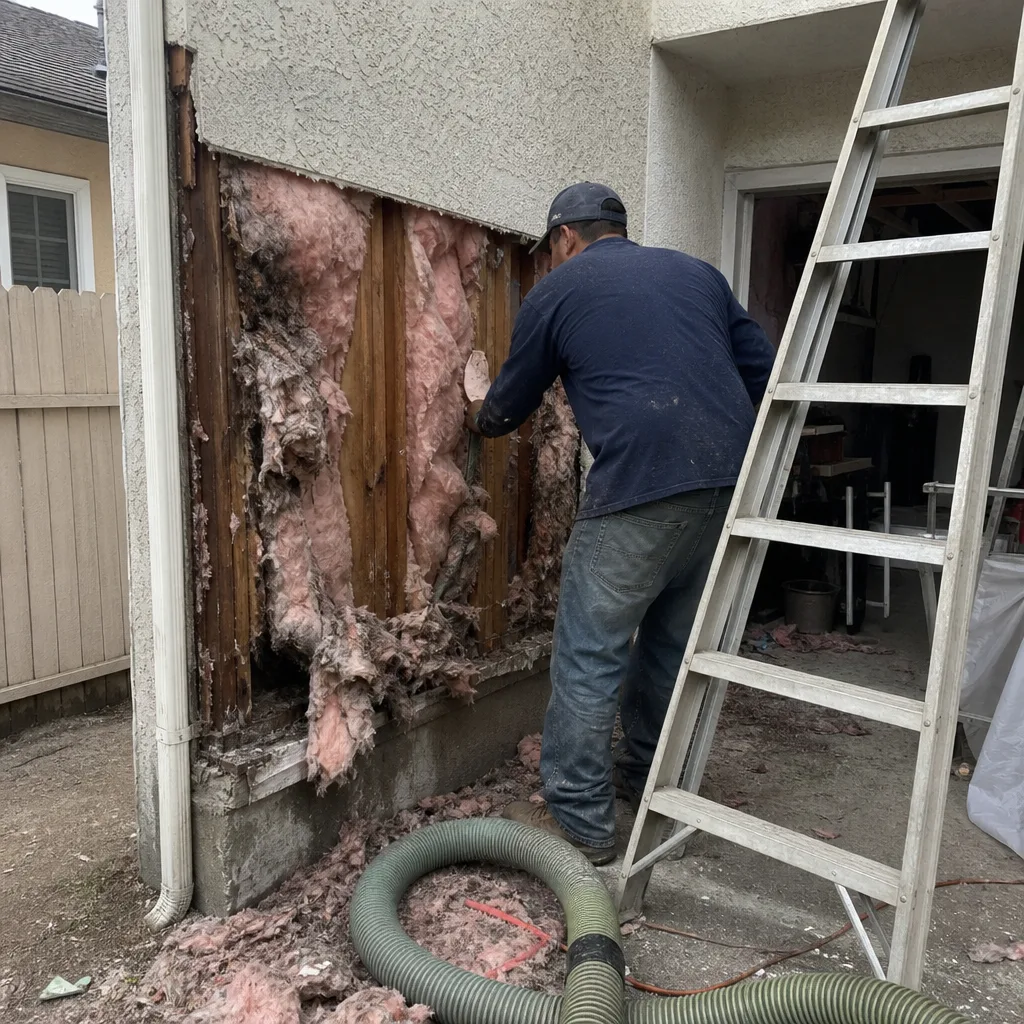 Before
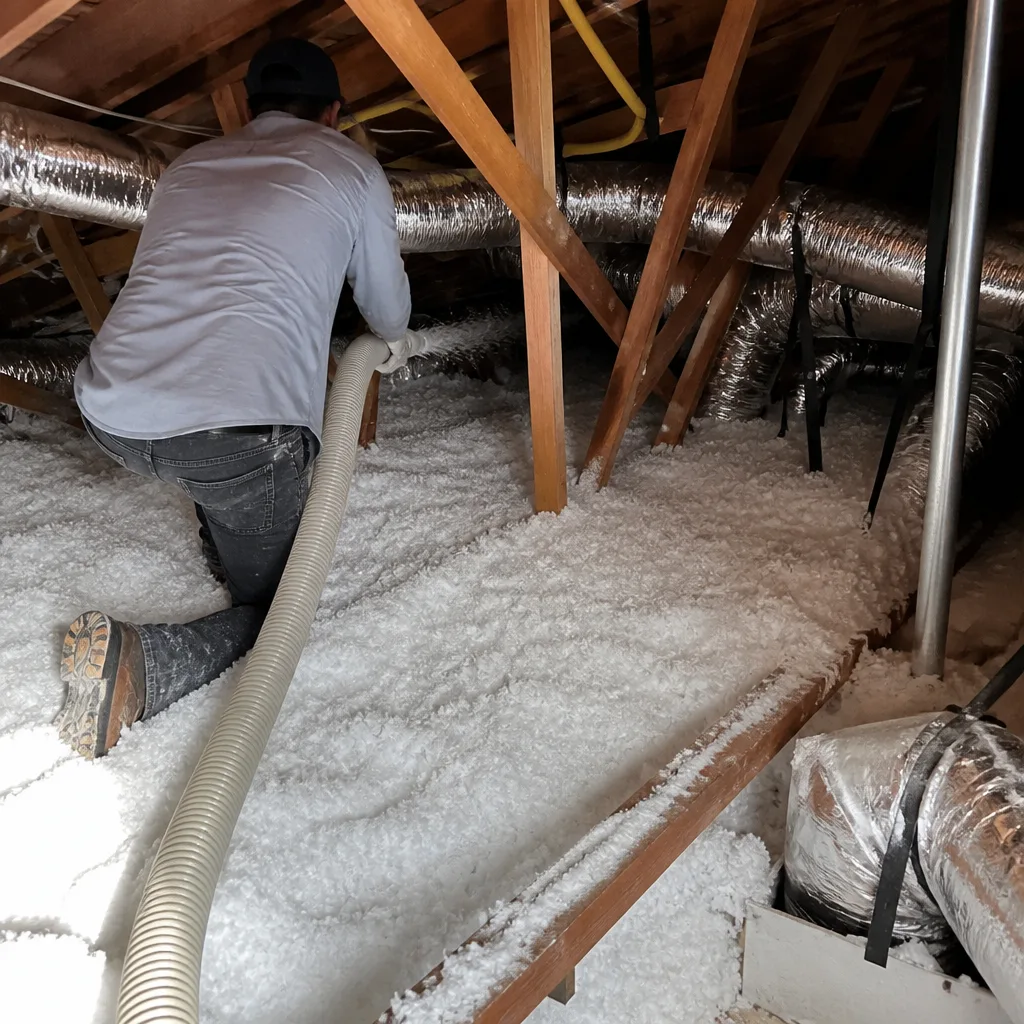 After
AfterReplacement Cost & What’s Included
Most Knauf radiant barrier installations in La Habra fall between $1,800 and $3,400. The low end covers a straightforward retrofit: remove degraded foil, air-seal top plates and penetrations with Knauf EcoSeal or equivalent acrylic sealant, drape new Knauf perforated barrier with proper air gap, and tape all seams. The high end addresses attics with complex geometry - multiple HVAC platforms, vaulted ceilings, or active rodent damage requiring cleanup first.
What drives the range: attic square footage, existing material removal (add $400-$800 if we need to pull degraded foil and dispose), and whether we find unsealed bypasses that should have been addressed originally. Every job includes our written scope, the Documented Photo Record, and on applicable jobs, before-and-after blower-door numbers so you can verify the air-sealing result. We source Knauf materials through our standard supplier chain - no proprietary lock-in, no markup games. The 365-Day Done Right Promise applies to all completed work.
DIY or Call Us?
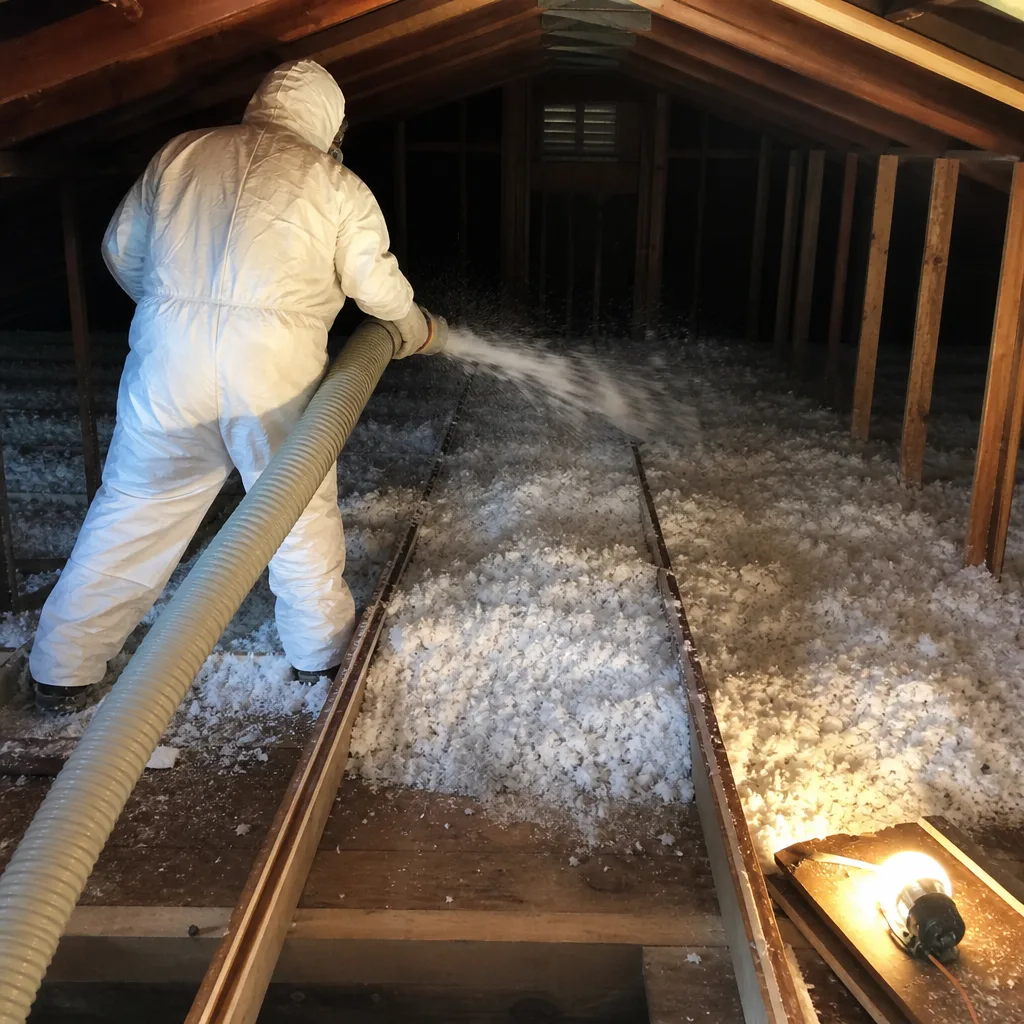
You can safely check three things: confirm the foil has a Knauf stamp and ASTM marking, look for perforations (hold it to light), and verify there’s an air gap between foil and the surface below. What you cannot safely do is work in a La Habra attic in July without hydration and fall protection, or properly air-seal top plates from above without knowing which walls are load-bearing. We’ve pulled homeowners out of attics who stapled through live Romex or compressed fiberglass into soffit vents, creating moisture traps. The actual barrier swap is straightforward; the envelope sequencing - seal, then insulate, then reflect - is where the performance lives. Call (562) 267-3291 and we’ll read your situation with you, no charge for the assessment.
FAQs
Properly installed Knauf perforated radiant barrier lasts 15-25 years in La Habra’s mixed-dry climate. The perforations prevent the moisture-driven delamination that kills non-perforated foils in 5-8 years. Dust accumulation is the real lifespan limiter; draped installation with proper air gap sheds dust, while flat-stapled foil acts as a shelf. Call (562) 267-3291 for an attic assessment - estimates are free.
Localized tape failure or small tears can be patched with matching aluminum tape, but widespread delamination or dust-embedded foil requires full replacement. We’ve never seen a patch job recover more than 60% of original performance. For most La Habra homes, the labor to patch exceeds the labor to replace once you’re already in the attic. Call (562) 267-3291 and we’ll show you the photo evidence before you decide.
A standard La Habra attic - 1,200-1,800 square feet - takes one crew day, assuming no prior removal or rodent cleanup. Complex attics with multiple HVAC platforms or vaulted ceilings run into a second day. We don’t bill by the hour; your written price is fixed before anyone starts. Call (562) 267-3291 to schedule.
Yes. We carry Knauf perforated radiant barrier rolls (48-inch width, 500 square feet per roll) and both Knauf FSK-25 tape and commercial-grade equivalent on every La Habra truck. Same-day start is standard if your attic is accessible and cleared for work. Call (562) 267-3291 to confirm availability for your address.
Written by Wes Okafor, Owner, Topside Attic Insulation La Habra at Topside Attic Insulation La Habra, serving La Habra and nearby areas.