
Owens Corning Radiant Barrier Installation: The La Habra Owner’s Guide
Most Owens Corning radiant barrier installations in La Habra run between $1,800 and $3,400 for a typical 1,400-2,200 square foot attic, including materials, labor, and the air-sealing prep that makes the barrier actually perform. We stock Owens Corning-compatible radiant barrier rolls and rigid board products on our La Habra trucks, and most installs are completed in a single day. Homeowners usually notice the problem in July or August, when the upstairs thermostat won’t hold setpoint even though the AC runs nonstop, or when they climb into the attic and the radiant heat off the roof deck feels like opening an oven.
Which Owens Corning Models This Applies To
Owens Corning makes two distinct radiant barrier product lines that we install in La Habra homes. The AtticCat Radiant Barrier is a perforated, double-sided aluminum foil roll designed to lay over existing attic insulation or staple to rafters, typically in 500-square-foot rolls at 48-inch width. The FOAMULAR NGX Radiant Barrier Board is a rigid polyiso panel with a factory-laminated reflective facing, used in cathedral ceilings or kneewall applications where a rolled product won’t hold shape. Both carry the same reflective performance spec: 0.03 emissivity or lower on the bright side.
To identify what you’ve got, check the printed edge tape on rolled products or the stamp on rigid board corners. AtticCat rolls show a lot number and “OC RB-500” marking. FOAMULAR NGX panels are stamped with thickness and R-value, usually 1-inch (R-6) or 1.5-inch (R-9.6) with the reflective facing noted as “RF.”
We don’t use proprietary lock-in products. For Owens Corning systems, we install OEM-spec material sourced through our normal supply chain, or we can match with Reflectix equivalent products when the application allows. The difference matters in warranty coverage: Owens Corning’s system warranty requires their branded product in some new-construction applications, but for retrofit work in La Habra’s existing housing stock, the performance spec is what counts. We source from Owens Corning, Johns Manville, Knauf, Rockwool, CertainTeed, Icynene, Demilec, and GreenFiber.
Topside Attic Insulation La Habra is an independent service provider, not affiliated with Owens Corning.
Signs Your Owens Corning Radiant Barrier Installation Is Failing
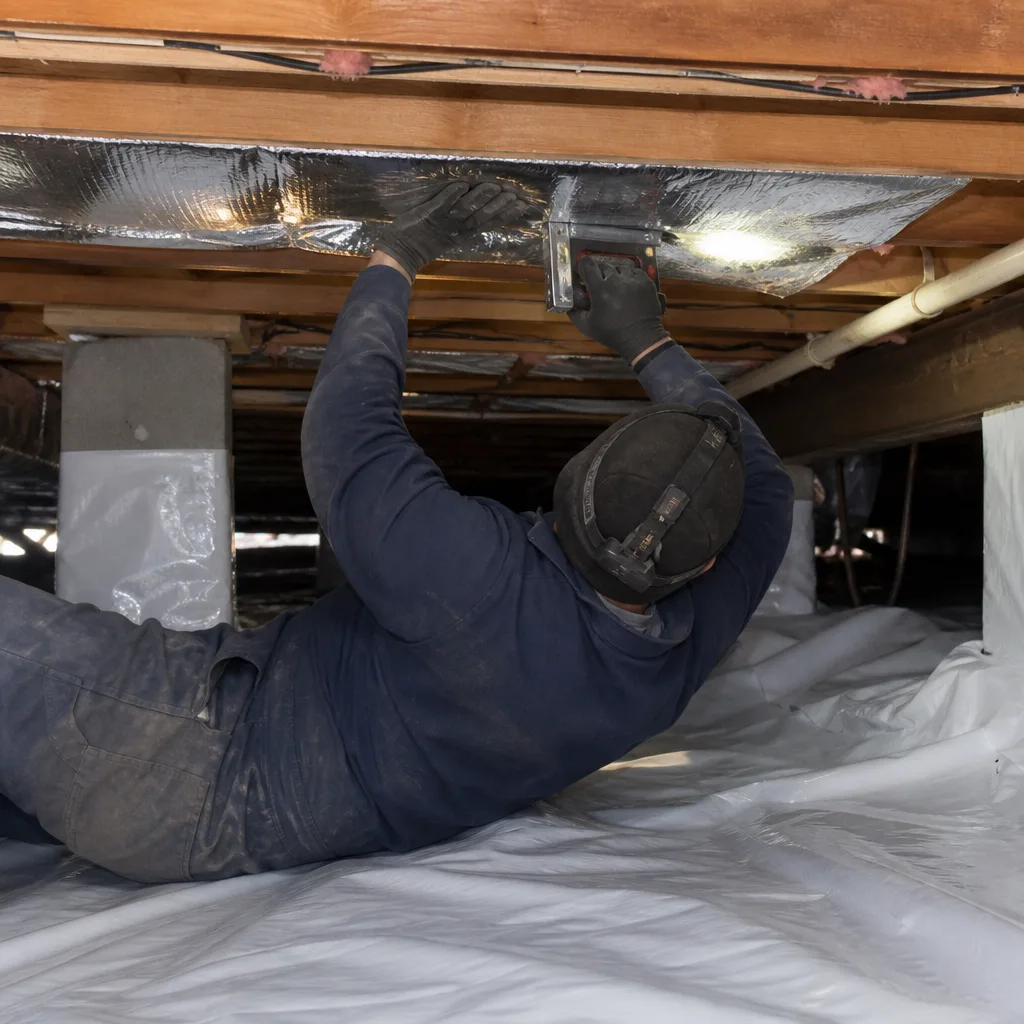
- Upstairs rooms run 8-12 degrees hotter than downstairs by mid-afternoon. In La Habra, where summer roof deck temperatures hit 140°F or higher, a compromised radiant barrier lets that infrared energy radiate straight through the attic floor into conditioned space. The temperature split is your first measurable signal.
- Dust has dulled the reflective surface to gray or matte. Owens Corning’s foil facing needs its 0.03 emissivity to work. Dust accumulation in La Habra’s Santa Ana wind seasons degrades performance without any visible tears. We see this most in homes near the 57 freeway corridor where particulate load is higher.
- The barrier has pulled loose from rafters or lies bunched on the insulation. Staple fatigue or inadequate tension during original install lets the material sag. Once it’s not facing an air gap, it’s not a radiant barrier anymore, it’s just a shiny blanket with no thermal function.
- Moisture staining on the foil or nearby rafters. Perforated AtticCat products allow some vapor transmission, but if the perforations are clogged with dust or if non-perforated product was used in a vented attic, condensation forms on the cool side. In La Habra’s mild winters, this shows as dark streaks by February.
- Your summer electric bill climbed 20% or more year-over-year with no rate change. We pull SDG&E interval data when homeowners report this. A failed radiant barrier shows up as extended afternoon AC runtime, not higher peak draw, because the system can’t reach setpoint.
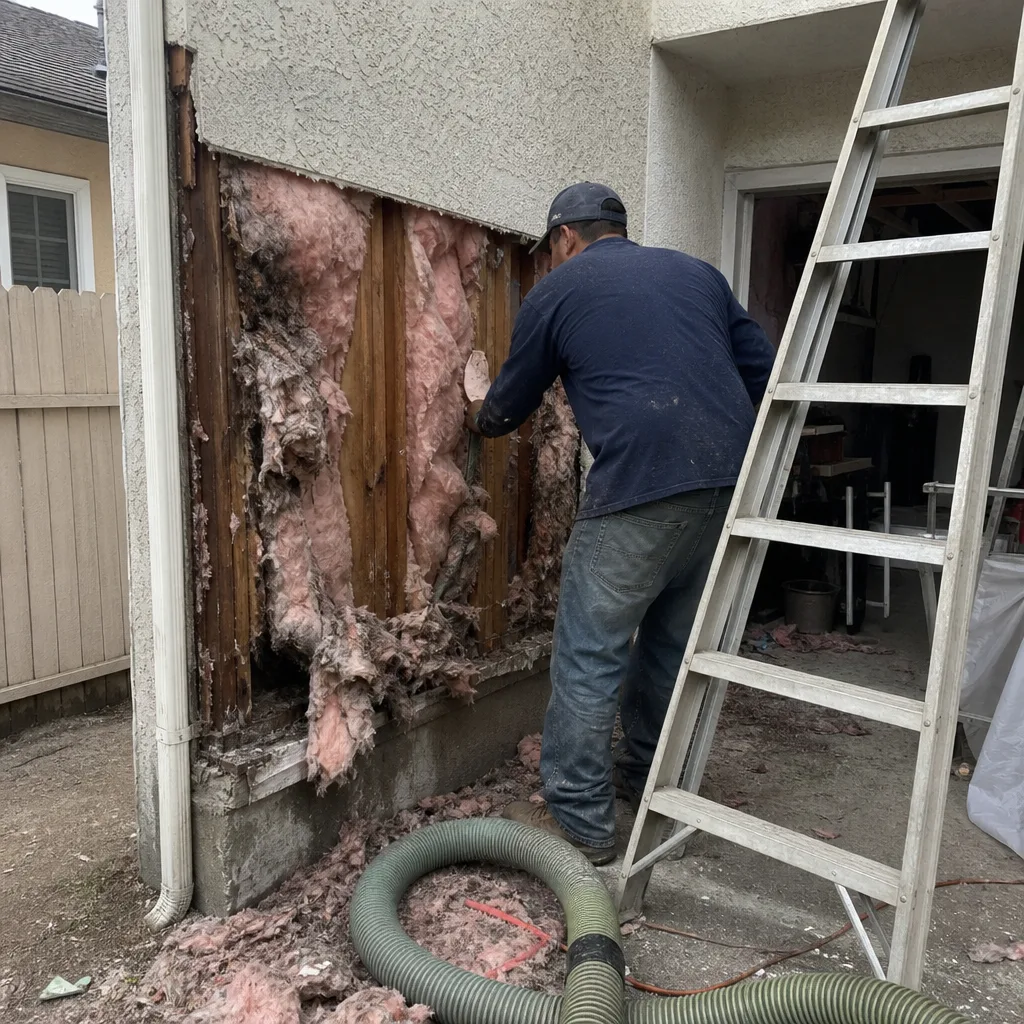 Before
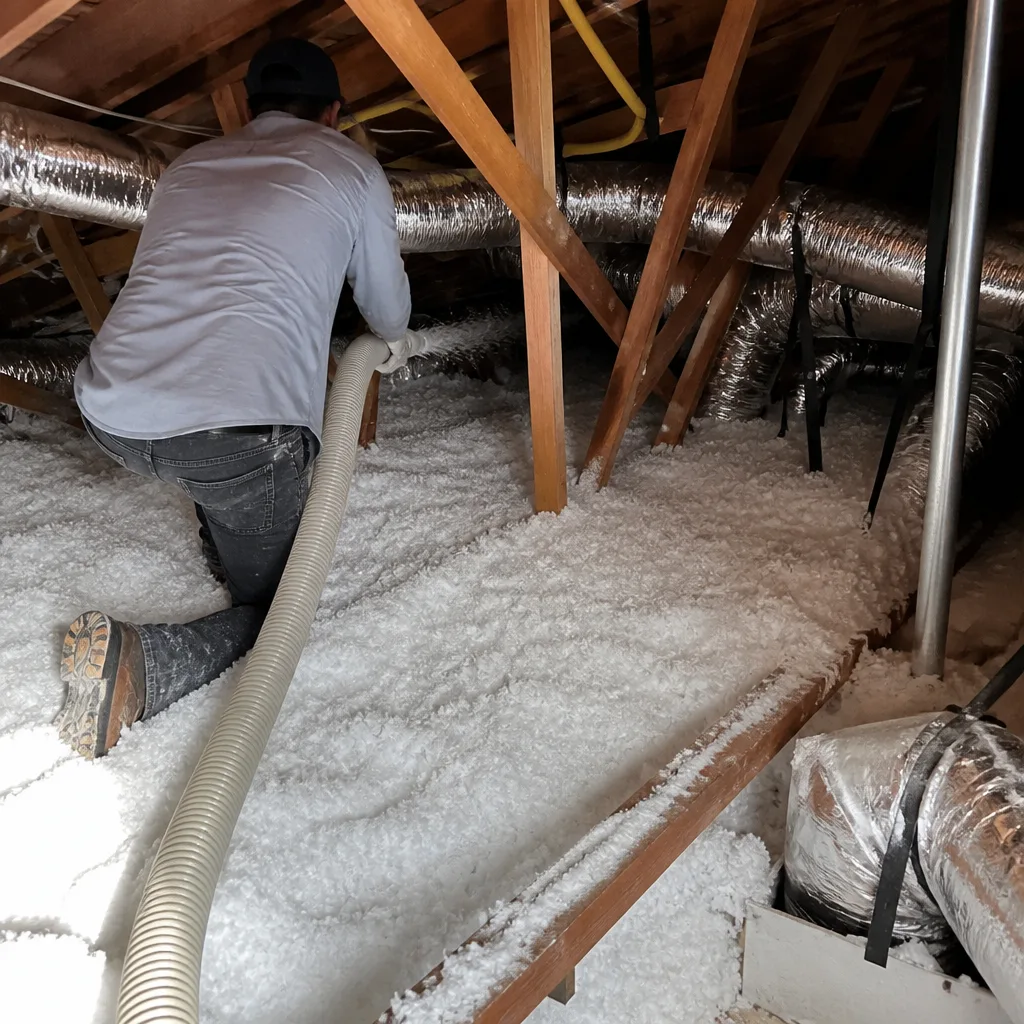 After
AfterReplacement Cost & What’s Included
Here’s how Owens Corning radiant barrier installation pricing breaks down for La Habra homes:
| Scope | Typical Range |
|---|---|
| AtticCat roll install, rafter-stapled, 1,200 sq ft attic | $1,800 - $2,600 |
| AtticCat over existing insulation, 1,800 sq ft attic | $2,200 - $3,000 |
| FOAMULAR NGX rigid board, cathedral ceiling, 600 sq ft | $2,800 - $3,800 |
| Add full attic air sealing (top plates, can lights, penetrations) | $400 - $800 |
The range driver is access. La Habra’s postwar ranch homes near La Habra Heights have straightforward attic hatches and open joist bays. Split-levels off Imperial Highway with scuttle holes and HVAC ducts in the way take longer. Every quote includes the air-sealing prep, because we won’t install radiant barrier over an unsealed attic floor. The insulation has nowhere useful to go until the air does.
What’s included: material, labor, removal and disposal of failed existing barrier, air sealing of accessible penetrations, and a Documented Photo Record of the completed work. On applicable jobs, we run a blower-door test before and after, publish both numbers, and include the thermal report with your final documentation. The 365-Day Done Right Promise covers all work. Written price before any work starts, always, per Haven Standard Clause 1.
DIY or Call Us?
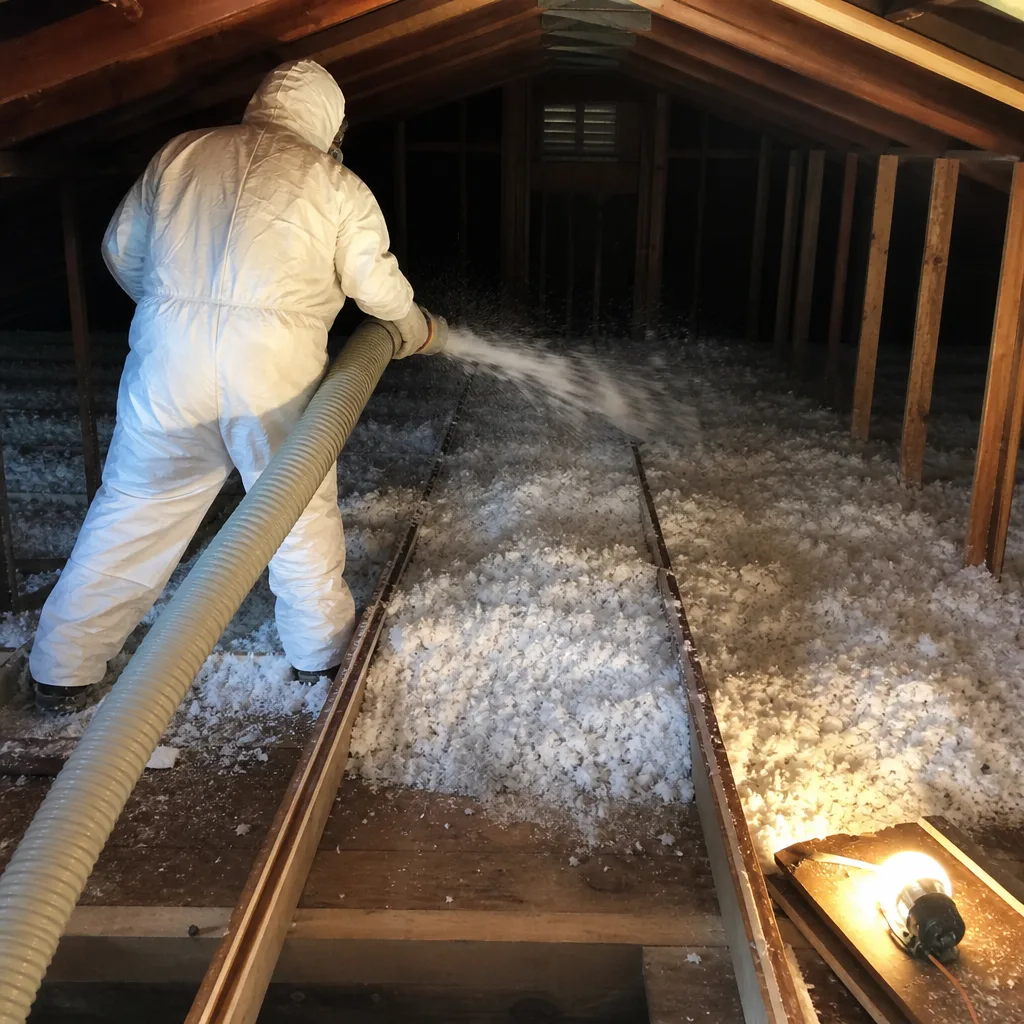
There’s no high-tension danger here like a garage door spring, but there are two ways DIY radiant barrier goes wrong in La Habra attics. First, working on a roof deck in August heat is genuinely hazardous; we’ve pulled homeowners out of attics with heat exhaustion. Second, the install details matter more than the product. A rafter-stapled barrier needs a minimum 3/4-inch air gap to function; laying it tight against the roof deck or stuffing it against insulation kills performance. Most DIY installs we see have the right material in the wrong place.
What you can safely check: from the attic hatch with a flashlight, look for sagging, torn, or dust-coated foil. Note any moisture staining. That’s diagnostic information we can use when you call. What we handle: proper tensioning, air gap maintenance, integration with existing ventilation baffles, and the air sealing that has to happen first. Call (562) 267-3291 for a free estimate with a written price before any work starts.
FAQs
Properly installed AtticCat or FOAMULAR NGX product should perform for 20-25 years in La Habra’s climate. The limiting factor is usually dust accumulation, not material degradation. In homes within a few blocks of major arterials like Beach Boulevard or Whittier Boulevard, we see meaningful dust buildup in 10-12 years that warrants cleaning or replacement. Call (562) 267-3291 and we can assess whether cleaning or full replacement is the better value.
Small tears or detached sections can be re-stapled or patched with foil tape if the reflective surface is still clean and the air gap is intact. We don’t recommend this when the barrier is more than 30% compromised, dust-dulled, or improperly located in the first place. The labor to patch often approaches replacement cost with inferior results. We provide a free second opinion on any written estimate if you want us to evaluate a repair-vs-replace call.
Most La Habra attic installs are completed in one day, typically 4-6 hours for a standard ranch or single-story home. Two-story homes with complex rooflines, or cathedral ceiling work requiring FOAMULAR NGX board, may run into a second day. We schedule a specific arrival window, text when the technician is en route, and leave you with the Documented Photo Record and any blower-door numbers the same day.
Yes. We carry AtticCat RB-500 rolls and FOAMULAR NGX 1-inch and 1.5-inch rigid board on our La Habra trucks, along with Reflectix equivalents for applications where they fit the spec. For unusual sizes or large commercial jobs, we can pull from our Whittier supply house with next-day availability. Same-day installation is standard for most residential calls we receive before noon.
Written by Wes Okafor, Owner, Topside Attic Insulation La Habra at Topside Attic Insulation La Habra, serving La Habra and nearby areas.