
Rockwool Attic Insulation: The La Habra Owner’s Guide
Rockwool attic insulation installation in La Habra typically runs $2.80-$4.20 per square foot installed, with most complete attic jobs falling between $3,200 and $5,800 depending on existing depth and air-sealing needs. We stock Rockwool Comfortbatt and AFB evo batt products on our La Habra trucks, and most attic insulation replacements can be scheduled same-day or next-day. Homeowners usually discover their Rockwool insulation has failed when they notice hot second-floor rooms in August despite the AC running continuously, or when they pull up attic access and find batts compressed, displaced, or moisture-stained from roof leaks or duct condensation.
Which Rockwool Models This Applies To
Rockwool’s residential attic line breaks into two families we install in La Habra: Comfortbatt, the semi-rigid batt designed for friction-fit between open joists or rafters, and AFB evo, the softer acoustic/fire batt used more often in interior partition walls but occasionally found in conditioned attic assemblies. Comfortbatt carries R-values from R-15 to R-30 in standard 15.25-inch and 23-inch widths to match 16-inch and 24-inch on-center framing. The product density runs 4.3 lbs per cubic foot, which matters because compressing it below its labeled thickness kills the R-value without recovering it.
To identify what you have, check the printed facing if any remains, or measure a full batt: Comfortbatt at R-23 is 5.5 inches thick, R-30 is 7.25 inches. AFB evo is slightly lighter at 3.2 lbs per cubic foot and compresses more easily. We source Rockwool through our standard material suppliers alongside Owens Corning, Johns Manville, and Knauf; we are an independent contractor with no affiliation to Rockwool International. For La Habra’s mix of 1950s ranch homes and newer stucco tract builds near the Heights border, we typically specify Comfortbatt R-30 for open attic floors and R-23 for rafter bays where headroom is tight. The gotcha: older La Habra homes with true 2×6 rafters cannot fit R-30 without furring or switching to a high-density product like Rockwool’s commercial Cavityrock line, which we do not stock standard but can source with a two-day lead.
Signs Your Rockwool Attic Insulation Is Failing
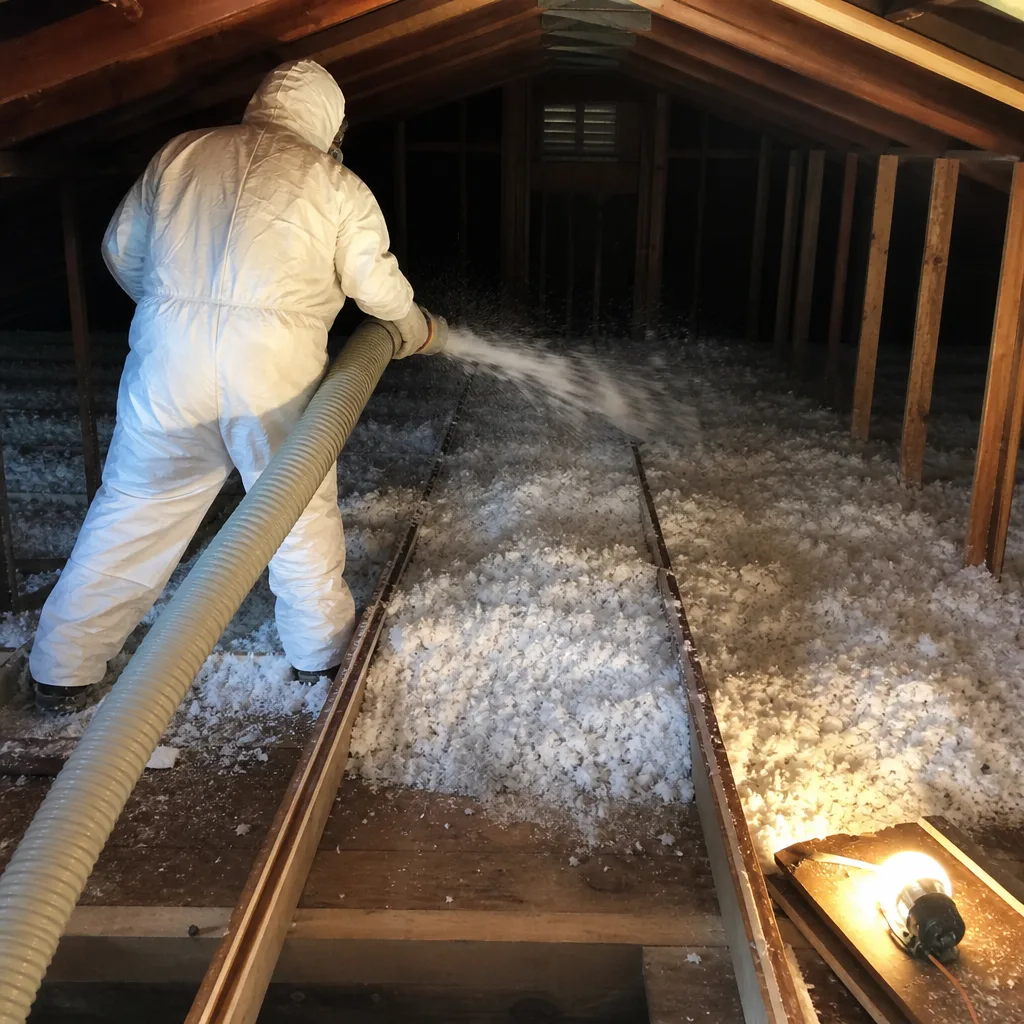
- Uneven temperatures room-to-room. Rockwool batts that have shifted out of place, often from wind washing through soffit vents or disturbance by prior trades, leave bare channels where conditioned air escapes. We find this most often above master bedrooms in La Habra’s 1960s ramblers, where the access hatch location made installers skip the far corners.
- Visible compression or matting. Rockwool tolerates some contact but not sustained compression below 90% of labeled thickness. Storage boxes, walking boards left in place, or prior cable runs squashed into the batt permanently reduce thermal resistance. A compressed R-30 batt performs like R-20 or worse, and the damage does not spring back.
- Moisture staining or musty attic air. Rockwool is hydrophobic and will not hold liquid water, but it will wick vapor to cold surfaces. In La Habra’s spring marine layer mornings, unsealed attic bypasses let humid interior air hit cold roof sheathing; the insulation masks the condensation site until the OSB or rafter tails show staining. The insulation itself may look fine while the assembly rots beneath it.
- Rodent nesting or droppings embedded in batts. Rockwool’s mineral composition does not appeal to rodents as nesting material the way fiberglass or cellulose can, but they will tunnel through it for access. Disturbed batts with compressed pathways, not the material itself, signal an entry point that needs sealing before replacement.
- Energy bills climbing year-over-year with no rate change. When we blower-door test La Habra homes with original or poorly added Rockwool, we regularly see 3,500-5,500 CFM50 before air sealing. After sealing top plates, can lights, and duct chases, then reinstalling to full depth, that figure typically drops 35-50%. The insulation was not the primary failure; the bypasses around it were.
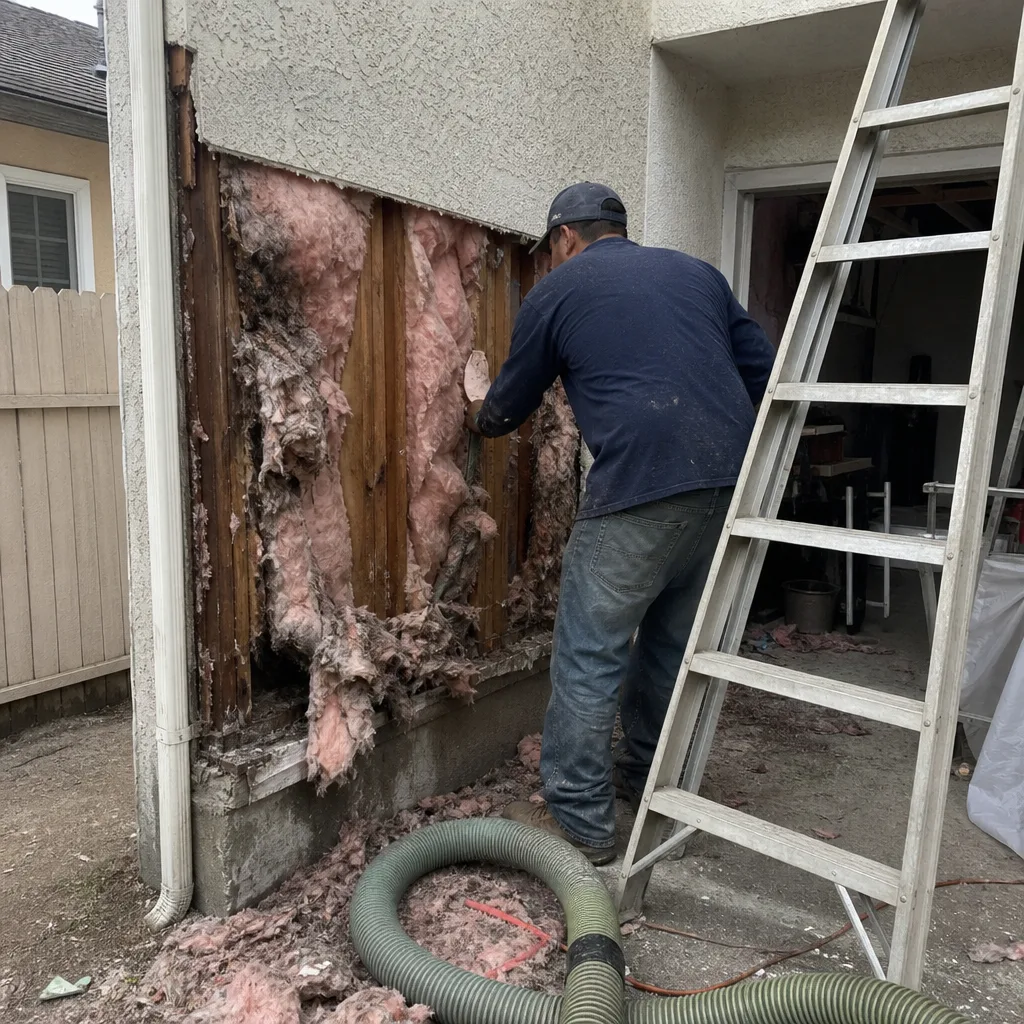 Before
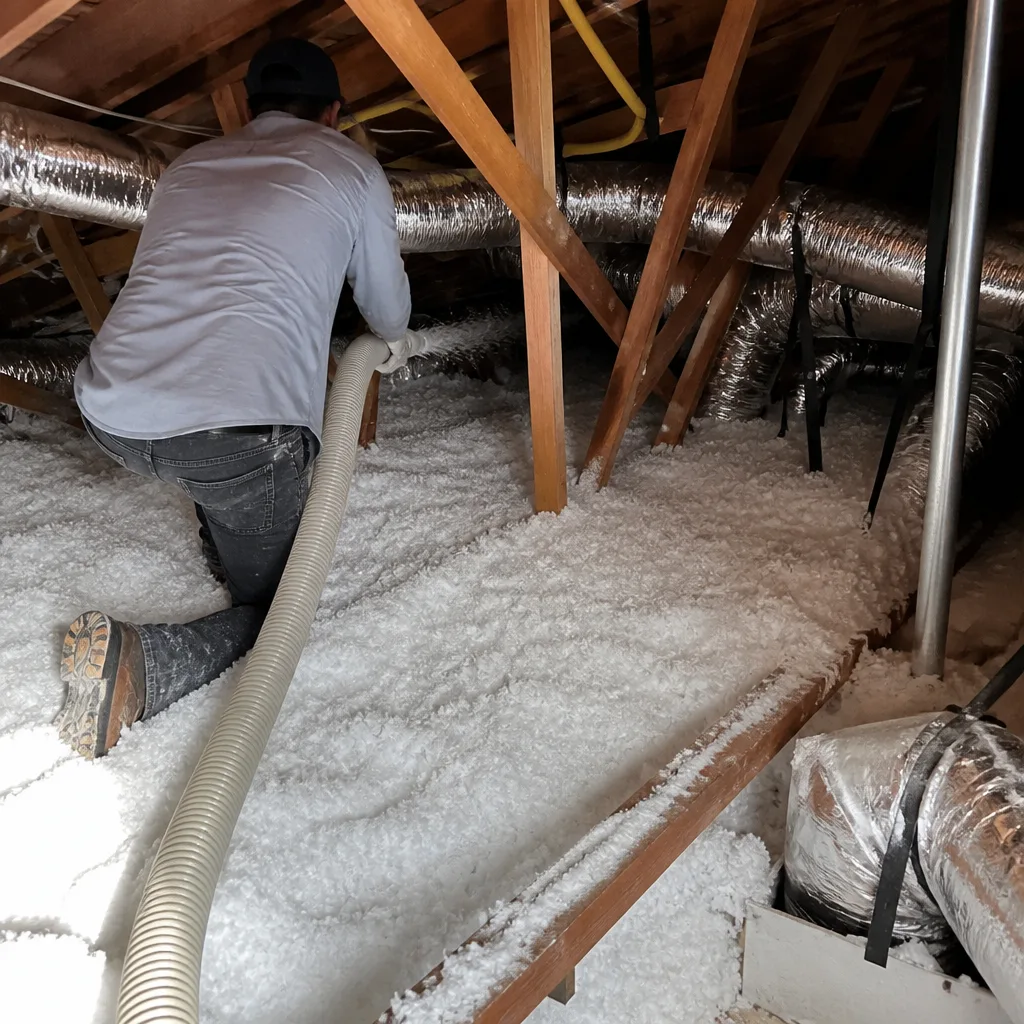 After
AfterReplacement Cost & What’s Included
| Scope | Price Range (La Habra) | What Drives It |
|---|---|---|
| Remove and replace Rockwool batts, open attic, up to 1,000 sq ft | $3,200-$4,400 | Existing depth, accessibility, whether decking needs partial removal |
| Same, plus full attic air sealing (top plates, penetrations, can lights) | $4,500-$5,800 | Linear feet of top plate, number of recessed fixtures, chimney chase detail |
| Rockwool over existing insulation (supplemental layer) | $1.80-$2.60/sq ft | Current settled depth, need for raised floor joists or retainer boards |
| Insulation removal only (contaminated or water-damaged) | $1.20-$1.80/sq ft | Bagging and haul-away volume, attic access size |
These prices include material, labor, and our Documented Photo Record delivered before we leave. Every job gets a written price before any work starts, under Haven Standard Clause 1. On air-sealing jobs, we provide before-and-after blower-door numbers so you can verify the performance change. The 365-Day Done Right Promise covers all completed work. We also offer a Free Second Opinion on any written estimate from another contractor; bring us their scope and we will read it with you.
DIY or Call Us?
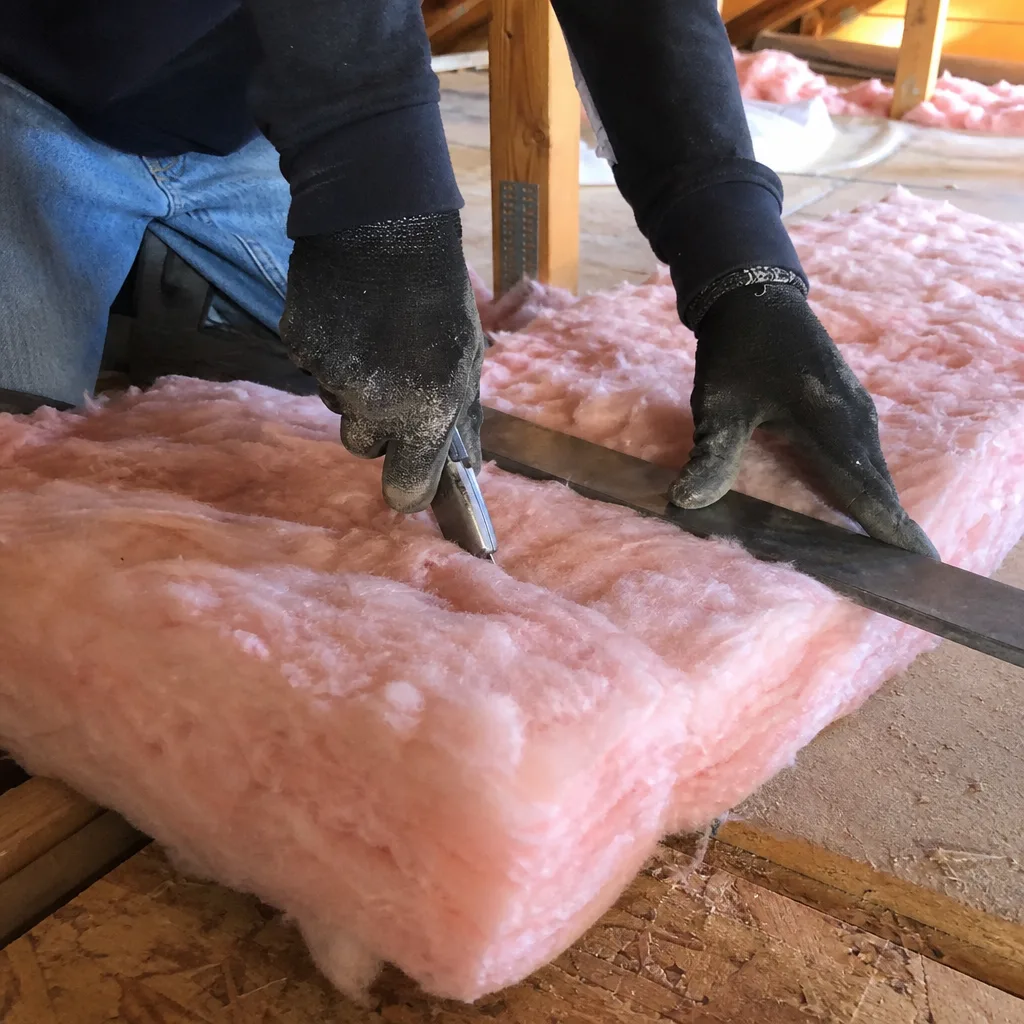
What you can safely check yourself: measure existing batt thickness against the labeled R-value, look for obvious displacement or compression, and verify your attic access path is clear. What goes wrong fast: Rockwool batts are heavier than fiberglass, and working overhead in a La Habra attic in August is not the same as rolling fiberglass in a garage. More critically, installing insulation over an unsealed attic floor is R-value on paper and heat loss in practice. We regularly find homes where a homeowner added Rockwool over bypasses that were leaking 800 CFM50 or more; the new batts looked perfect and the house stayed uncomfortable.
Seal the bypasses first. The insulation has nowhere useful to go until the air does. For attic work involving electrical junction boxes, can light housings, or combustion venting, we recommend a trained technician. Call (562) 267-3291 for a written price before any work starts.
FAQs
Rockwool mineral wool does not degrade from thermal cycling or moisture the way organic insulations can; in La Habra’s mild, dry-dominant climate, properly installed batts should perform for 50+ years. The failure mode is almost always installation error, compression, or air bypasses around it, not material breakdown. If your batts are older than 20 years and performance has dropped, the cause is usually displacement or unsealed gaps that developed over time. Call (562) 267-3291 and we will assess whether removal or supplemental layering makes sense.
Localized damage from a single roof leak or rodent entry can be spot-repaired by removing the affected batt and installing new material to match depth and density. However, if the original installation skipped air sealing, or if batts are widely compressed or displaced, partial repair leaves the underlying problem intact. We will tell you which scenario applies after a visual inspection. Estimates are free; call (562) 267-3291.
Most residential attic jobs in La Habra, from access to final photo documentation, take one long day for a two-person crew. Air sealing adds four to six hours. Jobs over 1,500 square feet, or those requiring partial decking removal, may extend to a second day. We schedule with a hard start time, not a window, and text when the crew is en route.
We stock Rockwool Comfortbatt R-23 and R-30 in standard widths on our La Habra trucks. AFB evo and non-standard thicknesses require a one- to two-day material pull. Same-day installation is available for standard Comfortbatt replacements when you call before 10 a.m. Call (562) 267-3291 to confirm truck stock for your specific R-value and framing width.
Written by Wes Okafor, Owner, Topside Attic Insulation La Habra at Topside Attic Insulation La Habra, serving La Habra and nearby areas.