
Rockwool Crawl Space Encapsulation: The La Habra Owner’s Guide
Rockwool Comfortboard 80 and Comfortboard 110 rigid mineral wool boards are the most common Rockwool products we see in La Habra crawl space encapsulations, with installed replacement or upgrade jobs typically running $2,800-$4,600 depending on crawl square footage and whether the existing vapor barrier can be salvaged. Most Rockwool crawl space jobs in La Habra are completed same-day if the boards are in stock, which they usually are through our Owens Corning, Johns Manville, Knauf, Rockwool, CertainTeed, Icynene, Demilec, and GreenFiber supply chain. Homeowners usually discover the problem when their floors stay cold despite the furnace running, or when a musty smell returns after a dry winter - both signs that the Rockwool layer has absorbed moisture through a compromised vapor barrier or that the boards have slumped away from the rim joist, leaving a convection channel.
Which Rockwool Models This Applies To
The Rockwool products we handle in La Habra crawl spaces fall into two categories: rigid board for perimeter and rim-joist applications, and loose-fill or batt for floor-cavity work, though the rigid boards are what fail most visibly.
Comfortboard 80 - 2-inch and 3-inch thicknesses, density of 8 pounds per cubic foot. The 2-inch board measures R-8; the 3-inch board measures R-12. We see this most often in 1960s-1980s ranch homes near the La Habra Heights border, where owners added it during partial encapsulations in the 2010s. The product label is a foil-faced tag on the board edge; if it’s water-stained or missing, measure thickness and density - anything lighter than 8 PCF that compresses under thumb pressure is not Comfortboard 80.
Comfortboard 110 - higher density at 11 PCF, used where the crawl space doubles as a mechanical chase or where local code requires a more rigid fire barrier. This costs roughly 15-20% more in materials but holds its shape longer in damp conditions. The gotcha: Comfortboard 110 is not interchangeable with 80 on friction-fit applications. The extra density means it will not compress into standard 16-inch joist bays without cutting, and forcing it creates edge gaps that defeat the air seal.
OEM vs. aftermarket: Rockwool does not sell a proprietary “encapsulation system” the way some spray-foam brands do. The boards are commodity mineral wool; what matters is the accompanying vapor barrier (usually 6-mil polyethylene or 10-mil reinforced) and the sealing detail at seams and penetrations. We source Rockwool boards through standard distribution and pair them with vapor barriers from compatible manufacturers. Topside Attic Insulation La Habra is an independent service provider, not affiliated with Rockwool.
Signs Your Rockwool Crawl Space Encapsulation Is Failing
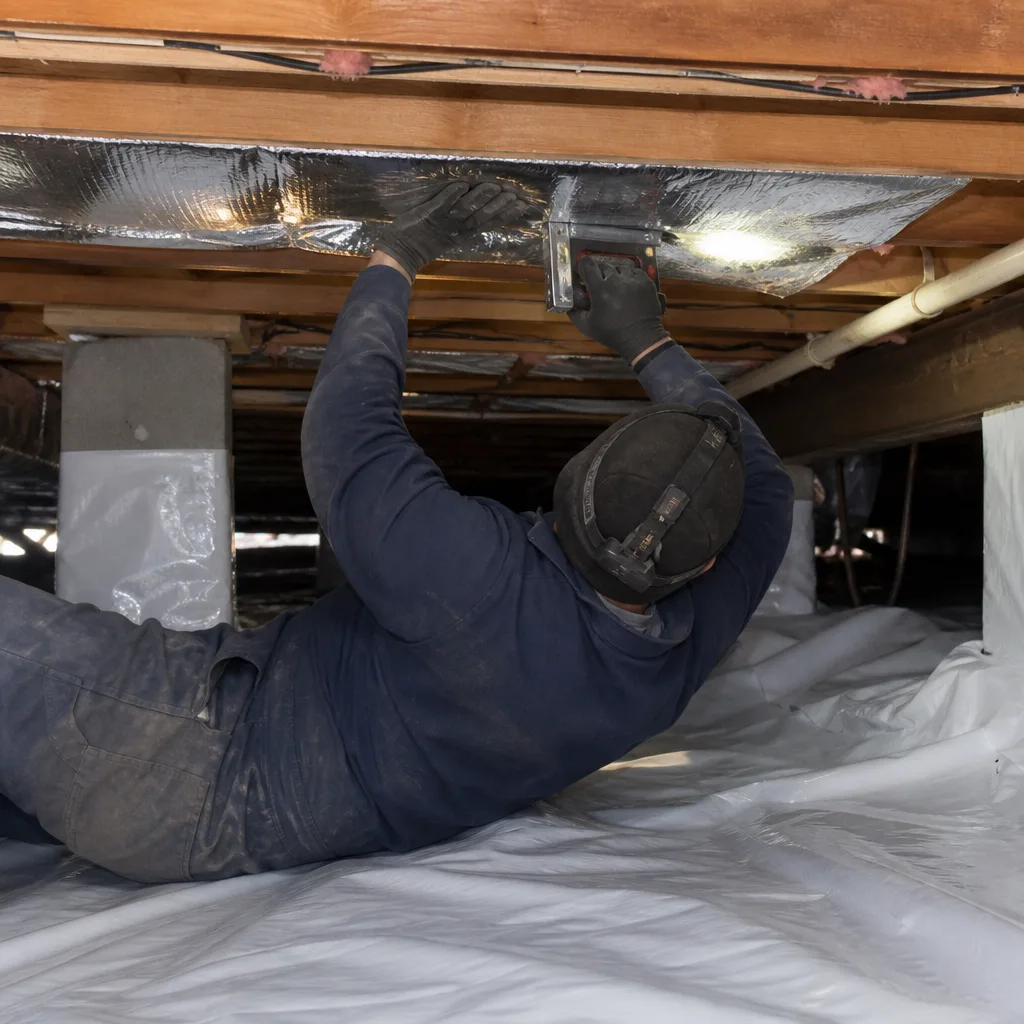
- Cold floors in January that warm up by March. This seasonal pattern means the Rockwool has absorbed winter moisture, collapsing its air pockets and dropping its effective R-value by 40% or more. The board may feel heavy or smell earthy when probed.
- Musty odor returning after the rain stops. La Habra’s clay-heavy soil holds moisture; a intact vapor barrier should keep the Rockwool dry year-round. If the smell persists into May, the polyethylene has torn at a seam or the tape has failed at a plumbing penetration.
- Visible sagging or detachment at the rim joist. Rockwool rigid board relies on mechanical fasteners or friction fit; if the fasteners were installed into damp wood or the wrong substrate, the board pulls away and creates a convection loop - warm house air rises out, cold crawl air drops in.
- Insulation debris on the ground. When Comfortboard 80 becomes saturated, it loses binder integrity and begins to crumble. If you’re sweeping up gray fibers during routine crawl space checks, the board is past its serviceable life.
- Energy bills climbing without HVAC changes. We compare this to our blower-door numbers from prior jobs: a crawl space with failed Rockwool and an unsealed rim joist can add 800-1,200 CFM50 to a home’s total leakage, which translates directly to heating runtime.
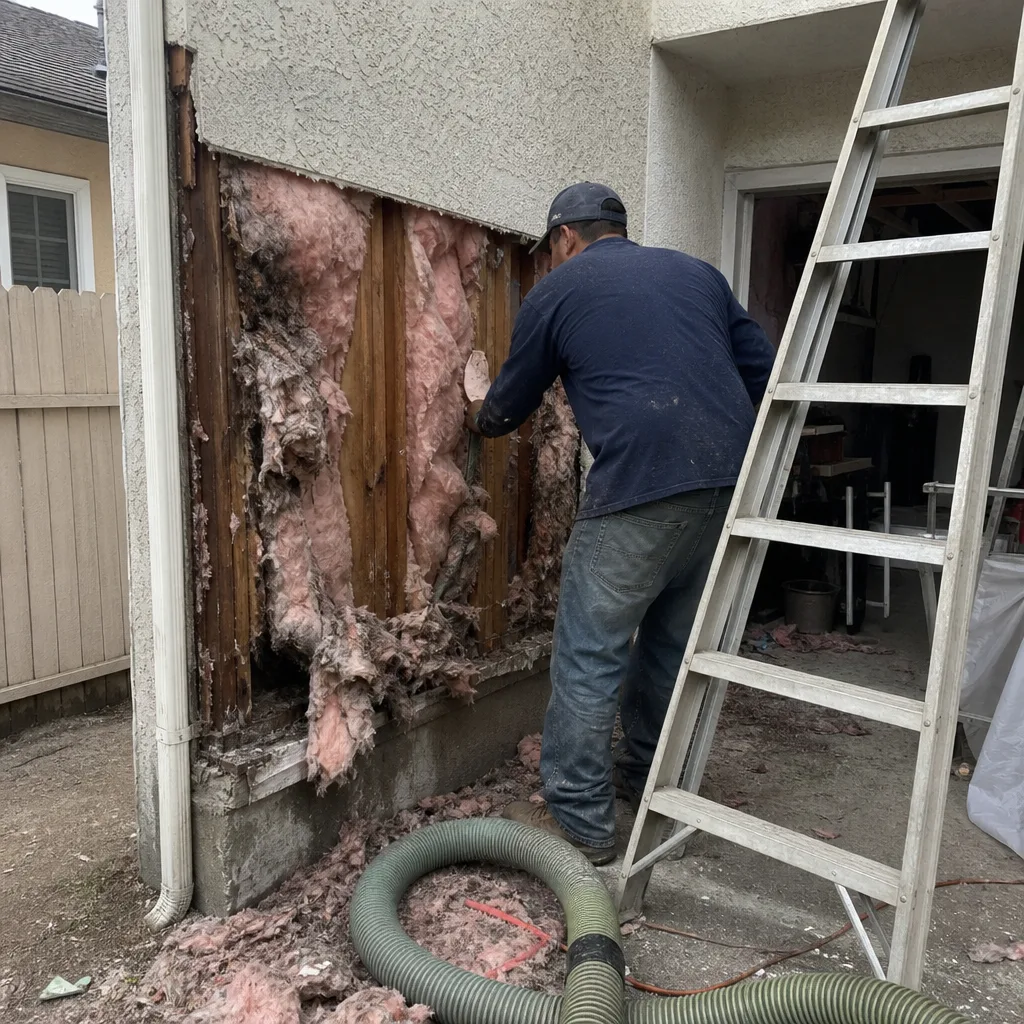 Before
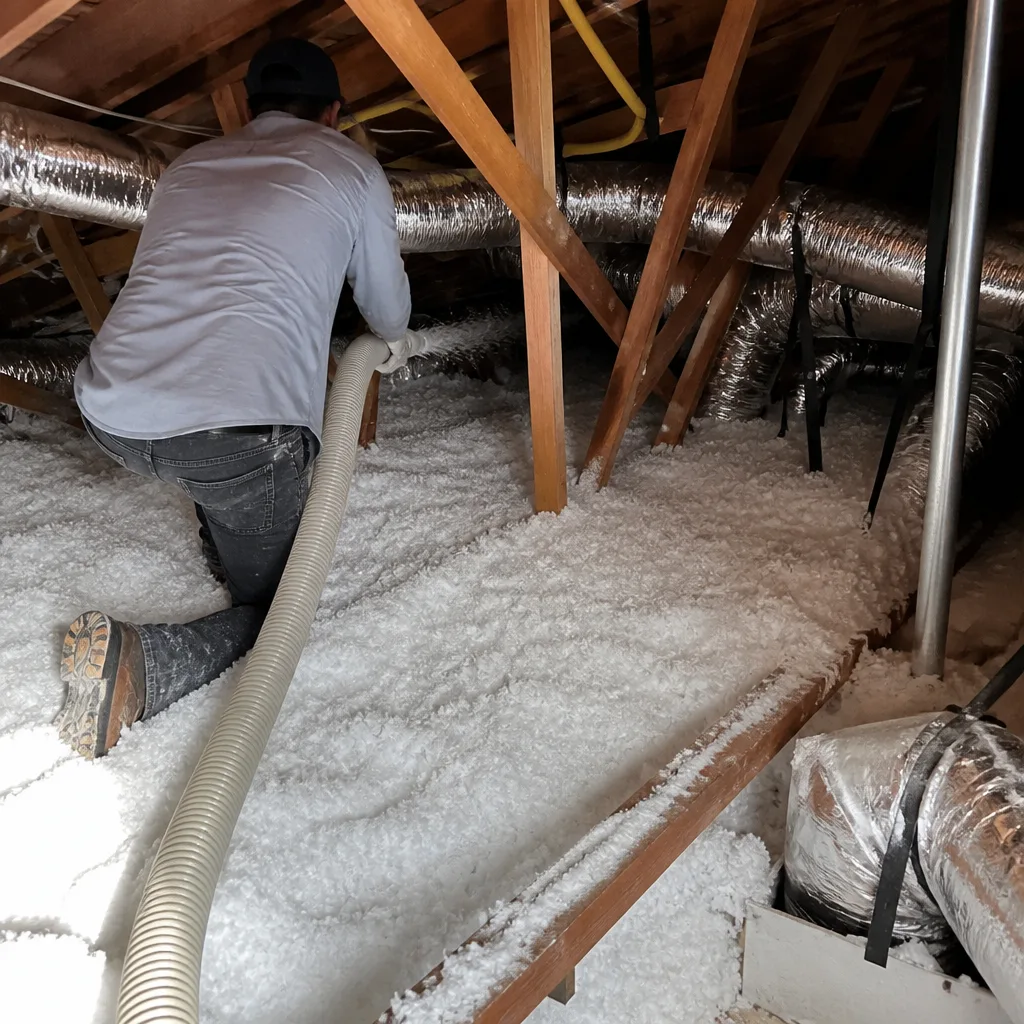 After
AfterReplacement Cost & What’s Included
Most full Rockwool crawl space encapsulation replacements in La Habra run $2,800-$4,600 for crawl spaces between 800 and 1,400 square feet. The range breaks down as follows:
- Materials: $1,100-$1,900 for Rockwool Comfortboard 80 or 110, 6-mil or 10-mil vapor barrier, seam tape, and mechanical fasteners
- Labor: $1,400-$2,300 for removal of failed material, surface prep, air sealing of rim joists and penetrations, installation, and vapor barrier placement
- Disposal: $300-$400 for saturated mineral wool, which cannot be reused and must be bagged for landfill
What drives the high end: multiple plumbing penetrations requiring custom cutting, a failed existing vapor barrier that has allowed subfloor mold, or a crawl space under 18 inches in height that slows work. What keeps it low: clean access, dry conditions, and a vapor barrier that can be patched rather than replaced.
Every job includes a Written Price Before Any Work Starts - Haven Standard Clause 1 - and a Documented Photo Record showing before, during, and after. On applicable jobs, we run a blower-door test before and after to quantify the air-sealing improvement. The 365-Day Done Right Promise applies to all completed work.
DIY or Call Us?
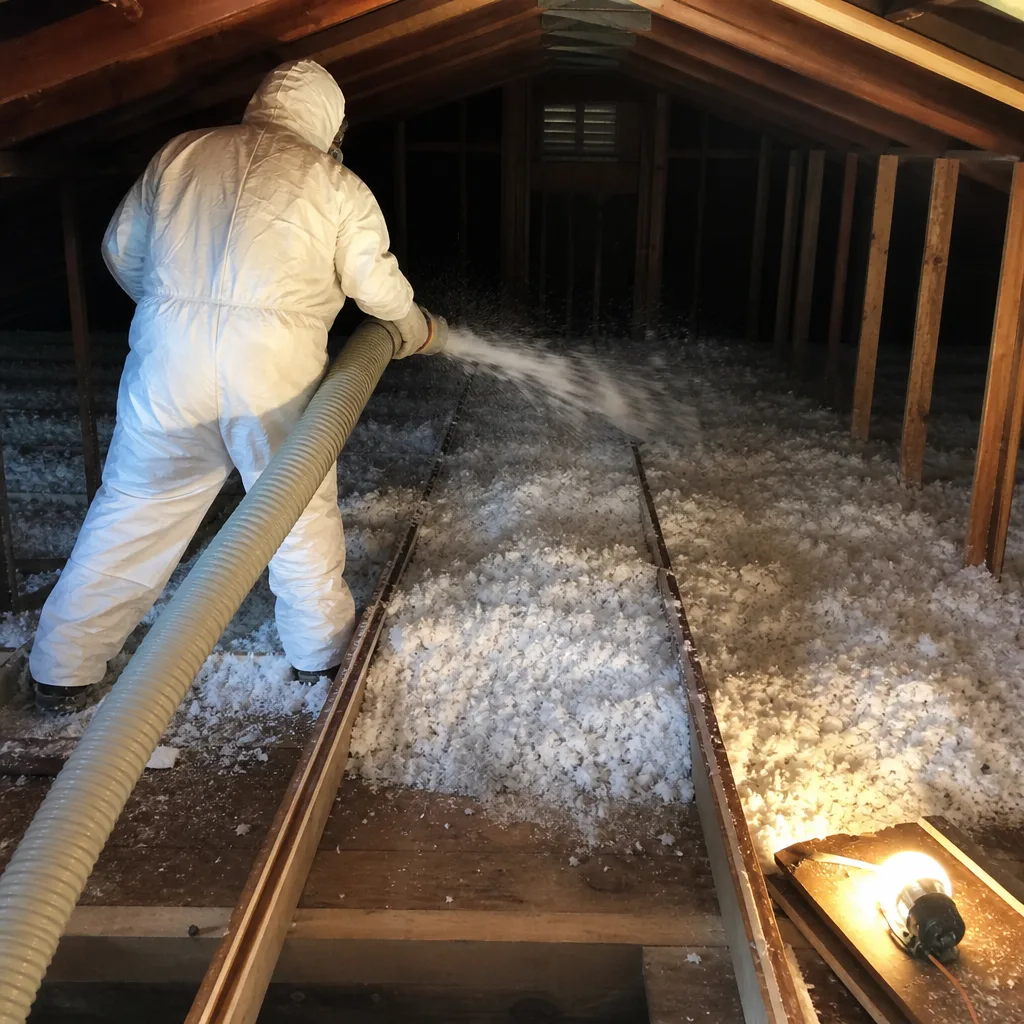
There is no high-tension danger in Rockwool crawl space work the way there is with garage door springs or electrical panels, but there are genuine health and effectiveness risks worth naming.
An owner can safely check: whether the vapor barrier is intact at visible seams, whether fasteners are still seated, and whether the board is dry to touch. Use a respirator rated for mineral wool fibers - not a dust mask - and full coverage clothing. Rockwool fibers are not asbestos, but they are mechanically irritating to skin and lungs.
Where DIY goes wrong: cutting board to fit around plumbing without accounting for thermal bridging, using the wrong tape that releases in crawl space humidity, and the critical error of installing new Rockwool over an unsealed rim joist. Seal the bypasses first. The insulation has nowhere useful to go until the air does. We regularly find La Habra homes where a homeowner added R-value without stopping the air movement, and the result is a warmer crawl space and the same cold floors.
For a written price on Rockwool crawl space encapsulation in La Habra, call (562) 267-3291. Estimates are free, and we stock the boards.
FAQs
In La Habra’s climate - mild winters, dry summers, but clay soil that holds moisture - properly installed Rockwool with an intact vapor barrier lasts 20-25 years. Without a vapor barrier, or with one that fails at seams in year seven, the board can degrade in 8-12 years. Call (562) 267-3291 and we can assess your vapor barrier condition during a free estimate.
Partial repair is possible if the damage is limited to one bay or one seam, but saturated Comfortboard 80 or 110 cannot be dried and restored - the binder breaks down and the fibers separate. We replace saturated sections and match them to the existing thickness and density. For a repair vs. replace assessment, call (562) 267-3291.
Most jobs are completed in one day, 6-8 hours for a standard 1,000-square-foot crawl space. Tight access, extensive plumbing, or mold remediation adds a second day. We schedule with a named technician and text when they are on the way - Haven Standard: Arrive on schedule.
We stock Comfortboard 80 in 2-inch and 3-inch thicknesses and can source Comfortboard 110 within 24-48 hours through our regular distribution. Same-day starts are common for 80; 110 jobs typically begin within two business days. Call (562) 267-3291 to confirm current stock for your job.
Written by Wes Okafor, Owner, Topside Attic Insulation La Habra at Topside Attic Insulation La Habra, serving La Habra and nearby areas.