
Rockwool Vapor Barrier Installation: The La Habra Owner’s Guide
Rockwool vapor barrier installation in La Habra typically runs $1,800-$3,400 for a complete attic assembly, depending on square footage and whether we’re retrofitting over existing insulation or starting from a clean deck. Most La Habra homes in the 90631 zip built between 1955 and 1985 need the poly vapor barrier replaced or properly integrated when upgrading to Rockwool batts, and we stock the 6-mil and 10-mil reinforced polyethylene sheeting on every truck. Same-day starts are available when you call before noon; the crew carries a full Rockwool compatibility chart because the Comfortbatt and Safe’n’Sound lines have different facing requirements that determine whether you need a separate vapor retarder at all.
Most La Habra homeowners figure out something’s wrong in one of three ways: their energy audit flags moisture accumulation in the attic sheathing, they pull up a batt during a remodel and find blackened kraft paper, or they notice the existing poly barrier has gone brittle and started flaking where summer attic temps in La Habra regularly push 140°F.
Which Rockwool Models This Applies To
Rockwool’s two residential batt lines handle vapor management differently, and getting this wrong means condensation inside your assembly.
Comfortbatt (R15, R23, R30) ships with an unfaced core. In La Habra’s climate zone 3B, code requires a Class I or II vapor retarder on the warm-in-winter side, which means we install a separate 6-mil poly barrier or kraft-faced accessory layer. The R23 5.5-inch batt is the most common retrofit we see in La Habra’s 1,200-1,800 square foot ranch homes; it compresses poorly, so the vapor barrier has to go in flat, not stuffed around obstructions.
Safe’n’Sound (3-inch and 6-inch) is engineered for interior partition walls and steel stud assemblies. It has no vapor retarder because it’s not designed for exterior envelope work. We’ve been called to La Habra homes where a previous contractor installed Safe’n’Sound in an attic cavity, which creates a guaranteed moisture problem without a separate vapor barrier. The product stamp reads “Safe’n’Sound” in white text on a gray batt; if that’s what you’re holding, you need the full poly installation.
We also stock Rockwool Comfortboard 80 for exterior continuous insulation applications, though that’s less common in La Habra’s existing housing stock. OEM Rockwool vapor retarder accessories exist but lead times run 3-4 weeks; we source equivalent ASTM E1745-compliant poly from Johns Manville and CertainTeed, which matches spec without the wait. Every roll we carry is stamped with its perm rating and mil thickness so you can verify what you’re getting.
Signs Your Rockwool Vapor Barrier Installation Is Failing
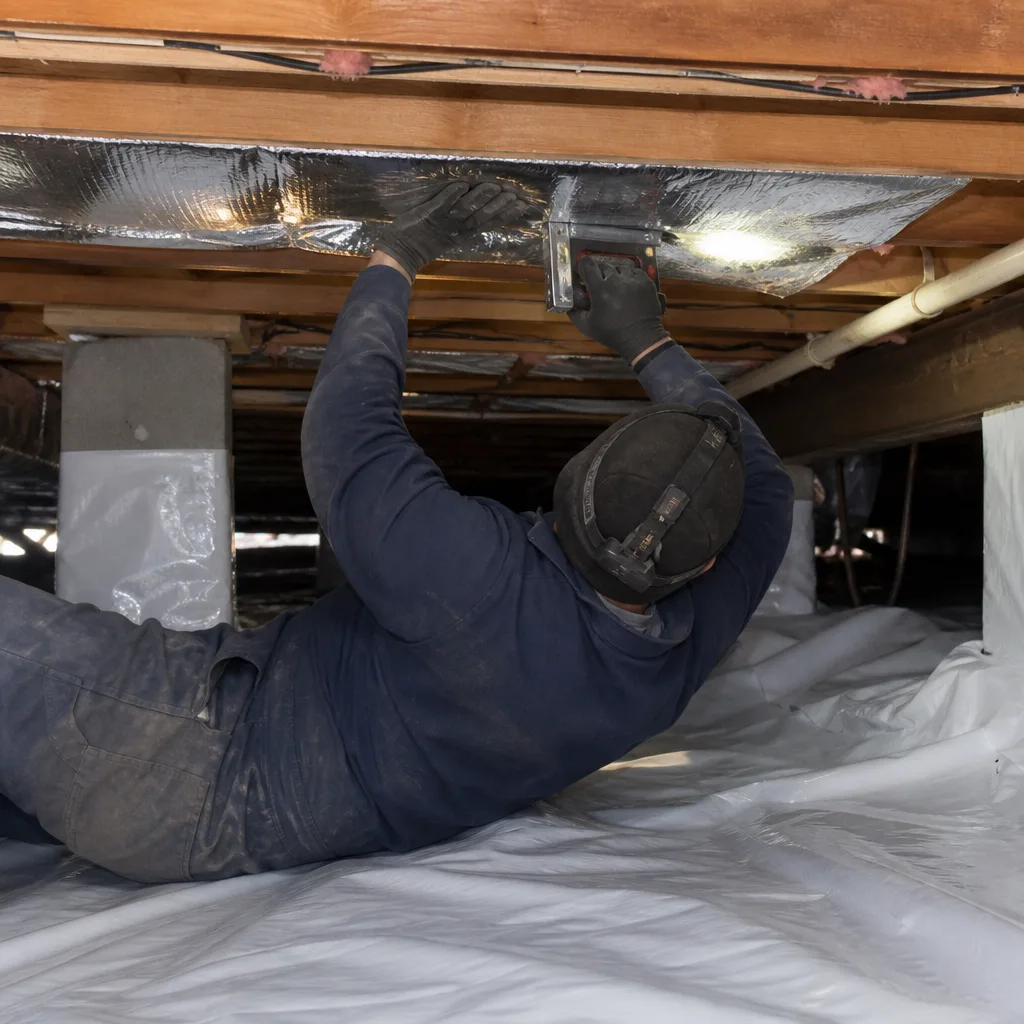
- Water staining on ceiling drywall below the attic. This usually means warm, moist interior air is migrating through gaps in the vapor barrier and condensing on the underside of your roof deck during La Habra’s cooler winter nights. The stain pattern follows the framing bays because that’s where the poly seams failed or were never taped.
- Blackened or crumbling kraft paper facing on existing batts. Kraft paper is a Class III vapor retarder; in La Habra’s mixed-dry climate, it’s often sufficient when new but degrades after 10-15 years of summer heat cycling. Once the asphalt-impregnated paper cracks, the fiberglass or old Rockwool behind it becomes a filter for dirty air, not a thermal barrier.
- Flaking, brittle polyethylene sheeting that shatters when touched. Attic temperatures in La Habra exceed 130°F for four to five months annually. Standard 4-mil poly from a hardware store oxidizes in 3-7 years under that load. We see this constantly in homes near La Habra Heights where the steeper roof pitches create even hotter peak cavities.
- Mold or mildew odor detected through recessed can lights. This indicates bulk air movement carrying moisture past a failed vapor barrier, then into the conditioned space through unsealed fixture penetrations. It’s a dual failure: the vapor barrier is compromised and the air sealing was never completed. Our blower-door test will quantify exactly how much air is moving through those can lights.
- Insulation settling more than 25% from original thickness. Rockwool doesn’t settle like fiberglass, but if it’s installed over a failed vapor barrier with active air washing, the material can shift and create voids. We measure settled depth at four quadrants on every job; anything under the labeled R-value thickness means the assembly isn’t performing.
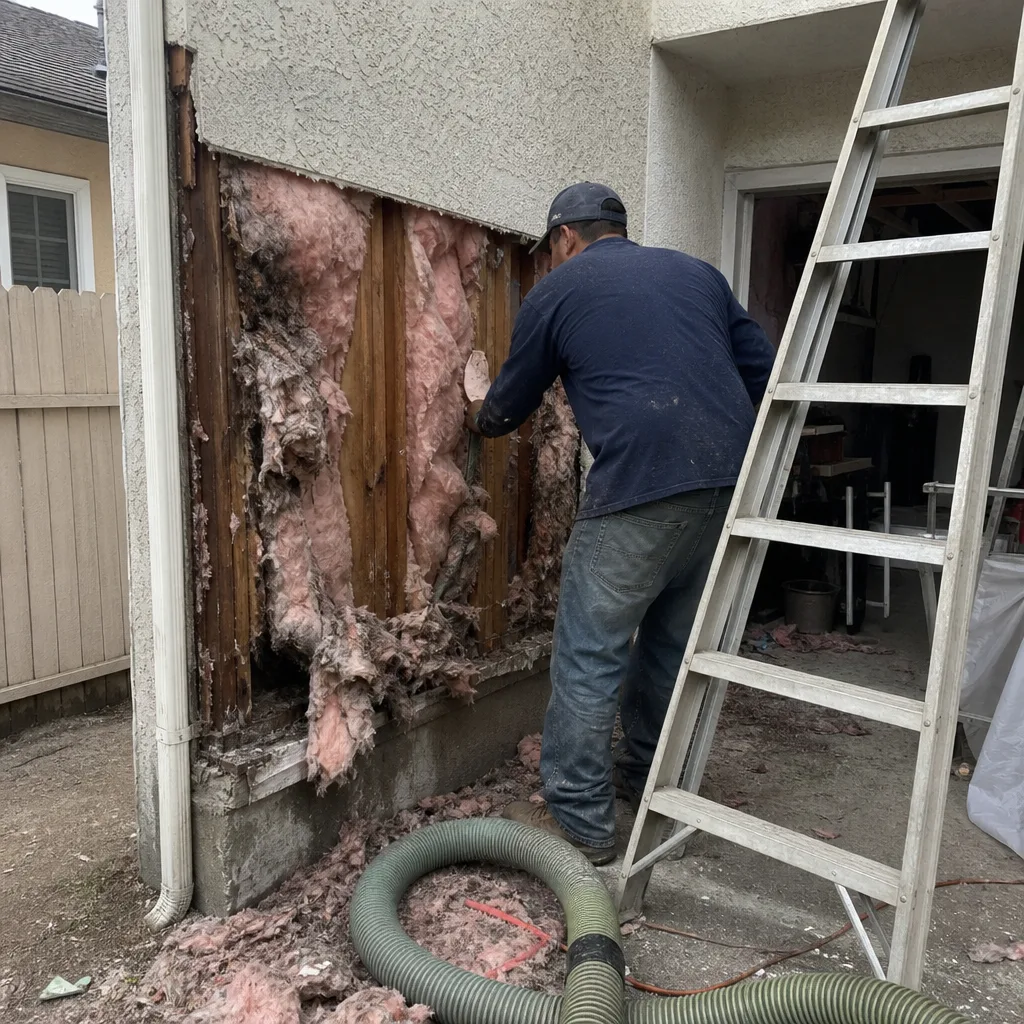 Before
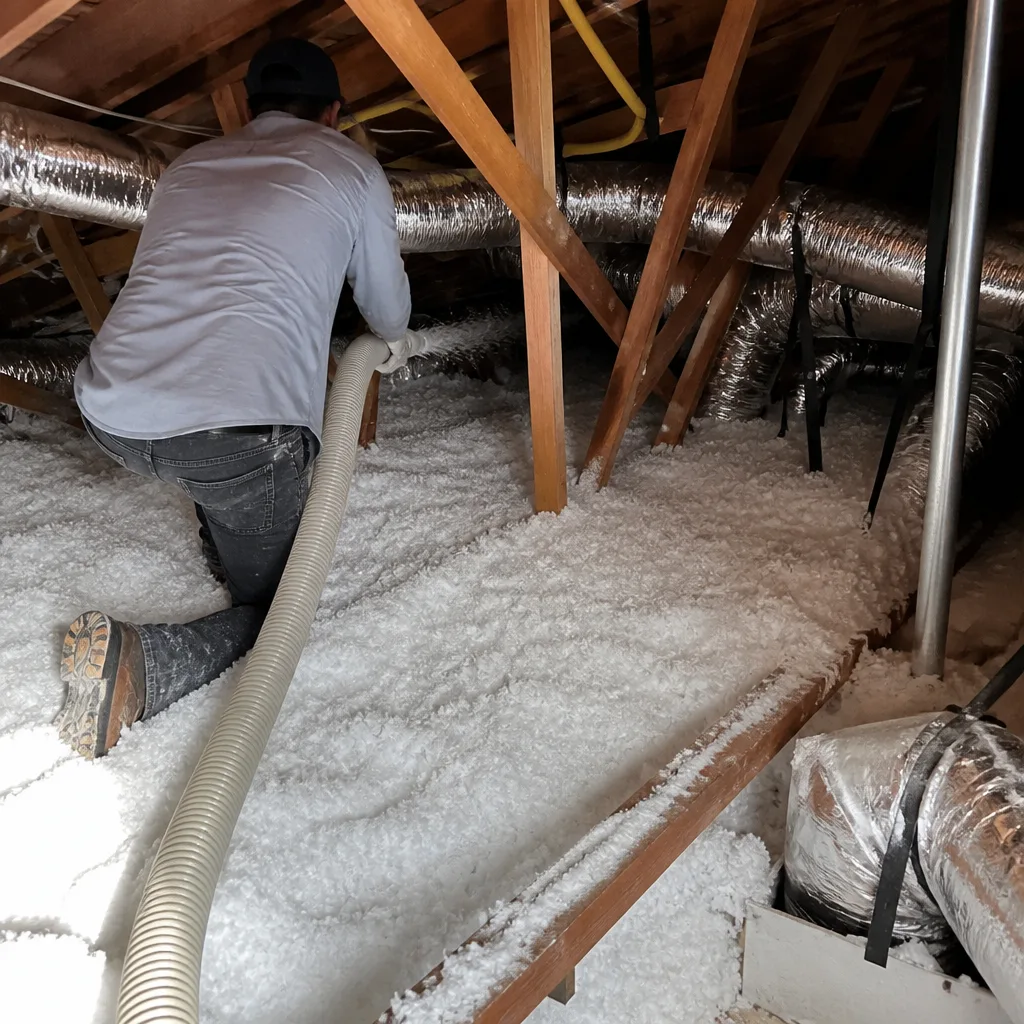 After
AfterReplacement Cost & What’s Included
| Scope | Typical Range in La Habra |
|---|---|
| Vapor barrier retrofit over existing insulation (up to 1,000 sq ft attic) | $1,800-$2,400 |
| Full removal, air sealing, new vapor barrier, Rockwool Comfortbatt install (1,000-1,500 sq ft) | $2,800-$3,400 |
| Additional air sealing of top plates and penetrations | $400-$700 |
| Blower-door test with before-and-after documentation | Included on full replacements |
What drives the range: attic accessibility (scuttle vs. pull-down stairs vs. no access at all), existing insulation condition requiring removal, and the extent of air sealing needed before the vapor barrier goes down. We don’t quote vapor barrier work without a blower-door baseline; installing a barrier over an unsealed attic floor traps moisture in the assembly. Every full replacement includes the Documented Photo Record, written scope, and 365-Day Done Right Promise under Haven Standard Clause 1. The written price is delivered before anyone enters your attic.
DIY or Call Us?
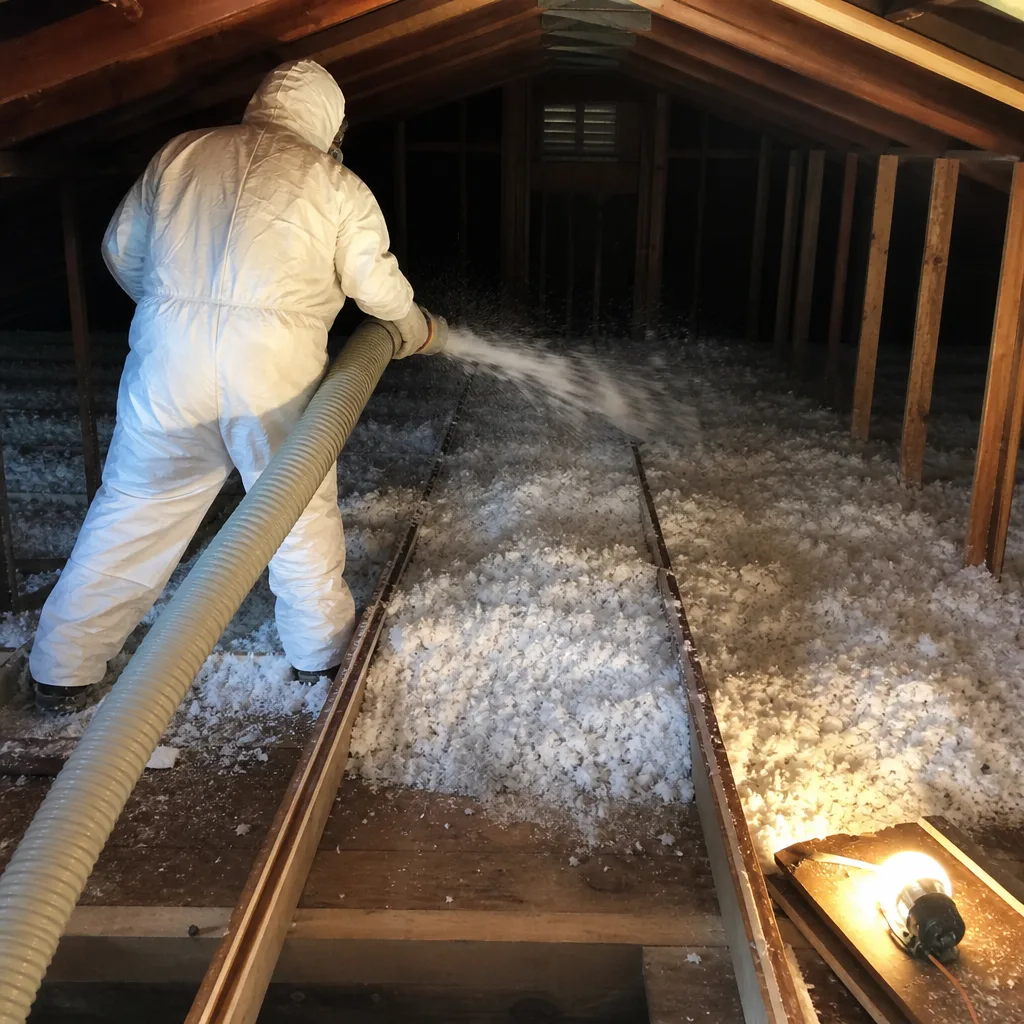
There’s a safe middle ground here. A homeowner can verify the product stamp on their Rockwool batts, measure attic square footage, and photograph any visible poly damage for documentation. What you cannot safely do: work in an unventilated attic during La Habra’s summer heat, handle degraded poly that may contain decades of rodent contamination, or attempt to seal electrical penetrations without knowing which fixtures are IC-rated.
The failure mode we see most from DIY vapor barrier work in La Habra is incomplete seam taping. A vapor barrier is only as good as its laps; 6-inch overlaps with acoustic sealant at all penetrations are code minimum, and most homeowners stop at laying the poly flat. If your attic has knob-and-tube wiring, gas appliance vents, or a whole-house fan frame, the fire-blocking and clearance requirements get specific fast. Call (562) 267-3291 and we’ll read your situation with you. Free Second Opinion on any written estimate you’ve already received.
Seal the bypasses first. The insulation has nowhere useful to go until the air does.
FAQs
Properly installed 6-mil reinforced poly with sealed seams lasts 20-25 years in La Habra’s climate; the 140°F summer peak temperatures are harder on the material than the mild winters. We warranty our installation work for 365 days under the Done Right Promise, and the materials themselves carry manufacturer defect coverage. Call (562) 267-3291 for the exact warranty terms on your specific assembly.
Patching works for isolated punctures smaller than a square foot, but cumulative degradation from La Habra’s heat cycling means most poly over 15 years old is brittle throughout. We photograph the full field condition during our inspection; if more than 30% of the surface shows oxidation or micro-cracking, replacement is the cost-effective choice. Call (562) 267-3291 for a free assessment and written price.
A straightforward vapor barrier retrofit in a 1,200-square-foot La Habra attic takes one crew one day; full removal, air sealing, and Rockwool replacement typically runs two days. We arrive with the materials already loaded, including the Rockwool batts and compatible poly, so there’s no supply run delay. Call (562) 267-3291 to check same-week availability.
We stock 6-mil and 10-mil reinforced polyethylene, vapor-retarder tape, and acoustic sealant on every truck; Rockwool Comfortbatt in R23 and R30 is warehoused locally for La Habra jobs. OEM Rockwool-branded vapor retarder accessories are available by special order with a 3-4 week lead time, but our ASTM E1745-compliant equivalents match spec without the delay. Topside Attic Insulation La Habra is an independent service provider, not affiliated with Rockwool. Call (562) 267-3291 to confirm current stock for your model line.
Written by Wes Okafor, Owner, Topside Attic Insulation La Habra at Topside Attic Insulation La Habra, serving La Habra and nearby areas.