
How Much Does Radiant Barrier Installation Cost in La Habra?
Our Radiant Barrier Installation services in La Habra, CA typically run between $1,400 and $3,200 for a single-story home with a standard attic, with most jobs landing around $1,800 to $2,400 depending on attic size, access conditions, and whether any air sealing work is done first. Most installations are completed in a single day. At Envelope Insulation Co., every job starts with a written price before anyone touches a tool – that’s not a courtesy, it’s how we operate under the Haven Standard.
Radiant Barrier Installation Cost Breakdown (2026)
Radiant barrier is a reflective foil product – usually laminated polyethylene or perforated aluminum foil – that gets stapled to the underside of attic rafters or laid over existing insulation on the attic floor. It works by reflecting radiant heat before it enters your living space, which in La Habra’s climate matters from roughly May through October. The price you pay depends on several line items, and it helps to see them separated out.
| Item | Typical Cost Range (La Habra, 2026) | Notes |
|---|---|---|
| Radiant barrier material only (foil-faced, per sq ft) | $0.15 – $0.35/sq ft | Perforated foil costs slightly more but allows moisture vapor to pass through – better for humid attics |
| Labor (staple-up, rafter application) | $0.55 – $1.10/sq ft | La Habra homes in the older tracts near Hacienda Road often have tighter attic access, which adds time |
| Labor (attic floor / over existing insulation) | $0.40 – $0.80/sq ft | Faster application, but rafter-side installation performs better in Southern California heat |
| Attic air sealing (top plates, can lights, penetrations) | $350 – $900 (per job) | Required before insulation work at Envelope Insulation Co. – gaps sealed first, then radiant barrier added |
| Insulation removal (if needed before installation) | $1.00 – $2.00/sq ft | Older La Habra homes built before 1985 sometimes have degraded fiberglass batts that should come out first |
| Small attic (up to 1,000 sq ft) | $1,400 – $1,800 total | Typical for condos and smaller homes near La Habra Heights border |
| Mid-size attic (1,000 – 1,800 sq ft) | $1,800 – $2,600 total | Most common range for La Habra tract housing built 1965 – 1995 |
| Large attic (1,800 – 2,800 sq ft) | $2,600 – $3,800 total | Larger footprint homes in areas like Hacienda Hills or near Imperial Highway corridor |
The most common job we see in La Habra falls in that mid-size range: a 1,200 to 1,500 square foot attic in a home built between 1970 and 1990, usually with existing blown-in insulation that’s still serviceable. When the attic floor insulation is in decent shape, we do the air sealing work first – top plates, recessed light fixtures, any plumbing or electrical penetrations – and then apply radiant barrier to the rafters above. That job typically prices out between $2,000 and $2,800 with the air sealing included. If you skip the air sealing, you’re leaving the single biggest performance gap unaddressed, and we won’t do that.
One pricing variable that’s specific to La Habra: the city sits in a geography where summer attic temperatures regularly exceed 145°F to 155°F on south- and west-facing roof planes. That extreme heat load means a properly installed rafter-side radiant barrier – not just a foil layer tossed on the attic floor – is the right specification here. That affects material choice and therefore cost slightly, but it also affects performance enough that it’s worth paying attention to.
What Affects Radiant Barrier Installation Pricing in La Habra
- Attic square footage and configuration: Price scales with the area covered. A simple rectangular attic over a ranch-style home is straightforward. Attics with multiple hip sections, dormers, or low-pitch sections that require working on your knees take more time and cost more in labor. Several La Habra neighborhoods built in the late 1970s – particularly in the area east of Beach Boulevard and north of Lambert Road – have irregular attic geometry that adds 15% to 25% to the labor estimate.
- Attic access quality: A standard pull-down stair with 24 inches of clearance is quick. A 16-inch scuttle hole with no ladder means materials have to be passed up differently and every trip takes longer. Older La Habra homes near the historical district along La Habra Boulevard sometimes have access points that were clearly an afterthought.
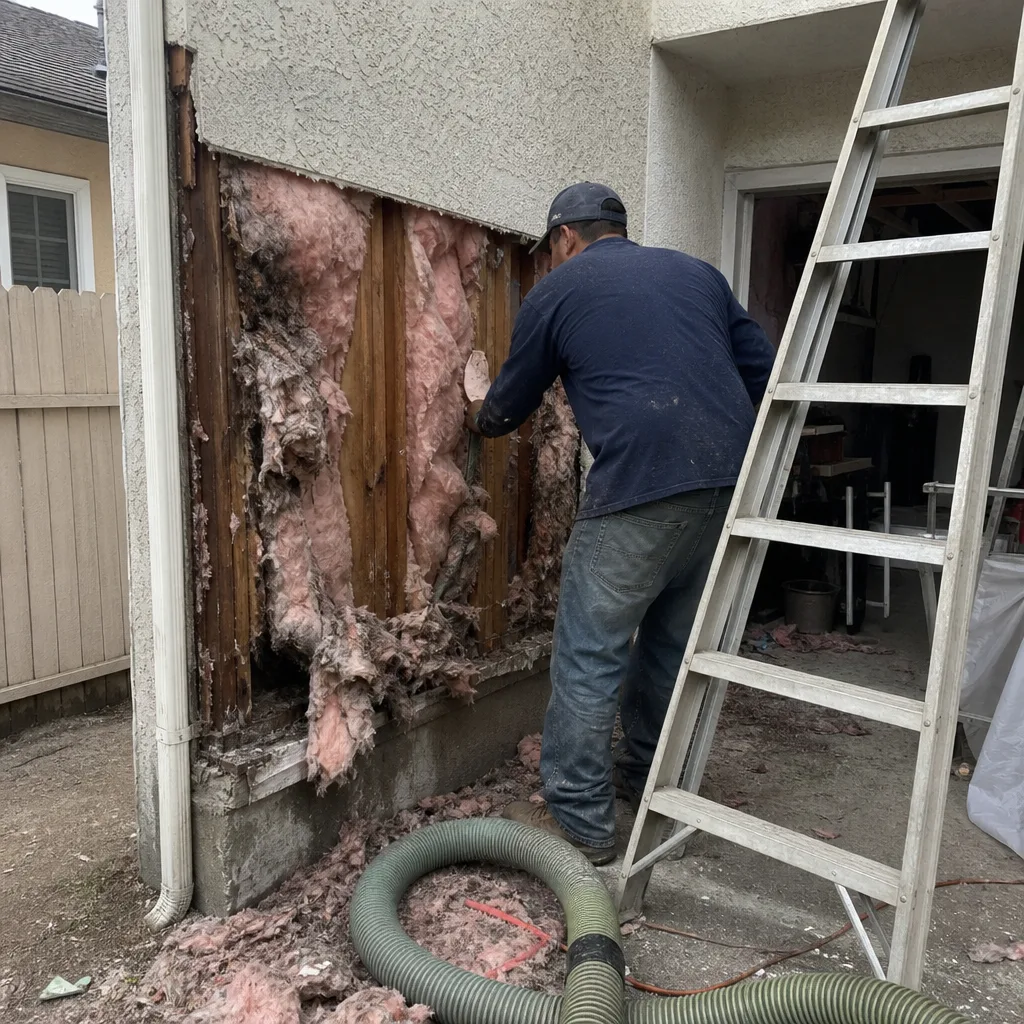
- Existing insulation condition: If existing attic insulation is packed with rodent debris, wet from a past roof leak, or simply degraded past the point of usefulness, we’ll identify that in the initial visit and price the removal separately rather than burying it in a flat quote. Under the Haven Standard, you get a written price that names every line item – no post-job invoices for work that wasn’t in the original scope.
- Air sealing requirement: At Envelope Insulation Co., we don’t install radiant barrier over an unsealed attic floor. That’s not an upsell – it’s a sequencing requirement that protects the performance of the barrier itself. Gaps in top plates and around can lights allow hot attic air to move directly into the living space, and a radiant barrier doesn’t stop air movement. The air sealing scope adds $350 to $900 to most La Habra jobs, and it’s always broken out as its own line item.
- Rafter-side vs. attic-floor installation: Stapling foil to the underside of rafters is the higher-performing method in Southern California’s climate and the one we default to in La Habra. Some contractors lay foil over the attic floor insulation instead – faster and cheaper, but it traps heat in the attic rather than blocking it at the roof deck. The price difference is roughly $0.15 to $0.30 per square foot, and the performance difference is meaningful enough to justify it here.
- Material specification – perforated vs. non-perforated foil: Perforated radiant barrier allows moisture vapor to pass through rather than trapping it against the roof decking. In La Habra, where coastal humidity from the San Gabriel Valley corridor can push attic relative humidity higher than inland desert locations, perforated foil is usually the better choice. It costs a few cents more per square foot – typically adding $50 to $150 to the total job – but it protects against the moisture condensation that can cause long-term decking issues.
 Before
 After
AfterLa Habra-Specific Considerations That Affect Radiant Barrier Performance
La Habra sits at roughly 400 to 600 feet in elevation on the southern flank of the Puente Hills, which puts it in a thermal zone that’s meaningfully hotter than coastal communities to the west and slightly different from the deeper inland valleys to the east. Summer afternoons in La Habra regularly hit 95°F to 105°F with direct sun loading on west-facing roof planes from about 1 p.m. to 6 p.m. That extended west-afternoon exposure is why we see attic temperatures at 150°F or higher in homes along Whittier Boulevard and the Euclid Avenue corridor – and why radiant barrier, installed correctly, can take 20°F to 30°F off attic air temperature.
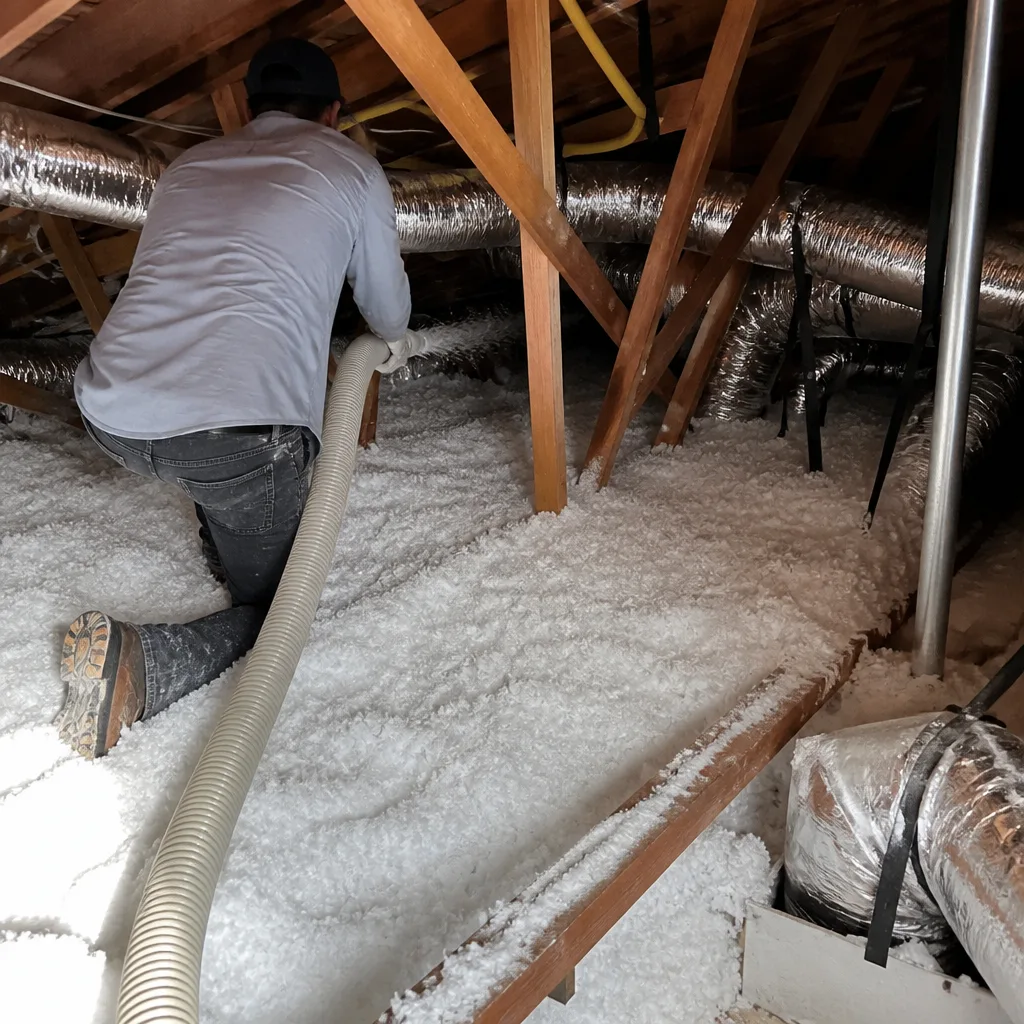
The housing stock matters, too. A significant portion of La Habra’s single-family homes were built between 1958 and 1985, when attic insulation requirements were minimal and radiant barriers weren’t yet common. These homes typically have R-11 to R-19 fiberglass batts between ceiling joists – well below the R-38 to R-60 range that current California Title 24 standards call for in this climate zone (CEC Climate Zone 8). That means most of these homes are simultaneously under-insulated and unprotected from radiant heat gain, and a radiant barrier job often gets paired with blown-in attic insulation to address both problems in one visit. When we do that combination, we always air seal first, then add insulation up to the target R-value, then apply the radiant barrier to the rafters. That sequence matters.
Permit requirements in La Habra: as of 2026, the City of La Habra Building and Safety Division does not require a building permit for radiant barrier installation in an existing attic when no structural work is involved. If you’re combining the project with HVAC modifications or attic access construction, permit requirements may apply. We confirm the permit status for every job before the written scope is issued – you’ll know before work starts, not after.
How to Save on Radiant Barrier Installation
The most direct way to pay less for radiant barrier installation is to get more than one written estimate and compare them line by line, not just as totals. A quote that omits air sealing isn’t cheaper – it’s incomplete. A quote that prices foil-over-floor installation lower than rafter-side installation is comparing two different products. When you call (562) 267-3291, we offer a free second opinion on any written estimate you’ve already received: we’ll read it with you, identify what’s included and what isn’t, and give you a clear comparison.
A few other things worth knowing:
- Bundle work when possible: If your attic insulation is already due for an upgrade, doing radiant barrier and blown-in insulation in the same visit typically saves $200 to $500 compared to scheduling them separately. The crew, the setup, and the access work happen once instead of twice.
- Check for utility rebates: Southern California Edison and SoCalGas both offer energy-efficiency rebates that may apply to attic insulation upgrades. Radiant barrier alone is less commonly a standalone rebate item, but when paired with insulation that brings you to Title 24 compliance, the combined project may qualify. We can tell you what documentation you’ll need before we start – not after.
- Time the project right: La Habra’s radiant barrier season peaks in June through September, when demand is highest. Scheduling in March, April, or October typically means shorter lead times and sometimes lower pricing – not because the work is different, but because crews aren’t running at full capacity. That said, we don’t manufacture urgency or offer fake seasonal discounts. The written price is the written price.
- Don’t skip air sealing to cut cost: It’s tempting to shave the estimate by pulling the air sealing line item out. We understand the impulse. But in a La Habra attic where can lights are punching holes through the ceiling into 150°F air, those gaps move more heat than a radiant barrier can reflect. The barrier and the sealing work together – one without the other leaves real performance on the table. Our Radiant Barrier Installation in La Habra service page explains the sequencing in more detail if you want the longer version.
- Ask about the documented photo record: This is included on every Envelope Insulation Co. job at no additional cost. The photos show attic condition before work started, the air sealing locations, and the completed barrier installation. If you ever have a roofing contractor, a home inspector, or a future buyer ask about the attic work, you have documentation. Some contractors charge extra for this. We include it because it’s the right way to close a job.
What the Installation Process Actually Looks Like
Understanding what you’re paying for helps you evaluate any estimate you receive, not just ours. Here’s how a standard La Habra radiant barrier job runs when it’s done in the right order.
The visit starts with an attic inspection – access point, deck condition, existing insulation depth and type, visible penetrations, HVAC equipment location, and ventilation. That inspection is documented with photos before any work starts. We note the attic’s square footage, sketch the rafter geometry if it’s irregular, and identify any conditions that affect the scope: wet spots, pest activity, degraded insulation, blocked soffit vents.
Air sealing comes next if the attic floor needs it, which it almost always does in La Habra homes built before 1995. Top plates – the framing members where interior walls meet the ceiling – are a primary air bypass in this housing vintage. Recessed can lights are another. We use two-part spray foam or fire-rated caulk depending on the gap size and location, applied to every identified penetration. This step is completed and photographed before any radiant barrier material goes in.
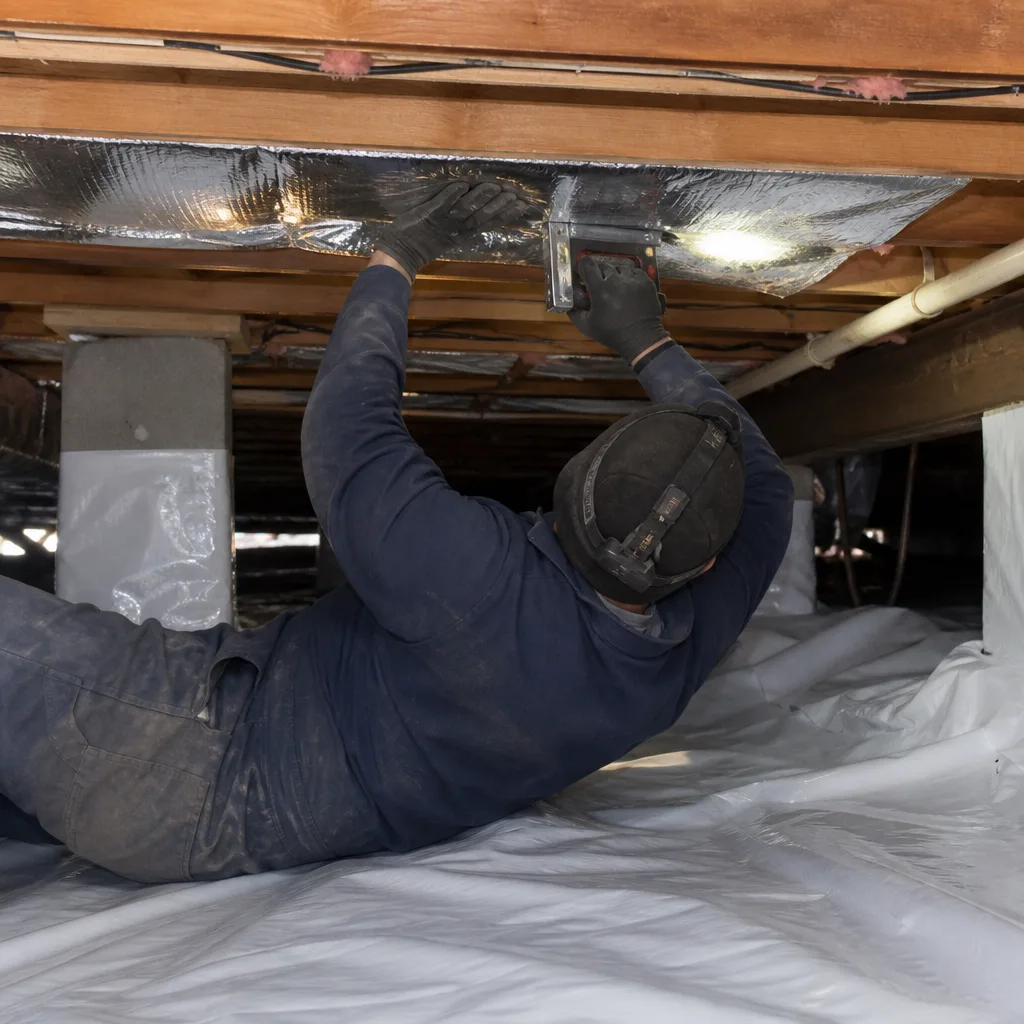
Then the radiant barrier goes up. For rafter-side installation, foil rolls are cut to rafter length and stapled at regular intervals to the underside of each rafter pair, working from the peak down toward the soffit. The foil needs an air gap between itself and the roof decking to function – radiant barriers reflect radiant heat across an air gap; they don’t work in direct contact with a surface. That air gap already exists in a standard rafter bay. The perforations in the foil allow any moisture vapor to continue moving through rather than accumulating behind the foil.
When the installation is complete, we photograph the finished work, note any observations about ventilation or insulation depth that the homeowner should know about, and provide the full documented photo record before we leave. The written scope and warranty travel with that documentation. That’s what leaving looks like on an Envelope Insulation Co. job.
Radiant Barrier vs. Adding More Attic Insulation: Which One Makes Sense in La Habra?
This is a question we get regularly, and the honest answer is: both usually matter, and the right starting point depends on what your attic currently has.
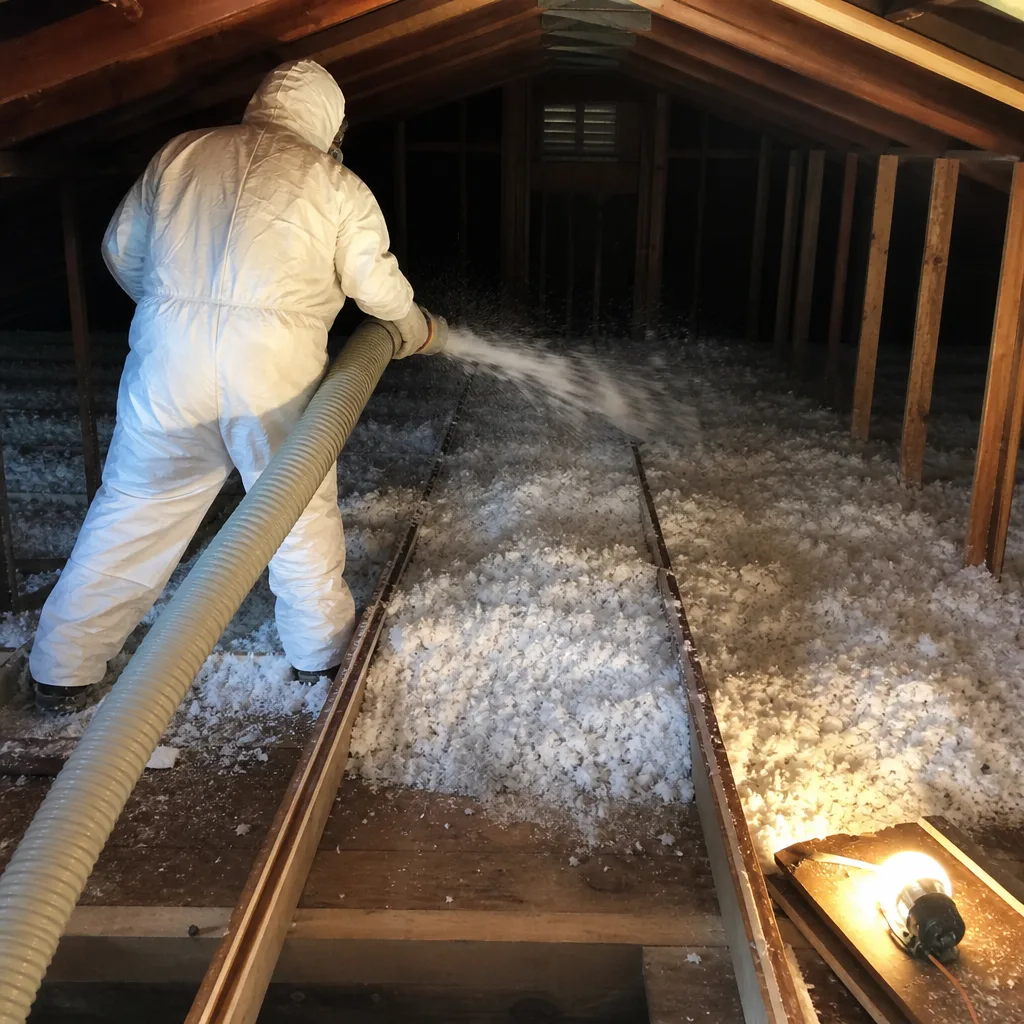
Radiant barrier addresses heat gain from radiant transmission – the infrared energy radiating off a hot roof deck into your attic air space. Attic insulation addresses the conductive and convective transfer of that heat through your ceiling into the living space below. They solve different parts of the same problem, which is why a La Habra home with good insulation but no radiant barrier still runs a hot attic, and a home with a radiant barrier but thin insulation still struggles to hold temperature.
If your attic has less than R-30 of insulation – common in homes built before 1990 in La Habra – adding blown-in insulation to reach R-38 or R-49 will usually produce a faster comfort improvement than radiant barrier alone. If your insulation is already adequate and your attic is still hitting extreme temperatures, a radiant barrier is the next logical step. In many La Habra homes, both are needed, and we’ll tell you which order to prioritize based on what we find in the attic, not based on which product has a higher margin.
FAQs – Radiant Barrier Installation Cost in La Habra
How much does radiant barrier installation cost in La Habra, CA?
Most radiant barrier installations in La Habra cost between $1,400 and $3,200, with the majority of single-story homes running $1,800 to $2,600 when attic air sealing is included. The per-square-foot cost for material and labor combined typically runs $0.70 to $1.45 for rafter-side installation. Call (562) 267-3291 for a free written estimate – we’ll give you a flat price per line item before any work starts, with no obligation.
Is radiant barrier worth the cost in La Habra’s climate?
Yes, in most La Habra homes – particularly those with west- or south-facing roof planes and attics that aren’t already insulated to current Title 24 standards. La Habra sits in CEC Climate Zone 8, where summer cooling loads are substantial and attic temperatures routinely exceed 145°F. A properly installed rafter-side radiant barrier can reduce attic air temperature by 20°F to 30°F, which translates to measurable reductions in air conditioning runtime. Homes with older single-pane windows or undersized HVAC systems see the most noticeable comfort improvement. The payback period in this market is typically 4 to 8 years, depending on the home’s baseline conditions and current utility rates.
Can radiant barrier be installed over existing insulation in La Habra?
It can be laid on the attic floor over existing insulation, but rafter-side installation – stapling foil to the underside of the rafters – is the better-performing method for Southern California’s climate, and it’s what we default to in La Habra. Attic-floor installation is less expensive by roughly $0.15 to $0.30 per square foot, but it traps heat in the attic rather than blocking it at the roof deck, which means your HVAC equipment and ductwork still sits in a very hot environment. If your ductwork runs through the attic, rafter-side installation is the clear choice. Call (562) 267-3291 to discuss which specification fits your attic.
Does La Habra require a permit for radiant barrier installation?
As of 2026, the City of La Habra does not require a building permit for radiant barrier installation in an existing attic when the work is limited to insulation and air sealing – no structural work, no HVAC modifications. If your project involves attic hatch construction, electrical work, or HVAC changes in the same scope, permit requirements may apply. We confirm permit requirements for every job before issuing the written scope – you’ll know your permit status before work starts. Call (562) 267-3291 if you have questions about a specific project.
How long does radiant barrier installation take in a typical La Habra home?
Most single-story La Habra homes are completed in 4 to 8 hours. A mid-size attic – 1,200 to 1,500 square feet – with standard rafter-side installation and air sealing runs 5 to 7 hours for a two-person crew. Homes with difficult access points, irregular attic geometry, or significant existing debris or insulation removal can run longer. We give you a realistic time estimate in the written scope before work starts so you can plan your day accordingly. Same-day completion is standard on most La Habra jobs.
What is the difference between cheap and expensive radiant barrier quotes?
The most common reason two radiant barrier quotes differ by $500 or more isn’t material quality – it’s scope. Lower quotes often omit air sealing, specify attic-floor installation instead of rafter-side, or use non-perforated foil in an application where perforated is the better call. Some lower quotes also skip the diagnostic step entirely – no attic inspection, no photo documentation. When you bring us a competing written estimate, we’ll read it with you and identify exactly what’s included and what isn’t. That’s our Free Second Opinion – call (562) 267-3291 to use it.
Why Envelope Insulation Co. for La Habra Radiant Barrier Work
Since 2016, Envelope Insulation Co. has completed work in more than 9,000 homes, every one of them with a written price before work started and a documented photo record when the crew left. That’s not a marketing position – it’s the operating procedure we’ve run under the Haven Standard since the beginning, and Wes Okafor built the company around it because it’s the only way to give a homeowner a real basis for comparison.
In La Habra specifically, we’ve worked in the older tracts near downtown, the hillside homes near La Habra Heights, and the newer construction along the 39 corridor. The attic conditions vary significantly across those neighborhoods – access quality, existing insulation vintage, rafter geometry, and ventilation design all affect how a radiant barrier job gets specified and priced. What doesn’t vary is the sequence: air sealing first, then insulation or radiant barrier, documented from start to finish.
We’re also the only contractor in this market who publishes before-and-after blower-door numbers – a pressurization test that shows, in a single figure, how much conditioned air your home was losing before sealing and how much it’s losing after. On applicable jobs, you get that number. Not a description of it. The actual reading.
Materials come from Owens Corning, Johns Manville, Knauf, Rockwool, CertainTeed, Icynene, Demilec, and GreenFiber. No proprietary product lock-in – we specify what the job requires, not what a distribution deal pushes us toward.
The 365-Day Done Right Promise covers all completed work. If something isn’t right, we make it right. That commitment is written into the scope document you receive before we start, not mentioned verbally after the fact.
You can learn more about our full service line on the home page, or go directly to the service details on our Radiant Barrier Installation in La Habra page.
Get a Written Estimate for Radiant Barrier Installation in La Habra
If you’re comparing radiant barrier quotes in La Habra and want a flat price with a written scope before anyone starts work, call Envelope Insulation Co. at (562) 267-3291. A live person answers – no voicemail loop, no callback window measured in business days. We’ll schedule an attic inspection, document what we find, and give you a written price per line item that you can compare against any other estimate you’ve received. There’s no obligation to proceed, and if you’ve already got a competing quote, bring it – we’ll read it with you.
Under Haven Standard Clause 1: the written price comes before any work starts. That’s not negotiable on our end, and it means you’ll always know exactly what you’re agreeing to before a crew arrives.
Written by Wes Okafor, Owner at Envelope Insulation Co. (operating as Topside Attic Insulation La Habra), serving La Habra since 2016.
Pricing reflects the La Habra market as of 2026. Topside Attic Insulation La Habra offers free estimates – call (562) 267-3291.
What Our Customers Say
"Fixed price, clean work, and they hauled the old material away as agreed."
- Todd M."They photographed rodent damage in the old insulation that we had no idea about, and priced the exclusion work separately so we could decide."
- Harriet N."Crawl space encapsulation done properly. Photographs of the vapour barrier at every seam, and the damp smell in the hallway is gone."
- Ainsley P.