

How Much Does Spray Foam Insulation Cost in La Habra?
Our Spray Foam Insulation services in La Habra, CA typically cost between $1.50 and $4.50 per board foot, depending on foam type, application area, and total project scope. Most La Habra homeowners pay between $2,800 and $7,500 for a standard attic or crawl space spray foam project, with larger whole-home jobs running $8,000 to $14,000 or more. Every project at Envelope Insulation Co. starts with a written price before any work begins – that is not a policy we make exceptions to.
Spray Foam Insulation Cost Breakdown (2026)
Spray foam pricing in La Habra breaks down by foam type, application zone, and square footage. Open-cell and closed-cell foam are not interchangeable products – they perform differently, cost differently, and suit different parts of a building envelope. Here is what the La Habra market looks like in 2026:
| Application / Project Type | Foam Type | Typical Cost Range (La Habra, 2026) |
|---|---|---|
| Attic roof deck (cathedral or unvented) | Closed-cell | $3,200 – $7,800 |
| Attic floor air sealing + open-cell foam | Open-cell | $1,800 – $4,200 |
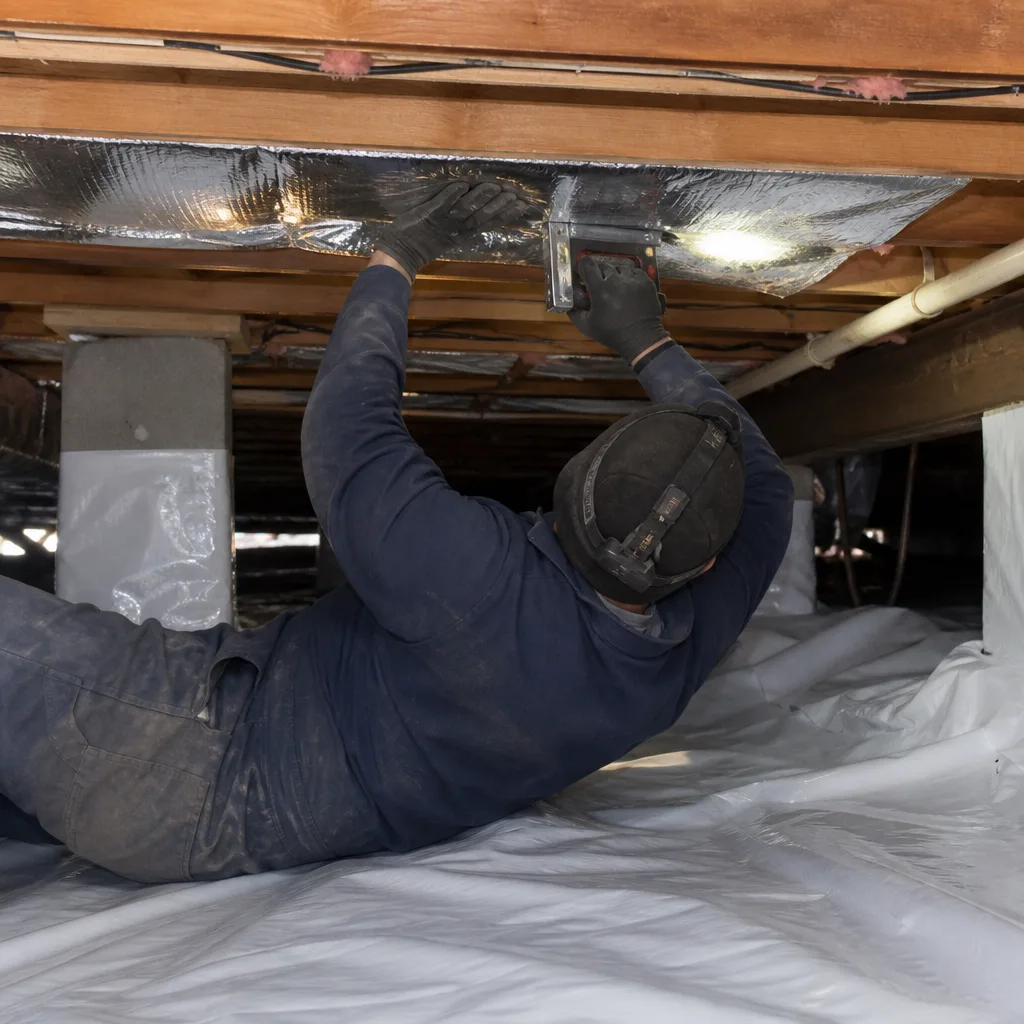
| Crawl space walls and rim joists | Closed-cell | $1,400 – $3,600 |
| Garage walls and ceiling | Open-cell or closed-cell | $900 – $2,800 |
| Rim joist sealing only | Closed-cell (2-inch lift) | $600 – $1,400 |
| Whole-home spray foam (new construction or full retrofit) | Closed-cell primary | $8,500 – $14,500+ |
| Per board foot (open-cell) | Open-cell | $1.50 – $2.25 |
| Per board foot (closed-cell) | Closed-cell | $2.75 – $4.50 |
A board foot – one square foot of foam applied at one inch of thickness – is the standard unit for quoting spray foam. When a contractor quotes you closed-cell at three inches thick on a 1,200-square-foot attic roof deck, you are buying 3,600 board feet. That math should appear on any written scope you receive before a crew shows up.
What pushes a La Habra project toward the higher end of those ranges? A few things come up regularly here. Homes in older La Habra neighborhoods – particularly the ranch-style and post-war construction near East La Habra Boulevard and around the Lambert Road corridor – often have attic bypasses, un-gasketed recessed lights, and open-wall top plates that need to be sealed before any foam goes in. At Envelope Insulation Co., we will not spray foam over an unsealed attic floor. Air sealing of top plates, can lights, and penetrations is completed first. That sequence adds time and sometimes modest cost upfront, but it is the only order that produces the air-sealing result you are paying for – and we back that result with a before-and-after blower-door reading on every applicable job.
Projects on the lower end of the range tend to be single-zone applications in newer construction where the substrate is clean, access is straightforward, and no prior insulation removal is needed. Projects on the higher end involve full retrofits, difficult attic geometry, significant air-sealing scope, or the need to remove degraded existing insulation before foam can be applied correctly.
What Affects Spray Foam Insulation Pricing in La Habra
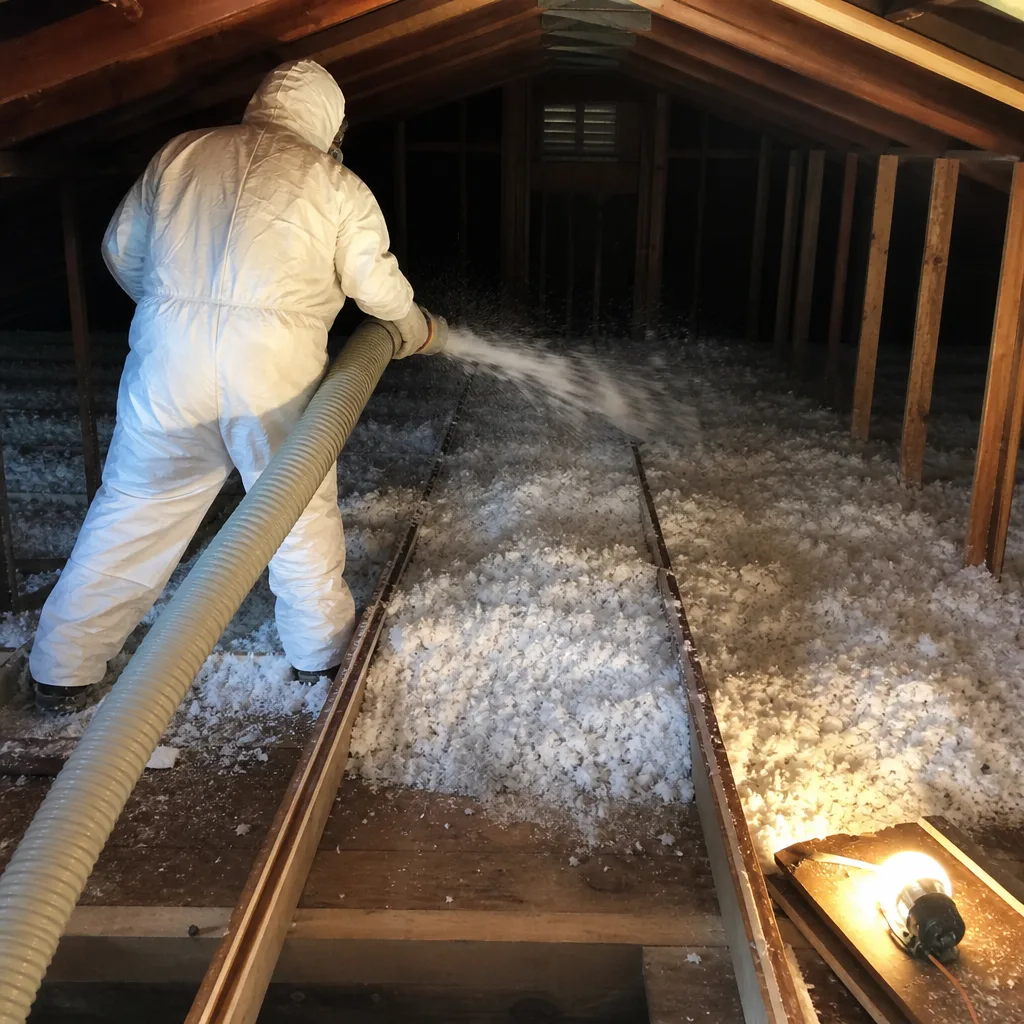
- Open-cell vs. closed-cell foam: Closed-cell foam – the denser product with an R-value around 6.5 per inch – costs roughly 40 to 60 percent more per board foot than open-cell, which runs about R-3.7 per inch. In La Habra’s climate zone 9, closed-cell is often specified for roof decks and crawl spaces where moisture resistance and structural rigidity matter. Open-cell is frequently used on interior walls and some attic floors where budget and vapor permeability are priorities.
- Total square footage and attic geometry: A simple, open 1,400-square-foot attic in a tract home near Hacienda Hills is a straightforward job. A 900-square-foot attic chopped up by dormers, low-slope sections, and HVAC equipment blocking half the work area takes significantly more labor hours. Geometry matters more than square footage alone in spray foam pricing.
- Required air sealing before foam application: In La Habra homes built before 1990, it is common to find recessed can lights punched directly into the conditioned space with no gasket or cap, open top plates at interior walls, and plumbing penetrations left completely unsealed. Sealing those bypasses – with fire-rated caulk, rigid foam blocking, or spray foam at the appropriate zones – adds labor time and material cost. On many La Habra retrofit jobs, this pre-foam air sealing phase runs $400 to $1,200 depending on how many penetrations need attention.
- Existing insulation removal: Spray foam does not bond correctly to loose, degraded, or contaminated insulation. If the existing blown-in or batt insulation needs to come out first – which is common on older La Habra homes where the attic has been accessed by rodents or the insulation has been compressed and flattened over decades – removal and clean-up adds $800 to $2,500 to the project total before a board foot of foam is sprayed.
- Access conditions and attic height: La Habra has a mix of single-story ranchers with generous attic clearance and two-story homes where attic access points are tight and some knee-wall sections require a technician to work in 24-inch clearance. Difficult access increases labor time. It is not a reason to skip the air sealing phase, but it does factor into an honest written price.
- Foam brand and formulation: Envelope Insulation Co. sources materials from Icynene, Demilec, and other brands in our material line, which includes Owens Corning, Johns Manville, Knauf, Rockwool, CertainTeed, and GreenFiber for the full building-envelope service line. There is no proprietary product lock-in here. The foam specified on your written scope is chosen for the application, not because of a supply arrangement that benefits the contractor over the homeowner.
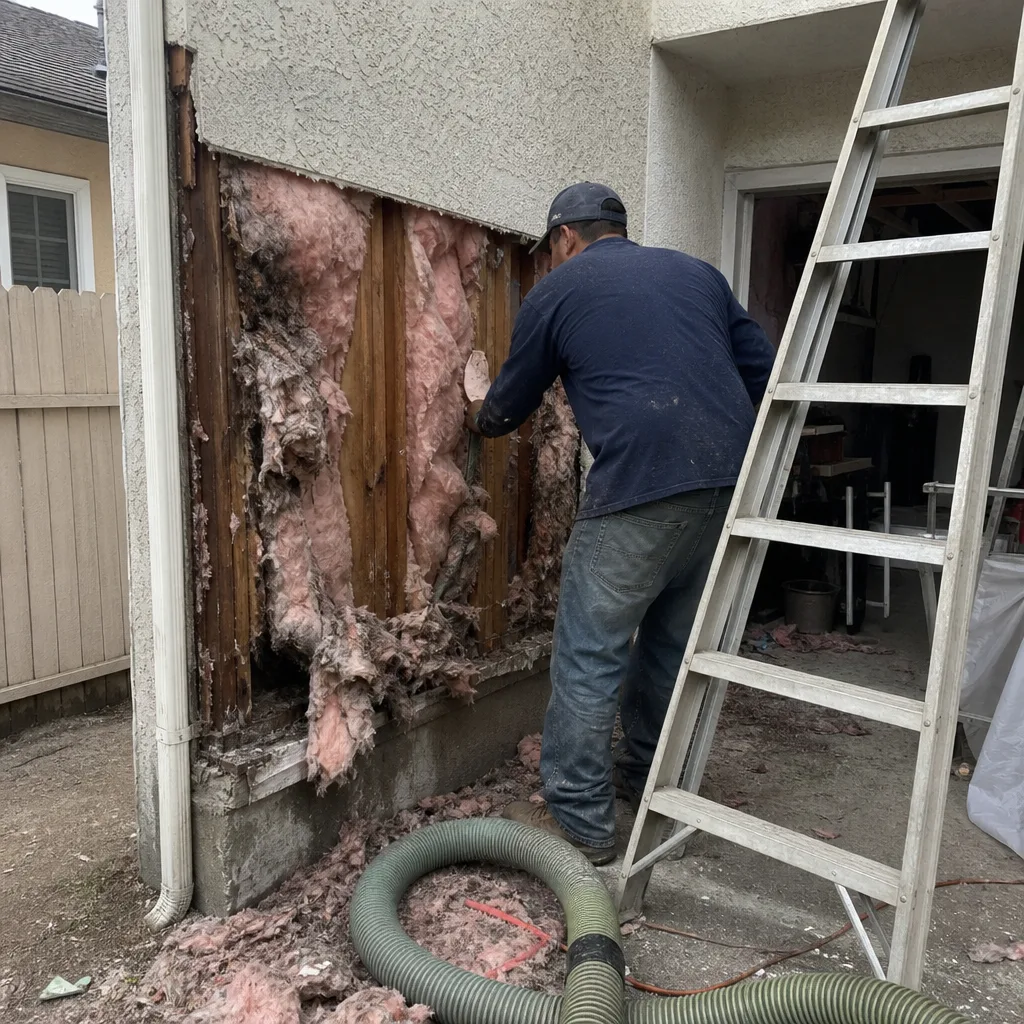 Before
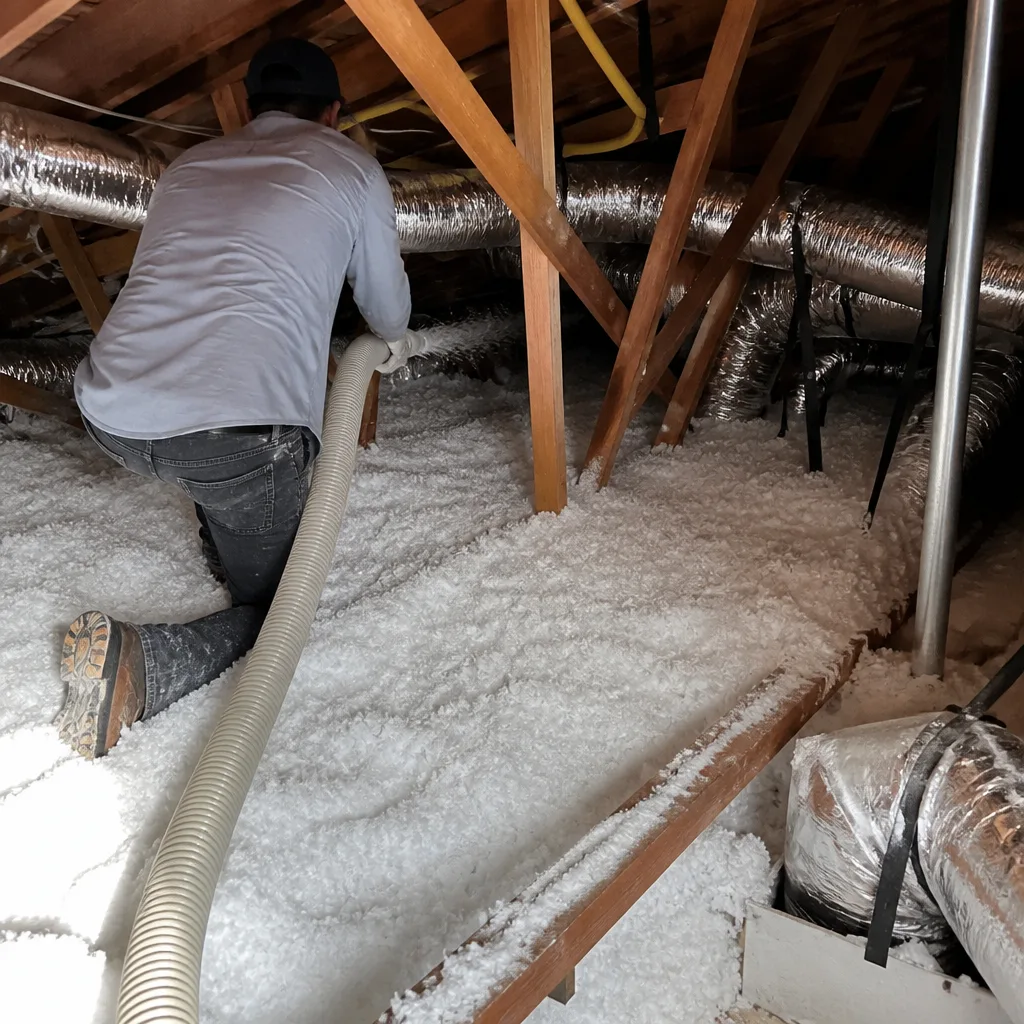 After
AfterLa Habra-Specific Factors That Change the Spray Foam Calculation
La Habra sits at the edge of the San Gabriel Valley, where summer temperatures in exposed attic spaces routinely reach 140 to 160 degrees Fahrenheit without insulation. That thermal load is one reason why unvented attic assemblies with spray foam applied directly to the roof deck – bringing the HVAC system into conditioned space – perform so well here. When an air handler and ducts are sitting in a vented attic at 150 degrees, the system loses efficiency even before you factor in duct leakage. Encapsulating that attic brings the mechanical equipment into the thermal envelope, and the before-and-after blower-door readings on those projects tell a clear story.
In La Habra’s older neighborhoods, particularly the blocks south of Whittier Boulevard toward the Fullerton border, we regularly see two-story homes with bonus rooms above garages where the floor cavity between the living space and the uninsulated garage is open and unprotected. Two inches of closed-cell foam in that floor cavity adds about R-13 and creates an air barrier – something fiberglass batts in that location cannot do on their own because they do not address air movement, only conductive heat transfer.
La Habra is in Los Angeles County, which follows California Energy Code (Title 24) requirements. For permitted work that includes spray foam on an unvented attic assembly, the code specifies minimum R-values that depend on the climate zone. Most La Habra residential spray foam work does not require a separate building permit for a straight insulation replacement job, but any work that changes the ventilation assembly – converting a vented attic to an unvented encapsulated assembly, for example – should be discussed with your contractor and, where applicable, with the City of La Habra building department. We walk through that conversation before the written scope is signed, not after.
How to Save on Spray Foam Insulation in La Habra
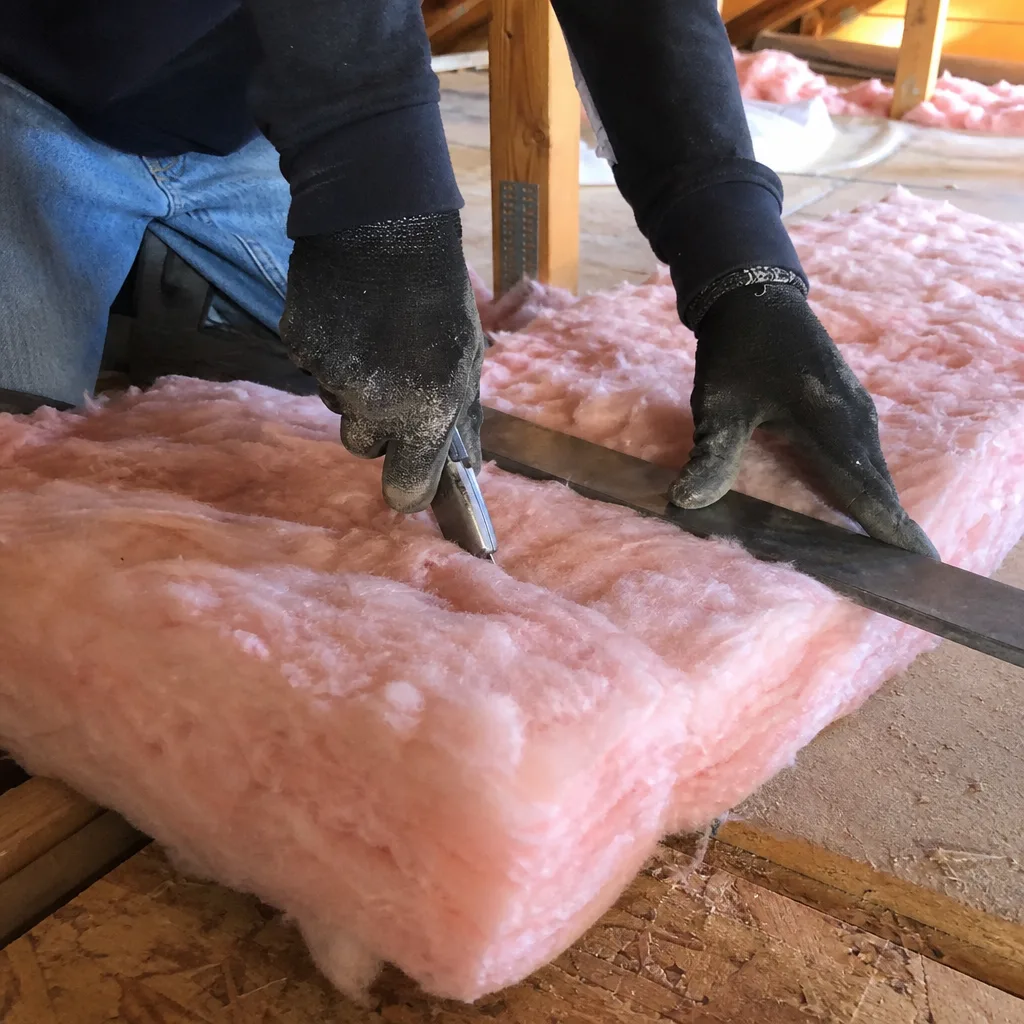
The single most effective way to reduce the cost of a spray foam project is to get a written scope from at least two contractors and read both scopes carefully, line by line. Not just the bottom number – the scope. A quote for open-cell foam at two inches is not comparable to a quote for closed-cell at three inches, even if the dollar totals are close. At Envelope Insulation Co., we offer a free second opinion on any written estimate: bring us a competing quote and we will read it with you, explain what each line means, and tell you where the numbers differ and why.
A few other practical ways to manage the project cost:
- Combine the air sealing and insulation scope in one visit. Scheduling air sealing as a separate project from spray foam means two mobilizations, two setup charges, and two labor minimums. Doing them together – the correct sequence anyway – is more cost-effective than splitting the work across vendors.
- Address the highest-impact zone first. In most La Habra homes, the attic is where the largest thermal and air-sealing gains are available. If budget requires phasing the work, start with the attic before the walls or crawl space.
- Ask about California and LADWP rebate programs. Some spray foam projects qualify for rebates through utility or state energy programs, particularly when combined with a documented energy audit. The availability and amounts change regularly, so verify current eligibility before counting on a specific number in your budget.
- Get the written price before any work starts. Under Haven Standard Clause 1, you receive a flat written price and a written scope before anyone lifts a tool. That means no change orders for “surprises” we should have seen in the estimate. A contractor who asks you to sign a contract with a time-and-materials clause for the air sealing phase is shifting the financial risk onto you. Ask for a fixed price, in writing, before the job starts.
- Schedule during non-peak periods where possible. Late fall and winter in La Habra tend to be less busy for insulation contractors than late spring and early summer. Lead times are shorter and scheduling is more flexible, which sometimes allows for tighter project coordination.
For a free estimate with a written price included, call us at (562) 267-3291. We will schedule a visit, document what we find, and give you a flat number – not a range to revisit later.
Spray Foam vs. Other Insulation Options: Where the Cost Makes Sense
Spray foam costs more per square foot than blown-in fiberglass or cellulose. That is a fact, and any comparison that doesn’t acknowledge it is not being straight with you. The question worth asking is what you are buying with the difference.
Blown-in fiberglass or cellulose at R-38 adds thermal resistance. It does not create an air barrier. If your attic has 15 bypass pathways – open top plates, unsealed can lights, plumbing chases – blown-in insulation sits over those openings and moves conditioned air around it all day. A blower-door test – a pressurization measurement that shows, in one number, how much air your building envelope is losing – will show you what the insulation alone accomplished and what it did not.
Spray foam, when applied correctly over a properly air-sealed substrate, creates both the thermal resistance and the air barrier in a single material. On an unvented attic roof deck application, it also removes the need for attic ventilation and brings the mechanical equipment into conditioned space. For La Habra homes where the HVAC system is in the attic, that combination – encapsulation plus mechanical equipment operating in conditioned space – typically shows a measurable performance change on the after blower-door reading and on the utility bill in the first summer after completion.
Our full Spray Foam Insulation in La Habra service page covers the application types, foam choices, and project process in more detail if you want to understand what a specific scope would look like before requesting a price.
What the Documentation Looks Like When We Leave
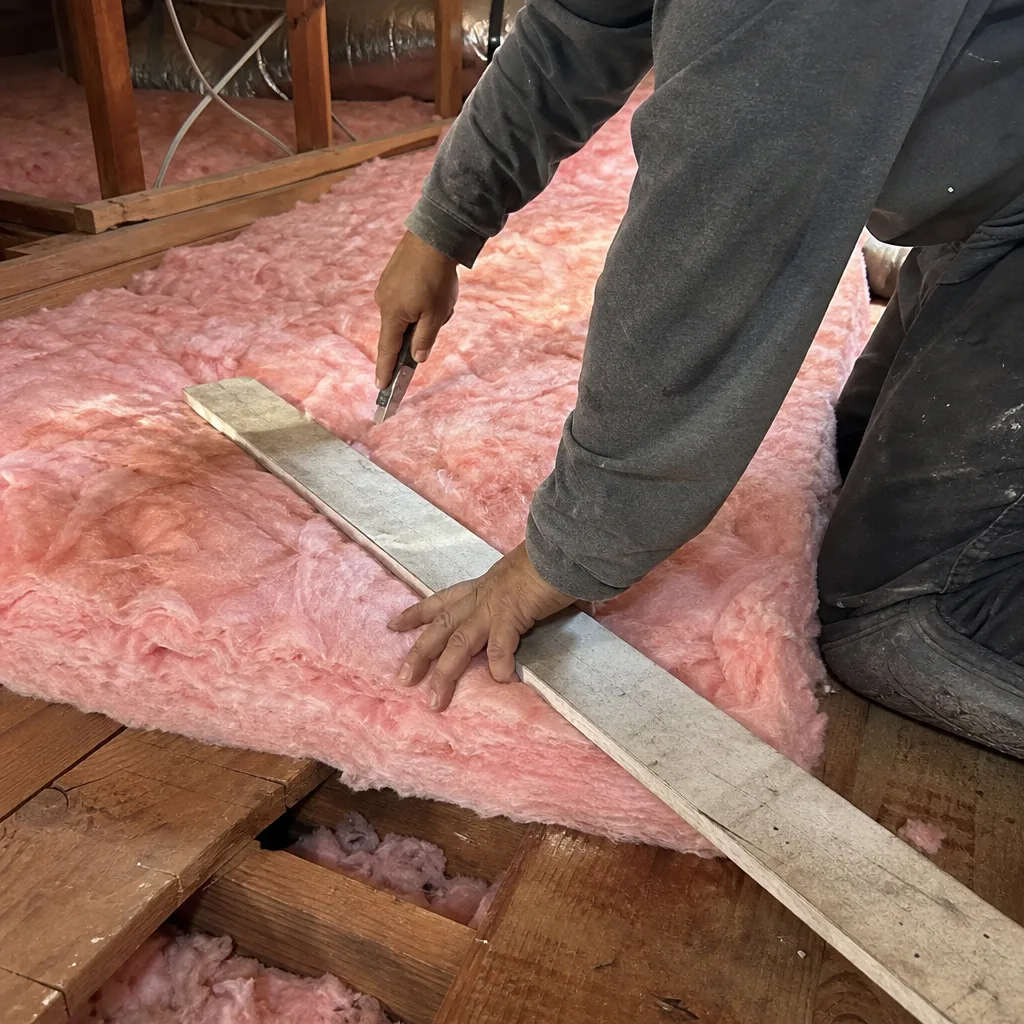
Under the Haven Standard, every job closes with a Documented Photo Record. On spray foam projects, that record includes photos of the substrate before foam application (so you can see what we sealed and where), photos of the completed foam coverage with approximate thickness visible at inspection points, and on applicable jobs, before-and-after blower-door readings – the CFM50 number before sealing and the CFM50 number after – so you have a documented record of the air change, not a verbal assurance that things improved.
The blower-door reading is a pressurization test that measures how many cubic feet of air per minute are moving through your building envelope at 50 pascals of pressure. A reading of 3,800 CFM50 before air sealing that drops to 2,100 CFM50 after is a documented 45 percent reduction in air leakage. You can show that number to a future buyer, to a utility company for a rebate application, or to yourself on a July afternoon when your air conditioner is holding temperature for the first time in years. That is the difference between “we significantly improved your home” and a number on paper.
The written scope, written warranty, and blower-door results are yours. The 365-Day Done Right Promise covers the completed work: if it is not right, we make it right, with the same documentation standard applied to any remediation visit.
FAQs – Spray Foam Insulation Cost in La Habra
How much does spray foam insulation cost per square foot in La Habra?
Open-cell spray foam in La Habra runs approximately $1.50 to $2.25 per board foot, and closed-cell runs $2.75 to $4.50 per board foot. If your contractor quotes you in square feet rather than board feet, make sure the thickness is specified in the same line – a square-foot price means nothing without knowing the applied depth. For a 1,500-square-foot attic roof deck application at three inches of closed-cell, you are looking at 4,500 board feet, which typically falls in the $4,800 to $6,500 range depending on access, air sealing scope, and substrate conditions. Call (562) 267-3291 to get a flat written price for your specific home – estimates are free.
Is spray foam worth the higher cost compared to blown-in insulation?
For most La Habra attic roof deck applications, yes – particularly in homes where the HVAC system is located in the attic. Spray foam creates both an air barrier and thermal resistance in one material, which blown-in insulation does not do. The measurable comparison is the blower-door reading before and after: on jobs where we convert a vented attic to an encapsulated unvented assembly with spray foam, the CFM50 reductions are typically 35 to 55 percent. Blown-in insulation over an unsealed floor rarely moves that number more than 10 to 15 percent. If your goal is thermal performance without addressing air leakage, blown-in at R-38 or R-49 is a lower-cost option. If your goal is to reduce conditioned air loss and bring mechanical equipment into the thermal envelope, spray foam costs more but produces a documented result you can verify.
Does spray foam insulation in La Habra require a permit?
In most cases, a straight insulation replacement or addition does not require a City of La Habra building permit. The exception is work that changes the ventilation assembly of the attic – converting a vented attic to an unvented encapsulated assembly typically constitutes a change in building configuration that may require permit review under California Energy Code Title 24. We discuss this at the estimate stage and clarify the permit requirement before the written scope is signed. If permit work is required, that cost and coordination is included in what you receive in writing before work starts.
How long does spray foam insulation last in La Habra’s climate?
Properly installed closed-cell spray foam has a service life of 80 years or more in most residential applications – it does not settle, compress, or absorb moisture the way blown-in products can under certain conditions. Open-cell foam, while less moisture-resistant, is similarly durable in interior applications where it is not exposed to direct water contact. La Habra’s climate zone 9 conditions – hot, dry summers and mild winters – are not particularly hard on spray foam. The more relevant long-term concern is the air sealing performed underneath and around the foam: gaskets, caulk lines, and rigid foam blocking at bypasses have shorter service lives than the spray foam itself. A documented photo record of those sealing points at the time of installation is part of what makes the 365-Day Done Right Promise meaningful rather than just a slogan.
Can I get a written price for spray foam before anyone visits my home?
We can give you a ballpark range based on square footage and application type before a site visit, but a flat written price – the number you can hold us to – requires an in-person assessment. Attic geometry, substrate condition, existing insulation state, air sealing scope, and access conditions all affect the number in ways that a floor plan alone cannot capture. The estimate visit is free, the written price comes before any work starts (that is Haven Standard Clause 1, not a policy we make exceptions to), and you are under no obligation after receiving it. Call (562) 267-3291 to schedule that visit.
What is the difference between open-cell and closed-cell spray foam for a La Habra home?
Closed-cell foam runs about R-6.5 per inch, is rigid and moisture-resistant, and is the standard specification for roof deck encapsulation, crawl space walls, and rim joist sealing in La Habra homes. Open-cell foam runs about R-3.7 per inch, is softer and vapor-permeable, and is used where budget, interior wall application, or vapor management requirements favor a more breathable product. Closed-cell costs 40 to 60 percent more per board foot, but three inches of closed-cell on a roof deck delivers R-19.5 in a space where you might otherwise need five or six inches of open-cell to approach a comparable R-value. The right choice depends on the specific application zone, the moisture conditions in that zone, and the R-value target specified under California Energy Code for the assembly. We specify the foam type on the written scope and explain the reason for the recommendation before work starts.
Key Takeaways
- Spray foam insulation in La Habra costs $1.50 to $4.50 per board foot, with most whole-attic projects running $2,800 to $7,800 and full-home retrofits reaching $14,500 or more.
- Closed-cell foam costs more per board foot than open-cell but delivers roughly 75 percent more R-value per inch and creates a moisture barrier that open-cell does not.
- In La Habra homes built before 1990, air sealing of bypasses – can lights, top plates, plumbing penetrations – is typically required before foam is applied, and that scope affects the total price.
- A before-and-after blower-door reading is the only way to verify that an air sealing and spray foam project produced the result you paid for. At Envelope Insulation Co., that documentation is standard on every applicable job – not an upsell.
- Every project begins with a flat written price and ends with a Documented Photo Record. The 365-Day Done Right Promise covers all completed work.
- Free second opinions on written estimates are available. If you have a competing quote, bring it and we will read it with you.
Get a Written Price for Your La Habra Spray Foam Project
Wes Okafor and the team at Envelope Insulation Co. have been delivering written prices before any work starts since 2016 – across more than 9,000 homes sealed and insulated in the greater La Habra area and surrounding communities. Every estimate visit is free, every scope is written before a crew arrives, and every applicable job closes with blower-door numbers you can read yourself.
If you are comparing contractors, use the free second opinion: bring us any written estimate and we will go through it line by line with you. If you are starting from scratch, call (562) 267-3291 to schedule an estimate visit. You will receive a flat price, in writing, before any decision is required. That is Haven Standard Clause 1, and it applies to every job, no exceptions.
You can also learn more about the full service offering on our home page, including the complete building-envelope service line and the Haven Standard commitments that apply across every job type.
Written by Wes Okafor, Owner at Envelope Insulation Co. (operating as Topside Attic Insulation La Habra), serving La Habra, CA since 2016.
Pricing reflects the La Habra market as of 2026. Topside Attic Insulation La Habra offers free estimates – call (562) 267-3291.
What Our Customers Say
"The winter gas bill dropped by about a third. They had estimated a quarter, so they under-promised."
- Genevieve R."Fixed price, clean work, and they hauled the old material away as agreed."
- Todd M."They photographed rodent damage in the old insulation that we had no idea about, and priced the exclusion work separately so we could decide."
- Harriet N.