
Last updated September 24, 2026
The Complete Guide to Insulation in La Habra
A house in La Habra can have R-38 blown fiberglass in the attic and still lose 35% of its conditioned air through unsealed top plates - a fact the original installer’s invoice will never mention. We’ve measured this exact scenario in a 1964 ranch off La Habra Boulevard, where the blower-door test read 4,200 CFM50 before we started and 2,100 after sealing the plates, can lights, and stucco-to-framing gaps. In this guide and our more guides & resources, you’ll learn how La Habra’s specific housing stock - 1950s stucco ranches, 1970s tract homes, and 1990s two-stories - demands insulation choices matched to assembly type and air-leakage path, not just R-value shopping. We’ll map CEC Climate Zone 10 requirements to real materials, explain what documentation you should walk away with, and show why utility rebate programs now require proof of performance, not just proof of purchase.
Quick Answer
Insulation in La Habra requires R-38 to R-60 in vented attics, R-13 to R-19 in walls, and R-19 to R-30 in crawl spaces per CEC Title 24 standards for Climate Zone 10. But R-value alone won’t solve the comfort problems common to La Habra’s stucco-clad housing stock - air sealing must precede insulation installation, and the only way to verify that sequence worked is a blower-door test showing reduced air changes per hour (ACH50). Most La Habra homes we test pre-retrofit leak at 10-20 ACH50; after proper envelope work, 5-7 ACH50 is achievable.
Table of Contents
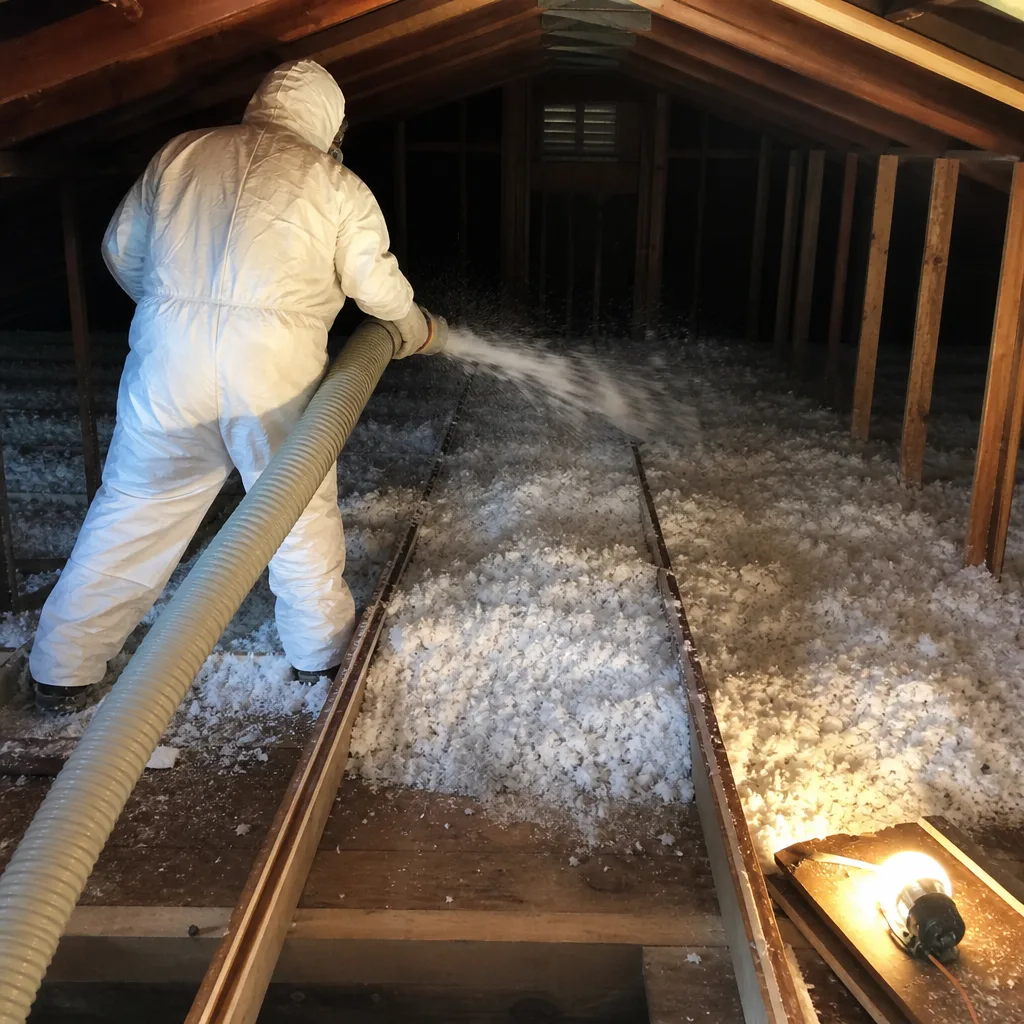
- La Habra’s Climate Zone 10: What It Actually Means for Your House
- Mapping Insulation to La Habra’s Three Housing Eras
- Insulation Materials: What Works Where (and What Doesn’t)
- Why Air Sealing Comes First - The Blower-Door Evidence
- The Stucco Air-Leakage Problem Specific to La Habra
- The Three-Document Package Every Homeowner Should Receive
- SCE and SoCalGas Rebates: Why Invoices Alone No Longer Qualify
- What Insulation Costs in La Habra (2024-2025 Ranges)
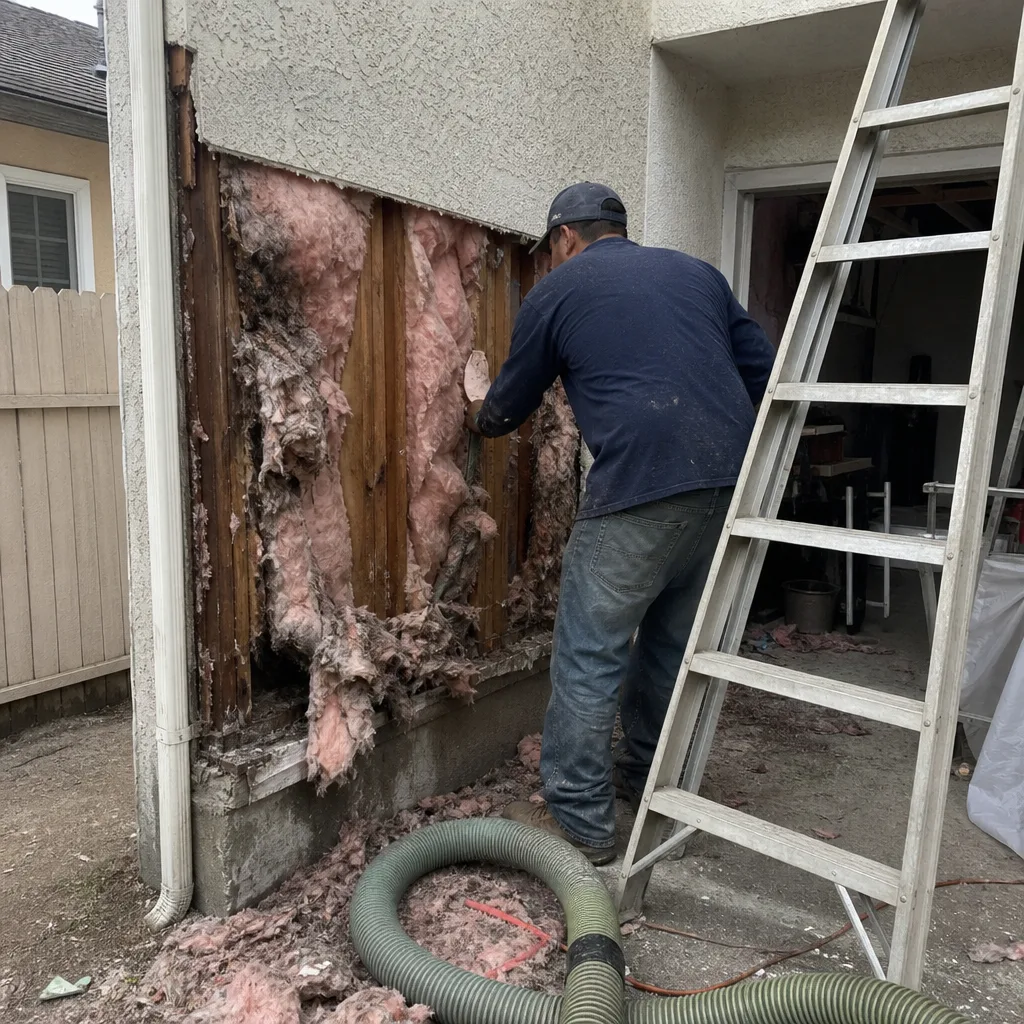 Before
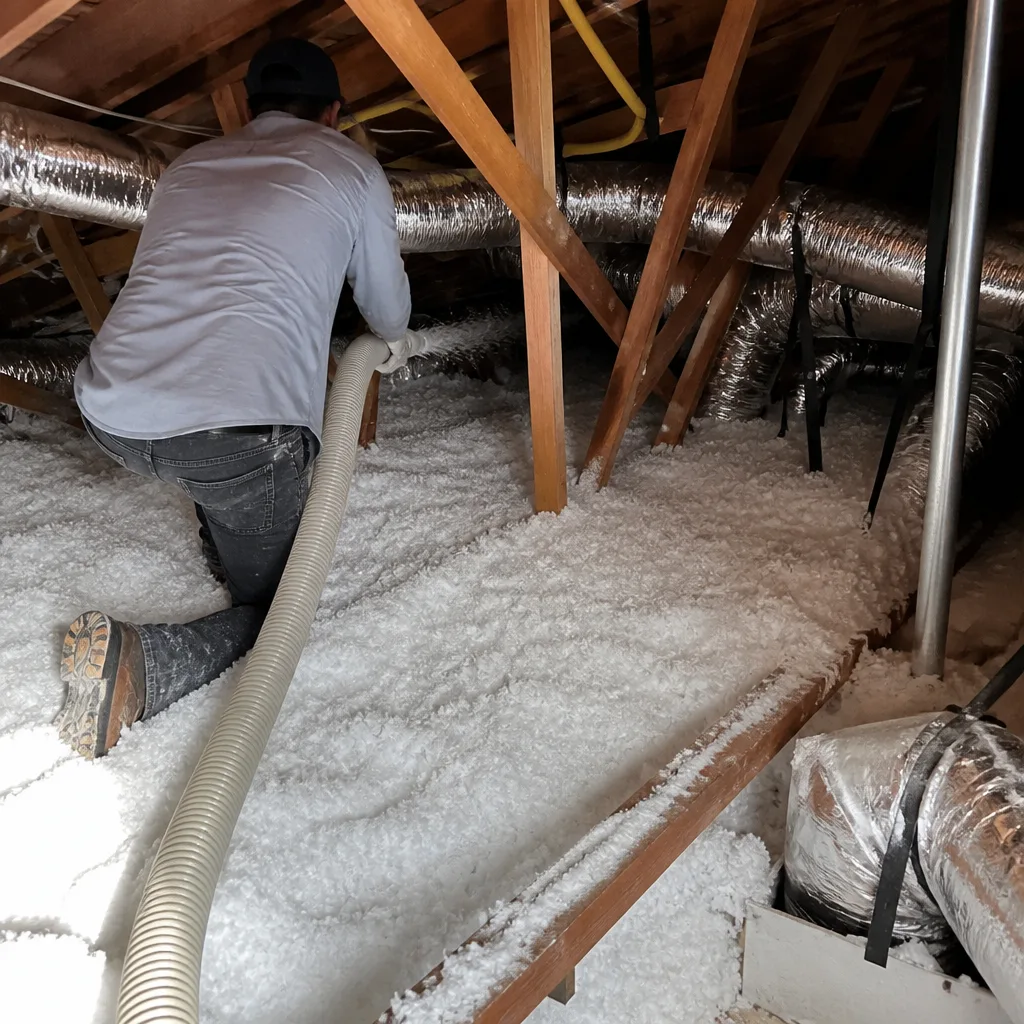 After
AfterLa Habra’s Climate Zone 10: What It Actually Means for Your House
The California Energy Commission places La Habra in Climate Zone 10, a classification that sounds bureaucratic until you understand what it measures: heating degree days below 65°F and cooling degree days above 75°F. Zone 10 is a mixed-dry climate with mild winters and hot summers, which means your insulation system must handle both heating load (those January mornings in the low 40s) and cooling load (July afternoons touching 97°F near Imperial Highway).
Title 24, Part 6 sets the minimums. For new construction and major alterations in Zone 10:
- Vented attic: R-38 minimum, R-60 recommended for full replacement
- Wood-framed wall: R-13 cavity insulation, or R-15 if using continuous insulation
- Floor over unconditioned crawl space: R-19 minimum, R-30 recommended
- Rim joist: R-13 minimum, though R-19 with rigid foam is preferred for thermal bridging control
These are code minimums. In practice, a 1950s La Habra ranch with original R-11 batts and no air sealing performs far below these numbers because thermal performance degrades rapidly when conditioned air moves through the cavity. The R-value printed on the bag assumes no air movement. La Habra’s afternoon Santa Ana winds pressurize wall cavities differently than morning marine layer infiltration. A static R-value doesn’t capture this dynamic.
We specify materials from Owens Corning, Knauf, and Rockwool depending on the assembly. Knauf’s EcoBatt with ECOSE Technology works well in open attics where low dust and formaldehyde-free binders matter. Rockwool Comfortbatt excels in wall cavities where fire resistance and moisture management are priorities - relevant in La Habra’s older homes with occasional plumbing leaks inside walls.
Climate Zone 10 also affects vapor drive direction. Winter heating drives moisture outward; summer cooling drives it inward. This means La Habra homes need insulation that handles seasonal vapor reversal without trapping moisture. Fiberglass handles this if the air barrier is intact. Spray foam creates its own air barrier but must be applied at correct thickness to avoid condensation on the foam surface.
Mapping Insulation to La Habra’s Three Housing Eras
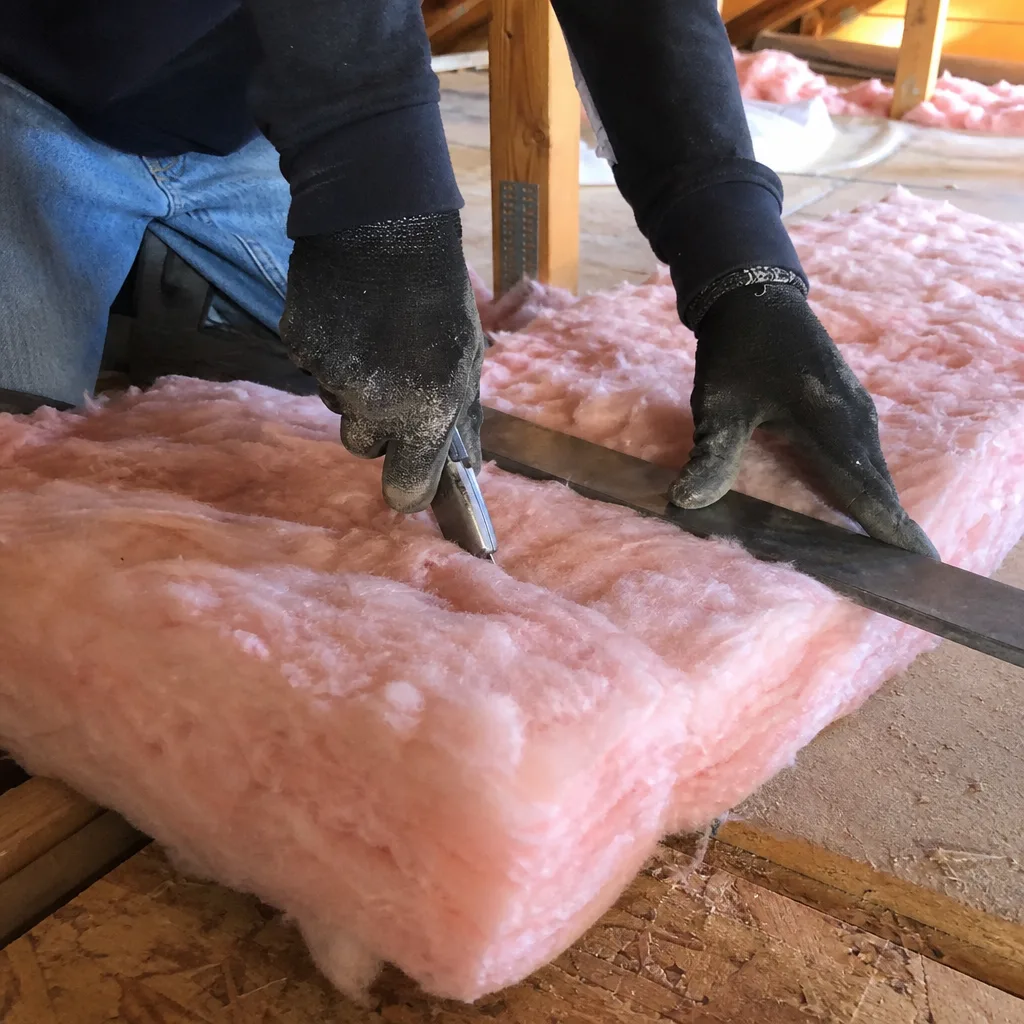
La Habra’s built environment falls into three distinct cohorts, each with characteristic framing, insulation history, and failure modes. We’ve worked in all three since 2016, and the diagnostic approach changes significantly.
1950s Stucco Ranches: West La Habra and Boulevard District
These homes typically feature 2×4 walls with no insulation or early R-11 batts, R-19 or less in the attic, and unsealed crawl spaces with dirt floors. The framing is often true-dimensional lumber (actual 2×4, not 1.5×3.5), which creates odd cavity widths. Original stucco was applied over wire lath with minimal water-resistive barrier, meaning decades of moisture cycling have degraded any original batts.
Recommended approach:
- Remove degraded attic insulation and inspect top plates for gaps where stucco meets framing
- Air seal all top plates, electrical penetrations, and chimney chases with fire-rated foam and sealant
- Install blown-in fiberglass or cellulose to R-49 to R-60, ensuring even coverage without compression
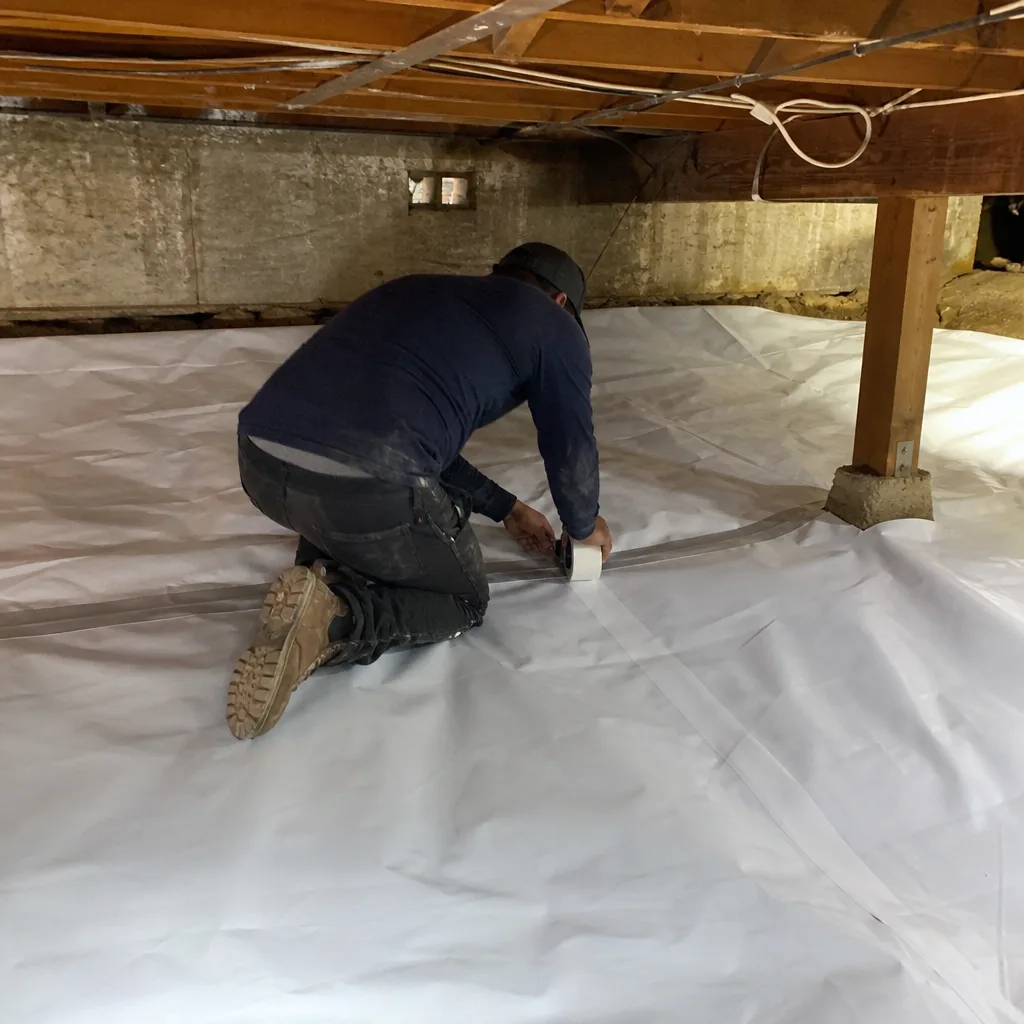
- Address crawl space with vapor barrier and rim joist insulation - Crawl Space Encapsulation & Vapor Barrier in La Habra details this assembly
In a 1957 ranch off Hacienda Road, we measured 18 ACH50 pre-retrofit. After sealing and insulating to R-49 attic, R-19 walls (dense-pack cellulose), and R-30 crawl floor, the home tested at 6.2 ACH50. The homeowner’s SCE summer bills dropped 34%.
1970s Tract Homes: East La Habra and Portola Park Area
These homes often have R-19 attic batts installed with gaps and compression, unsealed recessed can lights, and the first generation of whole-house fans that create massive thermal bypasses. The 1970s energy crisis prompted insulation installation, but air sealing was not part of the standard practice. We’ve found many of these homes have R-19 that performs like R-9 due to wind washing and thermal bridging.
Key issues:
- Top plates rarely sealed; attic air moves freely into wall cavities
- Recessed can lights (non-IC rated) create heat and air leakage points
- Original ductwork in vented attics leaks 20-30% of conditioned air
- Garage-attached walls often uninsulated
For these homes, we typically recommend full attic air sealing with Attic Insulation in La Habra work that includes baffles, damming around access points, and proper ventilation balance. Blown fiberglass to R-38 to R-49 is usually sufficient if the air barrier is intact.
1990s Two-Stories: La Habra Heights Border and Newer Developments
These homes were built to early Title 24 standards and often have R-30 attic insulation, but complex rooflines create inaccessible corners where insulation was never properly placed. The two-story design means the attic is smaller relative to conditioned volume, but ductwork runs are longer and more prone to leakage. We frequently find the master bedroom suite - often over the garage - is the coldest room in winter and hottest in summer due to missing or compressed insulation over the garage ceiling.
Specific attention needed:
- Bonus rooms over garages: inspect for proper insulation and air barrier continuity
- Complex tray and coffered ceilings: thermal bridging at framing transitions
- HVAC ducts in unconditioned attic: seal and insulate to R-8 minimum
- Fireplace chases: common uninsulated vertical shafts
For these homes, Spray Foam Insulation in La Habra can solve complex geometry where batts or blown material won’t conform. Icynene open-cell foam at 3.5 inches in walls provides R-13 plus air sealing in one step, which matters when retrofit access is limited.
Insulation Materials: What Works Where (and What Doesn’t)
Every insulation material has an application where it performs well and others where it fails. We source from Owens Corning, Johns Manville, Knauf, Rockwool, CertainTeed, Icynene, Demilec, and GreenFiber - no proprietary lock-in means we specify for the assembly, not the brand rebate.
Attic: Blown Fiberglass vs. Cellulose vs. Spray Foam
Blown fiberglass (Owens Corning AttiCat, Knauf Jet Stream) is our default for vented attics with good access. R-value per inch: approximately 2.5. Advantages: doesn’t settle significantly, non-combustible, low moisture absorption. Disadvantages: requires excellent air sealing beneath; wind washing can reduce effective R-value near eaves.
Cellulose (GreenFiber, CertainTeed InsulSafe) provides R-3.2 to R-3.8 per inch and better resistance to air movement due to density. Advantages: higher R-value per inch, better sound attenuation, recycled content. Disadvantages: can settle 10-15% over decades if over-fluffed; requires borate treatment for fire and pest resistance; heavier load on ceiling drywall.
Spray foam (Icynene open-cell, Demilec closed-cell) creates both insulation and air barrier. Open-cell: R-3.5 per inch, vapor-permeable, good for attic floors and roof decks in conditioned attics. Closed-cell: R-6.5 per inch, vapor-impermeable, used for rim joists and limited-access cavities. Cost is 2-3x blown material, but air sealing is included.
Wall Cavities: Dense-Pack, Injection, or Removal
For existing walls without removal:
- Dense-pack cellulose (R-3.8 per inch at 3.5 lbs/cubic foot): requires 2.5-inch holes drilled at top and bottom of each cavity, filled under pressure to eliminate voids. Best for empty 2×4 or 2×6 cavities.
- Injection foam (Icynene or similar): expands to fill irregular cavities, excellent for balloon framing or cavities with obstructions. Cures in hours, not days.
- Drill-and-fill fiberglass: rarely recommended; impossible to verify complete fill, prone to settling in vertical cavities.
Wall insulation in La Habra’s stucco homes requires special care. The stucco exterior is not an air barrier; it’s a drainage plane. Any wall insulation strategy must include attention to the interior air barrier (drywall, sealant at plates) or the exterior will drive moisture into the cavity.
Crawl Spaces: Floor vs. Wall Approach
In La Habra’s 1950s and 1960s homes with vented crawl spaces, we evaluate whether to insulate the floor above or the walls and seal the space. The floor approach (R-19 to R-30 batts or spray foam between joists) is cheaper but leaves ducts and plumbing in unconditioned space. The wall approach - Crawl Space Encapsulation & Vapor Barrier in La Habra - converts the crawl to conditioned space, protects ducts, and often yields better overall efficiency. We make this recommendation based on duct location, moisture history, and existing foundation vents.
Why Air Sealing Comes First - The Blower-Door Evidence
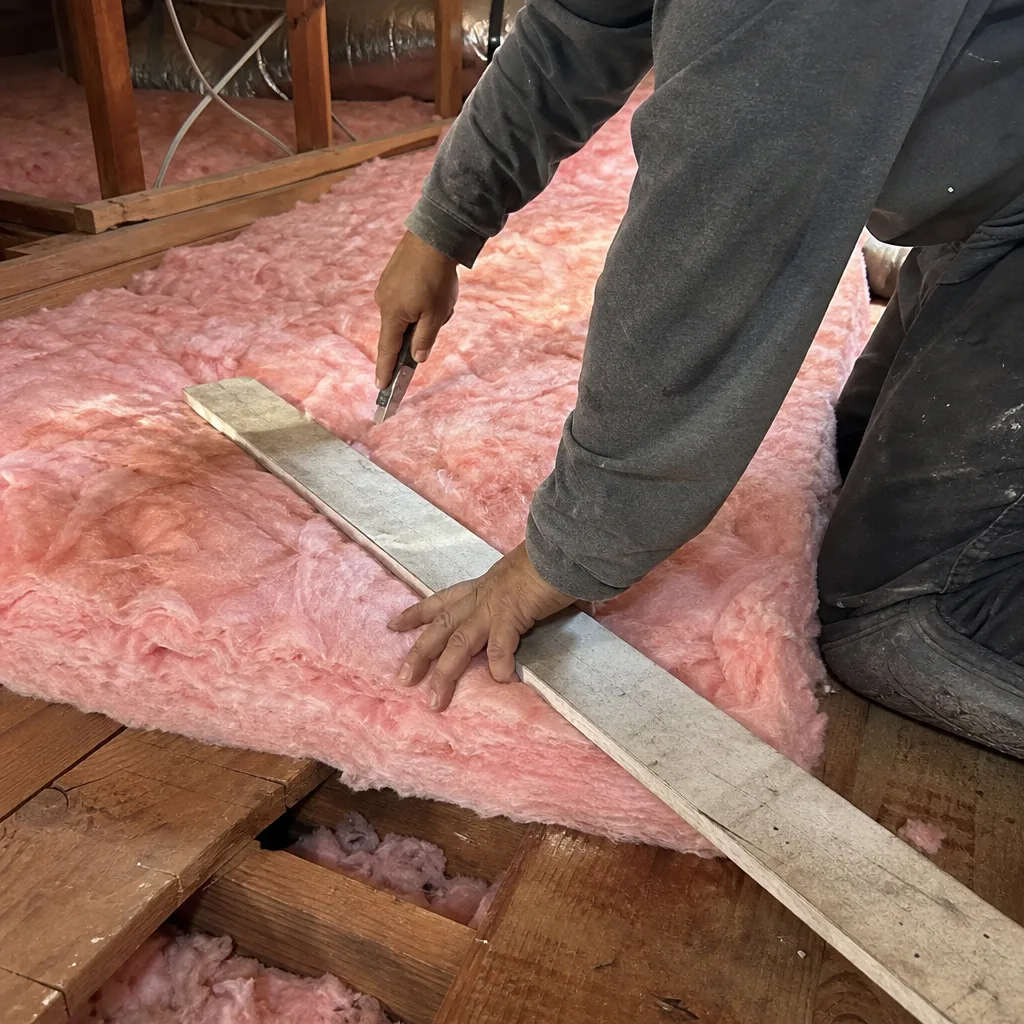
Envelope Insulation Co. will never blow insulation over an unsealed attic floor. This is not preference; it’s physics. Air moves from high pressure to low pressure, and in a house, the stack effect drives warm air upward in winter and downward in summer. Insulation slows heat transfer but does not stop air movement. An R-38 attic with 500 CFM of leakage performs like an R-15 attic with no leakage, because the moving air bypasses the insulation entirely.
The blower-door test - a pressurization reading that shows, in one number, how much air your building envelope is losing - is how we prove this to homeowners. The test depressurizes the house to 50 pascals below outdoor pressure and measures airflow in cubic feet per minute (CFM50). Divide by conditioned volume and multiply by 60, and you get ACH50: air changes per hour at 50 pascals.
What we typically see in La Habra:
| House Type | Pre-Retrofit ACH50 | Post-Retrofit ACH50 | Primary Leakage Paths |
|---|---|---|---|
| 1950s ranch, original condition | 15-25 | 5-8 | Top plates, can lights, crawl space |
| 1970s tract, some upgrades | 10-18 | 4-7 | Attic bypasses, duct leakage, garage wall |
| 1990s two-story, code-built | 7-12 | 3-5 | Fireplace chase, bonus room floor, complex roof |
These numbers matter beyond comfort. SCE’s Home Energy Upgrade program and SoCalGas rebates increasingly require pre- and post-improvement documentation. A contractor who doesn’t measure cannot document.
Our sequence on every job: seal first, verify with blower door, then insulate. In a 1968 home near Idaho Street, we sealed top plates, replaced can lights with airtight LED housings, and sealed the garage-to-house wall. The blower door dropped from 16.2 to 8.4 ACH50 before we added any insulation. Only then did we blow Knauf Jet Stream to R-49. Final test: 5.1 ACH50. The insulation’s R-value could now perform as rated.
The Stucco Air-Leakage Problem Specific to La Habra
Stucco dominates La Habra’s residential architecture, and stucco creates a specific air-leakage signature that insulation contractors in other climates rarely encounter. The problem is not the stucco itself; it’s the interface between stucco and wood framing, and the fact that stucco is often treated as the air barrier when it is not.
Traditional three-coat stucco over wire lath has thousands of penetration points where the lath is stapled to studs. The paper backing behind the lath - when present - is the water-resistive barrier, not an air barrier. Air moves through the stucco, through the lath penetrations, and into the wall cavity at the top plate, bottom plate, and around windows.
In La Habra’s climate, this matters because:
- Winter heating season: warm indoor air rises, exits through top plate gaps, and draws cold air in at the sill plate. The stucco exterior is cold; any air reaching it condenses moisture inside the wall.
- Summer cooling season: hot outdoor air is drawn inward at the top plate as cool indoor air sinks. The stucco exterior is hot; this drives vapor inward toward the cool drywall surface.
- Santa Ana events: high winds pressurize the wall cavity directly, forcing air through any gap in the interior finish.
We’ve inspected homes in the Boulevard District where R-13 batts in walls were black with dust streaks - not mold, but evidence of years of air washing through the cavity. The insulation was filtering the air, not stopping it. R-value in these batts was effectively zero because the air movement conducted heat around and through the fibers.
The solution is not better wall insulation; it’s sealing the interior air barrier. We caulk the drywall to top and bottom plates, seal electrical boxes with foam gaskets, and use airtight recessed light housings. Only after this sealing do we consider dense-pack wall insulation. In some La Habra ranches with balloon framing or no top plate blocking, we install fire-blocking and air-sealing at the same time, which satisfies code and performance simultaneously.
A homeowner on Arbolita Drive told us her bedroom had been cold for twenty years. Two previous insulation contractors had added attic insulation. We found the top plate of her exterior wall was completely unsealed where the stucco met the framing; air was moving from the attic, down the wall cavity, and out through the baseboard gap. Sealing the plate and dense-packing the wall solved it. No additional attic insulation was needed.
The Three-Document Package Every Homeowner Should Receive
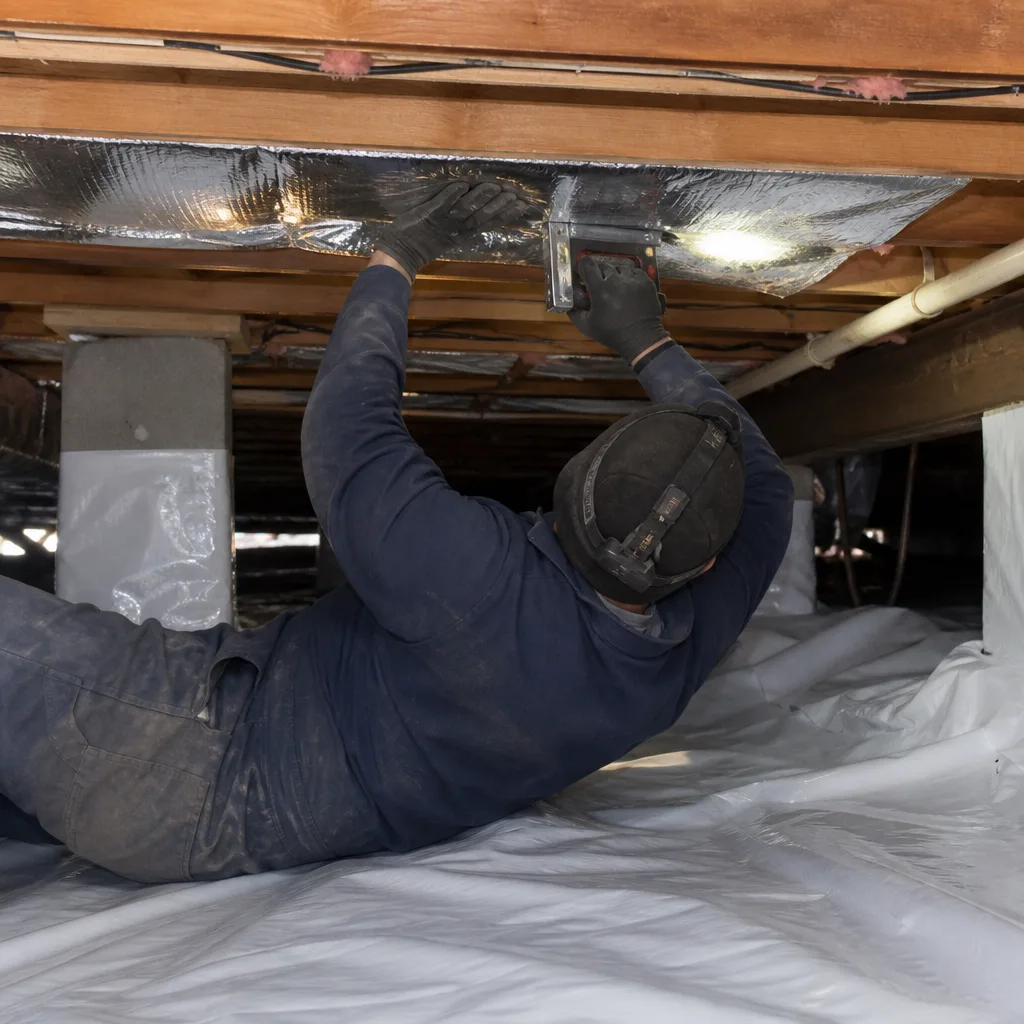
Under Haven Standard: Have it in writing. Every job begins with a written price and ends with documented evidence. When we leave a La Habra home, the homeowner receives three documents. This is what leaving looks like before we arrive.
Document 1: Blower-Door Report
For applicable jobs, this shows CFM50 and ACH50 before and after our work, with a graph of the depressurization curve. The report includes outdoor temperature and wind speed at time of test, which affect interpretation. A test at 95°F and calm conditions reads differently than at 65°F with Santa Ana winds. We note conditions so the numbers mean something when you review them later.
The report also identifies the largest remaining leakage paths if the home doesn’t meet target. This is not failure; it’s honesty. Some homes have structural limitations - a vented crawl space with code-required ventilation, for instance - that prevent sub-5 ACH50 without major reconstruction. We tell you this, in writing.
Document 2: Material Data Sheets with R-Value per Inch
We provide manufacturer data sheets for every material installed: blown fiberglass, spray foam, rigid foam, or batt. These sheets show R-value per inch, density, fire rating, and vapor permeance. If you ever sell the home or need to match materials for an addition, you have the specification.
For spray foam jobs, we include the applicator’s daily log showing substrate temperature, ambient temperature, humidity, and pass thickness. Icynene and Demilec both require specific conditions for proper adhesion and cure. The log proves conditions were met.
Document 3: Post-Job Inspection Photo Log
Our Documented Photo Record on Every Visit shows: attic before and after, with depth markers; sealed top plates and penetrations close-ups; wall cavity fill verification (through inspection ports or infrared); and any conditions found (rodent damage, water staining, electrical hazards). These photos are date-stamped and included with every job, not available on request.
In a dispute with a La Habra homeowner’s insurance over water damage attribution, our photo log from a 2019 job proved that the damage occurred after our work and was unrelated to our installation. The homeowner kept the documentation; it saved them a $4,000 deductible fight.
SCE and SoCalGas Rebates: Why Invoices Alone No Longer Qualify
Both Southern California Edison and SoCalGas offer rebates for insulation and air sealing upgrades, but the qualification requirements have shifted. Early programs accepted contractor invoices as proof of work. Current programs, including SCE’s Energy Efficiency Financing and SoCalGas’s Residential Energy Efficiency Programs, require documented performance improvement - not just proof that material was purchased and installed.
SCE requirements for insulation rebates:
- Pre-improvement home energy audit with blower-door test
- Post-improvement blower-door test showing minimum 10% reduction in ACH50
- Insulation depth verification with photos and R-value calculation
- Air sealing work itemized separately from insulation
SoCalGas requirements for whole-home rebates:
- HERS rater verification for larger rebates (typically $3,000+)
- Pre- and post-improvement tests by certified rater
- Combustion safety testing if any gas appliances are present
- Documentation that work meets Title 24 compliance path
We’ve processed these rebates for La Habra homeowners since 2016. The key friction point is usually the pre-improvement test. Homeowners who insulate first and test later cannot qualify; the rebate requires the before number. We schedule the pre-test before any work begins, include it in our written scope, and coordinate with HERS raters when the rebate tier requires it.
A 2023 job on Lambert Road illustrates: the homeowner qualified for $2,400 in combined SCE and SoCalGas rebates because our pre-test read 14.7 ACH50 and post-test read 5.8 ACH50 - a 61% improvement. The rebate application included our blower-door report, material data sheets, and photo log. An invoice alone would have yielded zero.
What Insulation Costs in La Habra (2024-2025 Ranges)
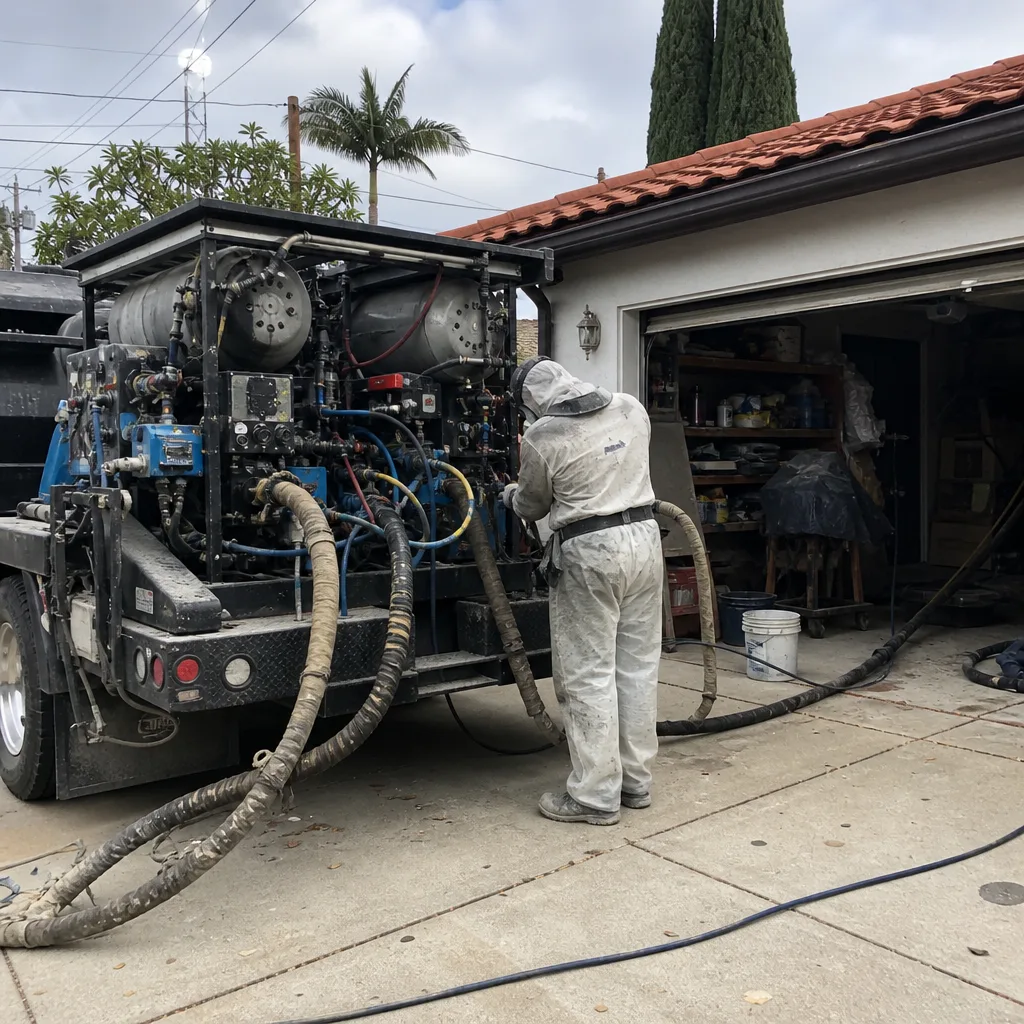
We publish price ranges because Haven Standard Clause 1 requires a Written Price Before Any Work Starts, always. These are typical ranges for La Habra homes we’ve priced since 2024; your specific home may differ based on access, existing conditions, and assembly complexity. For detailed line-item expectations, see our Insulation Cost Breakdown: The La Habra Homeowner’s Reference for 2026.
| Service | Typical Range | What Affects Price |
|---|---|---|
| Attic air sealing + blown fiberglass to R-38 (1,200 sq ft attic) | $2,800 - $4,200 | Existing insulation removal, can light count, top plate accessibility |
| Attic air sealing + blown fiberglass to R-49 (1,800 sq ft attic) | $3,800 - $5,600 | Cathedral ceiling sections, HVAC duct relocation needs |
| Spray foam attic (open-cell, roof deck, conditioned attic) | $5,500 - $9,000 | Roof pitch, square footage, ventilation strategy |
| Dense-pack wall insulation (per sq ft of wall) | $2.50 - $4.00 | Cavity obstructions, stucco repair needs, interior patching |
| Crawl space encapsulation + floor insulation | $3,500 - $6,500 | Height clearance, moisture damage extent, vapor barrier mil rating |
| Rim joist spray foam (closed-cell) | $1,200 - $2,400 | Linear footage, access, existing pest damage |
| Full envelope retrofit (attic, walls, crawl, air seal) | $12,000 - $22,000 | Home size, era, existing condition, rebate coordination |
These ranges include our standard deliverables: written scope, blower-door testing on applicable jobs, material data sheets, and Documented Photo Record. They do not include HERS rater fees for rebate applications, which typically run $400-$800 and are paid directly to the rater.
We also offer a Free Second Opinion on Any Written Estimate. Bring us a competing quote; we will read it with you and identify what’s included, what’s omitted, and what questions to ask. We’ve found La Habra homeowners who received quotes for “R-38 attic insulation” with no mention of air sealing, no blower-door verification, and no removal of degraded existing material - a gap our DIY vs Professional Insulation: The La Habra Homeowner’s Decision Guide explores in depth. The price looked lower because the scope was incomplete.
Common Mistakes to Avoid
- Installing insulation over unsealed air leaks. This is the most common error we correct in La Habra. The new insulation hides the leaks, making them harder to find later, and performs below its rated R-value.
- Assuming R-value equals comfort. A high R-value in an attic with unsealed can lights and top plates yields less real-world performance than a lower R-value in a well-sealed envelope. The blower-door number tells you more than the R-value number.
- Ignoring the crawl space. In La Habra’s 1950s and 1960s homes, the crawl space often contributes 20-30% of total envelope leakage. Insulating the attic alone leaves this path active.
- Using the wrong material for the assembly. Open-cell spray foam in a floor cavity exposed to potential plumbing leaks can absorb and hold moisture. Fiberglass in a wind-washed eave compresses and loses R-value.
- Skipping pre- and post-testing. Without a blower-door test, you cannot prove improvement to yourself, your buyer, or the utility rebate program. Testing costs less than the rebate it often unlocks.
- Hiring based on price per square foot alone. A lower price per square foot often means no air sealing, no testing, no removal, and no documentation. Compare deliverables, not just unit pricing.
- Neglecting stucco-specific leakage paths. La Habra’s stucco homes have characteristic gaps at the top plate and around windows that insulation contractors from other regions miss. Local experience matters.
When to Call a Professional
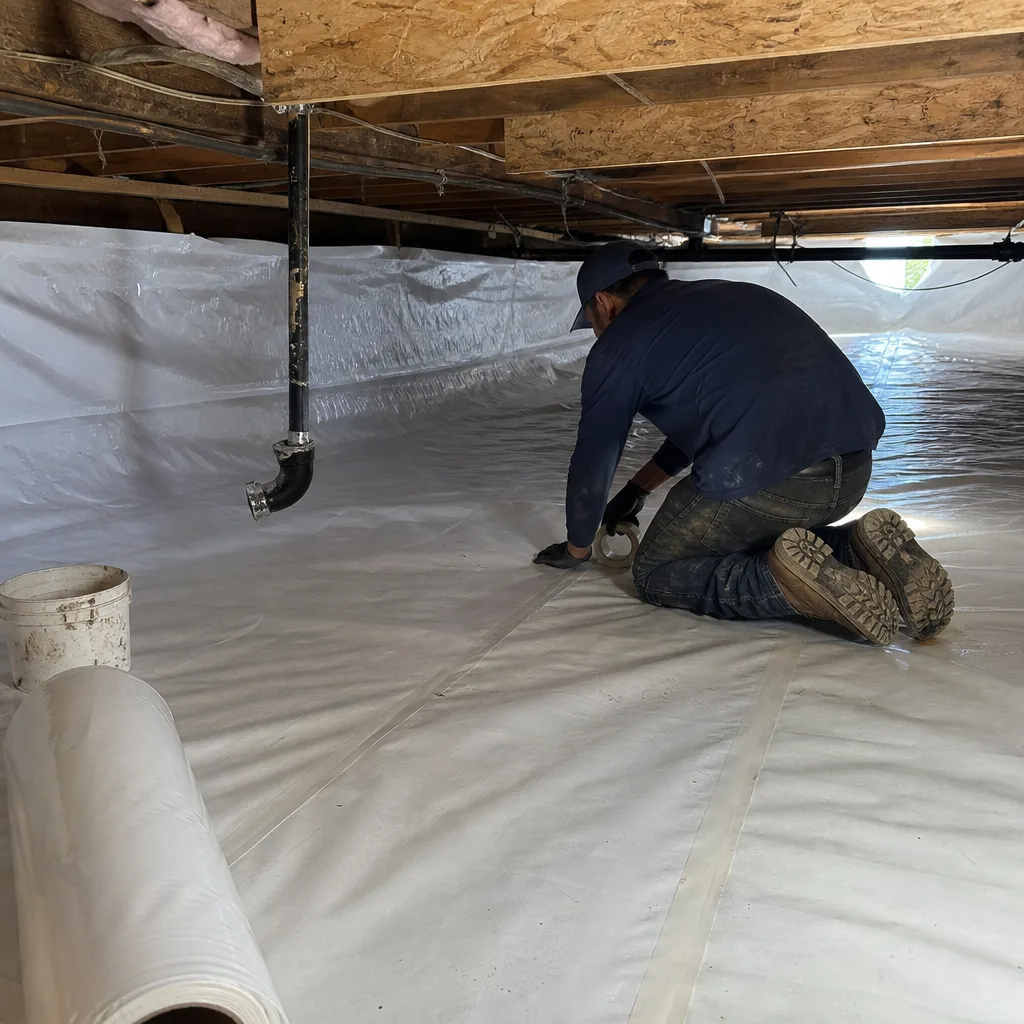
Call a professional when your home has uneven temperatures between rooms, energy bills that rise without rate increases, or insulation that is visibly degraded, compressed, or animal-damaged. Also call when you’re considering any insulation upgrade and want to qualify for SCE or SoCalGas rebates - the pre-improvement test must happen before work begins.
Topside Attic Insulation La Habra offers free estimates in La Habra. We’ll test your home’s envelope performance, show you the blower-door reading, and provide a written scope with a fixed price before any work starts. Call (562) 267-3291. A live person answers 24/7 - no voicemail loops, no callback windows measured in business days.
Frequently Asked Questions
Most attic insulation jobs in La Habra homes run between $2,800 and $5,600 for air sealing plus blown fiberglass to R-38 or R-49, depending on attic size and existing conditions. Spray foam attic conversions range from $5,500 to $9,000. Call (562) 267-3291 for an exact quote - estimates are free.
CEC Climate Zone 10 requires R-38 minimum for vented attics in new construction and major alterations, but R-49 to R-60 is recommended for full replacements in La Habra’s mixed climate. R-value alone doesn’t determine performance; air sealing beneath the insulation is equally important.
Unsealed air leaks bypass insulation entirely. In La Habra’s stucco homes, common paths include unsealed top plates, recessed can lights, and gaps where the stucco meets framing. A blower-door test identifies these paths; sealing them before or during insulation installation solves the comfort problem.
Yes, both SCE and SoCalGas offer rebates, but current programs require documented performance improvement - typically a 10%+ reduction in ACH50 shown by pre- and post-improvement blower-door tests. Invoices alone no longer qualify. We coordinate this testing as part of our standard process.
Spray foam provides both insulation and air sealing in one application, which matters in complex assemblies where batts or blown material won’t conform. In La Habra’s 1990s two-stories with tray ceilings and bonus rooms, Icynene open-cell foam often solves problems that other materials cannot. The cost premium is justified when air sealing is difficult or access is limited.
You should receive three documents: a blower-door report showing before-and-after air leakage, material data sheets with R-value per inch for everything installed, and a date-stamped photo log of the work. If your contractor provided only an invoice, you have no verification. Under Haven Standard, every job includes all three.
The Bottom Line
Insulation in La Habra is not a product purchase; it’s a system design problem. The right R-value in the wrong place, or over unsealed leaks, wastes money and fails to deliver comfort. La Habra’s stucco construction, Climate Zone 10 requirements, and utility rebate programs all point to the same conclusion: measure first, seal second, insulate third, verify last. The documentation you receive - blower-door numbers, material specs, photo record - is the only proof that the system was assembled correctly. We’ve sealed and insulated 9,000+ homes since 2016 under this standard, every one with a written price before work started and a documented record when the crew left.
Written by Wes Okafor, Owner at Topside Attic Insulation La Habra, serving La Habra since 2016.