
Last updated September 24, 2026
DIY vs Professional Insulation: The La Habra Homeowner’s Decision Guide
A homeowner in La Habra who installs their own attic insulation can do so legally - but they cannot sign the CF1R installation certificate required for a HERS verification, which means they cannot close a permit that requires it, and that unclosed permit will appear on a title search at sale. This is not a hypothetical edge case. In the last five years, we’ve been called to three La Habra homes where a DIY attic job from years prior surfaced during escrow, forcing the seller to either tear out and redo the work under a licensed contractor or accept a credit that erased whatever savings the original project had produced. This guide will show you exactly where the DIY-professional line sits under California building code, what documentation you actually need, and how to calculate whether the savings are real or borrowed against your future sale price.
Quick Answer
DIY insulation in La Habra is legally permissible for simple, non-permitted scopes like adding batts to an accessible attic or weatherstripping an attic hatch. Any work that triggers Title 24 compliance, requires a HERS verification, or involves spray foam, crawl space encapsulation, or electrical penetration sealing requires a C-2 licensed contractor who can sign a CF1R certificate. The true cost gap between DIY and professional work narrows significantly once you account for equipment rental, disposal, safety gear, and the value of documented air-sealing performance - especially in La Habra’s older postwar housing stock where bypassed top-plate leaks can undo 30% of apparent R-value.
Table of Contents
- What You Can Legally Do Yourself in La Habra
- The CF1R and HERS: Why Homeowners Can’t Sign
- Real DIY Cost Model: Attic Batt Installation
- Professional Cost: What You’re Actually Paying For
- Three Failure Modes in La Habra Homes
- Scopes That Are Appropriate DIY Candidates
- Scopes That Are Not DIY
- How to Evaluate a Professional Contractor
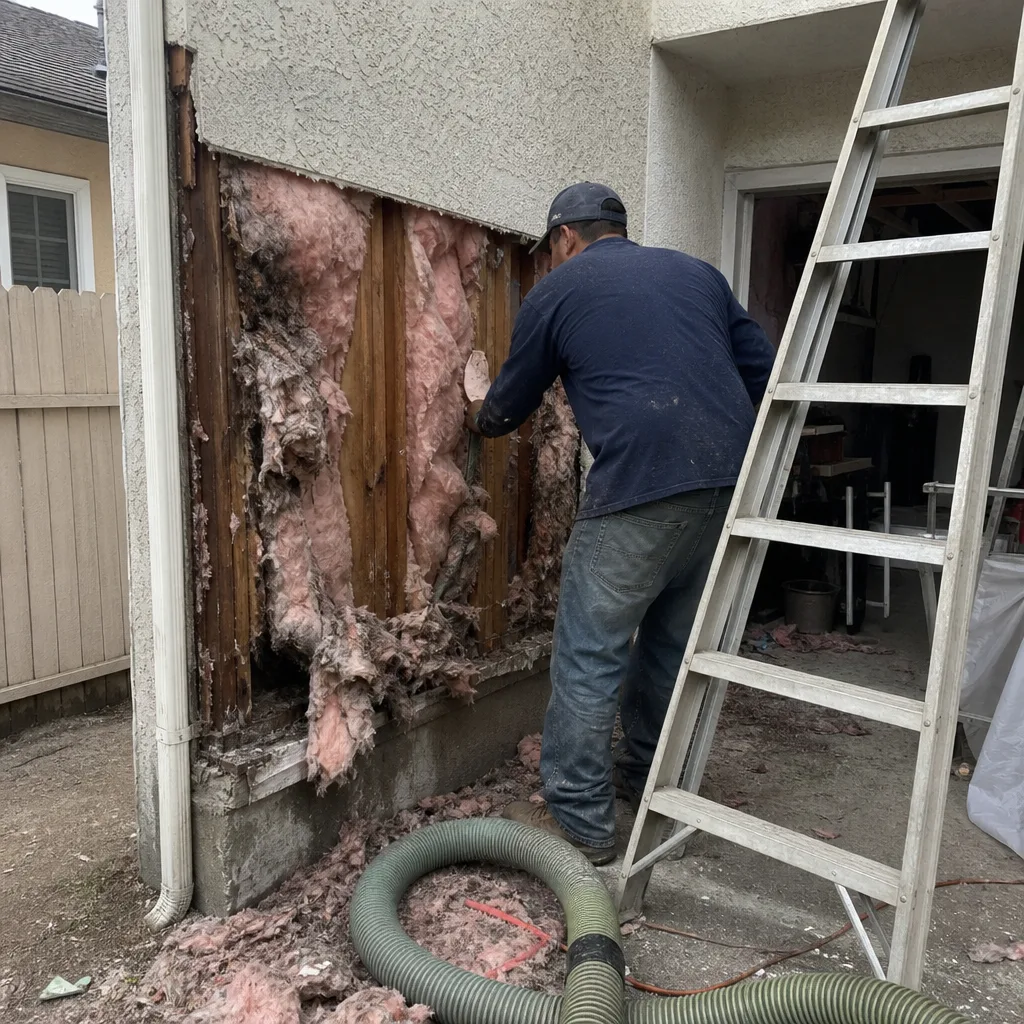 Before
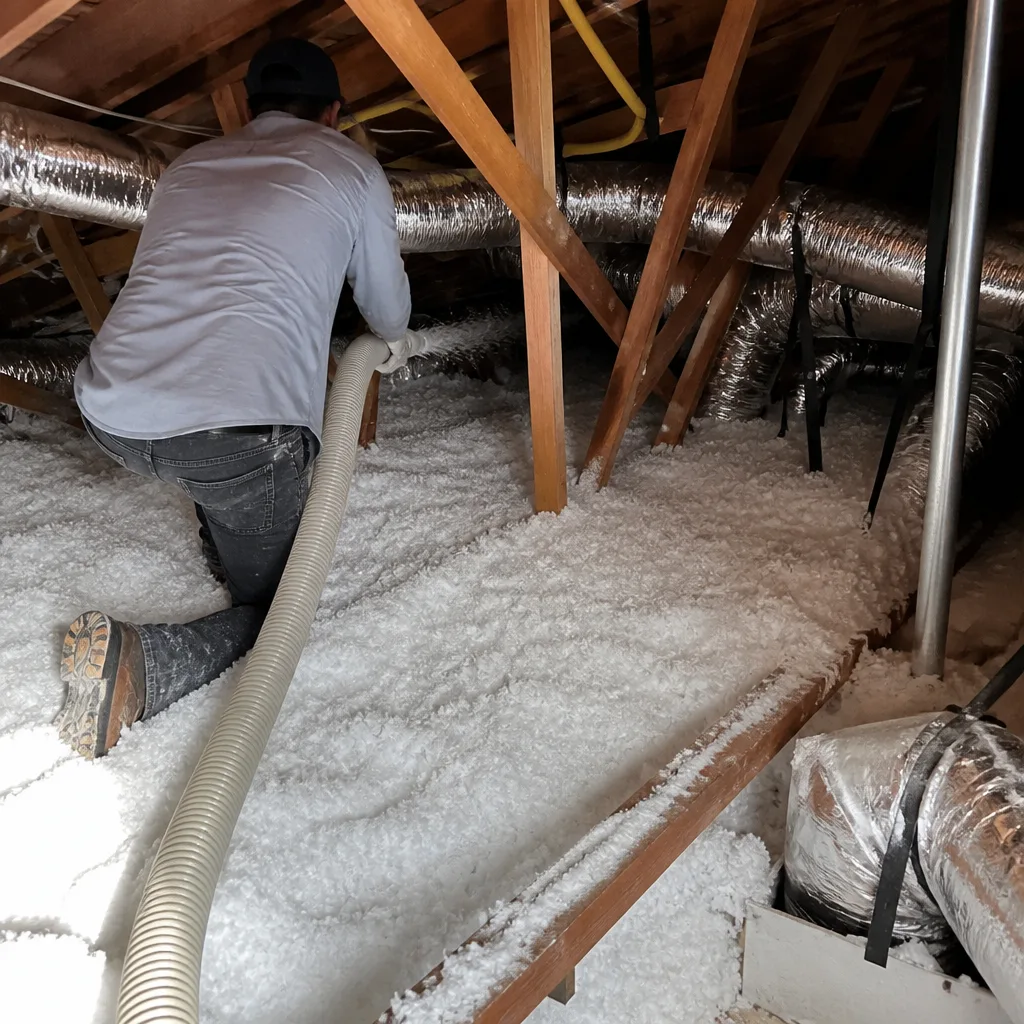 After
AfterWhat You Can Legally Do Yourself in La Habra
California building code does not prohibit homeowners from installing their own insulation, though Insulation Permits, Codes & Inspections in CA: What You Need to Know explains the full regulatory landscape. The distinction that matters is whether the scope triggers a permit, and whether that permit requires a HERS (Home Energy Rating System) verification.
Under the 2022 California Energy Code, a permit is required for any insulation installation that is part of an alteration affecting the building envelope’s thermal performance - which includes most attic insulation replacements, additions that change the R-value, and any work tied to a remodel or addition. However, many jurisdictions, including La Habra’s building department within Orange County’s oversight framework, do not require permits for “like-for-like” replacement of existing insulation in an existing attic where no other work is occurring. The critical word is “existing.” If you’re adding insulation where none existed, or changing the insulation type (say, from batts to blown-in), you have likely crossed into permit territory.
Here is the practical breakdown for La Habra homeowners:
- No permit, no HERS, DIY legal: Adding batts on top of existing batts in an accessible attic with no other concurrent work; weatherstripping an attic hatch; insulating a garage ceiling that is not conditioned space and has no firewall implications; sealing accessible duct joints with mastic (not replacing ductwork).
- Permit required, but no HERS trigger, DIY technically possible but risky: Full removal and replacement of attic insulation in a home built before 1978 where no Title 24 compliance is being claimed; crawl space vapor barrier installation under 1,000 square feet in some interpretations (check with La Habra building department before proceeding).
- Permit + HERS required, DIY not viable: Any insulation work tied to an HVAC changeout, room addition, or envelope alteration where a CF1R certificate is filed; spray foam installation; any work where utility rebates or PACE financing requires HERS verification.
The trap is that permit requirements are not always obvious at the outset. A homeowner who adds R-30 batts to their La Habra attic, then five years later replaces their furnace and discovers the new system requires a Title 24 compliance package, may find that the prior insulation work now needs to be documented in that package - and they have no CF1R to show. We have seen this exact scenario twice in La Habra’s Southgate and Westridge neighborhoods, where 1950s and 1960s homes are common.
The CF1R and HERS: Why Homeowners Can’t Sign
The CF1R - Certificate of Installation for Energy Efficiency Measures - is the compliance form a licensed contractor signs attesting to installed R-value, air sealing scope, and material specifications. It is not a recommendation. It is a legal attestation that the work meets the specifications in the approved Title 24 compliance documents.
Here’s how the chain works:
- A project triggers Title 24 compliance (new construction, addition, HVAC replacement, or certain envelope alterations).
- The designer or contractor files a CF1R with the California Energy Commission’s database, specifying the insulation R-value, air sealing details, and other measures.
- The installing contractor completes the work and signs the CF1R, certifying that what was installed matches what was specified.
- A HERS rater verifies the installation through visual inspection and testing (blower-door test, duct blaster, infrared scan where required).
- The building department receives the verified CF1R and closes the permit.
A homeowner cannot sign the CF1R. Only a C-2 (Warm-Air Heating, Ventilating and Air-Conditioning) or B (General Building) licensed contractor, or a contractor with the appropriate insulation specialty classification, can execute this attestation. The HERS rater cannot substitute for this; their role is verification, not certification of installation.
The consequence of an unverified, unclosed permit is not immediate. It sits in the county records. When the home sells, a title search reveals open or non-compliant permits. In California’s disclosure environment, this becomes a material fact that must be addressed. The homeowner must then either:
- Retroactively permit the work, which often requires opening walls or removing insulation for inspection;
- Hire a licensed contractor to sign a CF1R for work they did not perform (which reputable contractors will not do without full reinspection and often reinstallation); or
- Negotiate a sale credit that typically exceeds the original DIY savings by a factor of three to five.
In La Habra’s competitive housing market, where median sale prices have held above $750,000 and buyers are increasingly sophisticated about energy costs, an unclosed permit is not a minor footnote. It is a transaction obstacle.
Real DIY Cost Model: Attic Batt Installation
To understand whether DIY savings are genuine, you need a complete cost model, not just the price of batts at the home center. Here is a realistic breakdown for a 1,200-square-foot attic in a typical La Habra single-story home built between 1950 and 1975 - the most common housing stock in neighborhoods like Vista del Valle and El Cerrito.
| Item | Cost Range | Notes |
|---|---|---|
| Fiberglass batts, R-38, 16″ o.c. (Owens Corning EcoTouch or equivalent) | $580 - $720 | 32 batts at approximately $18-$22 each; price varies by retailer and season |
| Attic stair cover or hatch weatherstripping | $45 - $120 | Rigid foam cover preferred over tent-style for durability |
| Disposable coveralls, N95 respirators, safety glasses, gloves (2-person set) | $65 - $85 | Do not skip the respirator; fiberglass dust is a sustained irritant |
| Utility knife blades, straightedge, measuring tape, stapler | $35 - $55 | Assumes basic tools on hand; blades dull quickly on compressed batts |
| Insulation support wires (for joist cavities) | $25 - $40 | Required where batts are cut to fit irregular bays |
| Old insulation disposal (if removing existing material) | $180 - $320 | La Habra municipal waste does not accept bulk insulation; requires hauler or self-transport to Orange County landfill |
| Truck or trailer rental for material transport and disposal | $85 - $140 | Half-day rental; batts in packaging are bulky |
| Lighting (headlamp, work light) | $30 - $50 | Attic lighting is typically inadequate for precision work |
| Total DIY Outlay | $1,045 - $1,530 | Assumes two weekend days of labor, valued at $0 |
This model assumes no equipment failures, no discovery of rodent damage requiring remediation, and no need for air sealing materials (caulk, foam, fire-rated sealant for top plates). It also assumes the attic is accessible, the joists are regularly spaced, and the homeowner correctly calculates the required R-value for La Habra’s climate zone.
La Habra sits in California Climate Zone 8, which requires R-38 to R-49 in attics for new construction and major alterations. Many existing homes have R-11 to R-19. A homeowner who installs R-30 batts over existing R-19 may believe they have achieved R-49; they have not. Compressed interfaces, thermal bridging across joists, and air movement through the cavity reduce the effective R-value by 15-30% compared to the nominal rating on the package. Without a blower-door test - a pressurization reading that shows, in one number, how much air your building envelope is losing - the homeowner has no measurement of this degradation.
Professional Cost: What You’re Actually Paying For
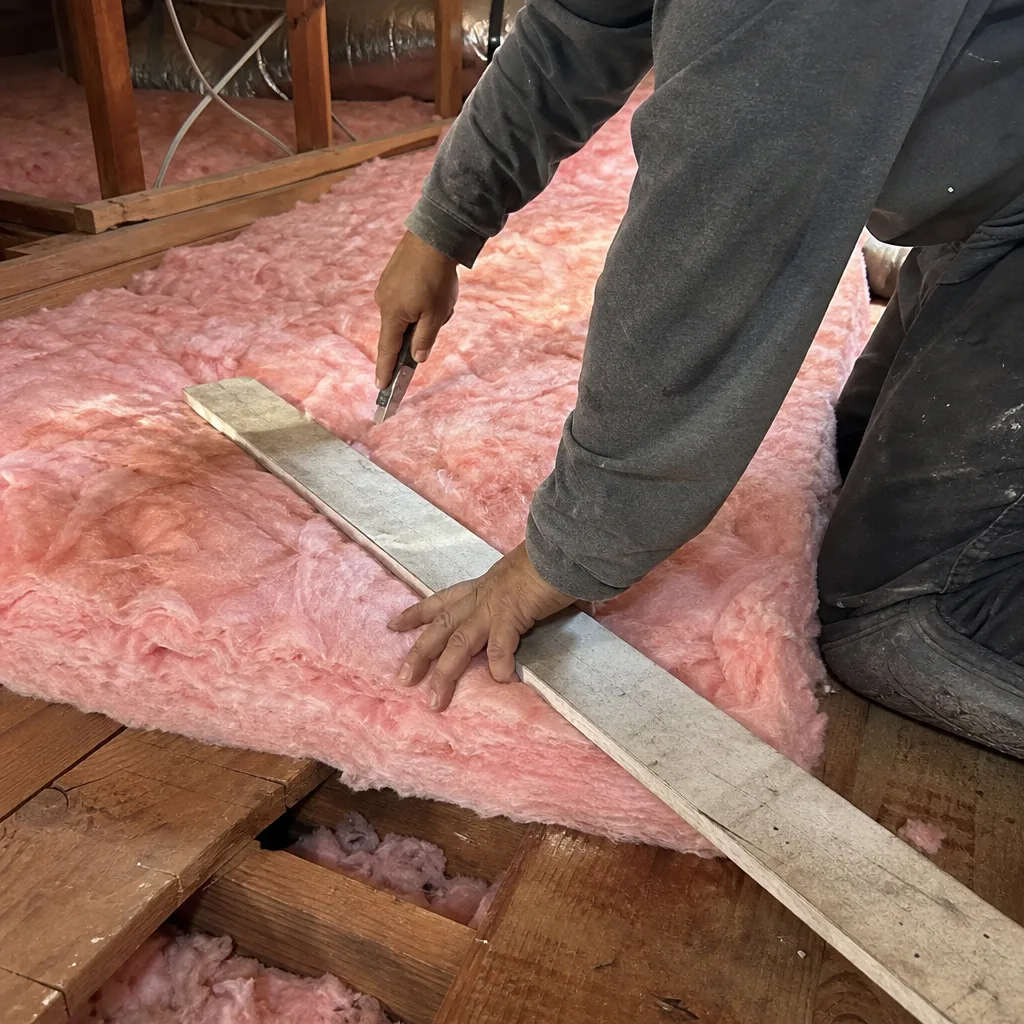
A professional insulation job in La Habra is not simply the DIY materials plus labor. The price includes documentation, measurement, and accountability that the homeowner cannot self-provide.
For the same 1,200-square-foot attic, a professional scope from Attic Insulation in La Habra typically includes:
- Removal of existing insulation and disposal
- Air sealing of top plates, can lights, pipe and wire penetrations, and chimney chases with fire-rated materials where required
- Blower-door test before and after air sealing to quantify leakage reduction
- Installation of baffles at eave edges to maintain ventilation path
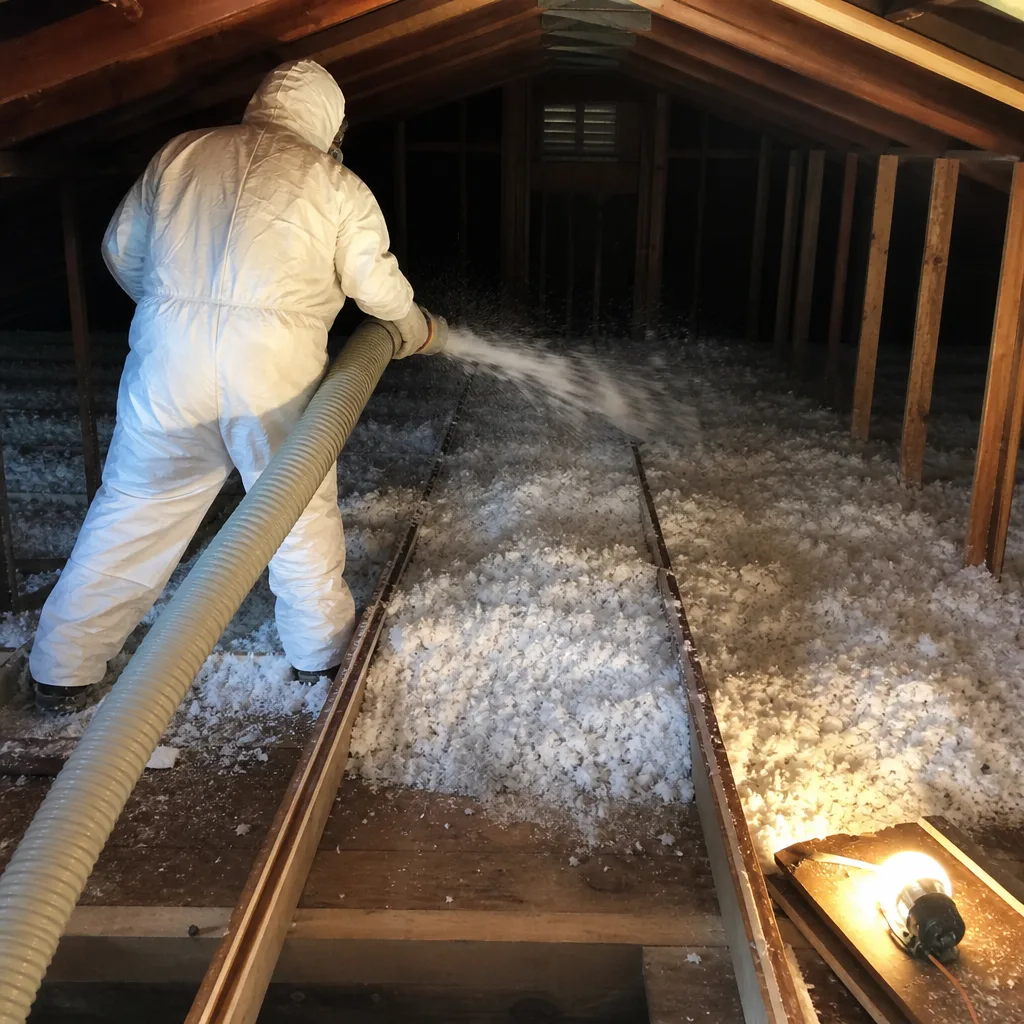
- Blown-in fiberglass or cellulose (often Knauf EcoFill or GreenFiber, depending on the home’s needs) to specified depth with depth markers
- Attic hatch insulation and weatherstripping
- Documented Photo Record of all accessible areas before, during, and after
- Written scope, written price, and written warranty delivered before work begins
Most attic insulation jobs in a La Habra home of this size run between $2,800 and $4,200 when air sealing and blown-in installation are included. For a detailed breakdown, see our Insulation Cost Breakdown: The La Habra Homeowner’s Reference for 2026. The differential against the DIY model above is $1,270 to $3,155. What the homeowner receives for that differential:
- Measured performance, not assumed performance. Our crews perform a blower-door test before any insulation is touched. In La Habra’s 1960s ranch homes, we regularly see starting readings of 3,500-5,500 CFM50. After air sealing and before insulation, that typically drops to 2,000-3,200 CFM50. The homeowner receives both numbers in writing.
- Code compliance and future sale protection. If the scope triggers a permit, we file the CF1R, coordinate the HERS rater, and close the loop. The permit is closed. The title search is clean.
- Labor warranty and callback protection. Under our 365-Day Done Right Promise, if settling, moisture, or performance issues emerge, we return. A homeowner who installs their own batts has no recourse against a manufacturing defect or their own installation error except to tear it out and start again.
- Time valuation. Two weekend days for DIY, plus research and procurement time, versus one day of professional work with the home fully usable that evening.
The savings differential is real but smaller than it first appears, and it comes with a documentation deficit that may cost multiples at sale.
Three Failure Modes in La Habra Homes
In our experience with La Habra’s housing stock - predominantly postwar construction with raised foundation, gable or hip roofs, and original knob-and-tube or early Romex wiring - DIY attic installations fail in three predictable ways. These are not skill judgments. They are structural consequences of working from an attic hatch with limited mobility and no diagnostic equipment.
Compressed batts at eave edges blocking ventilation
La Habra’s climate is mild but sun-exposed. Attic ventilation is critical to prevent summer heat buildup that degrades shingle life and drives cooling load. DIY installers, working from the center of the attic toward the edges, often compress batts into the narrow space at the eave to avoid cutting precise strips. This blocks the soffit vents. In homes near La Habra Boulevard and Whittier Boulevard, where 1950s construction often has minimal original ventilation, this compression can reduce effective airflow by 40-60%. The correct approach is installing baffles - vent chutes - before insulation, then cutting batts to fit without compression. This requires working in the eave space, which is uncomfortable and easy to skip.
Unfilled cavities at irregular joist bays
Postwar La Habra homes were not framed with the precision of modern platform construction. Joist spacing varies. Headers, hips, and valley rafters create odd cavities. A DIY installer working with standard-width batts leaves gaps at these irregularities, or stuffs loose pieces that settle and leave voids. Blown-in insulation, installed with a hose that fills each cavity to density, eliminates this failure mode. But blown-in requires a machine, training, and the ability to move quickly across the attic without disturbing the finished ceiling below.
Bypassed top-plate penetrations that the installer couldn’t see from the hatch
This is the most consequential and least visible failure. Top plates - the horizontal framing members where wall studs meet the ceiling joists - are drilled for electrical, plumbing, and ductwork. These penetrations create direct air paths between conditioned space and attic. A homeowner working from the hatch, with a headlamp, in fiberglass dust, cannot reliably locate and seal these leaks. We use blower-door-directed air sealing - pressurizing the house and using smoke pencils or infrared cameras to find leakage paths - then seal with fire-rated foam, caulk, or sheet metal as appropriate. In a La Habra home built in 1962 that we audited last year, bypassed top-plate leaks accounted for 1,800 CFM50 of the total 4,200 CFM50 leakage. The homeowner’s self-installed R-38 batts were performing like R-19 because air was moving through them.
These three failure modes are not hypothetical. We have documented them in dozens of La Habra homes, and they are the primary reason we do not install insulation over an unsealed attic floor. Topside Attic Insulation La Habra home treats air sealing as a hard prerequisite, not an upsell.
Scopes That Are Appropriate DIY Candidates
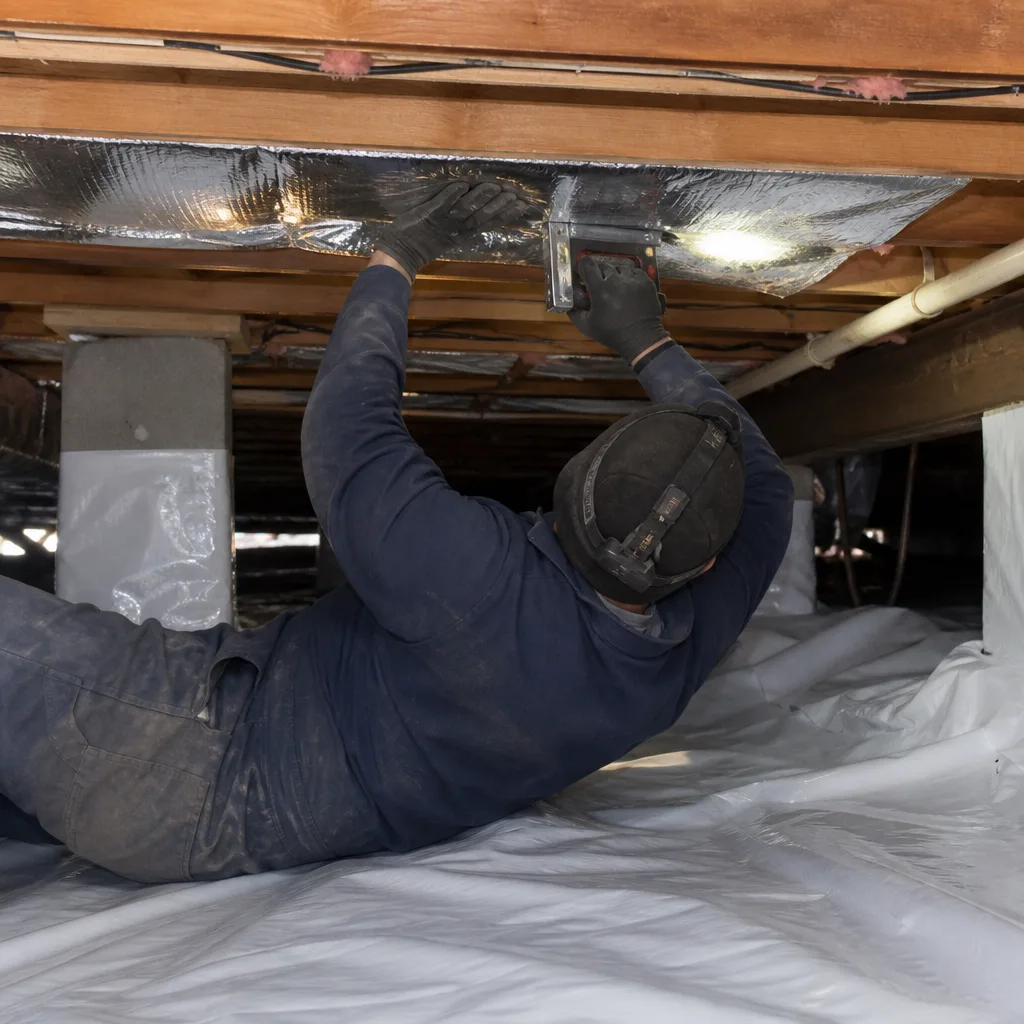
Despite the documentation constraints, certain insulation scopes are genuinely appropriate for capable homeowners in La Habra. The common thread: no permit trigger, no HERS requirement, no fire or moisture risk, and no need for pressurized diagnostic equipment.
Appropriate DIY:
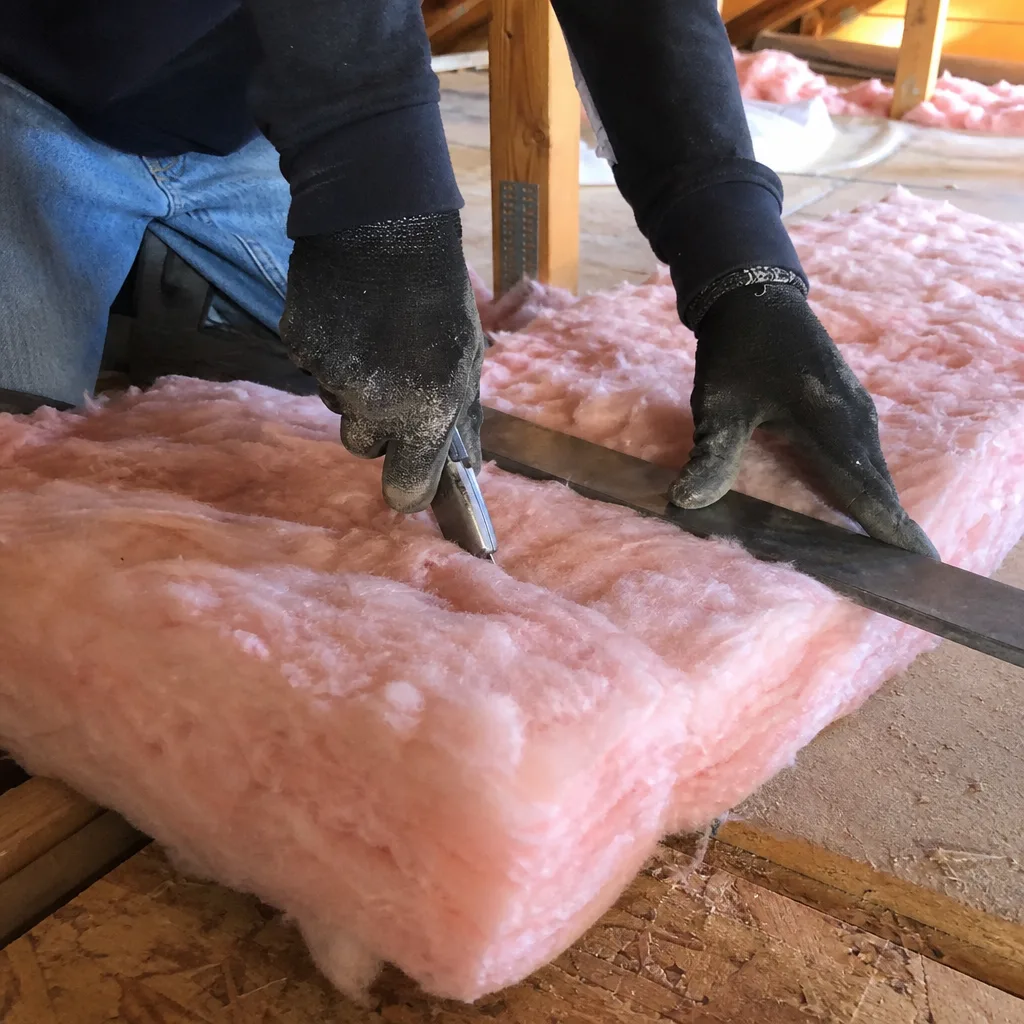
- Adding batts on top of existing batts in an accessible attic with no removal required. Verify that the existing insulation is dry, uncontaminated, and not compressed. Use unfaced batts to avoid trapping moisture. Do not block soffit vents.
- Weatherstripping an attic hatch or pull-down stair. Use adhesive foam tape rated for the temperature range. Install rigid insulation on the hatch’s interior surface. This is low-risk, high-return work.
- Insulating an attached garage ceiling that is not conditioned space and has no firewall rating implications. Check with La Habra building department if the garage shares a wall with living space; fire separation requirements may apply.
- Sealing accessible duct joints with mastic. Not duct tape - mastic, a thick paste applied with a brush or gloved hand. This improves HVAC efficiency without altering the insulation envelope.
For each of these, the homeowner should photograph the before condition, retain receipts for materials, and note the date. If future work triggers a permit, this documentation may help establish what was done when.
Scopes That Are Not DIY
These scopes either require a licensed contractor by code, create safety hazards that warrant professional handling, or produce documentation that only a professional can provide.
Spray foam at rim joists or roofline
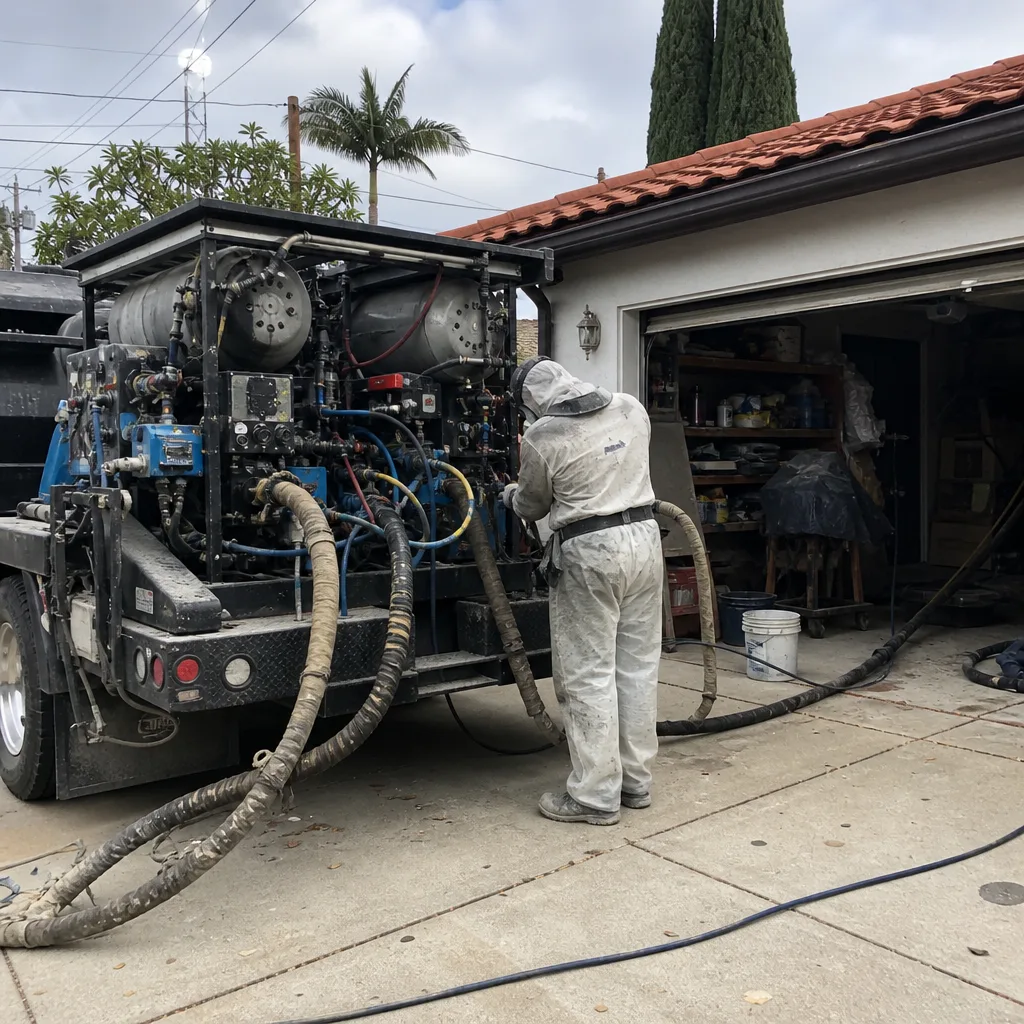
Spray foam - whether open-cell Icynene or closed-cell Demilec - requires specialized equipment, respiratory protection beyond homeowner-grade gear, and precise mixing ratios. Off-ratio foam fails to cure, producing odors and potential health hazards that require complete removal. In La Habra’s crawl spaces, where rim joists are common entry points for rodents and moisture, spray foam also requires careful sequencing with vapor barrier and drainage work. Spray Foam Insulation in La Habra should only be installed by contractors with specific spray foam training and equipment.
Any work that triggers a Title 24 compliance form
This includes insulation installed as part of an HVAC replacement, room addition, or envelope alteration where the city requires a HERS verification. The CF1R requirement is absolute.
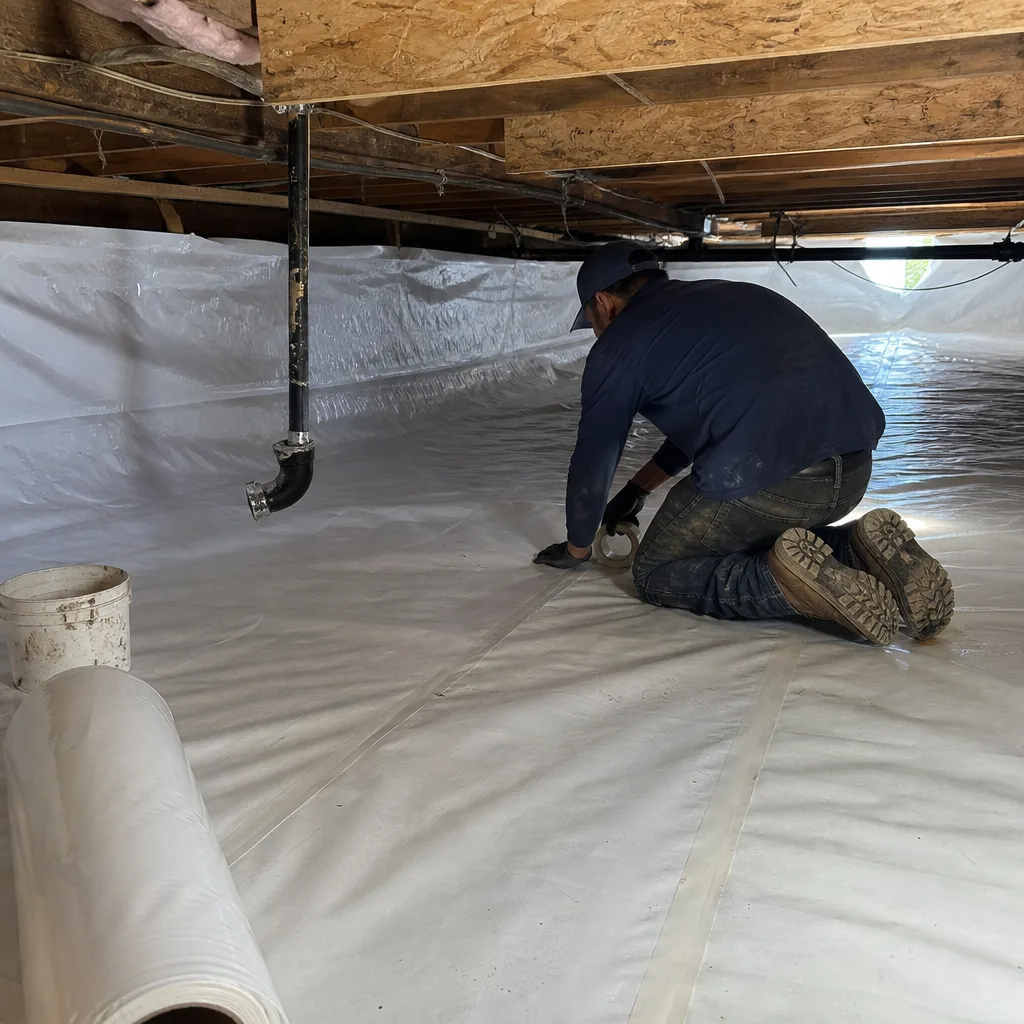
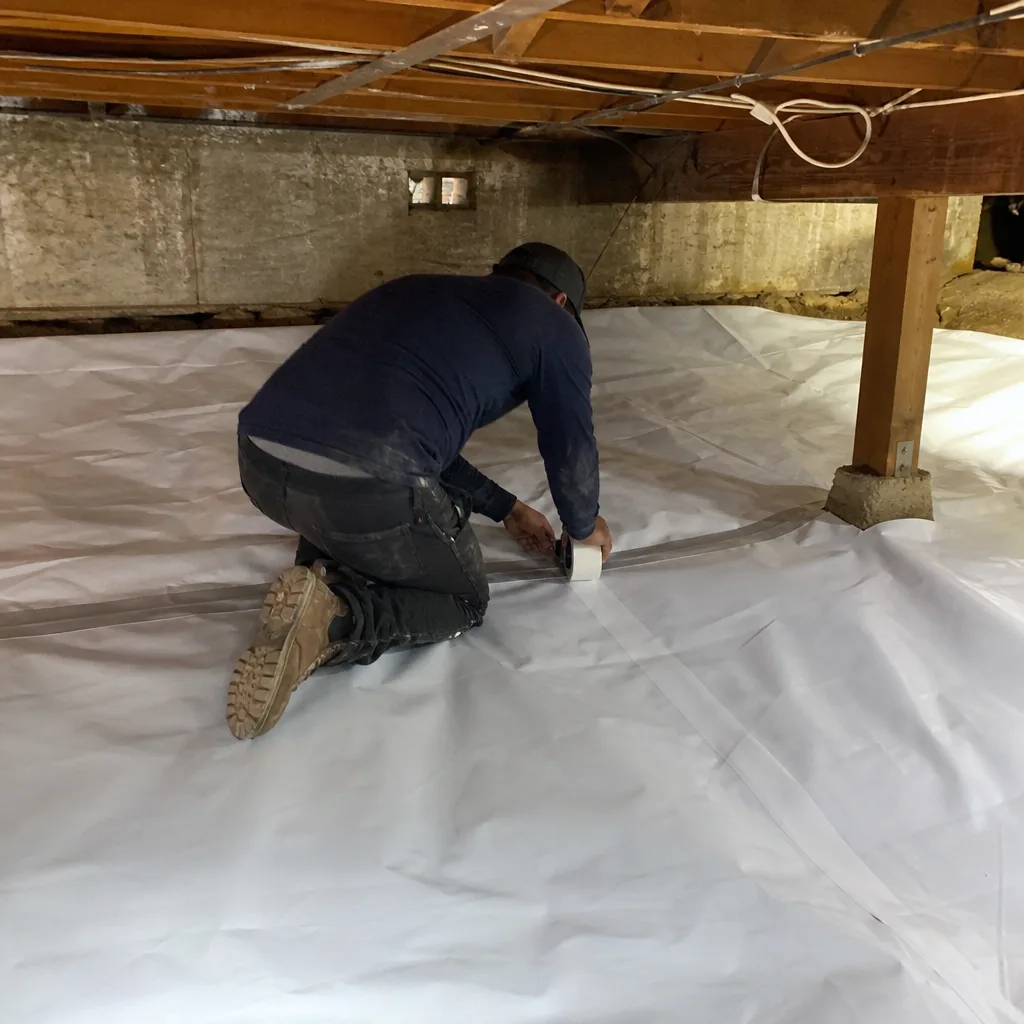
Crawl space encapsulation and vapor barrier installation
La Habra’s clay-heavy soils and seasonal moisture create crawl space conditions that require sub-slab drainage assessment, vapor barrier seam sealing to manufacturer specifications, and often conditioning or dehumidification. A homeowner who installs a thin vapor barrier without addressing drainage or wall sealing may trap moisture against framing, accelerating decay. Crawl Space Encapsulation & Vapor Barrier in La Habra is a full-system scope.
Insulation removal where asbestos or rodent contamination is suspected
Pre-1980 insulation may contain asbestos. Disturbing it without abatement certification is illegal and hazardous. Rodent-contaminated insulation requires HEPA containment and protective protocols. Do not self-assess; have a sample tested.
Air sealing at electrical penetrations or recessed can lights
Contact with live wiring or covering non-IC-rated fixtures with insulation creates fire risk. This work requires electrical safety knowledge and often an electrician’s involvement.
How to Evaluate a Professional Contractor
If you determine that professional installation is appropriate, the selection process matters as much as the decision to hire. In La Habra’s service market, homeowners encounter a range of contractor quality. Our How to Hire a Insulation Contractor in La Habra: A Step-by-Step Guide explains how to distinguish documentation-backed work from cosmetic installation.
Ask for the blower-door number, not the sales pitch
A contractor who cannot or will not provide before-and-after blower-door readings is selling insulation, not performance. The number - CFM50, cubic feet per minute at 50 pascals of pressure - is the single most informative metric for air-sealing quality. Ask what their typical starting and ending readings are for homes similar to yours in age and size.
Request the written scope before the written price
Under Haven Standard Clause 1, every job begins with a written price - but that price should attach to a written scope that specifies R-value, material type, air sealing details, and ventilation measures. A price without a scope is not a quote; it is an estimate that will move.
Verify the CF1R and HERS coordination
If your project requires Title 24 compliance, ask who files the CF1R and who coordinates the HERS rater. The answer should be specific: “We file the CF1R through the CEC database and schedule the HERS verification with [named rater firm].” Vague answers suggest the contractor has not managed this process before.
Check for material flexibility
A contractor who specifies only one brand or one product type may be optimizing for margin, not performance. We source from Owens Corning, Johns Manville, Knauf, Rockwool, CertainTeed, Icynene, Demilec, and GreenFiber, selecting based on the home’s specific needs. No proprietary lock-in means the recommendation is for the house, not the supplier.
Confirm documentation delivery
Ask what you receive when the crew leaves. The minimum should be: a final invoice matching the written price, a photo record of work areas, and warranty documentation. For air-sealing jobs, add the blower-door report.
Common Mistakes to Avoid
- Installing insulation over wet or moldy existing material. La Habra’s winter rains and occasional roof leaks create attic moisture that homeowners miss from the hatch. Trapping moisture with new insulation breeds mold and degrades wood. Always inspect the deck and framing, or hire a professional who will.
- Using faced batts in an attic. The kraft paper facing is a vapor retarder, not a vapor barrier, and in California’s mixed climate it is often installed on the wrong side. Unfaced batts with proper ventilation are the safer choice.
- Blocking soffit vents with compressed insulation. This is the most common DIY error we correct in La Habra. It seems minor from the attic center, but it destroys the ventilation profile that keeps roof decks cool and dry.
- Ignoring recessed lighting fixtures. Non-IC (insulation contact) rated can lights cannot be covered with insulation without fire risk. IC-rated fixtures can, but the distinction must be verified. Many La Habra homes have mixed generations of lighting.
- Assuming more R-value is always better. Beyond R-38 to R-49 in La Habra’s climate zone, additional attic insulation produces diminishing returns. Air sealing typically yields greater comfort improvement per dollar than additional R-value above this range.
- Failing to document the work. Photographs, receipts, and dated notes are your only defense if a future sale or insurance claim questions what was done. Professional contractors provide this as standard; DIY homeowners must create it themselves.
- Neglecting the attic hatch. A 1/2-inch plywood hatch with no weatherstripping is a 2-square-foot hole in your thermal envelope. It is also the easiest and cheapest fix, and the one most often skipped.
When to Call a Professional
Call a professional when the scope requires documentation you cannot produce, when safety hazards are present (wiring, steep rooflines, contaminated materials), or when the performance outcome matters more than the material cost. In La Habra’s housing market, where energy costs and resale transparency are both rising, professional installation with measured results is increasingly the conservative financial choice, not the premium one. For more guides & resources on attic insulation and home performance, visit our blog.
Topside Attic Insulation La Habra offers free estimates in La Habra. We’ll review your attic’s condition, explain whether your scope requires a permit and HERS verification, and provide a written price before any work starts. Call (562) 267-3291.
Frequently Asked Questions
Yes, if the work is like-for-like replacement or simple addition in an existing attic with no other concurrent construction. If the scope changes the R-value, alters the envelope, or is part of a larger project, a permit and possibly HERS verification are required. Call La Habra building department at (562) 267-3291 to confirm your specific scope before starting.
Most attic insulation jobs in a La Habra home between 1,000 and 1,500 square feet run between $2,800 and $4,200 when air sealing and blown-in installation are included. Smaller scopes or batt-only installations may fall below this range; larger homes or spray foam applications rise above it. Call (562) 267-3291 for a written price on your specific home - estimates are free.
A blower-door test is a pressurization reading that shows, in one number, how much air your building envelope is losing. A fan mounted in an exterior door depressurizes the house; the airflow required to maintain that pressure, measured in CFM50, quantifies total leakage. Before-and-after readings prove that air sealing worked. Without this measurement, you are guessing at performance.
Generally no. Southern California Edison and SoCalGas rebate programs for insulation upgrades require HERS verification or contractor certification of installation. A homeowner self-installation cannot produce the required documentation. Check current program requirements at energyupgradeCA.org, but expect to hire a participating contractor for rebate eligibility.
The unpermitted work will appear on a title search or disclosure review. In California, sellers must disclose material facts affecting property value. An unclosed permit is a cloud on title. The buyer may require remediation, a price reduction, or escrow holdback. The cost to resolve typically exceeds original DIY savings.
No. Spray foam requires specialized equipment, chemical handling training, and respiratory protection beyond homeowner availability. Off-ratio application produces uncured foam that off-gasses indefinitely. Fire safety and building code compliance add further barriers. Spray foam is a professional-only scope.
The Bottom Line
The DIY-versus-professional question in La Habra is not about whether you are capable of carrying batts into an attic. It is about whether you can certify, measure, and document the result in a way that protects your home’s performance and your future sale. For simple, non-permitted scopes with no air sealing component, DIY is legally permissible and can produce reasonable results if ventilation and safety are respected. For any scope that triggers Title 24, requires HERS verification, or involves spray foam, contaminated materials, or electrical interfaces, professional installation is not a luxury. It is the only path to a closed permit, a clean title, and a measured outcome you can verify.
Since 2016, we’ve sealed and insulated over 9,000 homes, every one with a written price before work started and a documented record when the crew left. If you’re weighing this decision for your La Habra home, we’ll give you a free second opinion on any written estimate and a clear answer on whether your scope requires professional documentation. Call (562) 267-3291.
Written by Wes Okafor, Owner at Topside Attic Insulation La Habra, serving La Habra since 2016.