
Last updated September 24, 2026
Insulation Permits, Codes & Inspections in CA: What You Need to Know
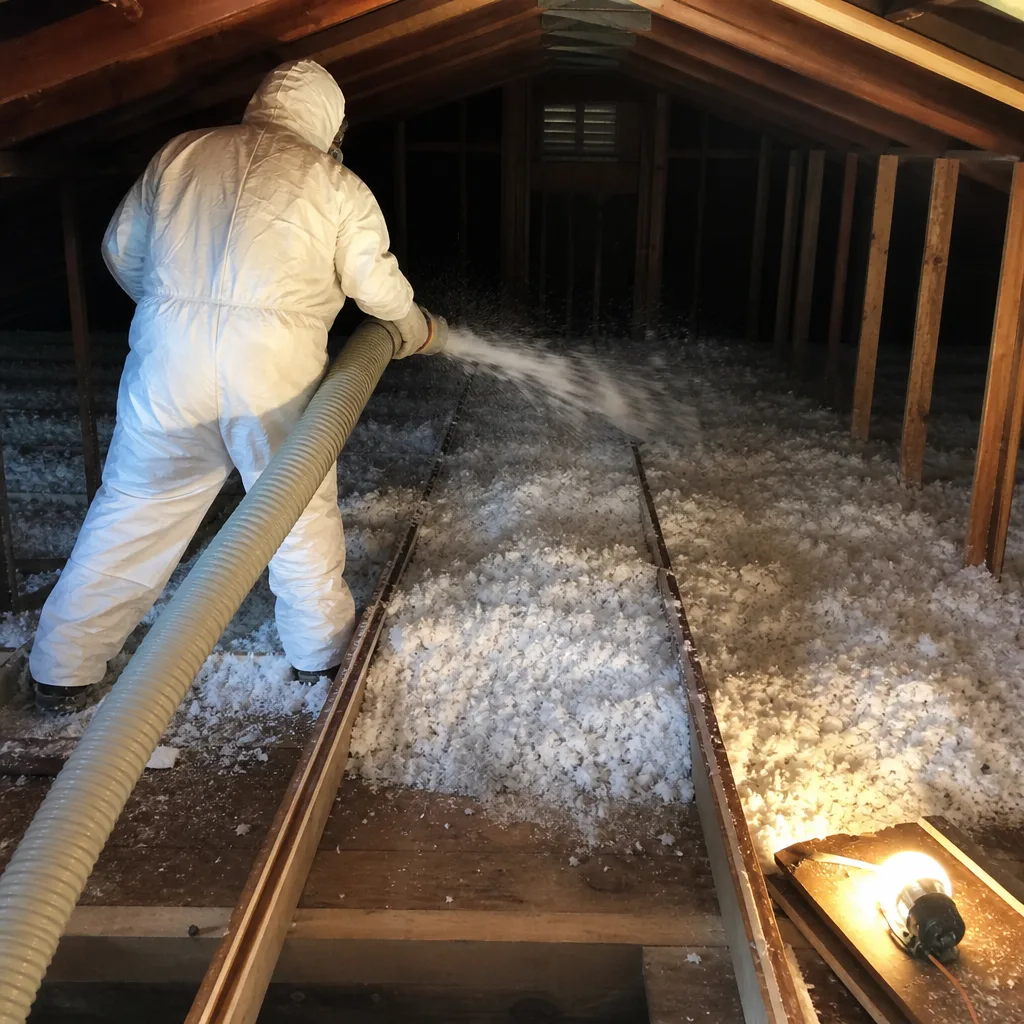
A homeowner in La Habra pulls a permit for attic insulation, passes the building inspector’s visual check, and still fails to close the permit. The reason: a HERS rater found the assembly’s effective R-value fell below Title 24’s minimum because air leakage through top plates and can-light penetrations was never addressed. The code requires remediation before the permit closes, and that requirement shows up in approximately zero contractor sales presentations. In this guide and our more guides & resources, we’ll walk through which insulation jobs in La Habra require permits, which trigger mandatory HERS verification, and how to read the documentation that keeps your project legal and your escrow on schedule.
Quick Answer
Most attic, wall, and floor insulation work in California requires a building permit under Title 24 Part 6, with mandatory HERS field verification for any job claiming compliance with the Energy Code’s prescriptive path. In La Habra, the City Building Division enforces these rules under the 2022 California Energy Code cycle. Failing a HERS inspection means you cannot legally close the permit, which blocks a remodel certificate of occupancy and can derail a home sale.
Table of Contents
- When Is a Permit Required for Insulation Work in La Habra?
- Title 24 Table 150.1-A: Minimum R-Values for Climate Zone 10
- What Is HERS Verification and Which Jobs Trigger It?
- Building Inspection vs. HERS Verification: Why One Can Pass While the Other Fails
- What Happens to Unpermitted Insulation at Point of Sale
- The Permit Process in La Habra: Forms, Fees, and Timeline
- What Documentation You Should Receive From Your Contractor
- Common Mistakes to Avoid
- When to Call a Professional
- Frequently Asked Questions
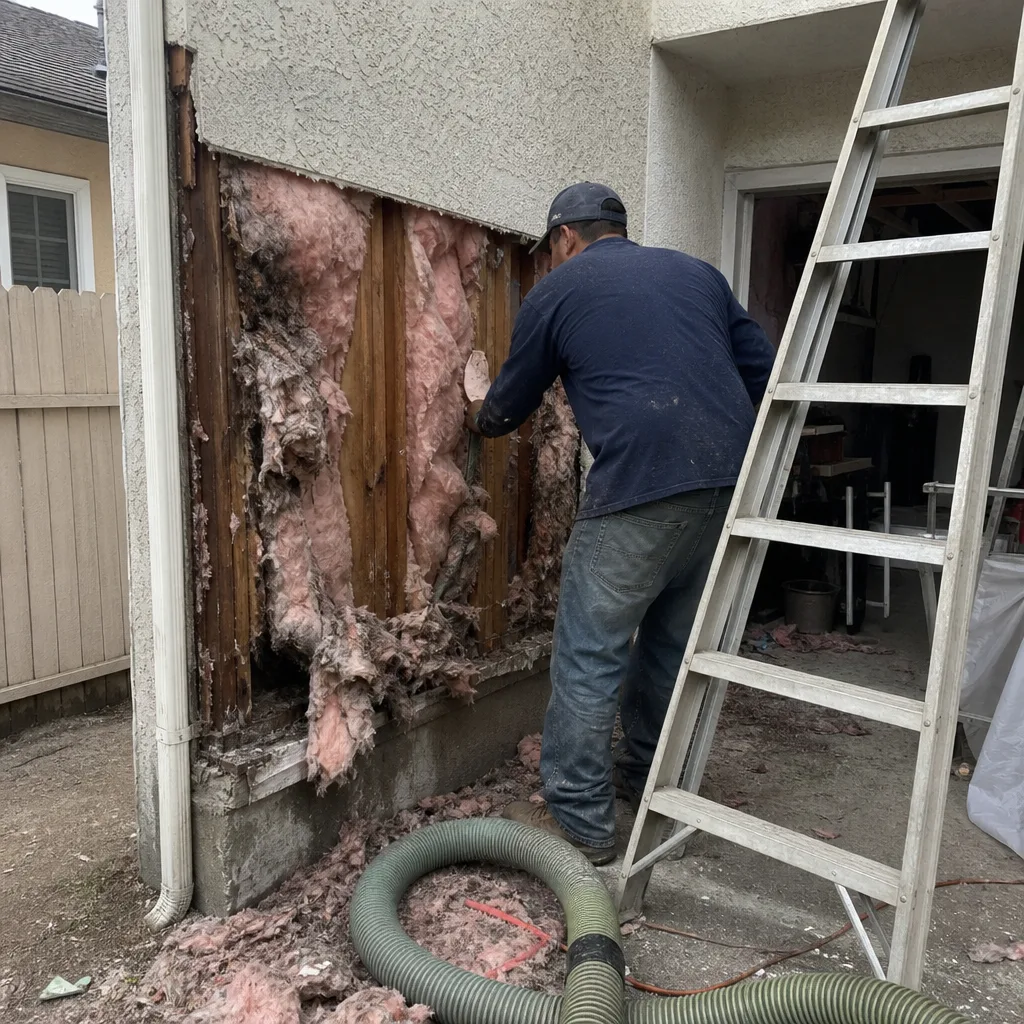 Before
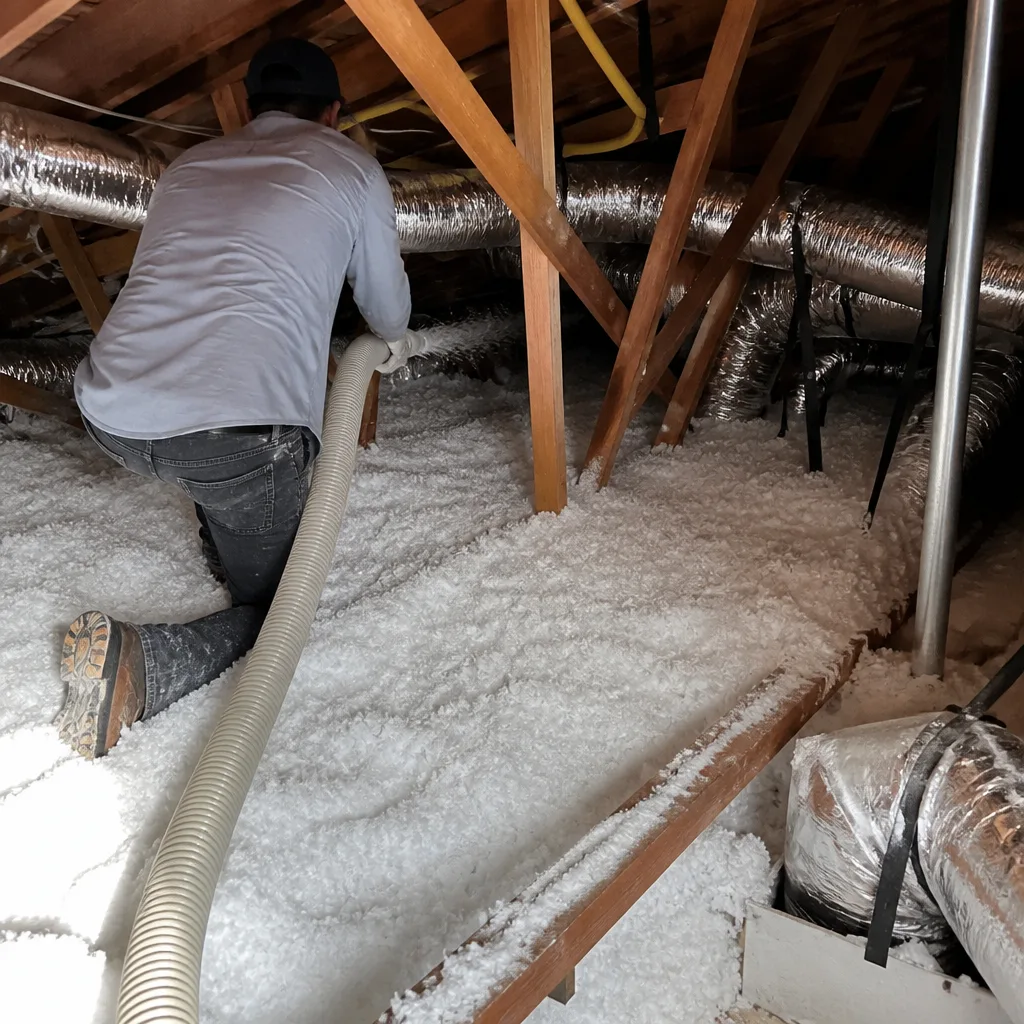 After
AfterWhen Is a Permit Required for Insulation Work in La Habra?
California Building Standards Code Section 105.1 requires a building permit for “the installation of any insulation material” that forms part of the thermal envelope. In practice, La Habra’s Building Division interprets this to cover attic insulation, wall insulation, floor insulation, and spray foam applications that alter the envelope’s thermal performance. The permit requirement applies whether the work is part of a larger remodel or a standalone energy upgrade.
Exemptions exist, but they are narrower than most homeowners assume. Under CBC 105.2, work may be exempt if it qualifies as “ordinary repairs” that do not affect structural, electrical, or mechanical systems and do not alter the building’s energy compliance. Replacing a small section of damaged insulation in an otherwise intact assembly might qualify. Blowing new cellulose over old, compressed fiberglass in a La Habra attic does not; that changes the effective R-value and triggers permit requirements.
Here is how La Habra typically classifies common insulation scopes:
- Attic insulation (new or additional): Permit required. This includes blown-in cellulose, fiberglass batts, and spray foam applied to roof decks or attic floors.
- Wall insulation (retrofit or new construction): Permit required. Dense-pack cellulose, injection foam, and batt replacement all fall under this.
- Crawl space insulation and vapor barrier: Permit required when part of a conditioned space conversion or when insulation is added to perimeter walls. Crawl space encapsulation in La Habra often crosses into permit territory when it involves sealing vents and insulating rim joists.
- Spray foam insulation: Permit required. The chemical application and its effect on envelope performance make this non-exempt. Spray foam jobs in La Habra also trigger additional fire-resistance inspections under CBC Chapter 26.
- Radiant barrier installation: Permit typically required when attached to roof decking or rafters as part of a thermal assembly.
- Insulation removal only: Permit may not be required if no replacement occurs, but most La Habra contractors bundle removal with installation, which triggers the permit.
The permit application in La Habra requires submission of a site plan, the specific insulation type and manufacturer, and the proposed R-value. For jobs on the prescriptive compliance path, you’ll also need to identify whether HERS verification is triggered. More on that in the next section.
Title 24 Table 150.1-A: Minimum R-Values for Climate Zone 10
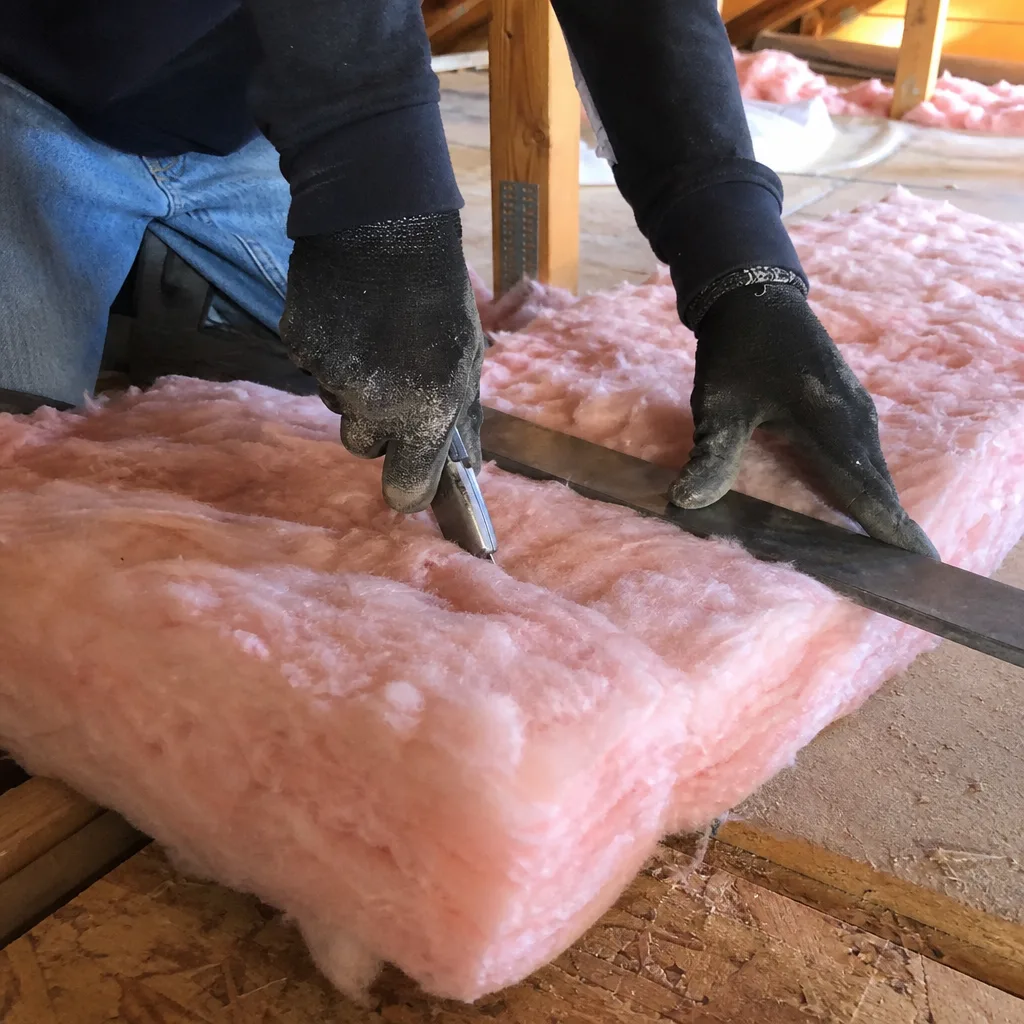
La Habra sits in California Climate Zone 10, a hot-dry zone that covers much of Orange County and the Los Angeles basin. Title 24 Part 6, Table 150.1-A sets the minimum prescriptive R-values for new construction and alterations. The 2022 code cycle increased several of these values over the 2019 edition, a change that catches contractors who haven’t updated their specification sheets.
For existing homes in La Habra undergoing insulation upgrades, the relevant assemblies and their 2022 minimums are:
| Assembly | 2022 Minimum R-Value (Climate Zone 10) | 2019 Minimum (for comparison) |
|---|---|---|
| Wood-framed attic (ceiling) | R-49 | R-38 |
| Wood-framed wall | R-19 or R-13 + R-5 continuous | R-13 or R-0 + R-5 continuous |
| Floor over unconditioned space | R-25 | R-19 |
| Steel-framed wall | R-13 + R-5 continuous or R-19 | R-13 + R-3.8 continuous |
| Raised floor (crawl space) | R-25 | R-19 |
The jump from R-38 to R-49 for attic ceilings is the most consequential change for La Habra homeowners, as detailed in our Insulation Warning Signs: A La Habra Homeowner’s Reference Guide. Many attics in neighborhoods like Westridge and Imperial Estates were built to R-30 or R-38 in the 1970s and 1980s. Bringing them to 2022 compliance means adding significant insulation depth, not just topping off what exists. A contractor who quotes R-38 for an attic upgrade in 2024 is quoting below code minimum.
Importantly, these are effective R-values, not nominal. Compressed fiberglass batts, thermal bridging through framing members, and air movement through the assembly all reduce the effective value. A HERS rater measures performance, not label claims. We’ve seen La Habra attics where R-49 blown fiberglass was installed to proper depth but performed at R-32 equivalent because attic-floor air sealing was skipped. That assembly fails HERS verification even though it looks correct to a visual inspection.
The prescriptive path is not the only compliance route. The performance path, using approved energy modeling software, allows trade-offs between assemblies. A home with higher-than-minimum wall insulation might offset a lower attic value. This path still requires HERS verification for the modeled measures, and the documentation burden is heavier. Most residential insulation jobs in La Habra use the prescriptive path for simplicity.
What Is HERS Verification and Which Jobs Trigger It?
HERS stands for Home Energy Rating System, a California-specific program administered by the California Energy Commission. A HERS rater is a third-party certified technician who verifies that installed energy measures match what was modeled or specified for code compliance. The rater does not work for the contractor or the city. They work for the permit holder, and their findings are filed directly with the California Energy Commission’s HERS registry.
Not every insulation job triggers HERS verification. The requirement applies when:
- The job uses the prescriptive compliance path and involves insulation in an attic, wall, or floor assembly that is part of the thermal envelope.
- The job is an addition or alteration that alters the envelope and is subject to mandatory measures under Title 24 Part 6, Section 150.2.
- The job claims a HERS-verified measure in the performance path modeling, such as reduced air leakage or specific insulation performance.
For La Habra homeowners, the practical trigger is usually Item 1: prescriptive-path attic or wall insulation on an existing home, a topic covered in our Seasonal Insulation Care for La Habra: Year-Round Homeowner’s Guide. If you’re adding R-49 cellulose to an attic that previously had R-19, and you’re using the prescriptive table to show compliance, HERS verification is mandatory. The city building inspector will not close the permit without a passing HERS registry number.
The HERS rater’s field verification for insulation includes:
- Visual inspection of installed insulation: Depth, density, coverage completeness, and absence of gaps or compression. For blown-in materials like GreenFiber cellulose or Owens Corning fiberglass, the rater checks that depth markers are visible and evenly distributed.
- Air leakage testing (when required): A blower-door test, the pressurization reading that shows, in one number, how much air the building envelope is losing. For certain measures, the rater must verify that air leakage meets a maximum threshold, typically expressed in CFM50 (cubic feet per minute at 50 Pascals pressure).
- Photographic documentation: The rater submits photos of critical details, such as attic floor condition before and after, top plate sealing, and penetration treatment.
- Form submission: The rater completes and uploads the relevant HERS forms, typically CF-1R for the modeled measures and CF-2R for field verification. These forms reference the permit number and tie directly to the city’s records.
The documentation the HERS rater requires from the installing contractor is specific and often missing. The rater needs the insulation manufacturer’s specification sheet showing the product’s R-value per inch at the installed density. For spray foam, they need the applicator’s certification and the specific product’s ESR (Evaluation Service Report) from ICC-ES. We’ve been called to remediate La Habra jobs where the original contractor used an unlisted foam product; the HERS rater caught it, the permit froze, and the homeowner faced tear-out.
The cost of HERS verification in the La Habra market typically runs $300-$600 for a standard attic insulation job, depending on the number of measures being verified and the rater’s travel distance. This is separate from the city permit fee and the building inspection. Some contractors bury this cost in their quote without explaining it; others leave it to the homeowner to arrange, which can delay closing.
Building Inspection vs. HERS Verification: Why One Can Pass While the Other Fails
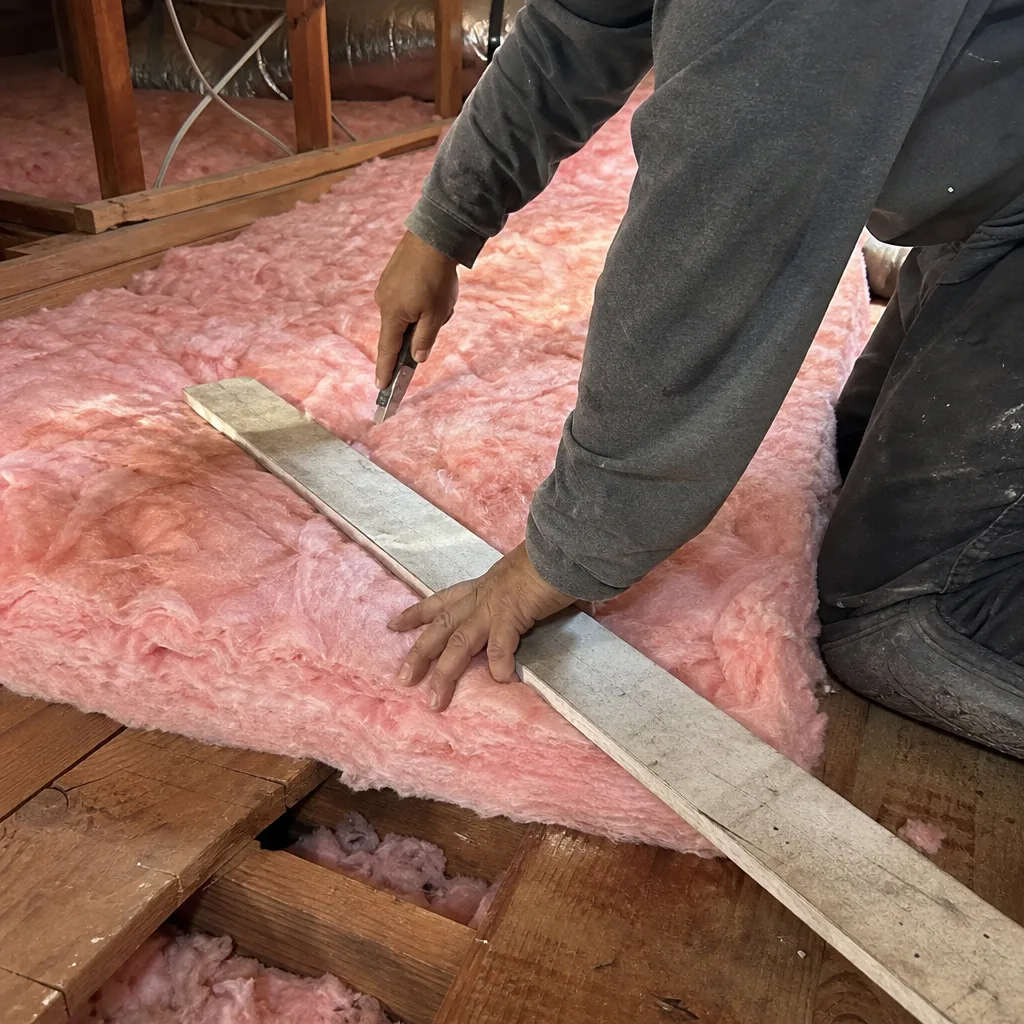
The building inspector and the HERS rater are looking at different things. Understanding this distinction prevents the most common permit failure we see in La Habra.
The city building inspector conducts a visual inspection for life safety and basic code compliance. For insulation, this means checking that the material is properly labeled, installed to avoid contact with heat-producing fixtures, and covered where required by fire-resistance ratings. The inspector verifies that recessed can lights have adequate clearance, that spray foam has the required thermal barrier, and that attic access is maintained. They do not measure thermal performance. They do not test air leakage. A job can look perfect to the building inspector and still fail HERS verification.
The HERS rater measures performance. They bring a blower door, infrared camera, and depth gauges. They care whether the installed assembly achieves its effective R-value, whether air sealing was completed to specification, and whether the documented measures match the permit application. A La Habra attic with R-49 cellulose installed to proper depth but with unsealed top plates and can-light penetrations will likely fail HERS verification for air leakage. The building inspector won’t flag this; the HERS rater will.
Here is how the two inspections diverge in practice:
| Factor | Building Inspection | HERS Verification |
|---|---|---|
| What is checked | Life safety, fire rating, clearance, labeling | Thermal performance, air leakage, installed R-value |
| Tools used | Visual, tape measure, code book | Blower door, infrared camera, depth gauge, density calculator |
| Pass/fail basis | Meets CBC Chapter 26 and local amendments | Meets Title 24 Part 6 modeled or prescriptive requirements |
| Who performs it | City of La Habra Building Division inspector | CEC-certified third-party HERS rater |
| Result filed with | City permit record | California Energy Commission HERS registry |
| Can pass independently | Yes - building can pass while HERS fails | Yes - HERS can pass while building fails (rare) |
The sequence matters. In La Habra, the building inspection typically occurs first, during or shortly after installation. The HERS verification follows, often requiring a second site visit after air sealing is complete. A contractor who schedules these poorly can leave the homeowner with a passed building inspection, a failed HERS test, and a crew that has already moved to the next job. The permit stays open, the registry shows non-compliance, and the homeowner bears the cost of recall.
We’ve remediated this exact scenario in La Habra’s South Hills neighborhood. The original contractor passed building inspection on a Friday. The HERS rater tested Monday morning and found 3,800 CFM50 on a home that needed to hit 2,500. The crew was two weeks out. The homeowner was selling in ten days. Under Haven Standard: Arrive on schedule, you get a named technician and a text when they are on the way. We dispatched a crew, completed air sealing of top plates and can lights, retested at 2,100 CFM50, and got the HERS registry updated before escrow closed.
What Happens to Unpermitted Insulation at Point of Sale
Unpermitted insulation work surfaces at sale in ways that surprise homeowners who assumed their upgrade was a selling point. California’s disclosure requirements are strict, and home inspectors in the La Habra market are increasingly thorough about energy-code compliance.
Under California Civil Code Section 1102.6, sellers must disclose material facts affecting the value or desirability of the property. A permitted, closed insulation job with HERS documentation is an asset. An unpermitted job is a material fact that must be disclosed, and it typically appears on the buyer’s home inspection report as an open or undocumented alteration.
Here’s how it plays out in practice:
- The home inspector flags it: During a pre-sale inspection, the inspector notes newer insulation in the attic with no visible permit sticker on the electrical panel or near the attic access. They recommend the seller provide permits or the buyer assume the risk.
- The buyer’s lender gets involved: Many lenders require proof that alterations are permitted and code-compliant. An unpermitted insulation job can trigger an appraisal condition that delays funding.
- The title company searches: Open permits appear in city records. La Habra’s Building Division maintains permit records back decades. An open permit, even for something as minor as attic insulation, clouds title.
- The seller faces a choice: Retroactively permit the work (which may require opening walls or removing insulation for inspection), negotiate a credit to the buyer, or accept a reduced sale price. Retroactive permitting in La Habra requires the same HERS verification as original permitting, with the added complication that the work is already covered and harder to inspect.
The disclosure obligation exists even if the work was done by a prior owner. A La Habra homeowner who bought in 2019 and discovers unpermitted 2017 insulation during a 2024 sale must still disclose. The statute of limitations on building code violations in California is not the shield homeowners assume; the disclosure duty runs to the current seller’s knowledge.
Buyers in La Habra’s competitive market are increasingly savvy about this. We’ve spoken with homeowners in the Vista del Oro and East La Habra areas who lost buyers specifically over undocumented energy upgrades. The buyer’s agent cited the lack of HERS documentation as a red flag for other hidden alterations. The insulation, intended as a selling point, became a liability.
The fix is documentation from day one. A permitted job with a closed HERS registry entry is transferable, verifiable, and value-additive. An unpermitted job is a ticking clock that detonates at the worst possible moment.
The Permit Process in La Habra: Forms, Fees, and Timeline
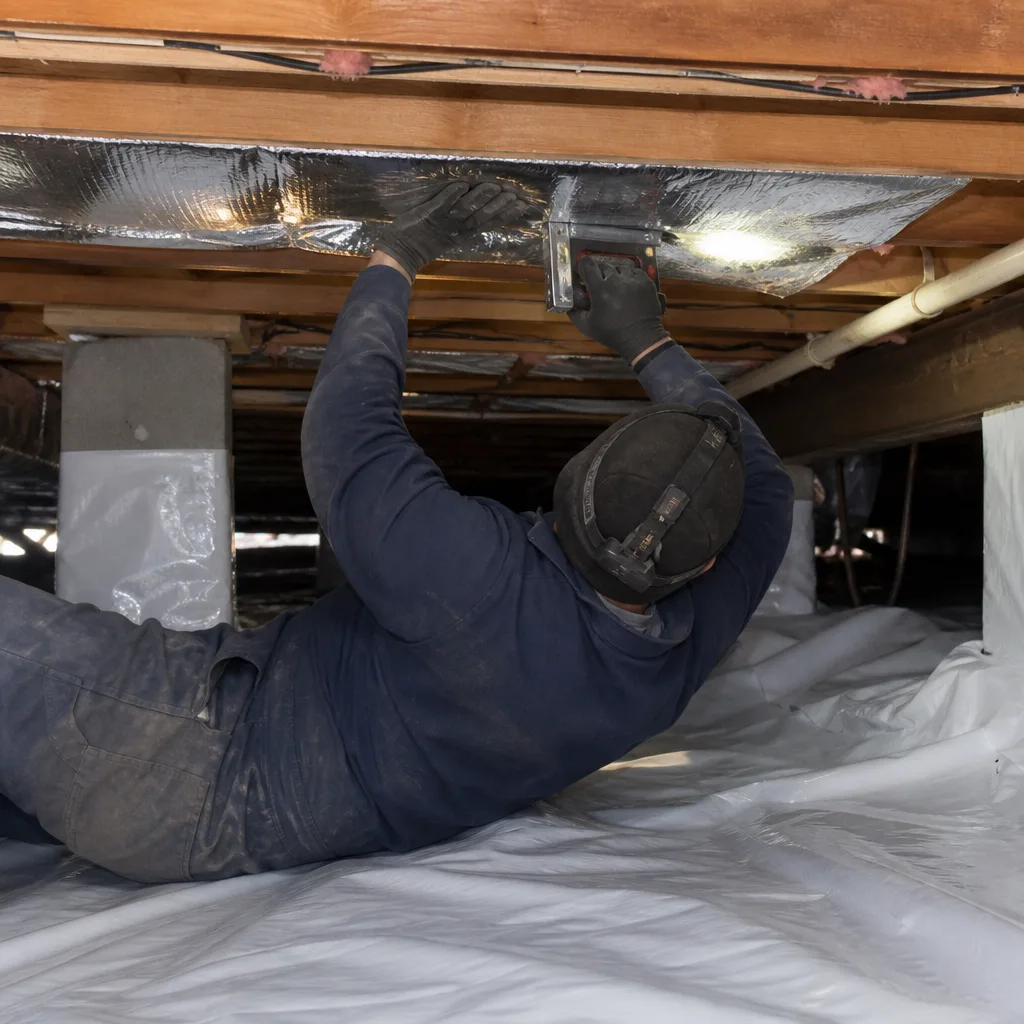
La Habra’s Building Division processes insulation permits through the City of La Habra Community Development Department. The specific forms and fees depend on project scope, but the general process follows a predictable path.
Step 1: Application and plan submission
The homeowner or contractor submits a permit application (Form B-1, Building Permit Application) with a description of the work, the property address, and the contractor’s state license number if applicable. For insulation jobs, the application must include:
- The insulation type, manufacturer, and product name
- The proposed R-value and the code section being used for compliance (typically Title 24 Part 6, Table 150.1-A)
- A floor plan or site plan showing the areas to be insulated
- The compliance path: prescriptive or performance
- Whether HERS verification is triggered
Step 2: Plan review
La Habra’s plan review for standalone insulation permits is typically over-the-counter for simple attic jobs, meaning same-day or next-day approval. More complex jobs, such as spray foam in a conditioned attic or wall cavity dense-pack in a historic home, may require a full plan review taking 5-10 business days. The 2022 code cycle added review points for air sealing details, which can trigger requests for additional documentation.
Step 3: Permit issuance and fee payment
Permit fees in La Habra for residential insulation typically range from $150-$400 for attic jobs, depending on valuation. The fee schedule is published by the Community Development Department. HERS verification fees are paid directly to the rater, not the city.
Step 4: Installation and rough inspection
The contractor performs the work and schedules the building inspection. For attic jobs, the inspector needs access to the attic space and visible depth markers. For spray foam, the inspector verifies the thermal barrier and ignition barrier requirements per CBC Chapter 26.
Step 5: HERS verification (if triggered)
The HERS rater performs field verification, typically after air sealing is complete. The rater uploads results to the CEC registry and provides the homeowner with a HERS certificate number.
Step 6: Final inspection and permit closure
The building inspector conducts a final inspection, verifies the HERS registry entry if required, and closes the permit. The homeowner receives a Certificate of Completion or Certificate of Occupancy (for larger projects), and the permit record is archived.
Total timeline for a straightforward La Habra attic insulation job: 2-4 weeks, depending on inspection scheduling and HERS rater availability. We’ve seen permits stall for months when contractors fail to coordinate the HERS step, leaving homeowners in limbo.
What Documentation You Should Receive From Your Contractor
The Haven Standard requires that every job end with a documented record. For a permitted insulation job in La Habra, that record should include specific items-see our Attic Insulation Maintenance Checklist for La Habra Homeowners-that protect the homeowner’s legal and financial interests.
Before work starts, you should receive:
- A written price with a detailed scope of work, including the specific insulation product, R-value, and installation method
- A copy of the permit application or confirmation that the permit has been pulled
- The contractor’s California State License Board number and proof of workers’ compensation insurance
- A written warranty, typically one year for workmanship
After work completes, you should receive:
- The final permit inspection approval, either a signed card or electronic confirmation from the City of La Habra
- HERS certificate and registry number, if verification was triggered
- Manufacturer product data sheets for installed materials
- A Documented Photo Record showing before, during, and after conditions
- For applicable jobs, before-and-after blower-door readings showing the air-sealing result in CFM50
We publish blower-door numbers on every job where air sealing is performed. A typical La Habra home from the 1970s might test at 4,500 CFM50 before work and 2,200 after comprehensive air sealing and insulation. The homeowner receives this number in writing, with the test date and technician name. It’s not a feeling about efficiency; it’s a measurement of performance change.
The Documented Photo Record is included on every job, not available on request. Photos show attic floor condition before sealing, top plates after sealing, insulation depth with rulers visible, and any unusual conditions encountered. In La Habra’s older neighborhoods like La Habra Heights-adjacent areas, we frequently find knob-and-tube wiring remnants, damaged rafters from prior leaks, or rodent damage that affects the insulation scope. The photo record documents what we found, not what we felt about it.
Common Mistakes to Avoid
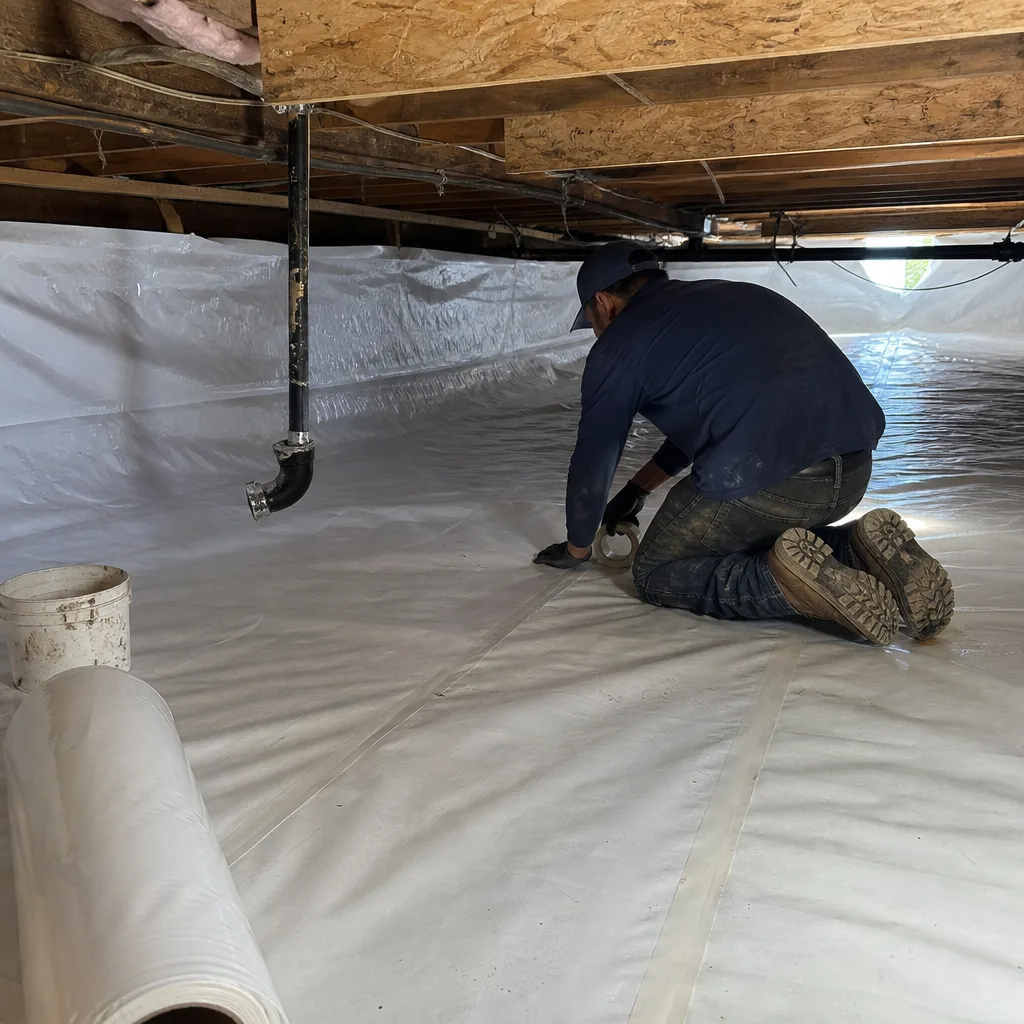
- Assuming a building inspection pass means the job is done. In La Habra, the building inspector does not verify thermal performance. A passed inspection with an open HERS requirement still blocks permit closure.
- Letting the contractor handle HERS scheduling without written confirmation. Some contractors quote insulation prices that exclude HERS fees, leaving the homeowner to arrange and pay for verification separately. Get the total cost in writing before work starts.
- Installing insulation over unsealed air leaks. This is the most common cause of HERS failure we see in La Habra. Top plates, can lights, plumbing penetrations, and chimney chases must be sealed before insulation covers them. A blower-door test after sealing but before insulating catches problems while they’re still accessible.
- Using R-38 in an attic that requires R-49. The 2022 code cycle changed this. Contractors working from old specification sheets or quoting from memory may undershoot the minimum. Verify the current table before approving the scope.
- Failing to disclose unpermitted work at sale. California Civil Code Section 1102.6 does not contain an exception for “minor” work. An unpermitted insulation upgrade is a material fact that can derail escrow or trigger post-sale liability.
- Accepting a verbal warranty without written terms. The Haven Standard requires a written warranty delivered before work starts. Verbal promises about “making it right” are unenforceable if the scope was never defined.
When to Call a Professional
Call a professional when your insulation project involves permit requirements you don’t fully understand, when HERS verification is triggered and you need coordination between the installer and rater, or when you’re preparing a home for sale and need to document prior work. The cost of professional guidance is typically recovered many times over in avoided permit delays, failed inspections, and sale complications.
Topside Attic Insulation La Habra offers free estimates in La Habra. We’ll review your existing insulation, identify the permit and HERS requirements for your specific scope, and provide a written price before any work starts. Call (562) 267-3291 to schedule. Every estimate includes a Documented Photo Record of what we find, and we offer a Free Second Opinion on any written estimate you’ve already received.
Frequently Asked Questions
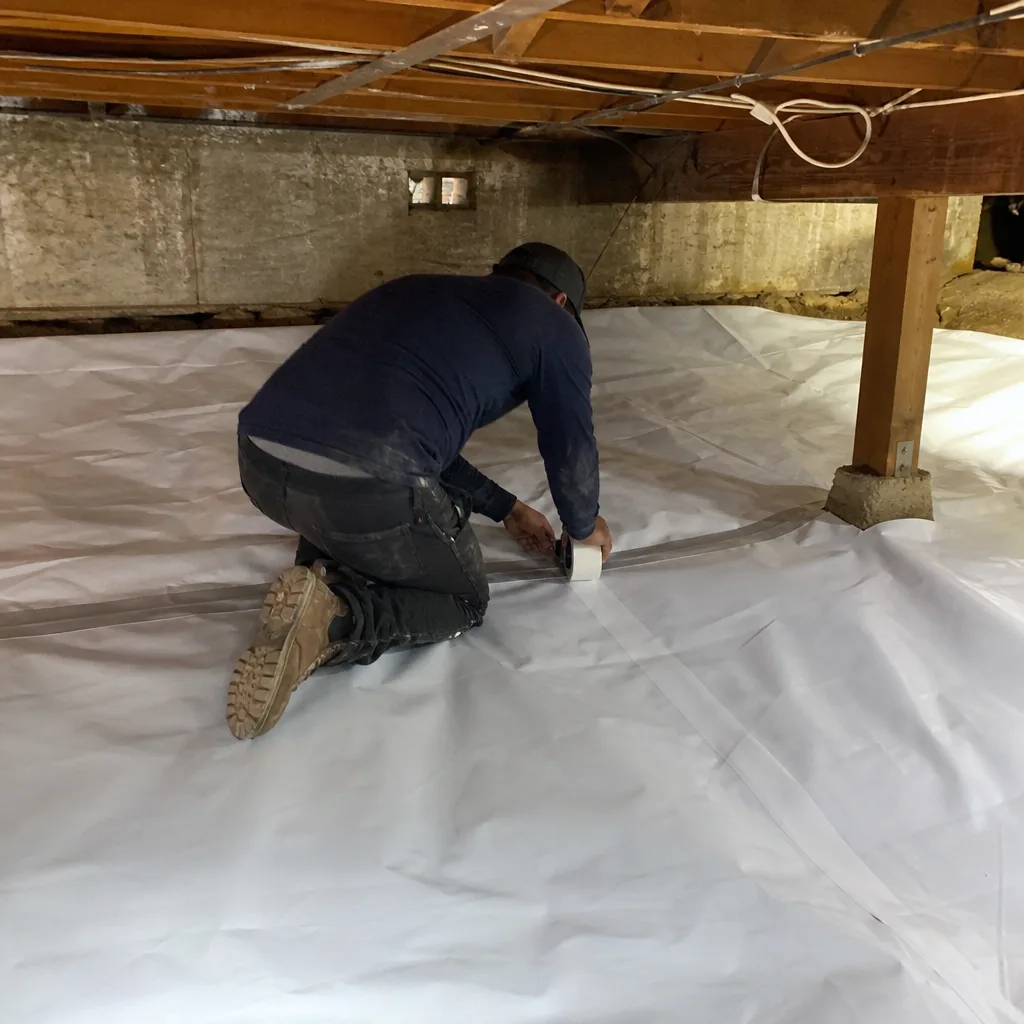
Yes, if the work alters the thermal envelope’s performance. California Building Standards Code Section 105.1 requires a permit for insulation installation, and La Habra’s Building Division enforces this for attic, wall, and floor insulation. Exemptions for “ordinary repairs” are narrow and typically do not cover energy upgrades. Call (562) 267-3291 for a free estimate and we’ll confirm the permit requirements for your specific job.
Permit fees for residential attic insulation in La Habra typically range from $150 to $400, depending on the project’s valuation and scope. This is separate from HERS verification fees, which run $300-$600 and are paid directly to the third-party rater. We include permit costs in our written price before any work starts, so there are no surprises. Call (562) 267-3291 for an exact quote on your project.
A building inspector checks life safety and basic code compliance visually, while a HERS rater measures thermal performance with specialized equipment including a blower door and infrared camera. A job can pass the building inspection and still fail HERS verification if the effective R-value or air leakage exceeds Title 24 limits. Both must pass to close the permit in La Habra.
You can, but you must disclose the unpermitted work under California Civil Code Section 1102.6, and it will likely appear on the buyer’s inspection report. This can trigger appraisal conditions, lender requirements for retroactive permitting, or negotiated price reductions. Retroactive permitting in La Habra requires the same HERS verification as original permitting, often at higher cost because the work is already covered.
Climate Zone 10, which includes La Habra, requires a minimum R-49 for wood-framed attic ceilings under the 2022 Title 24 Part 6 prescriptive path. This increased from R-38 in the 2019 code cycle. The value must be effective, not nominal, meaning compression, thermal bridging, and air leakage can reduce the actual performance below the labeled R-value.
Ask for the specific R-value, compliance path (prescriptive or performance), and whether HERS verification is triggered. The quote should reference Title 24 Part 6 by section and specify the insulation manufacturer and product. Under Haven Standard Clause 1, we provide a written scope, flat price, and written warranty before any work starts, with no exceptions. Bring us any competing quote for a Free Second Opinion.
The Bottom Line
California’s insulation codes are more than R-value tables. Title 24 Part 6 governs air leakage thresholds, installation quality, and mandatory third-party verification in ways that can trap the unprepared homeowner with an open permit at closing. In La Habra, the City Building Division enforces these rules under the 2022 code cycle, which raised attic minimums from R-38 to R-49 and added scrutiny to air sealing details. A job that passes visual inspection can still fail HERS verification, and unpermitted work becomes a disclosed liability at sale. The protection is documentation: permits closed, HERS registry entries filed, and performance measured rather than assumed.
Written by Wes Okafor, Owner at Topside Attic Insulation La Habra, serving La Habra since 2016.