
Last updated September 24, 2026
How to Hire a Insulation Contractor in La Habra: A Step-by-Step Guide
Asking an insulation contractor “do you do air sealing?” will get a yes from nearly every contractor you call. Asking “can I see the blower-door numbers from your last three jobs?” will eliminate most of them in under 60 seconds. In La Habra, where summer attic temperatures regularly hit 140°F and winter nights dip into the low 40s, the gap between a volume installer and a performance-oriented contractor isn’t price or materials. It’s whether they measure what they claim to fix. This guide - alongside our Insulation Warning Signs: A La Habra Homeowner’s Reference Guide - gives you the exact interview questions, document requests, and red-flag responses that reveal how a contractor actually operates before any money changes hands.
Quick Answer
To hire a qualified insulation contractor in La Habra, verify their C-2 license directly on CSLB.ca.gov, require a written scope with installed R-value and air-sealing locations by assembly, and demand blower-door documentation from recent jobs. Never sign a contract that lacks these specifics or that shifts liability for under-performing insulation to you through vague “owner responsibility” clauses.
Table of Contents
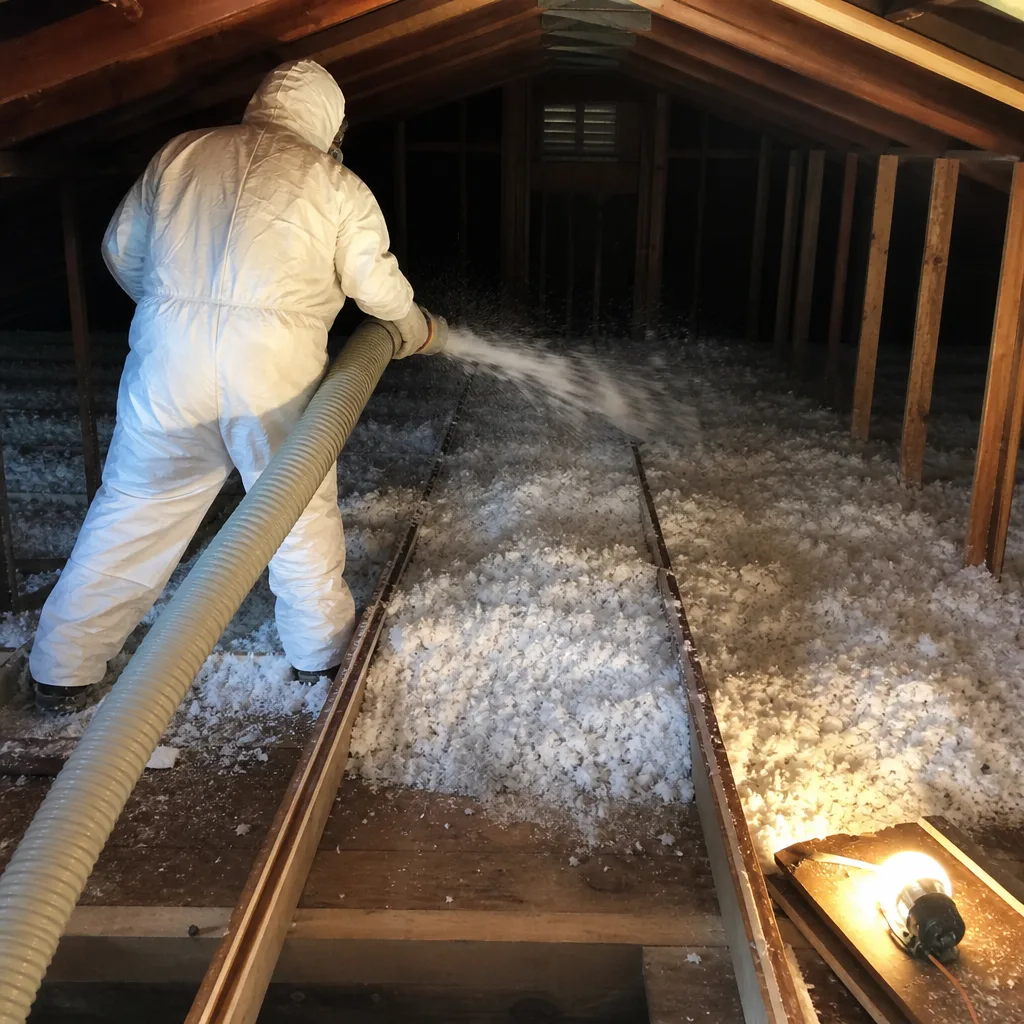
- The Five-Question Phone Screen That Eliminates Weak Contractors
- How to Verify a C-2 License (and Spot the Subcontractor Loophole)
- What a Written Scope Must Include (and What Most Omit)
- Why the Blower-Door Test Separates Real Contractors from Installers
- Materials and Methods: What La Habra Homes Actually Need
- Three Contract Clauses That Shift Liability to You
- Post-Job Documentation: What You Should Receive Before Final Payment
- What Insulation Costs in La Habra (Real Numbers)
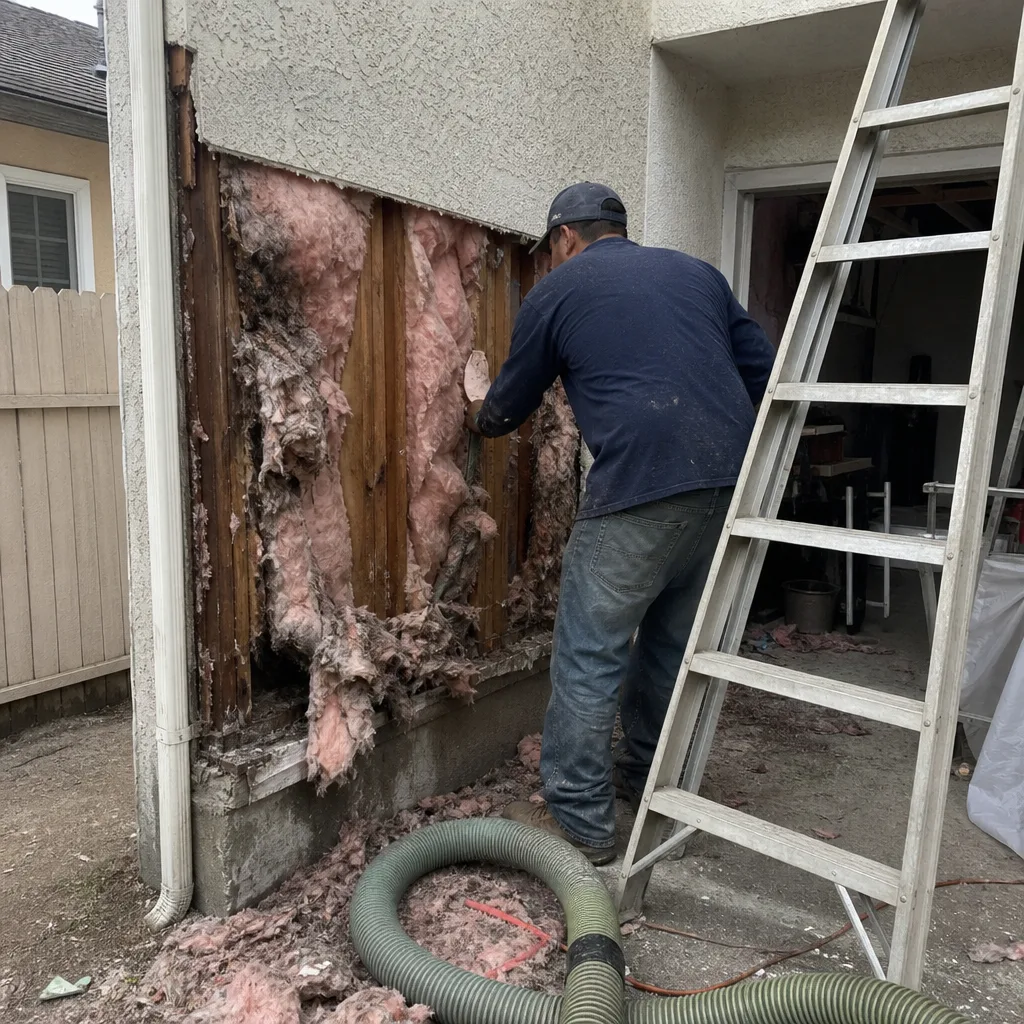 Before
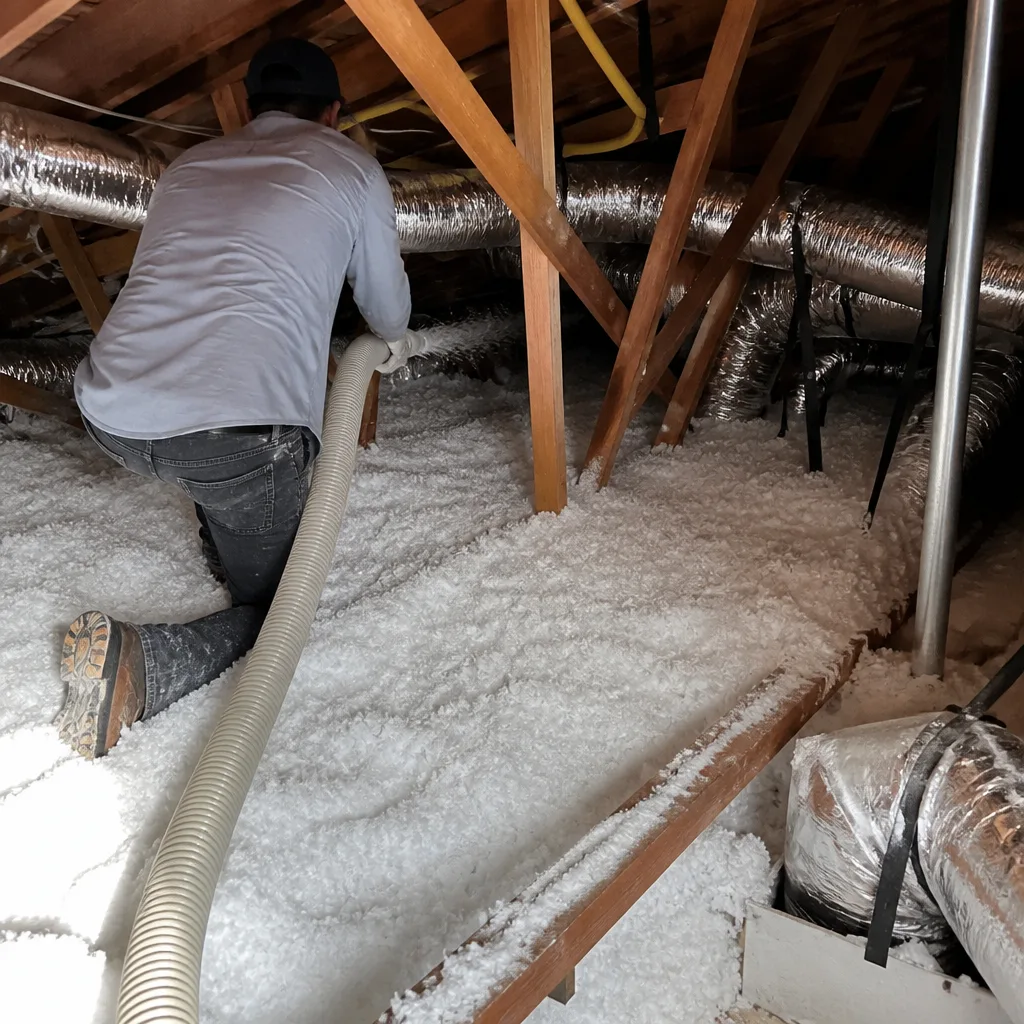 After
AfterThe Five-Question Phone Screen That Eliminates Weak Contractors
Most homeowners in La Habra start with three calls and pick the middle bid. That’s a mistake. Start with five questions, listen for specifics versus deflection, and you’ll narrow the field before anyone visits your home.
Here’s the verbatim screen we recommend:
- “Will you run a blower-door test before and after the job, and can I see the numbers from your last three projects?” A credible contractor names a recent date, a street, or a CFM50 figure from memory. A deflection sounds like “we can if you want” or “most homes don’t need that.” In La Habra’s older neighborhoods south of Whittier Boulevard, we’ve seen 1950s ranch homes test at 5,800 CFM50 before sealing and drop to 2,400 after. A contractor who can’t produce similar specifics hasn’t measured their work.
- “Walk me through your air-sealing sequence. What gets sealed before insulation goes in?” The answer should include top plates, can-light housings, plumbing and electrical penetrations, and the attic access hatch. If the contractor says “we’ll seal as we go” or “the insulation will do that,” you’re talking to an installer, not an envelope contractor.
- “What R-value are you installing, and how are you measuring square footage and depth?” Look for: R-38 to R-60 for attic floors in La Habra’s climate zone (per Title 24), with depth measured with a ruled stick at multiple points, not eyeballed. The contractor should cite the installed R-value, not the bag label.
- “What’s your license classification, and can I verify it on CSLB?” The answer must be C-2 (Insulation and Acoustical). “We’re covered under our GC’s license” is a red flag we’ll explain in the next section.
- “What documentation do I receive when the job is done?” The credible answer lists: written scope completion confirmation, photo record of work areas, blower-door results if applicable, and warranty terms. “We’ll give you a receipt” is insufficient for a building-envelope job.
In our experience across La Habra and north Orange County, fewer than one in five contractors who answer the phone will clear all five questions without hedging. That’s not snobbery. It’s a market reality: most insulation work is sold as a commodity product, not a measured performance upgrade. The contractors who pass this screen treat your home as a system, not a surface.
How to Verify a C-2 License (and Spot the Subcontractor Loophole)
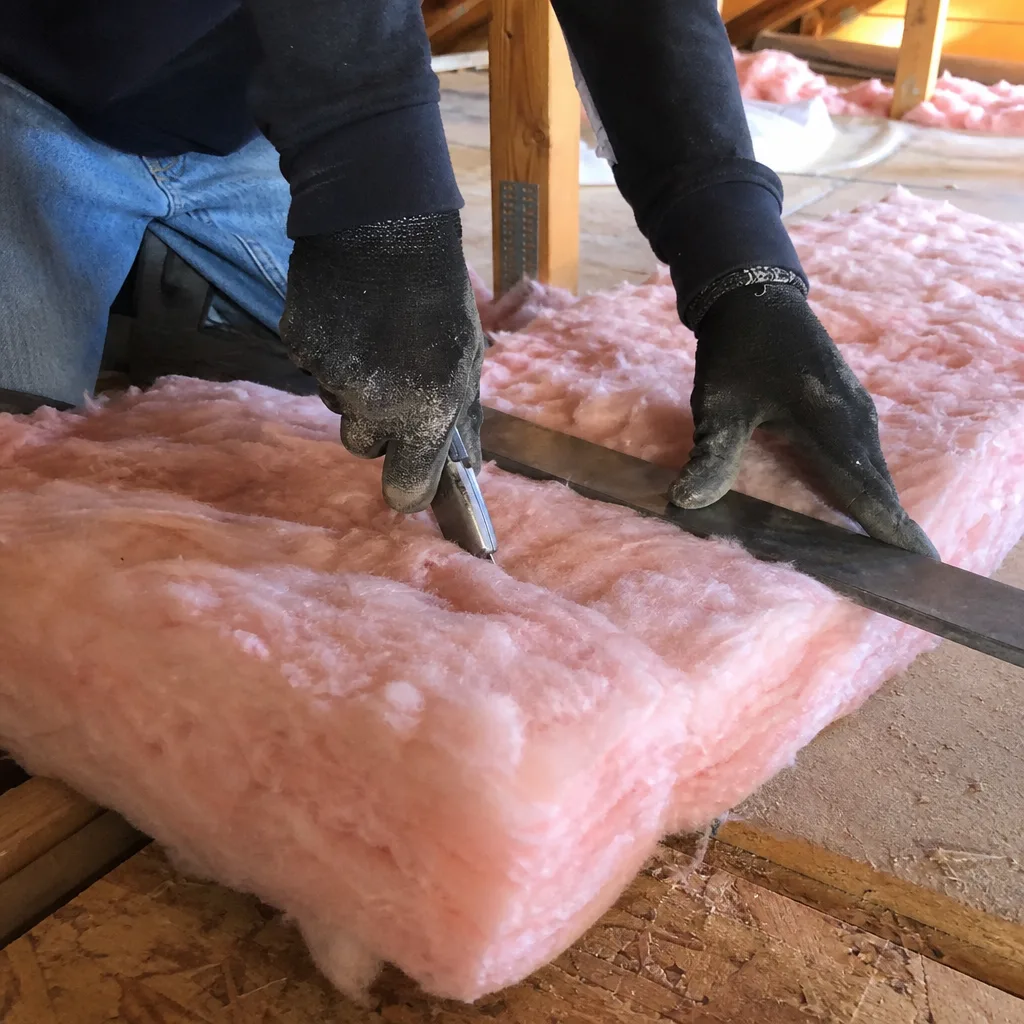
California requires a C-2 license for insulation and acoustical work. This matters because an unlicensed subcontractor operating under a general contractor’s B-license can leave you with no direct contractual relationship and no recourse if the work fails.
Here’s how to verify:
- Go to CSLB.ca.gov and click “Check a License.”
- Enter the business name or the individual’s license number.
- Confirm the classification reads C-2 - Insulation and Acoustical.
- Check that the license status is Active and the workers’ compensation insurance is current.
- Verify that the Business Name matches the name on your estimate. A mismatch suggests a subcontractor relationship.
The subcontractor loophole works like this: a general contractor wins your job, then hires an unlicensed or differently-classified crew to perform the insulation work. You pay the GC. The GC pays the crew. If the insulation compresses, settles, or was installed over unsealed leaks, you have no contract with the people who actually did the work. The GC may blame the subcontractor. The subcontractor may be unreachable. We’ve been called to fix this exact situation in La Habra’s Vista del Oro neighborhood, where a homeowner discovered their “new” attic insulation was hiding original 1950s batts with no air sealing beneath.
Under Haven Standard, we carry our own C-2 classification, maintain active workers’ compensation, and name the specific technician who will lead your job in writing before work starts. You verify this on CSLB, then you verify it again when our uniformed crew arrives with photo ID.
What a Written Scope Must Include (and What Most Omit)
A written price is not a written scope. A scope is a technical document that describes what will be done, where, to what standard, and how it’s verified. Most estimates we review in La Habra are single-line invoices: “Attic insulation: $X.” That’s not a scope. It’s a price.
Here’s what a proper written scope contains:
- Square footage by area: “Attic floor: 1,240 sq ft. Garage ceiling: 340 sq ft.” Not “approximate.”
- Installed R-value by assembly: “Attic floor: R-49 blown cellulose, installed to 14 inches per manufacturer spec.” Not “up to R-38.”
- Air-sealing locations by assembly: “Seal top plates at interior partition walls with acoustic sealant. Seal ten can-light housings with pre-formed covers. Seal plumbing vent stack penetration with fire-rated foam. Weatherstrip attic access hatch with compression gasket.” This is the section most estimates omit entirely.
- Measurement method: “Depth measured with ruled stick at minimum 12 locations per 1,000 sq ft, recorded on photo record.” Not “installed to proper depth.”
- Material specification: Manufacturer, product line, and density where relevant. For example: “GreenFiber All Borate cellulose, 1.5 lbs/cu ft installed density.” Not “premium blown insulation.”
- Exclusions: What is not included. “Insulation removal not included. Electrical work not included. HVAC duct repair not included.” This prevents scope creep and dispute.
- Verification method: “Blower-door test per ASTM E779, before and after, with results reported in CFM50.” Or for non-applicable jobs: “Thermal imaging scan of attic floor to verify coverage uniformity.”
Under Haven Standard Clause 1, every job begins with a flat price, written scope, and written warranty before anyone lifts a tool. We’ve delivered over 9,000 of these documents since 2016. The homeowner knows what leaving looks like before we arrive.
In La Habra specifically, Title 24 energy code requires minimum R-38 in attics for new construction and major alterations, but many existing homes perform below this. A written scope should state whether the job is bringing you to code minimum or beyond. We typically recommend R-49 for La Habra homes given the heat gain from south-facing roofs in neighborhoods like La Habra Heights-adjacent areas, where afternoon sun loads are severe.
Why the Blower-Door Test Separates Real Contractors from Installers
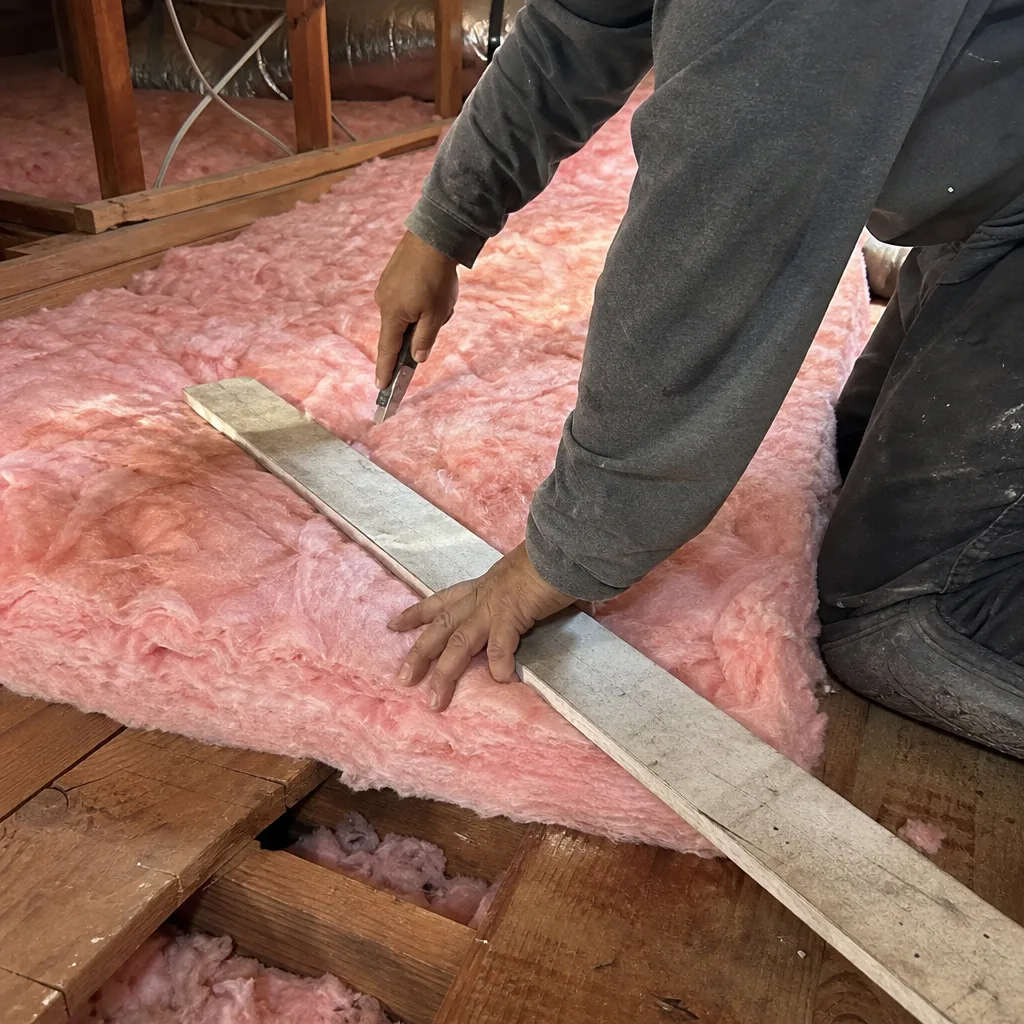
A blower-door test is a pressurization reading that shows, in one number, how much air your building envelope is losing. The equipment is a powerful fan mounted in an exterior door frame, coupled with pressure sensors. It depressurizes the house to -50 Pascals, then measures the airflow required to maintain that pressure difference. The result is reported in CFM50 - cubic feet per minute at 50 Pascals.
Here’s why this matters in La Habra: our climate demands cooling more than heating, and every cubic foot of conditioned air that escapes through the attic is air your AC worked to create. A leaky envelope in July means your system runs longer, your ducts sweat, and your upstairs bedrooms never quite cool down. We’ve tested homes in the Highland area where the blower-door reading was so high the fan couldn’t reach -50 Pascals at full speed.
The test has two phases for insulation work:
- Pre-work baseline: Measures total envelope leakage before any sealing or insulation. This identifies whether air sealing is even needed and helps prioritize the biggest leaks.
- Post-work verification: Measures leakage after air sealing and insulation are complete. The difference is your documented result.
A contractor who won’t run this test is asking you to trust that invisible work was done correctly. That’s not acceptable for a performance claim. We publish before-and-after blower-door numbers on every applicable job. A recent project on Arbolita Drive in La Habra tested at 4,200 CFM50 before work and 1,950 after - a 54% reduction that the homeowner could verify from their summer electric bills.
The test takes 45 minutes to an hour. It costs the contractor in equipment and training. That’s exactly why most skip it. When you ask to see numbers from recent jobs, you’re filtering for contractors who’ve made the investment in measurement.
Materials and Methods: What La Habra Homes Actually Need
La Habra’s climate is hot-dry in summer, mild-wet in winter, with significant diurnal temperature swings. The right material depends on the assembly, the existing conditions, and whether air sealing has been completed first.
Attic floors: Blown cellulose or fiberglass, installed after air sealing. In La Habra’s older homes with 2×4 ceiling joists, blown material fills irregular spaces better than batts and reduces thermal bridging. We source cellulose from GreenFiber and fiberglass from Owens Corning and Johns Manville, selecting by availability and specific application rather than brand loyalty.
Attic rafters (cathedral or conditioned attic): Spray foam, either open-cell (Icynene, Demilec) or closed-cell, depending on moisture management strategy and budget. Open-cell allows vapor permeability; closed-cell provides structural rigidity and vapor barrier in one. In La Habra’s occasional heavy rain events, we evaluate existing roof ventilation before recommending either.
Walls: Dense-pack cellulose for existing walls (retrofit through exterior holes), or batts in new construction. Wall insulation in La Habra is often neglected because it’s harder to access, but uninsulated walls in pre-1980 homes create significant comfort complaints in rooms with western exposure.
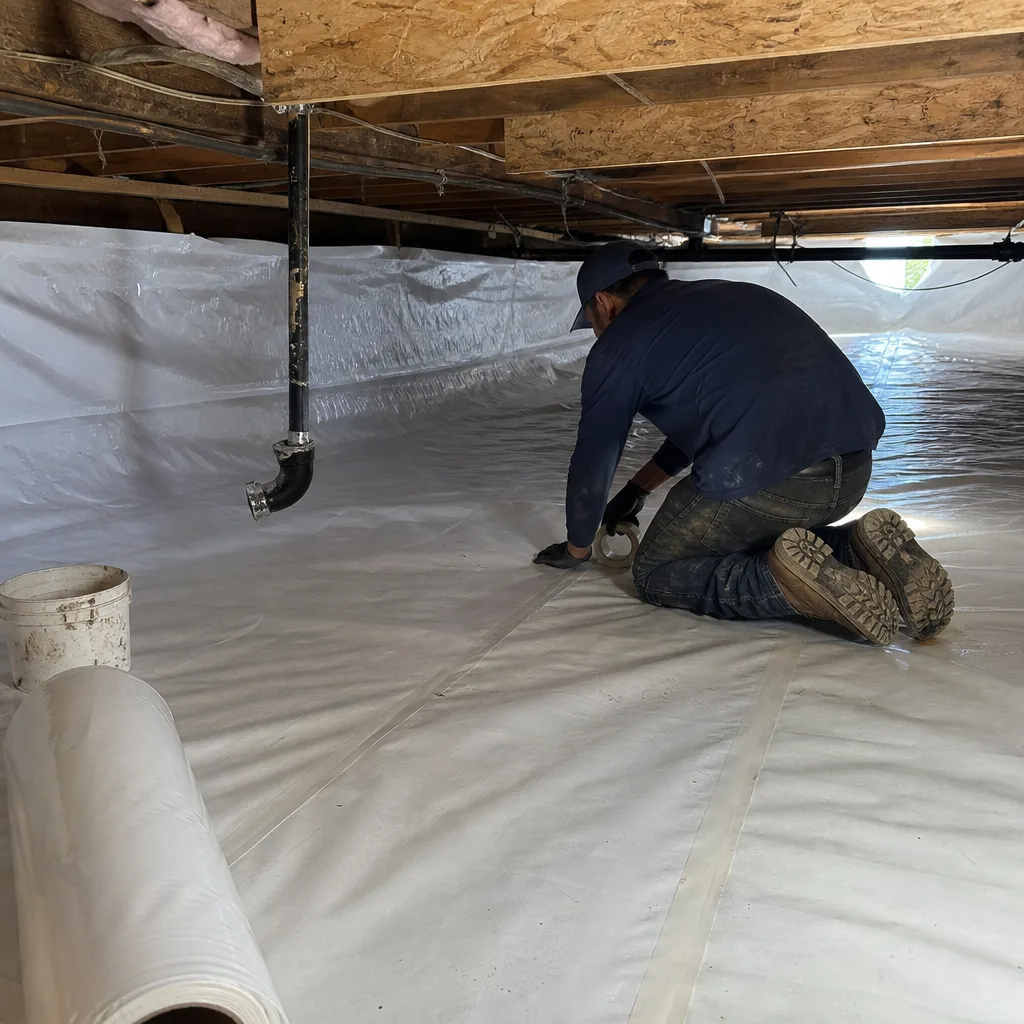
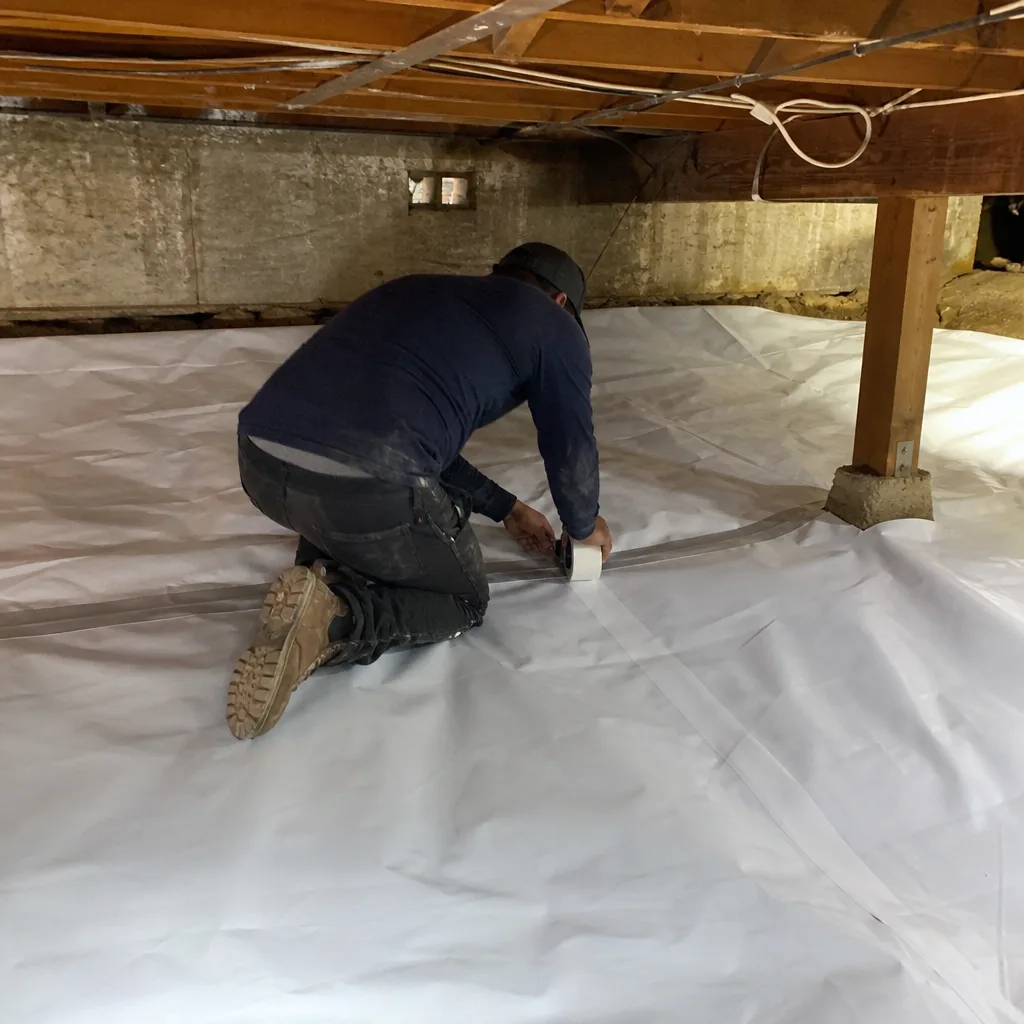
Crawl spaces: Encapsulation with vapor barrier and conditioned air supply, not just floor insulation. La Habra’s clay-heavy soils in areas near Coyote Creek hold moisture that migrates upward through unsealed crawl spaces. Crawl space encapsulation in La Habra addresses this at the source.
Radiant barriers: Foil-faced sheathing or draped foil in vented attics with significant ductwork. Effective in La Habra’s sun-baked roofs, but not a substitute for adequate R-value. We install these in homes where the attic remains vented and duct losses are measurable.
The critical principle: sealed first, then insulated. We will never blow insulation over an unsealed attic floor. Air sealing of top plates, can lights, and penetrations is completed before any insulation is added. Installing insulation over leaks traps moisture, reduces effective R-value, and creates conditions for mold in La Habra’s occasional humid periods.
Materials are sourced from Owens Corning, Johns Manville, Knauf, Rockwool, CertainTeed, Icynene, Demilec, and GreenFiber. We specify by job, not by exclusive arrangement. No proprietary product lock-in means we select what performs for your specific assembly.
Three Contract Clauses That Shift Liability to You
Standard boilerplate contracts often contain language that makes you responsible for the contractor’s under-performance. Read for these three clauses before signing:
1. “Owner responsible for maintaining adequate ventilation”
This sounds reasonable until your new insulation compresses or gets moisture-damaged because the contractor blocked soffit vents with blown material. The clause lets them blame you for a problem their installation created. A proper contract specifies how ventilation is preserved: baffles at eaves, maintained ridge vent clearance, etc.
2. “R-value based on settled thickness”
Blown insulation settles. The contract should specify installed thickness, not settled thickness, and should state the measurement timing. “Settled thickness” language lets a contractor install less material than you paid for, then claim the product performed as specified after natural compression. We specify installed depth and verify with photo record at completion.
3. “Contractor not responsible for thermal performance or energy savings”
This clause appears in contracts from volume installers who know their work won’t perform. It voids the entire purpose of hiring a professional. A performance-oriented contractor stands behind measurable results: blower-door numbers, thermal imaging verification, and documented R-value installation. Under our 365-Day Done Right Promise, if it’s not done right, we make it right - backed by the written scope you received before work started.
We’ve reviewed competitor contracts for La Habra homeowners who requested our Free Second Opinion on Any Written Estimate. Two of the last three contained at least one of these clauses. Bring us a competing quote; we will read it with you.
Post-Job Documentation: What You Should Receive Before Final Payment
The job isn’t done when the truck leaves. It’s done when you hold documentation that proves what was installed and how it performs. Here’s what you should receive:
- Written scope completion confirmation: A signed or initialed copy of the original scope, with each line item marked complete or noting any deviation with explanation.
- Documented Photo Record on Every Visit: Date-stamped photos of work areas before, during, and after. Attic floor showing air-sealed penetrations. Insulation depth measured with ruled stick at multiple locations. Access hatch weatherstripping detail. This is included on every job, not available on request.
- Blower-door results (if applicable): Before and after CFM50 readings, with test date, technician name, and equipment calibration date.
- Warranty document: Specific terms, duration, and what triggers a call-back. Our 365-Day Done Right Promise applies to all completed work.
- Material receipts or batch numbers: Proof that specified materials were actually used, not substituted without notice.
Do not make final payment until you have reviewed this documentation. A contractor who pressures for payment before delivering documents is signaling that the documents don’t exist or won’t hold up to scrutiny.
In La Habra, we’ve encountered homeowners who paid in full for “R-38” insulation, then found batts compressed to R-19 equivalent with no photo record to dispute the claim. The Documented Photo Record protects both parties. You see what was done. We stand behind what we show.
What Insulation Costs in La Habra (Real Numbers)
Price without scope is meaningless. For a detailed breakdown of what drives these numbers, see our Insulation Cost Breakdown: The La Habra Homeowner’s Reference for 2026. That said, homeowners still need ranges to budget and to filter absurdly low or high bids. Here are 2024-2025 ranges for typical La Habra homes, based on square footage and assembly type:
| Scope | Typical Range | What Drives Price |
|---|---|---|
| Attic air sealing only (no insulation) | $800 - $1,800 | Accessibility, number of penetrations, can-light count |
| Attic insulation, blown cellulose or fiberglass (R-38 to R-49), with air sealing | $2,400 - $4,800 | Square footage, existing removal needed, access difficulty |
| Attic insulation with spray foam (open-cell, rafter application) | $5,500 - $11,000 | Thickness, roof pitch, ventilation strategy |
| Wall insulation, dense-pack cellulose (retrofit) | $2,000 - $4,500 | Exterior finish type, cavity condition, repair scope |
| Crawl space encapsulation with vapor barrier | $3,500 - $7,500 | Area, height, drainage condition, conditioning method |
| Insulation removal and replacement (attic) | $3,000 - $6,500 | Volume of material, contamination level, disposal fees |
These ranges reflect La Habra’s market: moderate labor costs compared to coastal Orange County, but with accessibility challenges in hillside neighborhoods and older homes with minimal attic access hatches. A bid below these ranges likely omits air sealing, uses sub-code R-value, or employs unverified square footage. A bid far above should justify premium materials or exceptional access difficulty.
Under Haven Standard, you receive a Written Price Before Any Work Starts - flat, with no “plus materials” or “subject to change” language. For attic insulation in La Habra, most jobs in a 1,200-1,800 square foot home run between $2,800 and $4,200 with air sealing and Documented Photo Record included.
Common Mistakes to Avoid
- Choosing by price alone. The lowest bid usually omits air sealing, measures square footage from the street, or plans to subcontract to an unlicensed crew. In La Habra’s competitive market, we’ve seen $1,800 attic insulation quotes that skipped sealing entirely - the homeowner paid twice when mold developed in unsealed can lights.
- Accepting “R-value equivalent” claims. Some contractors install thin spray foam and claim it performs like thicker batts because of air-sealing value. R-value is a measured thermal resistance; it doesn’t “equivalent” to something else. Insist on installed R-value by assembly.
- Ignoring the access hatch. The attic access is often the leakiest square foot in the house. A contractor who doesn’t mention hatch weatherstripping and insulation hasn’t looked at your envelope as a system.
- Scheduling during La Habra’s heat peaks. Attic work in August is miserable for crews and can affect material installation quality. We schedule attic jobs in early morning during summer months, but some contractors push through midday heat to hit volume targets.
- Not verifying the license yourself. A contractor who says “I’ll send you the number” but doesn’t is hoping you won’t check. CSLB takes 90 seconds. Do it while you’re on the phone.
- Paying before documentation is delivered. The photo record, blower-door results, and warranty are your proof of performance. Final payment exchanges for completed documentation, not for a handshake.
When to Call a Professional
Call a professional when your upstairs bedrooms won’t cool below 78°F in July, when your energy bills spike without rate changes, when you find compressed or disturbed insulation in the attic, or when you’re considering any renovation that opens walls or ceiling. These symptoms indicate envelope failure that DIY patching won’t resolve.
Topside Attic Insulation La Habra offers free estimates in La Habra. A live person answers calls 24/7 - no voicemail loops, no callback windows measured in business days. Call (562) 267-3291 to schedule. We’ll review your existing conditions, run a blower-door test if indicated, and deliver a written scope with flat pricing before any work starts. We also provide a Free Second Opinion on any written estimate you’ve already received.
For spray foam insulation in La Habra or crawl space encapsulation, the same process applies: measure first, specify in writing, verify after.
Frequently Asked Questions
If your home was built before 1990 and has never had a blower-door test, it almost certainly needs air sealing first. In La Habra’s original neighborhoods near La Habra Boulevard, we’ve tested pre-1970 homes that leaked more air than their HVAC systems could condition. Call (562) 267-3291 for a free assessment with blower-door testing.
Open-cell spray foam is vapor-permeable, lighter, and less expensive per inch of R-value; closed-cell is denser, provides structural rigidity, and acts as a vapor barrier. For La Habra attics with adequate roof ventilation, open-cell is often sufficient. For crawl spaces or unvented roof assemblies, closed-cell may be required for moisture management.
Most attic insulation jobs in La Habra, including air sealing and blown material, are completed in one day. Spray foam rafter applications typically require two days: one for prep and application, one for curing and verification. We provide a specific schedule in your written scope.
Sometimes, if the existing material is dry, uncompressed, and free of pest debris. In La Habra’s older homes, we often find original batts compressed below half their labeled R-value, or evidence of past rodent activity that requires removal and sanitization. We assess this during our initial inspection and specify in the written scope whether removal is needed.
Yes. California law requires a C-2 classification for insulation and acoustical work. A B-general contractor can perform the work only with proper C-2-qualified supervision, but many operate without it. Verify on CSLB.ca.gov before hiring. For full details on permitting, see our guide to Insulation Permits, Codes & Inspections in CA: What You Need to Know. An unlicensed installer has no bond to claim against and no workers’ compensation if injured on your property.
Hire someone else. A written scope with installed R-value, air-sealing locations, and measurement method is the minimum documentation for a professional job. Under Haven Standard, we won’t start work without one. Bring us any competing quote for a Free Second Opinion - we’ll read it with you and identify what’s missing - or explore more guides & resources to keep researching.
The Bottom Line
Hiring an insulation contractor in La Habra comes down to three verifications: license status on CSLB, blower-door documentation from recent jobs, and a written scope that specifies what gets sealed before anything gets insulated. The contractors who pass these tests are rare, but they’re the ones who deliver measurable performance. Ask the five questions. Read the contract for liability-shifting clauses. Demand documentation before final payment. Your home’s envelope is a system, not a product, and it deserves a contractor who treats it that way.
Written by Wes Okafor, Owner at Topside Attic Insulation La Habra, serving La Habra since 2016.